
Canada has not considered the United States a military threat since the mid-19th century. Such tensions appeared to be settled, if not ancient, history – until now.
The US capture of President Nicolás Maduro, coupled with President Donald Trump’s broad assertions of US dominance across the Western Hemisphere – including ominous hints about seizing Greenland ‘the hard way’ – have unsettled long-held assumptions about Canada’s security in North America.
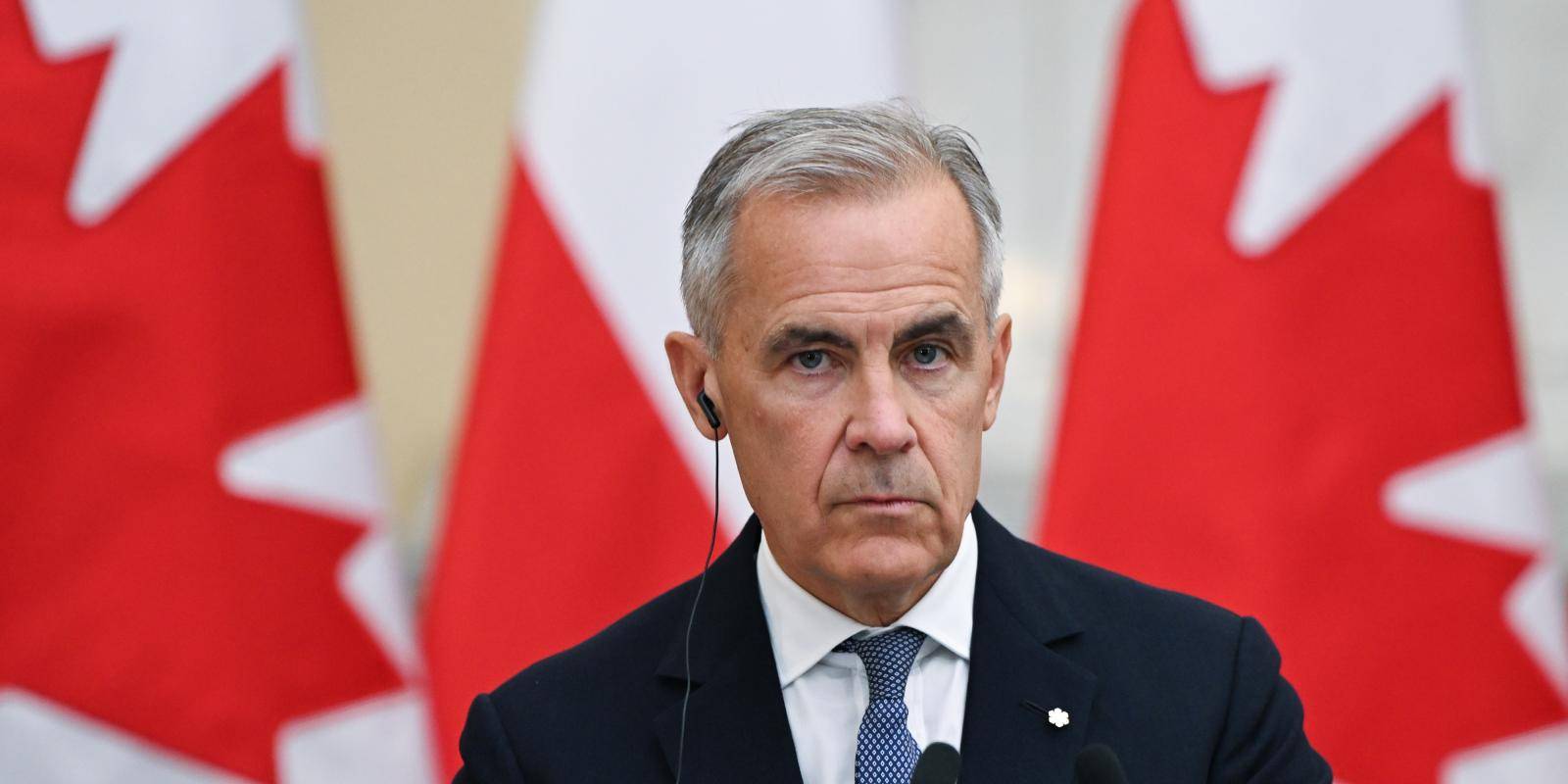
Trump frequently called for Canada to become the ‘51st state’ in the early months of his second term, provoking disbelief and anger among Canadians, and helping to propel Mark Carney to victory in Canada’s federal election last April. In the second half of 2025, however, Trump dialed back his comments, tempering Canadian unease about his territorial ambitions.
The US National Security Strategy issued in November elevated control of the Western Hemisphere as a top priority. But that document made no mention of Canada in that context, suggesting to some observers ‘that Ottawa is no longer squarely in Trump’s firing line’.
Instead, the US was assembling a naval force in the Caribbean and destroying speedboats – allegedly belonging to ‘narco-terrorists’ – in international waters, actions criticized by legal experts as violating international law. Ottawa remained silent, seemingly unwilling to provoke Trump – a caution shared by most US allies.
Then came the attack on Venezuela and capture of Maduro on 3 January. Canada’s response was again muted, with Carney vaguely urging ‘all parties to respect international law’. The prime minister’s caution is perhaps more understandable than that of other NATO allies: his economy remains heavily integrated with the US. Even with tariffs, 67 per cent of Canadian exports went to the US in October 2025.
Redefining the Monroe Doctrine
Since then, two developments have sharpened concerns in Canada.
First, Trump’s renewed threats toward Greenland have struck close to home. Canadians are acutely aware that Trump’s stated rationale for wanting Greenland – its plentiful resources and strategic position in an increasingly contested Arctic – applies just as readily to Canada.
Second, the contours of Trump’s hemispheric doctrine have come into clearer focus. The ‘Donroe Doctrine’, he claimed, has already ‘superseded’ its namesake – the Monroe Doctrine – ‘by a lot’. There is, regrettably, something to his boast.
The original nineteenth century doctrine held that European powers should neither colonize nor interfere in the Western Hemisphere. President Theodore Roosevelt recast the doctrine into a justification for the US to act as the sole ‘international police power’ in the Americas.
Trump’s interpretation seemingly asserts a right to intervene anywhere in the Americas and for virtually any purpose – in a manner explicitly unconstrained by international law.
This goes well beyond denying other powers access to the hemisphere or even claiming sole policing rights. Trump’s version is openly avaricious and arbitrary – in short, more imperial.
The extent to which Trump will act beyond Venezuela remains uncertain. He has long railed against ‘endless wars’, but it would be foolish to dismiss his threats, including against Greenland.
Trump has denied contemplating the use of military force against Canada. And even now, few believe he would resort to it. Yet developments over the past two weeks have sown doubt. ‘We are next on the menu,’ warned Canada’s former UN ambassador, Bob Rae.
It is not inconceivable that Trump might demand access to Canadian territorial waters in the Arctic, for example, or that his political allies might interfere in Canada’s domestic politics, exploiting the country’s many internal faultlines.
He has also been explicit about his willingness to use ‘economic force’ to pursue the absorption of Canada into the US.
Carney’s response
The ‘decades-long process of an ever-closer economic relationship between the Canadian and US economies is now over,’ Carney pronounced in October. Shortly afterwards, a row over a Canadian advertisement criticizing tariffs saw Trump announce he had terminated trade talks with Ottawa, highlighting the unpredictability now dogging relations.
Since taking office, Carney has reacted by seeking to reduce Canada’s long-term exposure to US tariffs by diversifying trade while retaining remaining access to the US market. The latter will include renewing the Canada–US–Mexico trade agreement, which is up for review this year.
The agreement is pivotal because it continues to provide tariff-free access for many Canadian imports into the US. But its fate is uncertain, and US tariffs on Canadian products including steel and automobiles have weighed heavily on Canada’s economy.
Diversification
This is not the first time a Canadian prime minister has sought to diversify Canada’s trade relations. Pierre Elliot Trudeau announced a similar strategy in the early 1970s. The urgency this time, however, is unmistakable.
That urgency helps explain Carney’s visit to Beijing this week – the first trip by a Canadian leader since 2017.
Under his predecessor, Justin Trudeau, high-level engagement between the two countries was effectively frozen, following a dispute in which China detained two Canadians in apparent retaliation for Canada’s 2018 arrest of a senior Huawei executive at the request of the US.
Frictions continue: Canada imposed a 100 per cent tariff on Chinese-made electric vehicles in 2024. China responded with tariffs on Canadian agricultural products last March. Despite these disputes, Carney is hoping to expand bilateral trade.
There will be limits to this rapprochement: Canadians distrust China. And Carney has set out ‘guardrails’ to constrain cooperation in areas he views as potential security risks.
Other partners
Carney has also restored high-level dialogue with India, thawing relations after Justin Trudeau accused the Indian government of involvement in the 2023 murder of Canadian citizen Hardeep Singh Nijjar – an outspoken Sikh nationalist.
India angrily denied the accusation and relations remained tense until Carney invited Indian Prime Minister Narendra Modi to the G7 summit in Canada last summer. Talks on a possible free trade agreement resumed in late 2025.
Carney has also sought deeper economic ties with Europe. Among other developments, Canada has become a partner in the EU’s Security Action for Europe (SAFE) program, a €150 billion financial instrument to support urgent defence spending.
This comes as Canada makes significant new defence investments after years of falling short of NATO spending targets – seeking to both strengthen Canadian capabilities and build new defence-industrial partnerships. Canada has also signed a pact with South Korea to expand collaboration on defence procurement, industrial security, and research.