

As the US administration declares the launch of Phase Two of the Gaza ceasefire, the reality on the ground tells a different story.
More than 450 Gazans have been killed since the start of the ceasefire in October. Israel controls over half of the enclave, Hamas is still armed, and humanitarian conditions remain dire.
Meanwhile, across the Israeli-occupied West Bank, de facto annexation continues with the expansion of settlements, and extremist settler violence has wreaked havoc on daily life.
Across both territories, the urgent need for security is intertwined with the broader priority of determining a political vision for Palestine. Indeed, the key pillars of the ceasefire plan, as well as hopes for broader regional stability, will fail without a political vision and a credible pathway for Palestinian self-determination.
Who will do what?
Phase Two of the ceasefire so far consists of US President Donald Trump’s announcements regarding three tiers of institutions that will oversee Gaza’s administration: a Board of Peace, chaired by Trump, comprised of invited heads of state, and supported by an Executive Board; a Gaza-specific Executive Board, comprised of members of Trump’s inner circle, regional officials, international diplomats, and businessmen; and a technocratic committee of politically unaligned Palestinians to lead on Gaza’s transition, headed by Ali Shaath, a former deputy minister of planning, chosen for his background in economic development and reconstruction.

Gaza: a ceasefire in ‘name only’ - Sanam Vakil
The core premise of a local technocratic committee supported by international and regional stakeholders is not in itself unorthodox. But the undefined responsibilities and ever-shifting relationships of the proposed bodies don’t bode well for facilitating Palestinian agency or addressing the hard issues.
Moreover, the proposed membership of the international committees – from Russian President Vladimir Putin’s invitation to the Board of Peace, to former UK Prime Minister Tony Blair being tapped to serve on both Executive Boards – has most Palestinians fearing yet another cycle of external overreach with limited representation of their interests. Even Trump’s inclusion of Turkish and Qatari diplomats on the Gaza Executive Board – a decision causing a major rift with Netanyahu – is no consolation, implying that regional actors can speak for Palestine.
Despite the headlines around the Board of Peace, of the three tiers, it is the technocratic body – officially the National Committee for the Administration of Gaza (NCAG) – that many Palestinians will be watching closely.
First and foremost, the committee will be tasked with restoring essential services for Gazans, like water, healthcare, electricity, and education. Moreover, as the only entity in the new arrangement to be comprised of Palestinian members, the NCAG will play a crucial role in re-centering Palestinian leadership in the enclave, even as questions remain regarding the extent of oversight from the other internationally-led bodies.
Hamas and Abbas
Indeed, although both Hamas and Palestinian Authority (PA) President Mahmoud Abbas have endorsed the committee, it is unclear if it will enjoy widespread legitimacy, as many Palestinians remain sceptical of the NCAG’s autonomy. Others worry that the technocratic approach may prioritise economic development and external investment over key political questions regarding Palestinian self-determination.
Beyond international overreach, the NCAG’s potential will be severely constrained by the two major sticking points to Phase Two: Hamas’s refusal to disarm, and Israel’s refusal to withdraw from its current position along the ‘Yellow Line.’
Indeed, Israeli Prime Minister Benjamin Netanyahu has already dubbed the transition to the new phase ‘symbolic,’ stressing that it will not undermine the Israeli objective of demilitarising the enclave.
To date, that de-militarisation has included the destruction of over 2,500 structures in the Israeli-controlled area of Gaza, which Israel says were booby-trapped homes and tunnels. The Israeli military has also drawn up plans for another potential ground operation into the Palestinian-controlled area if Hamas does not disarm by March.
Other possibilities include Israel pushing the Yellow Line deeper into Gaza, which has already occurred in several locations.
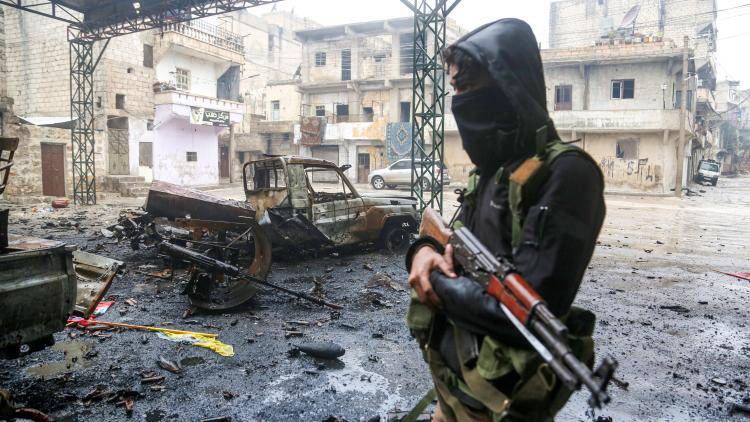
According to Trump’s plan, the Israeli military would withdraw further upon the deployment of an International Stabilisation Force (ISF), but few countries have committed personnel, and any deployment is still far off. Furthermore, with or without the ISF, it is highly unlikely that Netanyahu will withdraw Israeli troops while Hamas remains armed, especially with Israeli elections slated for later this year.
Hamas meanwhile has taken a hard public stance on refusing to disarm unless there are serious talks for Palestinian statehood and Israeli withdrawal from Gaza.
Privately, Hamas has reportedly shown openness to decommissioning offensive weapons, including missiles, or freezing or storing parts of their arsenal, but Israel will likely reject any offer short of full disarmament.
Moreover, given that resistance is central to Hamas’s identity, it is difficult to imagine the group disarming in any meaningful way without major concessions from Israel, such as agreeing to a credible pathway for Palestinian self-determination – which no major Israeli party is currently willing to entertain.