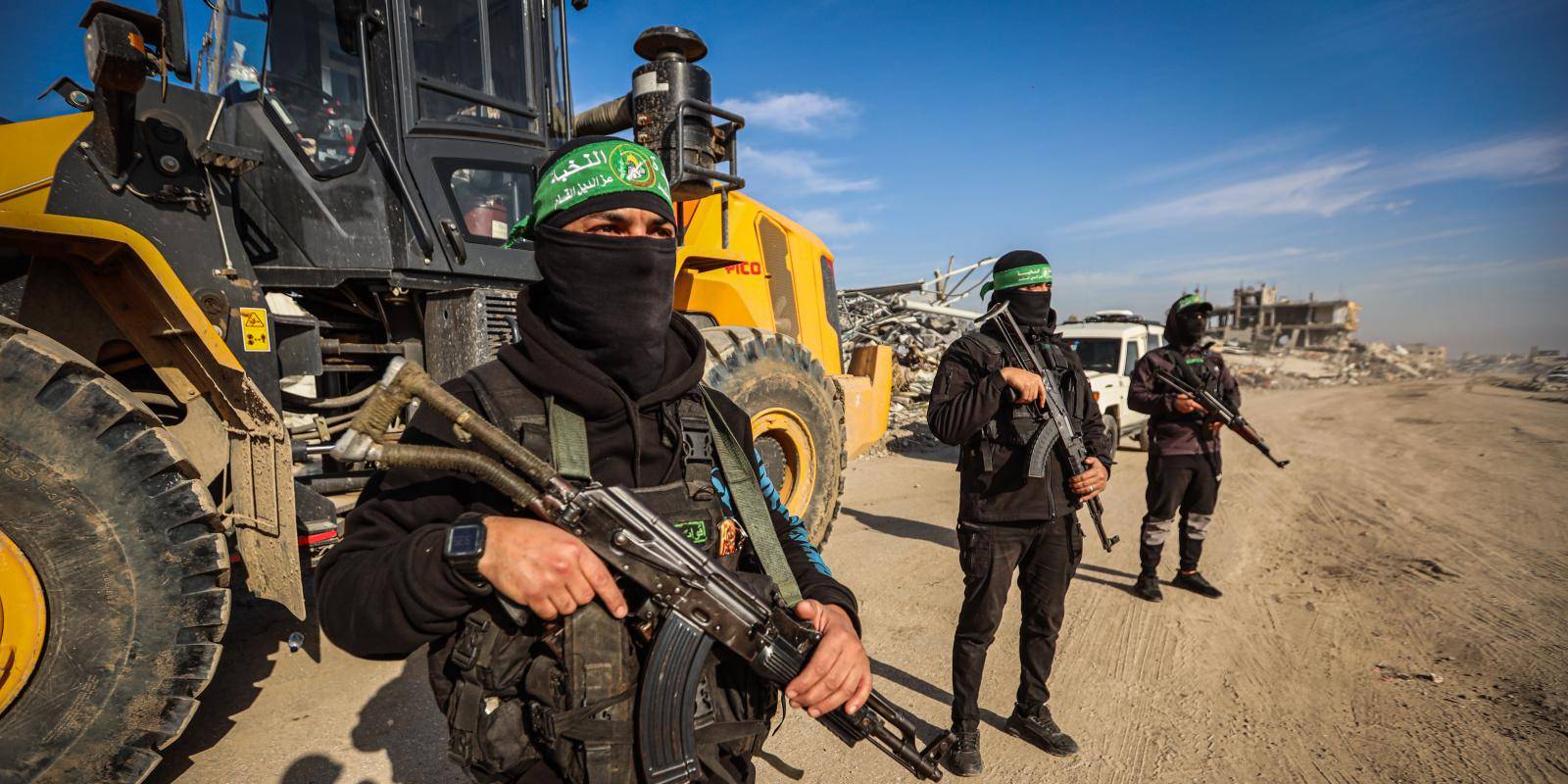

Since the Gaza ceasefire came into effect in October 2025, the Board of Peace has focused predominantly on Hamas’s disarmament as the key to unlocking other elements of US President Donald Trump’s 20-point plan. These include the entry into Gaza of the technocratic National Committee for the Administration of Gaza (NCAG), the deployment of an International Stabilization Force (ISF), and the start of desperately needed reconstruction.
Most crucially, the emphasis on disarmament has precluded any discussion of Israel’s withdrawal from Gaza. Instead, Israeli control of the territory has increased significantly since the start of the ceasefire, from about 53 per cent of Gaza in October (delineated by the so-called ‘Yellow Line’) to nearly 70 per cent today.
President Trump’s recent announcement that Hamas has agreed to his disarmament plan may change that dynamic. By essentially calling Israel’s bluff, Hamas’s move could potentially put external pressure on Israel in Gaza for the first time in months. The question is whether the Board of Peace in general, and Trump in particular, are willing to put the necessary pressure on both parties to move past the current stalemate.
Swift change unlikely
In reality, it is unlikely that a timeline for decommissioning weapons or drawing down troops will be agreed anytime soon.
Israeli Prime Minister Benjamin Netanyahu will likely seek to drag out any further negotiations as much as possible; the last thing he wants as he goes into October’s elections is US pressure to withdraw from Gaza. Any public suggestion from Netanyahu that Israel would reduce its control in Gaza or make concessions to Hamas would likely lose him his voter base. (Far from accepting Israel’s withdrawal from the enclave, right-wing Israeli ministers have already announced plans for new settlements in Gaza.)
Dragging out the process also suits Hamas. Agreeing to Trump’s plan is likely a pragmatic move by new Hamas leader Khalil al-Hayya. It keeps the group in the conversation about Gaza’s future and may improve its position in relation to the Board of Peace – potentially even shifting the onus of intransigence to Israel. But Hamas knows that the actual decommissioning of its weapons will not be immediate.
Indeed, both actors will likely double down on sequencing demands that have stymied previous attempts to reach agreements in Gaza: Israel will likely require full Hamas disarmament before withdrawal, while Hamas will likely insist on Israeli withdrawal before decommissioning weapons.
Already, Israeli officials have said they will not pull back without ‘genuine disarmament’ by Hamas and have expressed ‘serious security concerns’ about the deal to the White House.
Israel reportedly insisted to the Board of Peace that it reserved the right to strike areas set to be handed over to the ISF and objected to Qatar and Turkey (both central mediators in the agreement with Hamas) being involved in the roadmap’s future verification stages. It also reportedly demanded that Hamas’s weapons be destroyed rather than stored after confiscation.
Hamas is also hedging. It has stated that its moves will be contingent on Israel ending ‘all forms of aggression’, as well as withdrawing to the October ceasefire’s ‘Yellow Line,’ facilitating the entry of the ISF and NCAG, and meeting humanitarian aid obligations.
Hamas has also rejected Israeli demands that weapons be destroyed, and has intentionally avoided the language of disarmament or surrender. Indeed, the term ‘disarmament’ does not appear anywhere in Trump’s roadmap, relying instead on ‘decommissioning,’ modelled in part on Northern Ireland’s process.

Two perspectives on the two-state solution from the Chatham House archive: the UK’s former Foreign Secretary Yvette Cooper on 9 July 2026; and Israeli Prime Minister Benjamin Netanyahu on 3 November 2017.
Furthermore, Hamas will likely resist full decommissioning without a broader negotiated process to realize a Palestinian state. The disarmament plan does not mention Palestinian self-determination directly, but it does refer (in Article 8) to the completion of the ‘remaining commitments under [the] Sharm [el] Sheikh Protocol,’ Trump’s initial 20-point plan for Gaza. Point 19 of that plan refers to a ‘credible pathway for Palestinian self-determination and statehood.’ Netanyahu has fully rejected the notion of Palestinian statehood, while Hamas will insist upon it.
US and Board of Peace officials have stressed the ‘zero trust’ nature of the roadmap, emphasizing that it will proceed based solely on externally verified steps and conditions. But even reciprocal processes require one side to take the first step. It is more likely that both sides will buy time by telling the Board of Peace at least some semblance of what it wants to hear. Meanwhile, they will both likely avoid any real commitments by objecting to any one of the myriad thorny details required to actually implement a plan.
External pressure
In this context, external commitment and pressure are crucial. For Hamas, the mediating efforts of Egypt, Turkey, and Qatar have been essential in getting the group to publicly accept the agreement. But these regional states will have less leverage in getting Hamas to implement it, as they are not physically on the ground in Gaza to enforce commitments or to provide security guarantees.
On the Israeli side, it remains unclear the extent to which the US – and by extension, the Board of Peace – will be willing to impose substantive pressure on Israel to even discuss withdrawal.
There are several factors to consider here. First is the question of Trump’s personal commitment to shepherding the agreement beyond the fanfare of the initial headlines. If the past year is any guide, the disarmament roadmap could easily become yet another casualty of Trump’s slapdash approach to diplomacy, in which a numbered plan is released with bravado, but then flounders without the long, arduous subsequent work required to make it operational.
