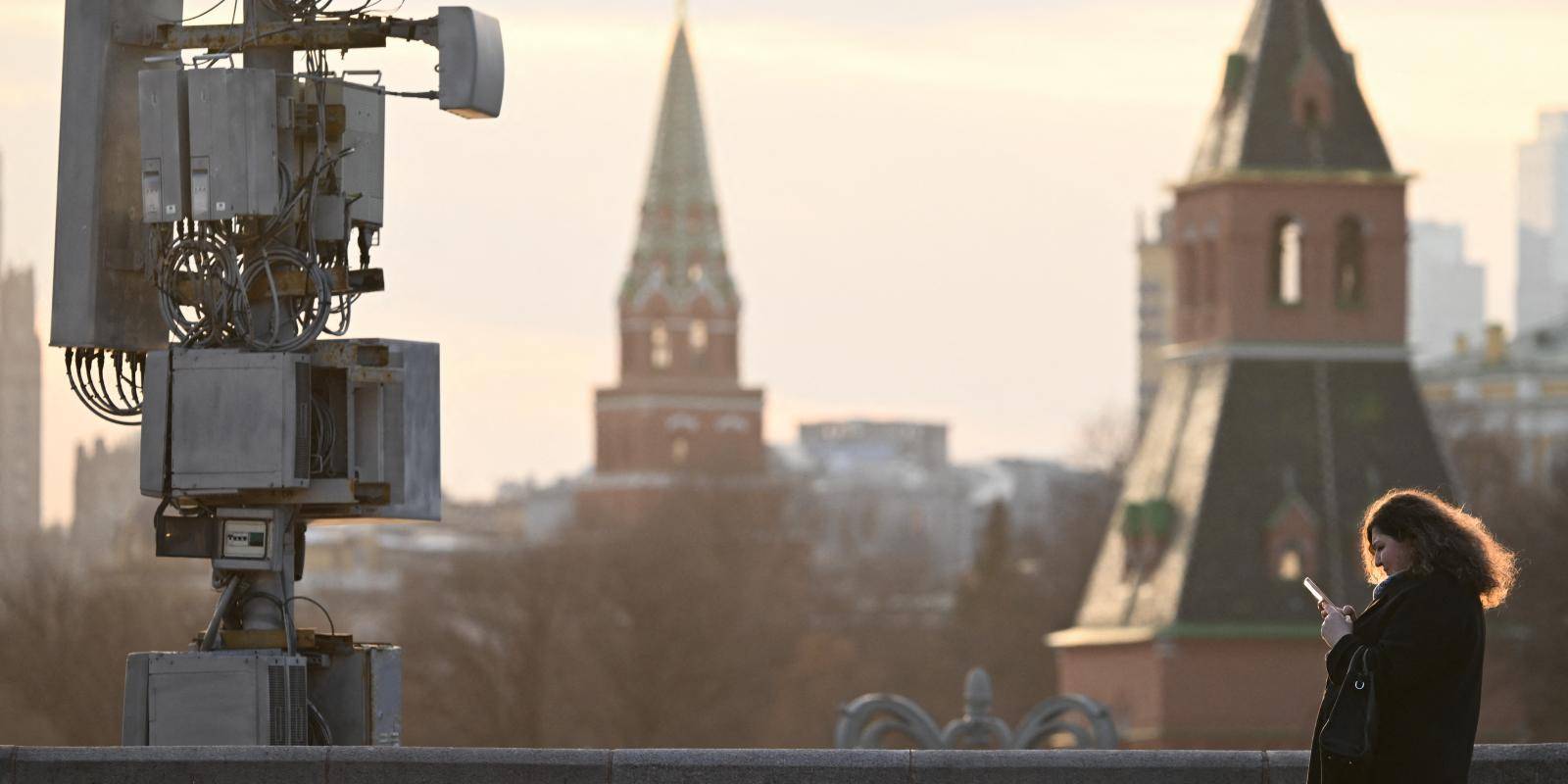

Across Russia, partial internet shutdowns have persisted for months, disrupting everything from cashless payments and bank transfers to taxi apps and digital courier services. But since early March, mobile internet blackouts have also hit central Moscow and St Petersburg, forcing locals to turn to landlines, pagers and paper maps.
The true reasons behind the blackouts are unclear. Officially, authorities cite security concerns, likely due to Kyiv’s use of mobile-guided drones to strike targets deep inside Russia. Targeted shutdowns were previously confined to regions bordering Ukraine and areas near strategic military bases across the country. The fact they are now happening in Russia’s key centres of wealth and power shows that the war is increasingly affecting the everyday lives of ordinary Russians previously distanced from it. But the outages are likely about more than security concerns. The blackouts also align with recent legal amendments on ‘centralized management’ of the internet, which empower the state tech regulator, Roskomnadzor, to assume full control over Russia’s internet and public communication infrastructure.
Meanwhile, the government has rolled out a curated ‘whitelist’ of state-approved websites and essential online services that remain accessible during outages. Designed to create a closed and tightly controlled internet architecture, these measures speak volumes about the regime’s mounting anxieties in the face of domestic and foreign political pressures.
The outages are part of Moscow’s broader campaign to cut off independent sources of information and horizontal networks of communication, designed to protect the regime from civil unrest and weed out foreign influences. Social media platforms and messaging apps such as YouTube, Instagram, Signal, Discord and Facebook have already been banned, with the country’s most popular messaging app Telegram reportedly being fully blocked from 1 April 2026, cutting off access for those without a virtual private network (VPN).
At the same time, officials have been urging Russians to switch to state-backed MAX messenger, an app widely believed to be monitored by the Federal Security Service (FSB) that comes pre-installed on all devices sold in the country. Amid serious privacy concerns, some senior officials are rumoured to rely on separate SIM cards and devices to install the app, while ordinary citizens are compelled to use it for access to government portals, school chats, and community services.
Still, Russians are finding ways to adapt. Many use VPNs to circumvent restrictions, while others turn to lesser-known, still-accessible platforms like the South Korean messaging app KakaoTalk. Ironically, the Kremlin’s efforts to restrict access to information by targeting Telegram have disproportionately hit the viewership of pro-state channels, while audiences of opposition outlets – toughened by years of restrictions – continue to circumvent controls.
Yet public expressions of discontent have so far been blocked. Authorities have rejected several applications for peaceful rallies for internet freedom in the Moscow Region, citing a 2020 ban on mass gatherings due to COVID-19. Last week, an 80-year-old protester was detained and fined in Perm for organizing an unsanctioned rally, while Moscow police briefly detained the administrator of a Telegram channel mobilizing support for protests against internet restrictions and censorship. Any future restrictions and blackouts will test the country’s potential for protest, especially among younger, digitally connected generations.
But the regime’s quest for self-preservation is taking its toll on the Russian people. Beyond disrupting livelihoods, the nearly three-week Moscow shutdown cost local businesses up to 1 billion roubles (£ 9.4 million) per day, with courier services, taxis and retail sector hit hardest. Disruptions to mobile payment systems left many retailers unable to process transactions, compounding pressure on already strained small businesses. Reflecting this downturn, the Bank of Russia’s business climate indicator fell to -0.1 points in March, its first negative reading since 2022. As the economy absorbs the mounting costs of the war, the shutdowns are likely to push more small and medium-sized enterprises towards bankruptcy in the near term. Soaring fossil fuel revenues amid the ongoing conflict in Iran may provide some immediate relief to the Russian economy, but whether they can meaningfully offset the strain on businesses and households remains an open question.
