
During the first administration of President Donald Trump, the US imposed so-called ‘maximum pressure’ sanctions on five countries: Cuba, Iran, North Korea, Syria and Venezuela. In three of those cases, ‘maximum pressure’ was exerted by either creating new sanctions (Venezuela), tightening existing ones (Cuba) or returning sanctions that had been lifted (Iran).
Maximum pressure sanctions are not only a Trump phenomenon: President Joe Biden applied punishing sanctions to Russia after it invaded Ukraine in 2022. Those were multilateral and focused on reversing the invasion. But Biden initially claimed they could also lead to regime change.
In his second term, President Trump has dialled back the regime-change rhetoric regarding sanctions on Russia – indeed he has lifted some oil-related sanctions on the country as a result of the Iran war.
But his administration has launched military action against two maximum-pressure sanctioned countries (Venezuela and Iran). And, even as war with Iran drags on, Washington is still threatening military intervention in Cuba.
This would seem to indicate a significant risk in the maximum pressure policy: imposing economy-wide sanctions without a coherent strategy for off ramps and negotiations creates an escalatory momentum – particularly when the primary objective is regime change.
Sanctions’ uneven record
The chances that sanctions fail to deliver are significant. Even less comprehensive sanctions, intended to force democratic change or human rights reforms, have a poor track record.

According to a 2025 Chatham House study Understanding and improving sanctions today, of the 858 sanctions applied by Western countries with at least one of the stated goals of democracy and/or human rights, 522 were determined to either be ongoing or have failed.
In the case of Cuba, economic and financial sanctions imposed in 1962 remained in place for 65 years and were codified twice into law by the US Congress – all without bringing about a change of regime.
President Trump, in both terms, has argued that previous administrations used insufficient force, and that a maximum pressure sanctions approach could bring about US goals.
But so far maximum pressure has not delivered. In 2019, shortly after announcing maximum pressure-style sanctions on the Venezuelan government, then National Security Advisor John Bolton called for the Venezuelan military to defect to remove President Nicolas Maduro. Later he declared that the regime’s collapse was only a matter of time. Those sanctions largely remained in place through the Biden administration. But so did Maduro.
Having failed to bring about the regime’s fall, and with no greater economic tools available, President Trump authorized the special forces operation that captured Maduro on 3 January 2026. That mission brought not the fall of the Maduro regime, but its decapitation – and the imposition of a more pliable leadership. Democracy and even regime change were not delivered, despite the promises made.
US policy towards Iran has followed the same pattern. In his first term, Trump pulled out of the Joint Comprehensive Plan of Action (JCPOA) nuclear agreement negotiated by President Barack Obama’s administration – calling the deal ‘defective to its core’ and promising a better one.
No such deal was achieved. And on his return to the White House this year, following the decapitation of the Maduro government, Trump turned his attention back to Iran.
The US’s stated goals for the Iran war were never coherent, but the implicit message was the same: maximum pressure sanctions had failed, demanding escalation to military intervention along the lines of the Venezuela operation.
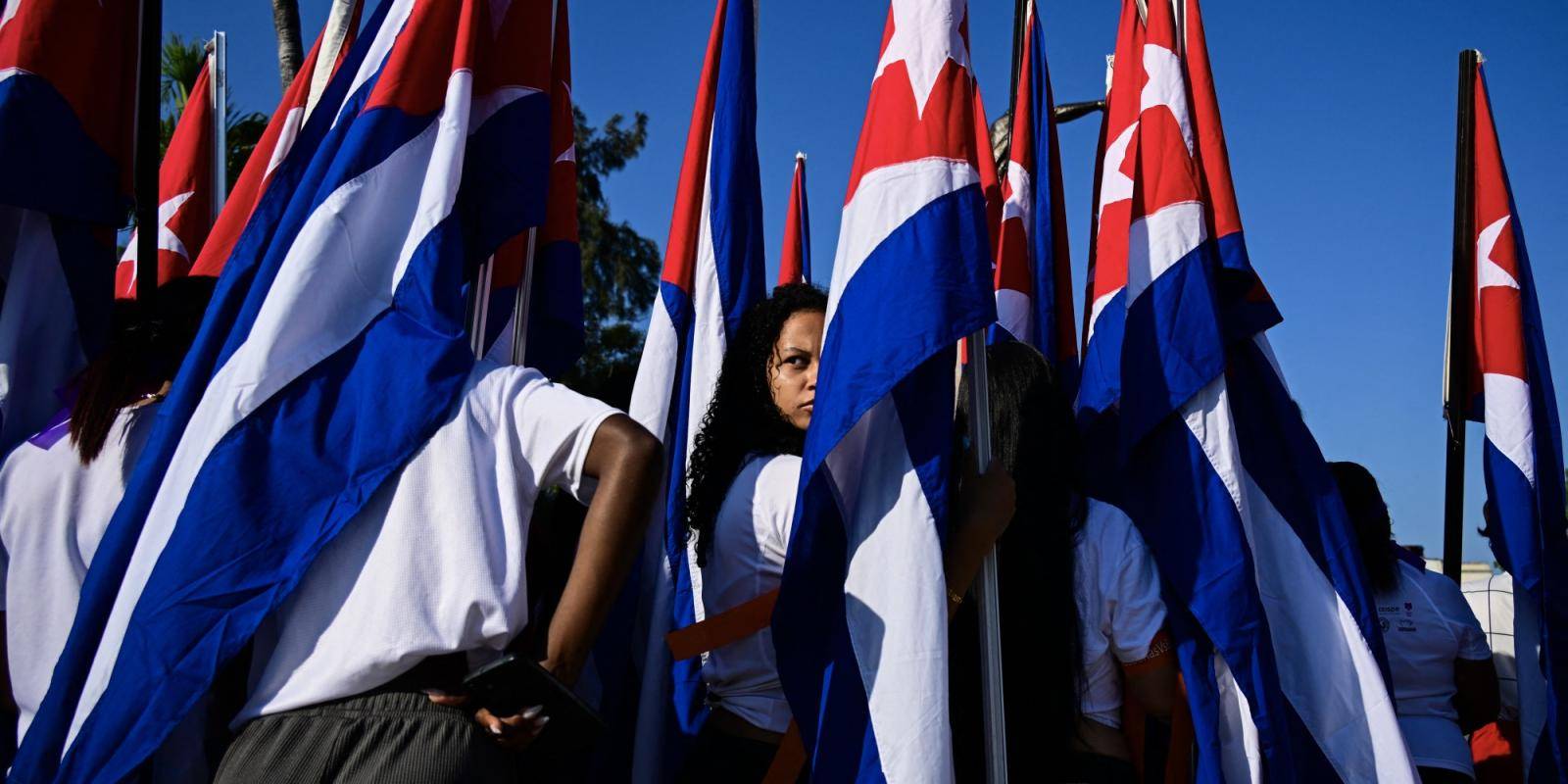
Cuba may be next. In June 2017 Trump announced he would roll back the measures Obama’s administration had taken to loosen sanctions on Havana. He re-tightened sanctions, promising that he would not negotiate until Cuba’s government held multi-party elections.
Unfortunately, despite their failure to produce either regime change or even modest human rights improvements, those sanctions largely remained intact under President Biden – and again failed in their stated goal to bring down the Cuban regime.
In January 2026, shortly after the Venezuela operation, Trump threatened to attack Cuba next. His administration then upped the pressure by halting the flow of subsidized oil the Venezuelan government had previously sent to Cuba. That has brought massive blackouts in Cuba, a collapse of the economy, and sparked outbreaks of disease, poverty and malnutrition.
But the regime is still standing, and Trump has returned to a more violent threat. On 3 May he said he could send the US aircraft carrier the USS Abraham Lincoln to Cuban coastal waters to force the issue – even though the Iran war has exposed the limits of military options.
Who else should worry?
Regime change came to Syria in late 2024, during the Biden administration. The role of sanctions in bringing about that change is debatable, but the toppling of the former Assad regime has seen US relations with the country improve and negotiations to lift sanctions begin.
But should other remaining ‘maximum pressure’ sanctioned countries, besides Cuba, fear US attack?
It seems unlikely. The objectives for these sanctions differ – ending the invasion of Ukraine in the case of Russia (despite Biden’s early, heated rhetoric about regime change) and ending the build-up of nuclear weapons in the case of North Korea. The fact that both countries have nuclear arsenals will no doubt deter military escalation by the US.
Is it the sanctions that lead to war, or is it Trump?
It is possible to argue that the increase in US military intervention is not simply the product of maximum pressure sanctions, but the consequence of a tempestuous president bent on enforcing a new vision of US dominance in the global order. But that seems reductionist.
The failure of ‘maximum pressure’ tactics to provoke regime change creates its own logic and momentum towards escalation. That can accelerate under a leader who feels the need to act (for whatever reason) – particularly when the sanctioned country is at a clear technological disadvantage to the US military and has no nuclear deterrent.
And the temptation to move from sanctions to military action may not only be limited to Trump or Trump-adjacent presidents. It remains a risk for any US administration, Republican or Democrat, that has placed significant political capital in a ramped up, punitive sanctions policy.
It remains easier for administrations to be drawn into escalating sanctions – or to maintain them – when efforts to liberalize or amend them inevitably bring calls of weakness, as has been the case in Cuba, Iran and Venezuela.
That is reflected by a spike in new sanctions in the past two decades: The Chatham House study shows the number of sanctions imposed by countries and multilateral organizations nearly doubled between 2001 and 2023 – the majority created by the US.