

US President Donald Trump is feeling emboldened. Not one US soldier was killed in the 3 January US special forces operation to abduct Venezuelan President Nicolás Maduro.
Intoxicated by the success, Trump has followed up by warning other Western Hemisphere countries, such as Colombia, Cuba and Mexico: you could be next.
Trump will feel attacks on all would be justifiable under his new corollary to the Monroe Doctrine of 1823. This new ‘Donroe Doctrine’ effectively asserts the right of the US to intervene at will in the Western Hemisphere to protect its national interests.
Regional and world leaders would be remiss if they didn’t consider the threat real. But its unclear what the purpose of new attacks on any of these very different countries would achieve.
Cuba
Cuba has always been in the Trump administration’s sights, especially of Secretary of State Marco Rubio – a Cuban American and former senator from Florida.
In the late 1990s the US’s fervently anti-Castro Cuban-American community believed that Cuba’s communist regime could collapse, following the dissolution of the Soviet Union. But the 1998 election of former president Hugo Chavez in Venezuela crushed that hope.
Chavez threw a lifeline to Cuba in the form of 100,000 barrels of oil per day at cut-rate prices. Venezuelan support has been maintained ever since – though it has declined to 30-35,000 barrels over time as production has faltered.
That is why, in conservative US political circles, the route to regime change in Cuba is seen to pass through Caracas. Cut off the oil, the reasoning goes, and you will speed economic crisis and end the Cuban regime – now headed by President Miguel Díaz-Canel.
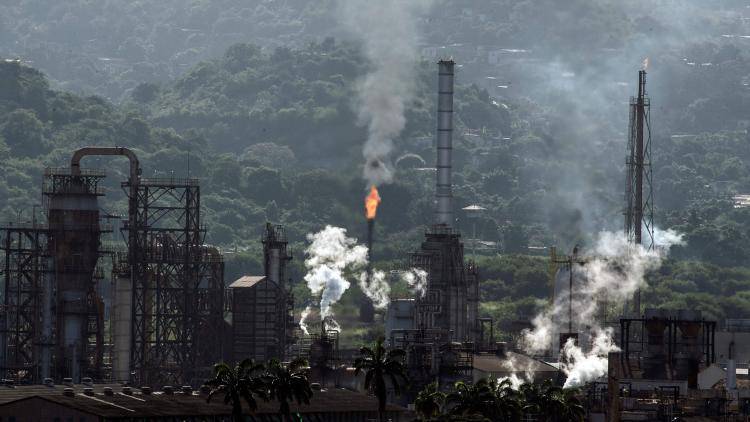
On 11 January Trump warned the Cuban government to ‘make a deal or face the consequences’. What that deal or the consequences might be was left open. A week after the Maduro operation, Trump pledged to cut off all Venezuelan oil shipments to Cuba.
What comes next is dangerously unclear. The Cuban regime is not as fragmented, chaotic or venal as its Venezuelan benefactors. And Cuba is also no longer governed by one figure. Díaz-Canel is a loyal party apparatchik, surrounded by a circle of regime loyalists, including the son of Raul Castro, Alejandro.
Similarly, splintering Cuba’s armed and security forces will not be as easy as it may be for the fractured, corrupt Venezuelan security sector. Cuban forces are more disciplined and cohesive. That means another Maduro-style abduction attempt in Cuba, a much stronger and now highly alert regime, will likely be a disaster.
One possibility is targeting specific infrastructural sites – miliary installations or ports, for example – for limited strikes. But it is hard to see what they would achieve, unless they were against foreign installations such as a Chinese satellite station and a Russian port. In either case, strikes might provoke belligerent reactions from Beijing and Moscow.
The US could tighten its existing embargo on Cuba’s financial sector and remittances and impose more targeted personal sanctions on members of the Cuban government and military.
But the hope in Washington will be that cutting off the Venezuelan oil supply will be enough to bring about financial meltdown and cause popular protests that will topple the regime.
At that point the US military could play a role, striking any security units that attempt to crackdown on unrest.
But Cuba has been fiercely indoctrinated and repressed since 1959. There is no political opposition, as there is in Venezuela. Washington ought to fear unleashing chaos, and a new outpouring of refugees on make-shift boats to the US.
Colombia
In the case of Colombia, Trump has engaged in a war of words on X with President Gustavo Petro, warning him shortly after the Venezuela strikes to ‘watch his ass’. When asked if he was considering military action Trump replied ‘It sounds good to me’.
As in the case of Maduro, Trump frames his confrontation with Petro as a matter of domestic security and drugs. A spike in cocaine production and insecurity has occurred during Petro’s term, though it started under his predecessor, Ivan Duque. It also doesn’t help that Petro is a former leftist guerrilla and has been sharply critical of Israel’s actions in Gaza.
Also at play are Colombia’s presidential elections in May 2026. Petro is constitutionally prohibited from running. Leading the field in the long-list of potential successors are Petro’s preferred candidate, Ivan Cepeda, and the Trump adjacent Abelardo de la Espriella.
Given Petro’s domestic challenges and tussles with Trump, the election results will likely skew to the right. Whether that will favour de la Espriella is unclear, but he will have strong White House support if his polling remains strong.
Again, it is difficult to imagine a Maduro style abduction of Petro. It’s one thing to take out a reviled autocrat like Maduro, who flagrantly stole the 2024 Venezuelan elections. It’s another to violently remove a democratically elected president.
Targeted missile or drone strikes on cocaine processing labs in mountainous jungle areas, where the Colombian state is not effective, would have a minimal effect on Petro. Instead, such flagrant violation of Colombia’s territorial integrity could rally support for Petro and Cepeda.
A phonecall last week between Trump and Petro appears to have averted an immediate crisis. But with these two voluble leaders it’s impossible to rule out tensions rising again.
Mexico
President Claudia Sheinbaum of Mexico has a much more difficult line to walk. The US is Mexico’s largest trading partner, taking about 80 per cent of Mexico’s goods and service exports. In turn, the White House depends on the Sheinbaum government for key elements of its immigration policy. Mexico accepts deportations of undocumented immigrants, houses asylum seekers at the border while their cases are processed in the US, and cooperates with US officials in controlling the 2,000-mile border.
But Mexico is also the major source of cocaine and fentanyl entering the US. Trump has previously argued for strikes on Mexican drug cartel targets. And on Thursday 8 January 2026 he told Fox News that ‘We are going to start hitting land with regard to the cartels’, clarifying that ‘The cartels are running Mexico’.
Again, the practicalities are difficult.
Presumably, Trump and his team are imagining surgical missile and drone strikes on fentanyl labs, cartel headquarters and smuggling routes.
But Sheinbaum is an elected head of state and an ally, not just of the US but of the Trump government. Such a strike against a sovereign country would provoke a popular and political uproar: the strength of Mexican nationalism should not be underrated.