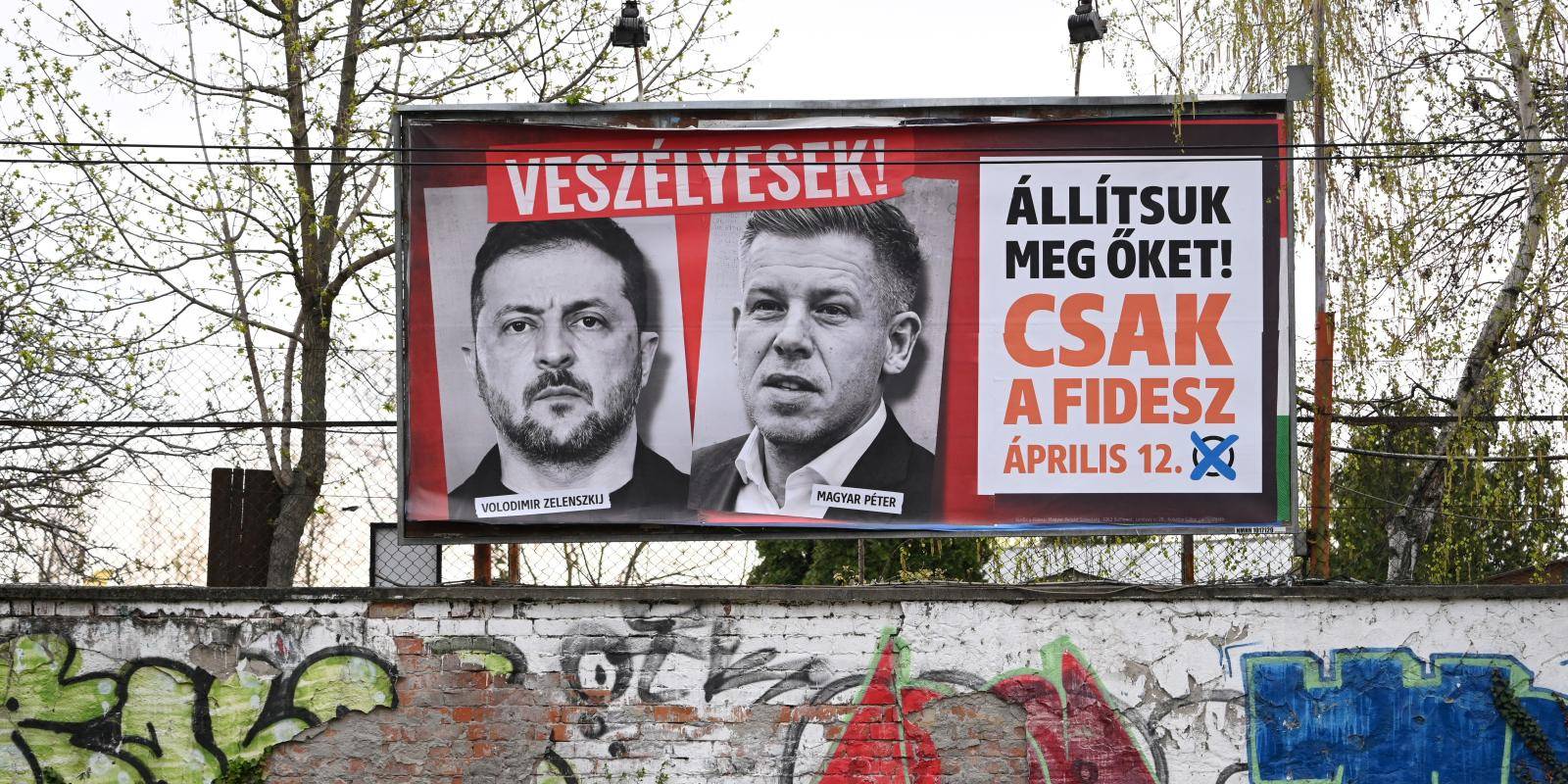

Since Russia’s full-scale invasion of Ukraine in February 2022, Hungary has created the most visible fissure in European Union (EU) support for Kyiv. Former Prime Minister Viktor Orbán dissented early on from the European consensus. And he progressively turned this dissent into political leverage. Budapest slowed sanctions on Russia, contested assistance to Ukraine, obstructed parts of Kyiv’s European path and blurred the moral and strategic line between aggressor and victim.
For Moscow, this mattered. Russia did not need Hungary to become an ally in any formal sense. It only needed an EU and NATO member state to make European unity appear conditional, reversible and transactional. Hungary’s role was therefore never only about Hungarian foreign policy. It was about the credibility of Europe’s collective resolve.
That is why Budapest’s emerging reset with Kyiv under newly elected Péter Magyar is important. Hungary and Ukraine have reached an understanding on a festering dispute over the rights of the Hungarian minority in Transcarpathia.
The agreement removes one of the main obstacles to opening EU accession talks with Ukraine – allowing Kyiv to take the first step on a long road to EU membership. Magyar has also signalled his readiness to meet Volodymyr Zelenskyy, presenting the issue as the beginning of a ‘new chapter’. The phrase may sound diplomatic, but the stakes are more strategic than they sound.
Ukraine’s EU objectives
For Zelenskyy, the benefits are immediate. Ukraine needs air defences, ammunition, financial support and heightened sanctions pressure on Russia – especially since the US–Israel war with Iran boosted oil prices, and Moscow’s energy revenues.
But Kyiv also needs momentum in Brussels. In Zelenskyy’s view, Russia’s wager is not only that it can outgun Ukraine, but that it can wait out its partners. Every EU delay in accession talks, financial support or sanctions enforcement therefore helps Moscow to turn time into strategic advantage.
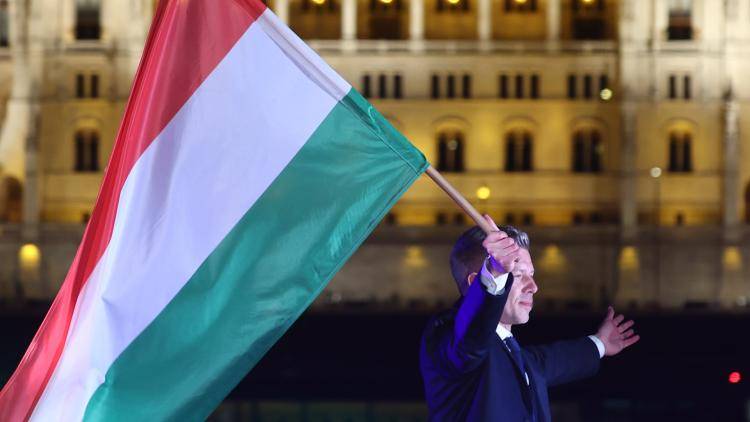
For Magyar, the issue is more delicate. His rise has been built on a promise to end the corruption, isolation and ideological theatre of the Orbán era. But he cannot simply reverse Hungarian policy by decree and expect domestic politics to follow. His government will still not send arms or troops to Ukraine.
The ‘reset’ is not a strategic conversion. It is a shift from obstruction to conditional cooperation. That is why the Transcarpathia issue matters: by conditioning support for Ukraine’s European track on Hungarian language, education and cultural rights, Magyar can tell voters that he is defending national interests more effectively than Orbán did.
That distinction is important. A reset with Kyiv will only be politically sustainable if it is framed as a somewhat elaborate form of Hungarian statecraft. It cannot appear to be capitulation to Brussels. Magyar’s task is to agree a settlement and come out as a statesman Europe can trust. That would be a meaningful change: a careful shift from obstruction to negotiation.
Kyiv has an interest in cooperating. Ukraine’s future in the EU will depend on more than its resistance to Russia. It will also need to demonstrate institutional maturity, even under extreme pressure. Restoring trust with Budapest over minority rights will strengthen the argument that Ukraine can manage difficult questions with regard to the law, and with the application of compromise and political discipline.
Repositioning the enlargement question
Yet the larger question is European. Since 2022, Europe’s support for Ukraine has often been impressive in substance but fragile in method.
It has produced sanctions packages, financial facilities, military assistance and enlargement commitments. But too often it has done so through last-minute bargaining, veto threats and leader-level firefighting. Orbán exploited that weakness. He understood that in a Union built around consensus, a single government can turn obstruction into currency and political gains at home.
A Magyar-led reset will not abolish that structural problem. But it could reduce its most corrosive effects. Ukraine’s accession process would still be long, technical and politically demanding. And Magyar has made clear that Hungary does not support a shortcut to membership. But the question would no longer be how far Hungary operates as Russia’s wedge inside Europe. Instead, it will be whether Hungary can be reincorporated into a more coherent European posture towards Moscow.
Why this is bad news for Moscow
Russia watches Europe’s internal politics very closely. It knows the best and cheapest way to weaken the continent is to convince Europeans that their unity is too expensive, their publics too divided, their institutions too slow and their commitments too tiring.
The Kremlin welcomes all European division over money, sanctions, EU enlargement or military aid to Ukraine. Each dispute supports the Russian strategy that Europe will tire first, divide and settle for less than Ukraine’s survival requires. In that respect EU resolve is as strategically important as ammunition production or air defence.
The Ukraine–Hungary reset should therefore be understood as part of Europe’s wider deterrence posture. A continent that cannot maintain political cohesion around Ukraine invites Russian escalation.
But a continent that can resolve internal disputes, and still sustain pressure on Moscow is harder to intimidate. The point here is fundamental: Europe does not need unanimity without argument – it needs argument without strategic paralysis.
There are risks, of course. Magyar may yet be tempted to use Ukraine policy as leverage in his own negotiations with Brussels over frozen funds, rule-of-law conditions and Hungary’s wider rehabilitation inside the EU. Kyiv may find that implementation of minority commitments becomes a moving target. And European governments may be too eager to declare the Hungarian problem solved. The danger is that Europe mistakes one diplomatic breakthrough for durable alignment.
But the opportunity is real. A serious reset could give Ukraine a clearer path through the next stages of accession talks. It could reduce Moscow’s room for political manipulation and help restore the credibility of Europe’s enlargement promise. It could also show that the post-Orbán transition, if consolidated, is not only a Hungarian domestic story but a strategic moment for European coherence.