


Europe is burning. So are parts of North Africa. After an early summer marked by record-breaking heatwaves closed schools, disrupted transport and claimed thousands of lives, wildfires have swept across Europe and are increasingly affecting parts of North Africa. Devastating blazes prompted Spain to declare a national emergency in the Madrid region. France has invoked help from the EU civil protection mechanism to face its worst fires in two decades.
The UK is also in the grip of a ‘firewave’, with fires affecting landscapes from the Cairngorms to the Suffolk coast, where a major incident forced the evacuation of a holiday park. Nearly half of England is facing an ‘exceptionally serious’ drought, which could severely undermine emergency response against the fires.
These events expose a growing gap in climate policy. Most governments continue to focus – rightly – on reducing emissions. But they are only beginning to grapple with a second challenge of ‘adaptation’: that is, how to make their societies resilient in the face of unavoidable climate impacts.
If this summer marks anything, it should be the moment that adaptation moves from the margins of environmental policy to the centre of economic planning and foreign policy.
A different phase of climate politics
Recurring heatwaves this summer demonstrate that even if every country dramatically accelerated decarbonization tomorrow, societies would still need to prepare for climatic changes that are locked into the system. The effects of these changes are becoming increasingly difficult to ignore.
Recent research suggests that the number of people exposed to extreme heat globally could double by 2050. Food supply shocks are increasingly common, as changing rainfall patterns, droughts and wildfires disrupt international agricultural production.
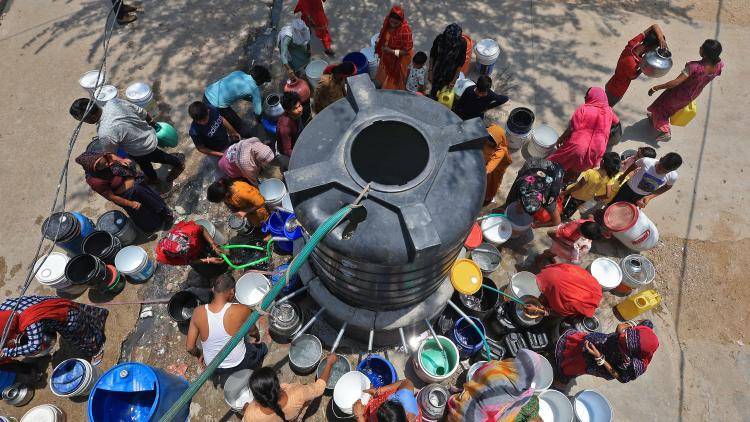
Water scarcity is another growing challenge. That includes in the UK: experts estimate that river flows in England could decline by up to 30 per cent compared with pre-industrial levels.
Meanwhile, the UK’s latest Climate Change Risk Assessment identifies a strong link between drought and wildfire risk, reinforcing the IPCC’s conclusion that climate change is increasing incidences of fire weather in many regions.
The question is therefore no longer whether climate change will affect economies. It already is. The question is, can governments adapt quickly enough?
For the new UK government, that means moving adaptation out of strategy documents and into delivery. Britain has made progress in assessing climate risks, but implementation has lagged, particularly on addressing issues like overheating, water resilience and wildfire preparedness.
Adaptation is economic policy
The new government needs to treat climate adaptation as economic policy, rather than a narrow environmental concern. Flood defences, emergency response and ecosystem protection remain essential ways to prepare for extreme weather. But they are only part of the solution.
In the UK, as elsewhere, adaptation requires a broader approach to land management. That includes measures like restoring peatland – to retain moisture and make soils less susceptible to drying and burning; better managing vegetation in high-risk areas; and improving coordination between landowners, fire services and local authorities.
Urban resilience also needs greater attention, as cities face greater amplification of heat compared to rural areas. Adapting to these conditions requires more green space, expanded tree cover and heat-resilient design of buildings and infrastructure to protect public health.
Many of these measures are well understood. The challenge is to embed adaptation into decisions on transport, energy, housing and water infrastructure from the outset – built into Treasury and public investment frameworks rather than added as an afterthought. The costs involved are significant. But the price of inaction is likely to be far greater.
Adaptation must become a principal test of public investment. It must inform the big incoming decisions, including on how to deliver expansion of the sovereign AI initiative and provide for an uptake of cooling solutions – particularly in schools, care homes and hospitals.
Momentum must be sustained by the knowledge that inactivity could threaten the UK’s societal resilience. As energy demand rises, so does the scale of impact in case of heat-related disruption. Infrastructure systems such as telecommunications and transport will increasingly be affected by extreme temperatures and carry potential knock-on risks to trade.
At the same time, parts of the UK may also become difficult to insure, prompting financial institutions to reassess how they account for climate risk across investments, insurance and lending. The UK must prepare and plan for this new reality.
From national ambition to international leadership
But adaptation policy cannot stop at Britain’s borders. A world that is more resilient to climate change will be a more stable world.
Many governments, from the Netherlands to Japan, understand this, and are beginning to integrate adaptation policy into economic planning and national security. So too is the EU. The UK should help accelerate this broader shift.
It should also apply pressure where progress remains uneven or is falling away. Some major donors, for example, are scaling back their ambitions under political and fiscal pressure: the World Bank has dropped its target of directing 45 per cent of its financing towards climate-related objectives.
The UK has signalled its intention to place climate at the centre of its foreign policy, and is already beginning to use diplomatic partnerships to address shared climate risks, including through recent joint statements with France and Spain on the growing threat of wildfires.
And it is well positioned to drive this broader shift through practical leadership in areas where it already has expertise and influence. Building on this approach, the UK can drive a broader shift through practical leadership in areas where it already has expertise and influence. Three priorities should stand out for new foreign secretary, Ed Miliband.
First, the UK should champion finance for adaptation ahead of this year’s COP31 climate conference. It can do so by supporting delivery of the New Collective Quantified Goal on Climate Finance agreed at COP29. That means using its diplomatic influence – for example through the G7, Commonwealth and bilateral relationships with other major donor countries – to build support for ambitious adaptation finance commitments and ensure they are translated into delivery.
Second, it should make water diplomacy a core element of its bilateral and multilateral engagement by building on initiatives such as its Just Transitions for Water Security Programme. And through multilateral processes such as the UN Water Conference, the UK can advance cooperation on water security while integrating resilience into trade, investment, technology and innovation partnerships.
Third, the government should act on the findings of its National security assessment on global ecosystems. So far this has had little visible impact on policy. But championing reforestation, ecosystem restoration and nature-positive growth will strengthen climate resilience while supporting public health and economic prosperity.
From net zero to climate resilience
The UK has rightly sought to lead by example on emissions reduction. But leadership in the coming decade will also be judged by how well it adapts to a warmer world, while helping others do the same.
Europe’s summer of fire should be a stark reminder that adaptation must move from the sidelines to the centre of government. For Andy Burnham’s new government, that means embedding resilience to extreme weather into its economic policy at home – and making it a defining pillar of its foreign policy too. Planning to live with the effects of climate change is no longer simply environmental policy: it is economic strategy, national security and diplomacy rolled into one.