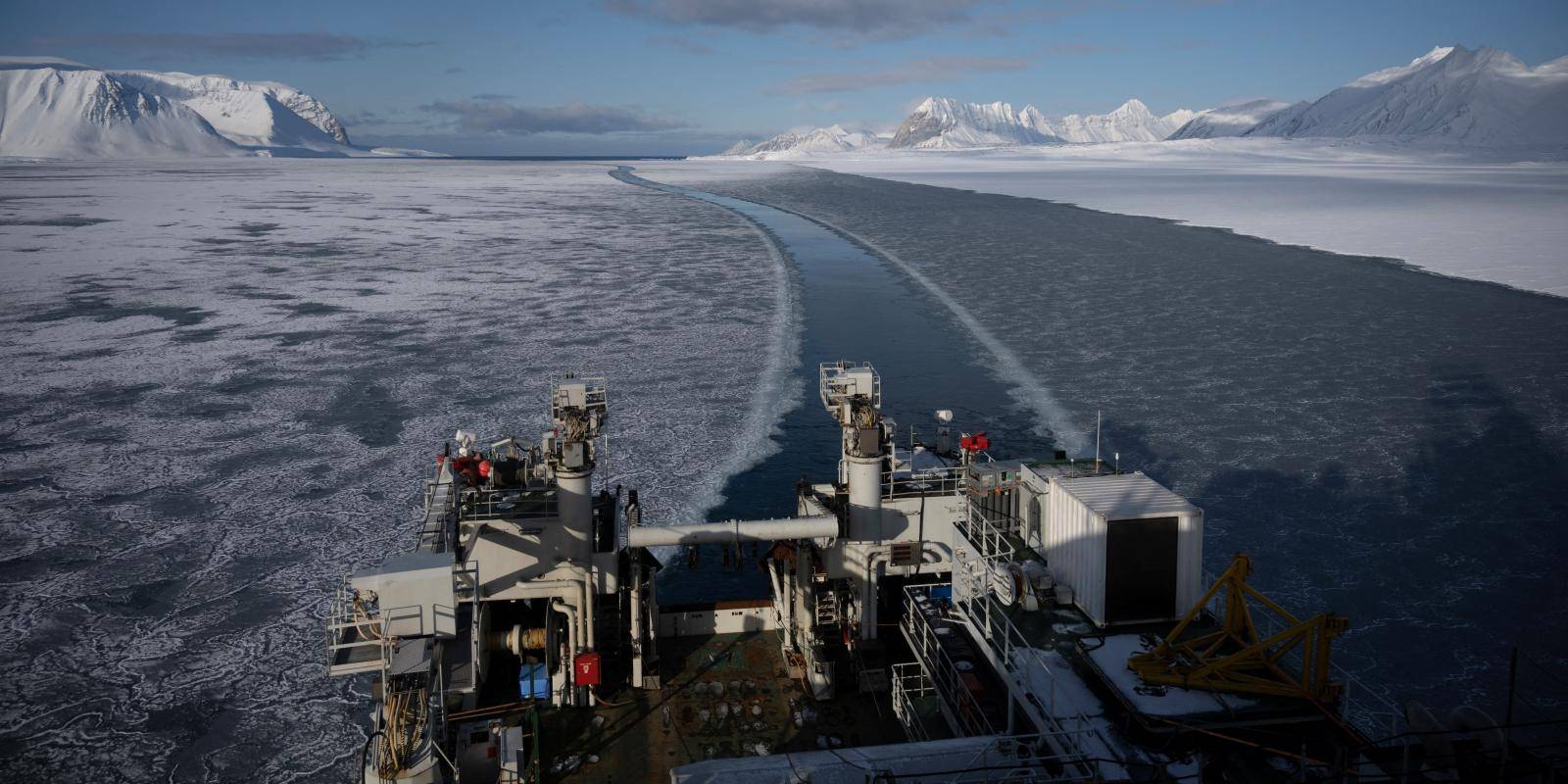


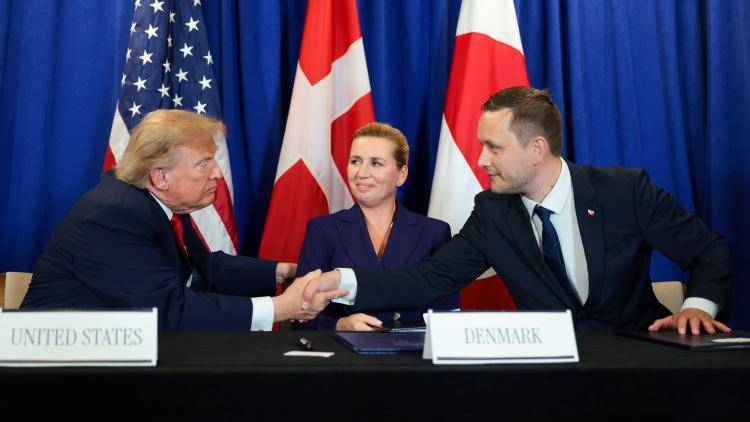
September’s security agreement between the United States, Greenland and Denmark has, for the time being, lowered the political temperature in the High North following months of tension over US ambitions towards Greenland. But the Arctic is being reshaped by multiple converging factors.
Accelerating climate change and ecosystem degradation are intersecting with geopolitical tensions, military activity, and competition for resources to make the region increasingly important. Arctic sea lanes, long considered unviable, are drawing interest following disruption in the Strait of Hormuz and Red Sea – though they are still not reliably ice-free.
In response, the UK published its updated Arctic Policy Framework on 15 October, swiftly followed by the EU’s own updated strategy for the Arctic ‘Europe’s Northern Neighbourhood’ on 20 October.
Both documents make important moves on enhancing military preparedness in the region. But alongside strategies for securing an Arctic that is melting, greater efforts are needed to keep it frozen.
From ‘low tensions’ to hard security
There are differences between the UK and EU strategies: The UK’s framework declares that the ‘High North, Low Tension’ policy followed by Arctic countries for 30 years is effectively over and adopts a NATO-first approach, based on deterrence and warfighting readiness. The EU’s strategy prioritizes maritime surveillance, military mobility and protection of subsea infrastructure, creating ‘dual-use and multi-purpose capabilities’ – placing the Arctic into the broader agenda of EU ‘Strategic Autonomy’.
But both strategies recognize the importance of the Arctic for security, and the need to respond to a greater Russian and Chinese presence in the region.
The threat is real. Over the last decade, Russia has established a new Arctic command and new Arctic military bases. Russia also has a long history of conducting military and intelligence operations under the cover of its Arctic and maritime research outfits. And communication lines between NATO and Russian forces in the region have effectively collapsed since Russia’s 2022 full-scale invasion of Ukraine.
China, meanwhile, claims to be a near Arctic state, and has shared plans for a new class of container ships, developed with Russia, to navigate the Northern Sea Route, which skirts Russia’s coast. Fears that this route may become a new trade chokepoint are probably overblown, while volumes are so low. But Moscow and Beijing are increasing military cooperation in the Arctic, for instance through joint air and sea patrols.
NATO activities have intensified in return. Sweden and Finland have joined the alliance, increasing the number of member-states with Arctic territory. And over the last decade, the UK has expanded its cooperation with Nordic NATO members, through the Joint Expeditionary Force established in 2014, increased training alongside Norwegian armed forces, and a joint frigate procurement programme with Oslo announced in 2025. In January, the Royal Marines deployment to Norway was expanded to a year-round commitment.
The new UK Arctic Strategy focuses on further strengthening deterrence and interoperability with NATO partners and commits to doubling the number of British troops training in Norway to 2,000 by 2029.
That signals a significant shift in the UK’s attention to Northern Europe. And it places the UK’s Arctic military activities in the context of its greater presence in the ‘Wider North’, building on long-standing commitments to air policing over Iceland, maritime patrols and under-ice submarine deployments, and recent NATO initiatives like Arctic and Baltic Sentry. It also emphasizes the UK’s reorientation to Europe in the 2025 Strategic Defence Review.
Both strategies also highlight the need for good governance. But this will likely be a struggle. The Arctic Council, a post-Cold War governance initiative that convenes all states and indigenous communities in Arctic territory, worked reasonably well for most of the post-1991 period. But Russia was excluded from the Council following its invasion of Ukraine in 2022, creating another international forum undermined by the war.
Climate change remains central challenge for Arctic security
Both the UK and EU strategies recognize climate change as a central challenge in the Arctic. They link the urgency of tackling the climate crisis to achieving net zero and emphasize the need to better understand climate tipping points.

However, the strategies could be more explicit about what crossing these tipping points could mean for the UK and Europe – particularly the increasing likelihood of Greenland ice sheet collapse and further weakening of the Atlantic Meridional Overturning Circulation (AMOC). That would pose a severe threat and cascading pressures to Europe’s food security, infrastructure, public finances and resilience. This threat makes protecting the Arctic from climate change a core European security interest.
The UK and EU strategies also need to draw stronger connections between Arctic climate research, domestic preparedness and international leadership on climate mitigation to help advance solutions and practical protection against these risks.
Halting global warming and preserving Arctic ice should be recognized as essential parts of a security strategy. Stronger climate action today could reduce, or even prevent, some of the geopolitical tensions and security risks associated with a warming Arctic. A rapidly melting Arctic increases the risk of new maritime disputes, conflicts over critical minerals, more pollution from shipping, environmental damage from new infrastructure development and uncontrolled extractive industrial activity.
Both updated strategies face unresolved policy tensions between protecting the region from climate impacts, pursuing new economic opportunities and expanding the European security presence.
For instance, increasing exploration for resources – as both strategies advocate – could mean creating significant new infrastructure to extract and export. That risks increasing emissions and heaping further pressure on the Arctic’s fragile ecosystems.
Meanwhile, constructing new dual-use infrastructure, as proposed by the EU strategy, may support civilian services, scientific research and emergency preparedness. But its military functions could fuel securitization of the Arctic.
On critical minerals, the UK’s strategy makes clear it will not sponsor or support the issuance of deep-sea mining exploitation contracts that conflict with the International Seabed Authority’s Mining Code, which regulates prospecting, exploration and exploitation of marine minerals. This is an important message, because it affirms that competition for critical minerals must remain subject to multilateral governance and international rules.
Success depends on strong Arctic partnerships
For their strategies to succeed, the UK and EU will need to deepen cooperation with Arctic states and communities, building on their generally welcomed security roles and the significant contribution of UK science to Arctic climate research. At the same time, the UK and EU need to remain sensitive to growing apprehension in the region about the motivations of non-Arctic actors.
Despite geopolitical tensions, there have been positive developments in Arctic governance. Greenland’s prominent role in negotiating the recent US security agreement signals a shift towards greater agency in decisions historically dominated by external powers.
The UK and EU should support this shift by strengthening indigenous participation in decisions affecting Arctic security and economic development, through institutions such as the Inuit Circumpolar Council and Saami Council. That will advance an approach to Arctic security that encompasses climate, food, health, livelihoods and cultural continuity alongside military concerns.
More comprehensive Arctic strategies are clearly needed. And the updated strategies largely make sense. Yet, managing the trade-offs between defence, economic development, climate protection and indigenous rights requires careful policy design, clearer priorities and meaningful engagement with Arctic communities.
Finally, the US will remain central to Arctic security. That makes sustained transatlantic engagement essential. Europe has demonstrated that, when united and working in cooperation with Canada, they can influence US policy towards the Arctic. Building on that collective strength can help ensure that future cooperation strengthens security across all dimensions.