
China has made no secret of its AI ambitions. Back in 2017, its Next Generation Artificial Intelligence Development Plan set out its goal of becoming the ‘world’s primary AI innovation centre’ by 2030.
Now, Beijing is fleshing out a crucial dimension to the plan. Backed by the technological excellence of the latest Chinese models, China is articulating a vision for what principles should underpin how AI works and how it should be governed globally.
But without the impressive AI models that have gained a broad following around the world, Beijing’s overtures to lead AI governance would lack traction. The symbiosis between its development of frontier AI models and Beijing’s governance push was on display in the run up to the launch of the World Artificial Intelligence Cooperation Organization (WAICO) in Shanghai last month.
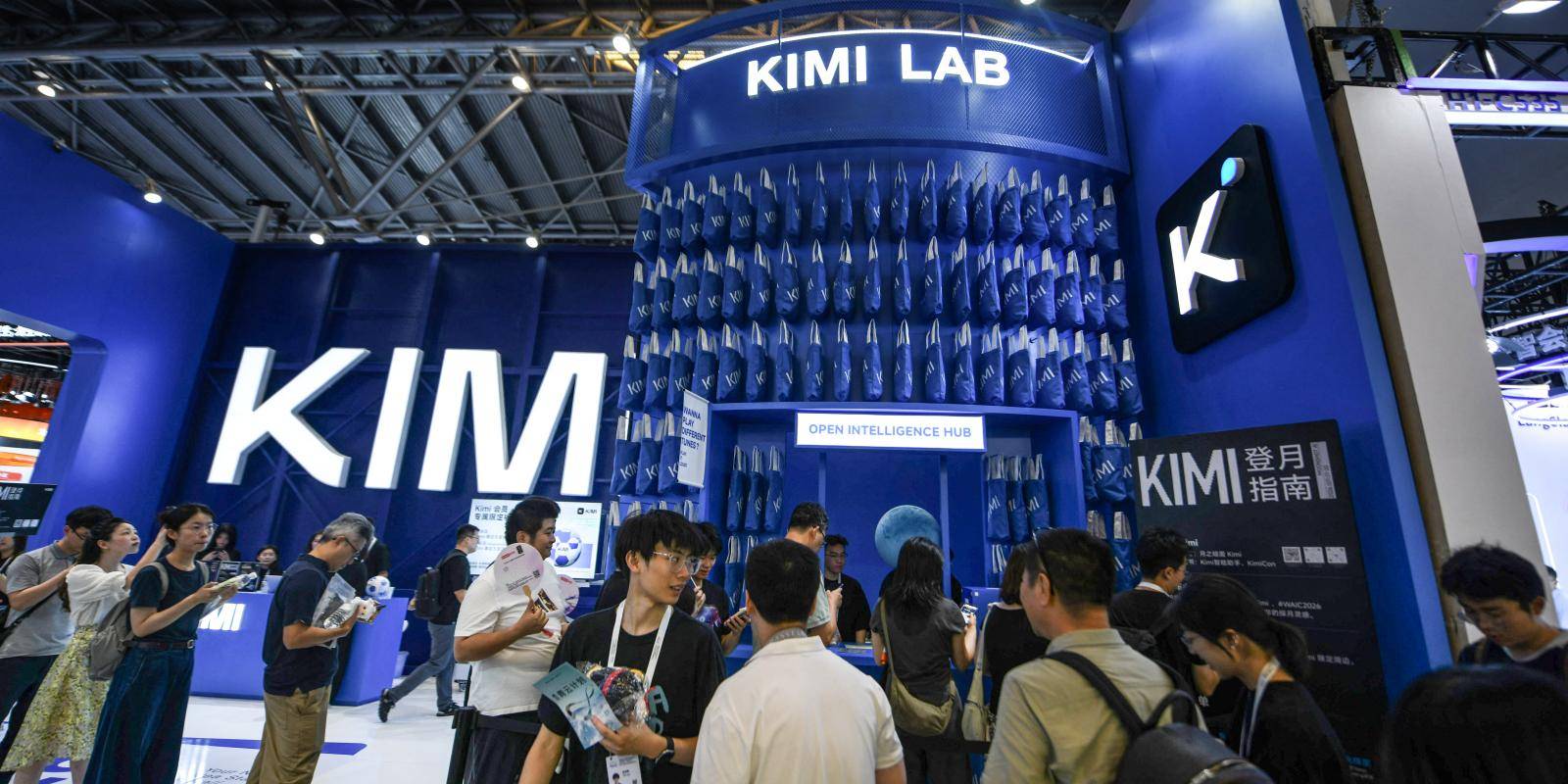
Just before the conference opened, Moonshot AI’s Kimi K3 – a powerful Large Language Model (LLM) with 2.8 trillion parameters – was launched. The model is open weight, meaning that it can be downloaded and modified by users to serve their specific purposes. This makes a contrast with LLMs owned by US companies like OpenAI, Google and Anthropic, which are closed weight – meaning they cannot be downloaded and modified.
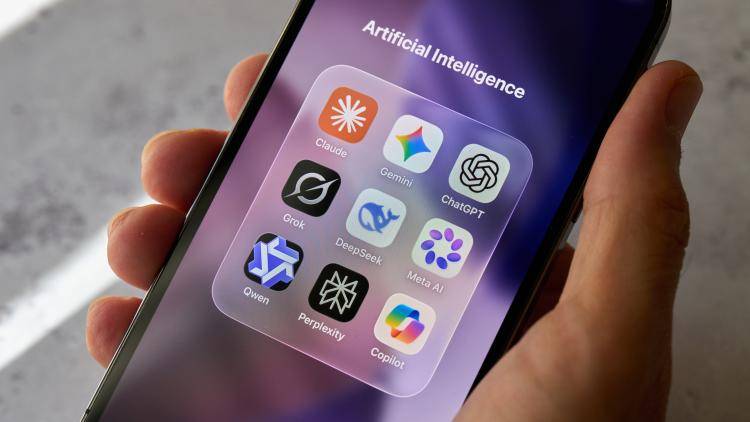
Kimi K3 is currently ranked in the top three on the Vals Index after two Claude LLMs, taking the Chinese model to the forefront of global AI tech. For potential users around the world, this is an attractive offer. The Chinese model provides cutting-edge performance with an open-weight format – and can be operated much more cheaply (per million output tokens) than the leading US models.
Such structural advantages underpin China’s AI diplomacy as well as its bid to be a rule-setter by creating institutions such as WAICO. The overtures that China made at the conference in Shanghai leave no doubt that its strategy is to woo the countries of the Global South and use their agency to help set the norms and rules that govern AI internationally.
Indeed, all 29 founding members of WAICO are countries of the Global South, including Indonesia, Brazil, Malaysia, South Africa, Senegal, Russia and Pakistan. Beijing has plans to vastly expand WAICO’s membership, mostly through further additions from the Global South, according to a private conversation with a Chinese official.
In his speech to announce WAICO, China’s President Xi Jinping promised to ‘help Global South countries with capacity building to bridge the AI and digital divides’ and ‘prevent creating new historical injustice in AI’. His statements build on principles established by China’s Global AI Governance Action Plan, published last year, which include supporting the Global South and assisting them in ‘truly accessing and utilizing AI’.
China has outlined plans to provide some 5,000 training opportunities through cooperation centres in forums that are either led by China or has China as a key member, including ASEAN (Association of Southeast Asian Nations), the African Union, the Shanghai Cooperation Organization and BRICS.
Another feature of China’s vision for global AI governance is that it should remain under human control, resisting a version of AGI – artificial general intelligence – in which AI models train themselves autonomously and create a super intelligent system that is beyond human control. Human control in China’s context effectively means under the control of key Communist party bodies such as the Cyberspace Administration of China. In his WAICO speech, Xi said that laws, regulations, technological monitoring and emergency response systems should be put in place to strengthen security.
But although the combination of China’s latest AI models and its governance vision create a potent offering to countries around the world, there are challenges on the horizon.
One concern is Beijing’s moves to potentially limit the transfer overseas of key data for the training of Chinese LLM models, according to the Financial Times. Discussions have reportedly been held by Chinese government agencies with Alibaba, ByteDance and Zhipu on whether to allow their AI model weights to be downloaded by foreign users. Such restrictions would reduce the appeal of Chinese LLMs, potentially undercutting their global popularity.
Another key challenge for Beijing revolves around the vexed question of AI’s capacity to take people’s jobs. With some 320 million people working in China’s ‘gig economy’ – without worker’s rights protection and social welfare provisions – the issue of under-employment is already a sensitive topic in China. Without comprehensive national policies to offset AI-induced job losses, this could prove to be a blind spot for Beijing.
The bigger picture, though, concerns whether China or the US has a better strategy to win the AI race. This so far is hard to judge because in several key respects, the two superpowers are running very different races.
China is popularizing open-weight or open-source models that are computationally efficient and either free or inexpensive to download and use. And it is proving to be a very successful strategy: the suite of Qwen models from Alibaba have racked up nearly one billion cumulative downloads, according to the South China Morning Post. This international footprint helps reinforce China’s bid to lead a process – through WAICO – of drafting rules and setting norms for AI’s usage internationally.
The US, by contrast, is relying on closed, proprietary models that do not allow users to download the LLM’s code or change its underlying weights, thereby preventing customization by users. One reason for this approach is to maintain a high level of security as US labs such as OpenAI and Anthropic pursue AGI. Another reason behind the closed, high-security approach to AI is the technology’s importance for the US military. But things could be changing. Meta CEO Mark Zuckerberg has called for lower US barriers for open-source AI to compete with Chinese models. Nvidia, one of the world’s most valuable companies, has launched the open-source and open-weight Nemotron 3.5, breaking the US pattern.
In truth, the US–China AI race is still in its early stages. And so far, the two superpowers are competing on very different terms.