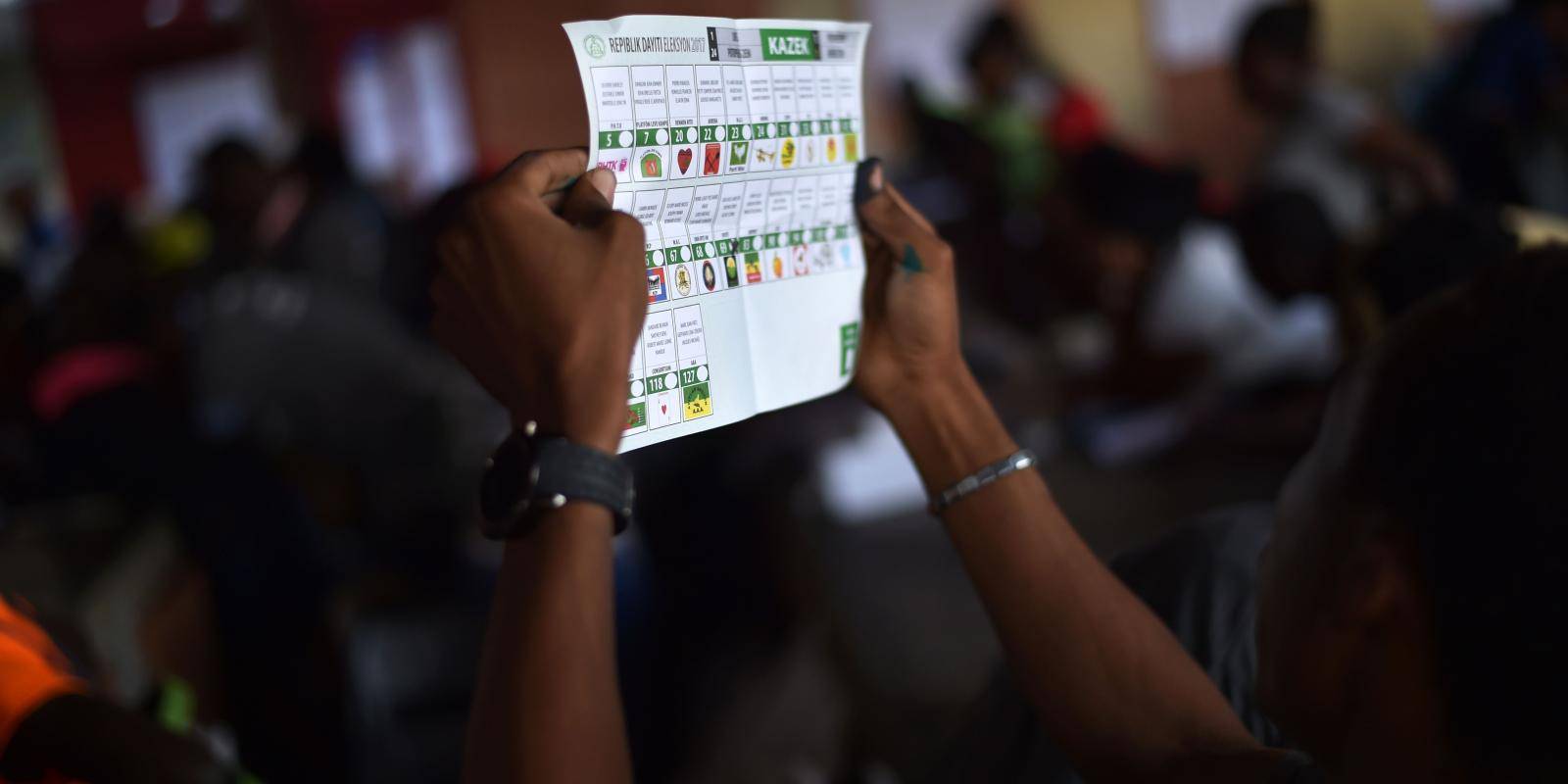
The CEP’s likely postponement of the December elections following the changes to the campaign period is an acknowledgment that the gap between the electoral timetable announced in July and the conditions required for a credible and secure national vote was too large. While postponement would provide additional preparation time, the underlying problems could remain unresolved.
According to the Chatham House/Q-Q 2026 survey, more than 75 per cent of Haitians have little-to-no trust in their political class. That number increases to 82 per cent among Haitians between the ages of 18 and 29 – most of whom have never cast a ballot given the 10-year lapse since elections were last held.
To hold credible, safe elections and limit the influence of gangs on the process, there will need to be secure transportation routes and protection both for candidates as they travel to campaign and for voters as they register to vote and cast their ballot. Despite some advances in arresting gang members, the Haitian National Police (PNH) and the international Gang Suppression Force (GSF) have yet to retake territory under direct or indirect gang control. Logistical and material delays have slowed the deployment on-the-ground of GSF troops.
There are also issues with voter registration. Insecurity, a lack of voter education around the process and the absence of clarity over some of the offices and candidates involved all have an effect. Since the CEP started the voter registration process, the daily count has slowed. As a result, the CEP is not on track to meet its own target of registering between 3 to 4 million voters before the election date. The electoral body’s records show that only 812,548 voters had been registered by 13 October – just 12 per cent of a potential 6.6 million eligible voters.
Preparations for registering candidates and voters are advancing, as are plans for managing and organizing voting centres, and for the transmission and tabulation of votes. But doubts remain. Concerns have been raised over coordination and the potential for fraud (or the perception of it) following a proposal to decentralize the voter tabulation process. This revised process would represent a big change from past elections, when a single central location tallied all votes from across the country.
Plans for the Haitian diaspora of voting age to participate create another set of logistical and political decisions to be made. Principal among these decisions is where to set up voting centres abroad. With the diaspora being dispersed widely from Canada to Chile, the US to France, not all communities of Haitians living abroad will be able to vote under a pilot effort like that proposed, meaning that diaspora vote totals will unavoidably be skewed.
The CEP is also short of the time and institutional capacity needed to vet candidates thoroughly for possible ties to illicit groups or criminal activity, aside from those individuals already sanctioned by the UN Security Council.
Finally, the 13 December presidential and parliamentary elections are due to be accompanied by a popular vote on constitutional reforms. Despite this, there is no detailed presentation of what precisely those reforms are and the expected process of public and popular consultation on the merits and risks of those reforms is yet to start.