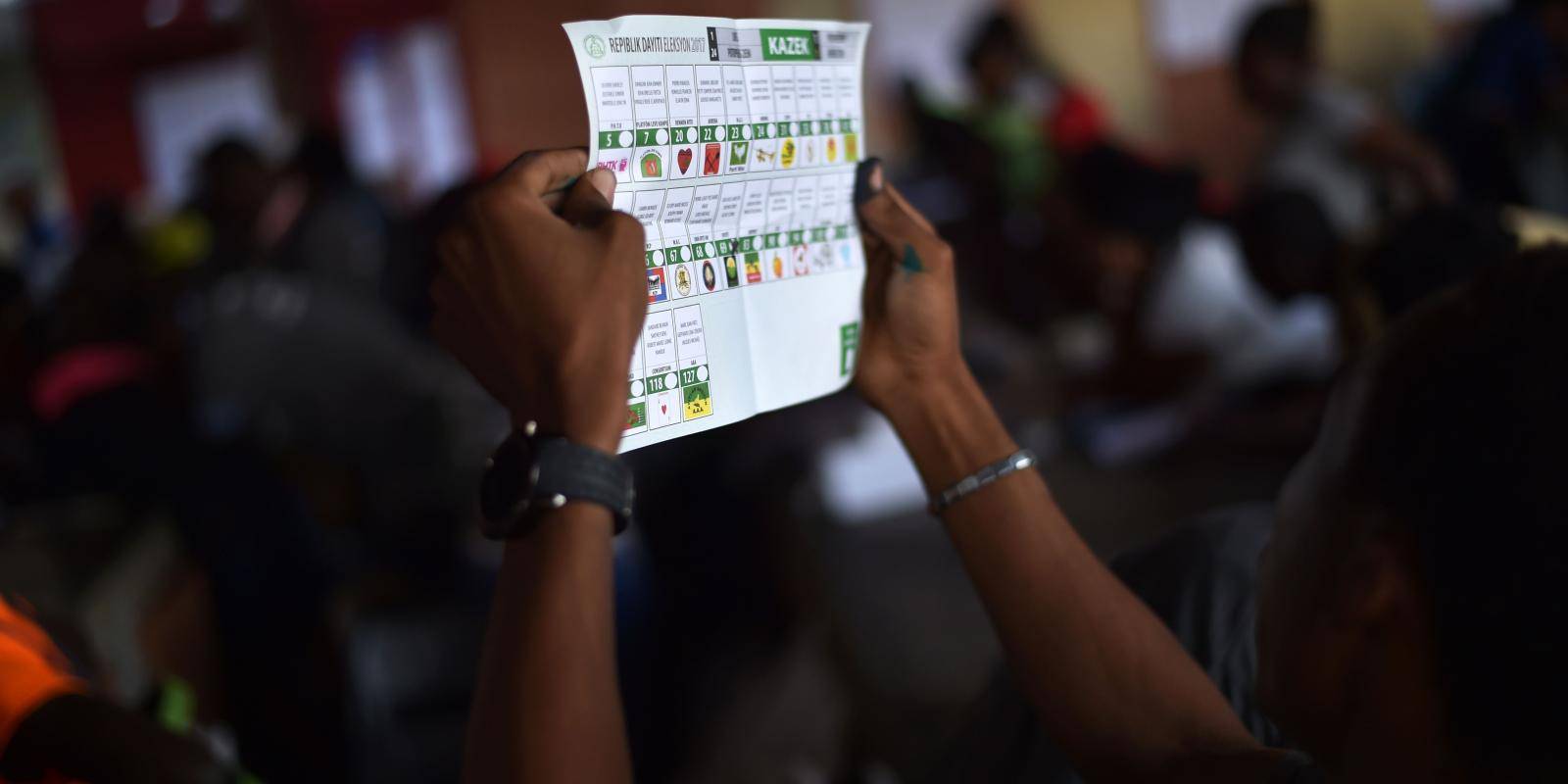
Haiti and its people have already started to prepare for elections. Their work will provide an important foundation for continued preparations whenever those elections are held. A postponement should not interrupt any preparations already undertaken. Instead, the additional time should be used to establish a framework of realistic timelines, measurable benchmarks and targets – accompanied by clear public communication.
International partners such as the UN Integrated Office in Haiti (BINUH), the UN Development Programme (UNDP) and the Organization of American States, as well as foreign embassies, should continue supporting existing electoral preparations while working with Haitian authorities, political leaders, civil society and election experts to establish a detailed framework for a revised timetable. Their role should be to assist – but not lead – a Haitian-owned process.
An example of such assistance could be an external pre-election assessment mission before the end of 2026. A group of international multilateral organizations and election experts would travel to Haiti meet with political and civic leaders to produce a public report on pre-electoral conditions and needs. Such an effort could help Haitian authorities as they wrestle with the design decisions noted above and competing demands.
The priorities should be to:
Develop a framework of electoral processes and benchmarks for progress towards agreed targets
The CEP and the Haitian government (with technical support from international partners) should work together to develop a framework of processes and sectors to prioritize. Those frameworks could include a timeline, specific metrics and realistic goals grouped around themes (and sub-themes). The following themes and actions are recommended:
- Participation. Continue to measure total numbers of voters enrolled over time; track the representativeness of voter rolls (based on Haitians with ONI ID cards); run voter education campaigns; and determine both interim and final threshold targets for progress.
- Institutional effectiveness and responsiveness. Agree on clear and objectively enforced candidate eligibility rules and processes; draw up detailed plans for the organization and operation of the polls and the tabulation of votes; and ensure database and software security for the CEP.
- Constitutional clarity. Identify specific constitutional reforms to be voted on alongside the presidential and parliamentary elections; conduct public education campaigns and continue popular consultations on the proposed reforms; and determine how those reforms will be presented on ballots.
- Voter and candidate security. Devise operational plans for the PNH and other forces to secure the electoral process; coordinate with the GSF as it reaches the full deployment; and determine areas of the country in which to prioritize security ahead of the elections.
Align security support with electoral access
Haitians and international donors should agree on a method to objectively measure improvements in security. One of the main points of focus should be securing Haiti’s electoral logistics. The GSF, Haitian security authorities and international partners should incorporate electoral access into their operational planning, while preserving each other’s roles and responsibilities.
Priority should be given in security planning to communes, transport corridors and population centres where insecurity is preventing voter registration, constraining candidates’ ability to campaign or blocking access to polling sites. Particular attention should be paid to the Artibonite, Centre and Ouest departments, where insecurity affects a significant share of the electorate.
Any security gains, however incremental, must translate into broader and more equitable political participation.
Sustain international engagement across the full electoral cycle
International financing for the elections should be structured around the electoral process as a whole, not a single voting date. Support will be required for multiple elements of the process, including voter registration and education; public consultations and informational campaigns on constitutional reform; election administration; observation; vote tabulation; dispute resolution; a possible second round of voting; and, if necessary, adjustments to the electoral timetable. The UNDP’s Electoral Basket Fund provides an established mechanism for coordinating such assistance.
To help keep the process on track and reassure Haitian citizens, international donors will need also to coordinate over and send clear signals of potential costs for failing to meet agreed timelines and goals.
Prepare mechanisms for dispute management and electoral contingency
Haitian authorities and international partners should anticipate disputes over candidacies, voter registration, constitutional questions, vote tabulation or the final results. They should therefore strengthen the mechanisms available to address such disputes before political tensions escalate. Domestic observation should be reinforced and complemented by sustained international monitoring across the electoral cycle.
These mechanisms are to support, and not substitute for, formal Haitian electoral and judicial processes and authorities. The value of such mechanisms lies in offering avenues for de-escalation and an independent evidentiary basis against which possible election violations such as vote fraud, large spending of unaccounted funds for campaigns and voter intimidation can be assessed.
The same principle should apply to any possibility of delay. Haitian authorities and international partners should prepare to coordinate and agree on potential scenarios. The priorities will be maintaining the momentum of the work done so far towards securing the credibility of the upcoming elections, and ensuring the predictability of the elections that will follow in future years. Public confidence in the process must also be built. This goal can be achieved by setting clear timelines and benchmarks and communicating them clearly, along with education campaigns on how, why and where to vote.
Future work should ensure that the electoral calendar remains tied to demonstrable progress towards a credible, secure process – one that Haitians can participate in freely, institutions can administer objectively, and all political actors can accept.