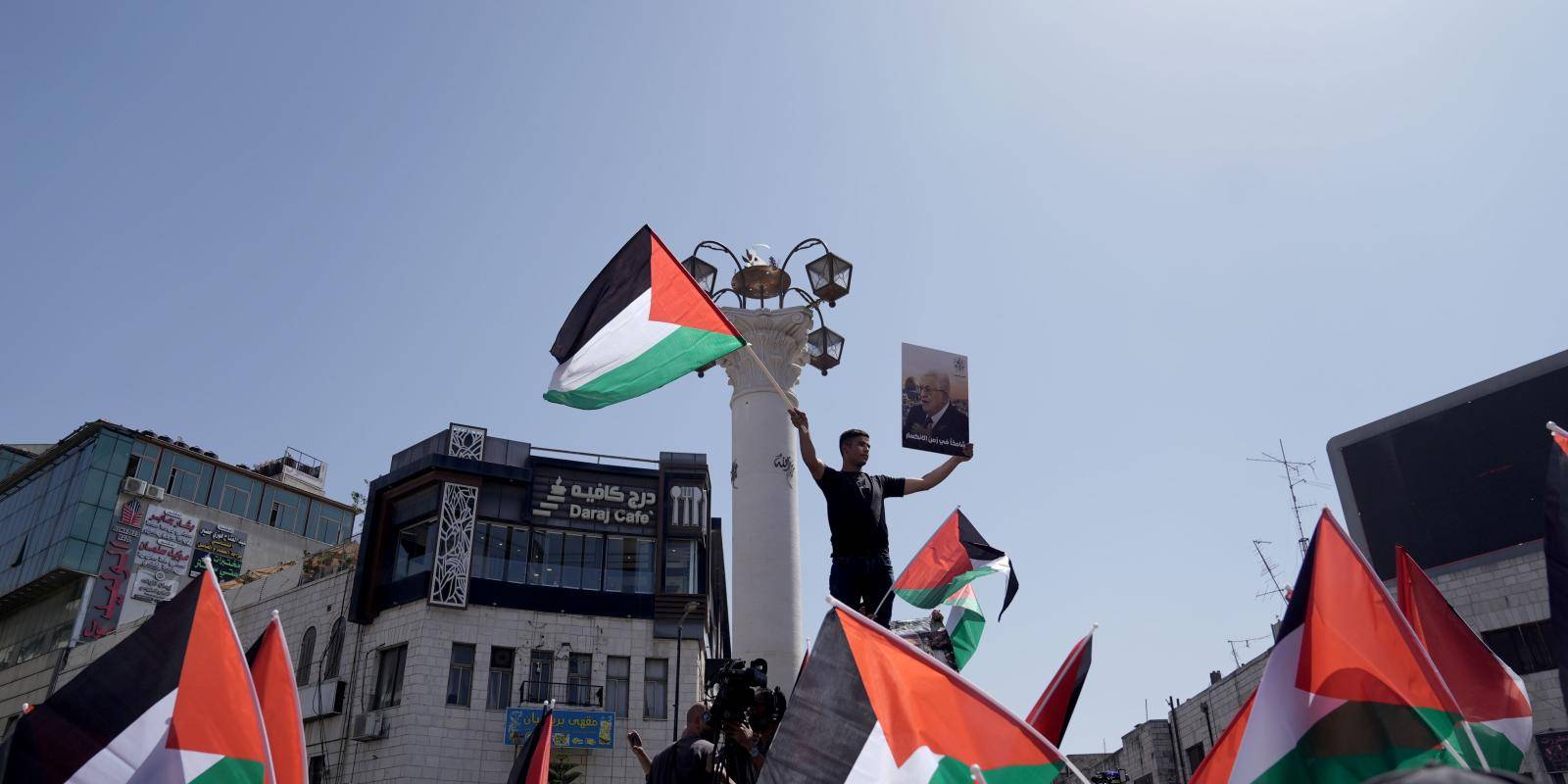
Regional and international actors remain important stakeholders in Palestinian reform and governance. Their contribution will matter most if it supports institutional development, safeguards national unity and advances a credible pathway to statehood.
The prospects for Palestinian leadership reform are closely linked to the actions of regional and international actors that continue to influence the political, financial and institutional context. Arab states, the US, the EU and the UK broadly agree on the need for a reformed PA capable of governing both Gaza and the West Bank, but differ over political inclusion, reform priorities and the conditions attached to support. These differences matter because external engagement can strengthen Palestinian ownership and institutional coherence or reinforce competing expectations that constrain both. Saudi Arabia, Jordan, Egypt, Qatar and the UAE have publicly stated their view that the PA remains the only acceptable institutional vehicle for Palestinian governance and statehood. In 2025, a UAE official told Reuters, ‘The UAE will not participate in any plan that fails to include significant reform of the Palestinian Authority, its empowerment, and the establishment of a credible roadmap toward a Palestinian state … These elements – which are currently lacking – are essential for the success of any post-Gaza plan.’
All five regional countries see leadership renewal, improved governance and greater administrative credibility as necessary conditions for any post-war political arrangement.
Their reform priorities converge on financial transparency, streamlined decision-making and a single chain of authority capable of governing both the West Bank and Gaza. Future political and financial engagement is therefore tied to the PA’s ability to exercise authority and demonstrate effective governance, with reconstruction, donor confidence and international support conditioned on visible change rather than rhetorical commitment.
The Arab League Bahrain Declaration (May 2024) states that, ‘Security remains a solely Palestinian responsibility, managed by legitimate institutions of Palestine under the rule of law, with full international support.’
The clearest point of divergence on how these outcomes should be achieved relates to Hamas and the future structure of power within a reformed system. Saudi Arabia, Egypt, Jordan and the UAE prioritize the exclusion of armed factions and the restoration of a clear monopoly of force, while allowing for varying degrees of Hamas’s future political role once it has disarmed. Qatar adopts a different approach, advocating political inclusion as a route to stability and arguing that Hamas should be incorporated into a unified political framework rather than being sidelined.
The future of Hamas hinges largely on progress in implementing UNSCR 2803, disarmament and the transfer of governance authority to the NCAG. Any attempt to provide Hamas with a political role would require it to renounce armed struggle, accept a two-state framework and contest Palestinian elections as a political party.
Meanwhile, no formal efforts to advance reconciliation among Palestinian factions have taken place since the Beijing Declaration of July 2024, which remains unimplemented.
UK, EU and US expectations
The UK, EU and US share a broad consensus that reviving Palestinian leadership requires demonstrable reform rather than declaratory commitments. All three actors place emphasis on improved governance capacity, financial transparency and institutional credibility as conditions for sustained engagement. Their approaches stress the need for a single governing authority capable of administering both Gaza and the West Bank, with security reform viewed as indispensable to political recovery.
Reform of education, oversight of public spending and the restructuring of prisoner and detainee payment schemes are also shared priorities, based on a common view that legitimacy, donor confidence and stability are closely connected. In different ways, all three frame reform as a prerequisite for restoring international support and maintaining the prospect of Palestinian statehood.
Palestinians interviewed for this research paper, including a former senior official, drew a clear distinction between the reform agenda promoted by international actors and the primary Palestinian issues. Many argued that externally driven reform efforts remain heavily focused on Israel’s security concerns, welfare provision and educational content, while giving insufficient attention to broader Palestinian priorities.
Interviewees stressed the need for democratic reforms that promote inclusive political participation and enable Palestinians to exercise their right to self-determination.
Options for international actors
International actors face an urgent and overarching responsibility that cuts across all recommendations in this paper: bringing to a halt the accelerating annexation of Palestinian land. A coordinated effort is required to address what amounts to an existential threat to the viability of a two-state solution. This requires sustained diplomatic pressure on Israel, coordinated positions on settlements and territorial integrity, and a clear signal that annexation carries meaningful political and economic consequences. Without action, the reform, reconstruction and governance measures outlined below will be overtaken by developments on the ground that render Palestinian statehood structurally unviable regardless of institutional progress. Within that context, the recently announced UK sanctions on Israeli settlements in the occupied West Bank, supported by France and Canada, are a significant development.
Reform framework and conditionality
The international community bears collective responsibility for ensuring that the reform process is credibly designed, equitably governed and genuinely linked to Palestinian statehood, and that it does not become a mechanism for indefinite delay or external control. The design of the reform agenda matters as much as its content. International actors should ensure that there is one clear, consolidated set of reforms, rather than a diffuse set of overlapping frameworks.
The Trump plan’s reference to a ‘reform programme as outlined in various proposals, including President Trump’s peace plan in 2020 and the Saudi-French Proposal’ is broad and would need to be further clarified and narrowed down to concrete reform agenda items that are time-bound, aligned with the Palestinian national agenda and attached to clear achievable benchmarks. A multiplicity of competing reform frameworks risks creating confusion, enabling selective compliance and ultimately hindering progress.
Equally critical is the question of who governs the reform process. Israel should not have a monopoly over Palestinian reforms. Israel’s ability to veto, delay or selectively endorse reform milestones creates a structural conflict of interest, given that prolonged Palestinian institutional weakness serves certain Israeli political objectives.
Israel’s ability to veto, delay or selectively endorse reform milestones creates a structural conflict of interest, given that prolonged Palestinian institutional weakness serves certain Israeli political objectives.
Reform benchmarks must, therefore, be defined in advance, jointly agreed and independently verified through a UN-backed multilateral mechanism, rather than being subject to Israeli approval. Palestinian buy-in equally depends on the process being seen as credible and self-determined; reforms perceived as Israeli-designed conditions will lack the political legitimacy needed for them to take hold.
As set out in paragraph 10 of UNSCR 2803, the first report on progress was submitted on 15 May 2026. While referencing the need for the PA to complete its reform programme, the report lacked any detail on that front. International actors must ensure that the reporting process on reform progress is included in the update reports, is robust, transparent and grounded in Palestinian realities.
The resolution clearly establishes the framework against which progress should be assessed, linking reform implementation and Gaza’s redevelopment to the emergence of a credible pathway to Palestinian self-determination and statehood. Reporting on PA reform must include clear benchmarks and timelines for completion. It should be prepared in consultation with the PA, the NCAG, the donor community supporting reform and the UN and other international organizations operating in Gaza. The report should be made public, and the UNSC should enable a process through which Palestinian civil society can provide observations.
Alongside periodic reporting, the UN should commission a transparent, inclusive and credible polling exercise to assess perceptions of progress among Palestinians in Gaza.
Beyond the mechanics of reporting, international actors must reinforce Palestinian reform efforts by protecting and investing in Palestinian civil society, recognizing that the viability of future elections and the legitimacy of the reform process itself depend as much on the health of civic space as on the technical frameworks within which they operate.
Moreover, building on provision 6 of President Trump’s 20-point plan and the BoP high representative’s statement that Hamas could remain as a political movement, international actors should support a time-bound link between Hamas’s disarmament and its political transition. If this option is explored, then regional and international guarantees that Hamas’s electoral participation will not be contested would give Hamas a concrete incentive to decommission its weapons, while avoiding the need for a prolonged factional reconciliation process before elections can proceed.
What recognizing states can do
As of late 2025, 159 of the UN’s 193 member states recognized the State of Palestine, representing more than 80 per cent of the international community. Recognition has expanded steadily since Palestine’s 1988 declaration of independence, with a further wave of recognitions by Western states, including the UK, France, Canada and Australia in 2025.
Recognition of Palestinian statehood, while politically significant, remains largely symbolic unless it is operationalized through concrete action and translated into coordinated practical measures.
One of the most immediate ways to operationalize recognition is through institutional integration. One approach would be to treat Palestine as a functioning state within international systems by upgrading diplomatic missions to full embassies, concluding bilateral agreements across areas such as trade, taxation and aviation, and integrating Palestine into regional economic frameworks. These steps do not resolve underlying sovereignty constraints, but they could incrementally construct the administrative and diplomatic infrastructure of statehood, normalizing Palestine’s role as a state actor. Recognizing states can also move towards providing direct budgetary support, alongside humanitarian assistance, to strengthen institutional capability and ensure continuity. Areas for action include:
Economic measures
- Grant preferential market access for Palestinian goods and services.
- Recognize Palestinian standards and certifications.
- Facilitate banking relationships and financial connectivity.
- Encourage private sector investment and commercial partnerships.
- Simplify customs procedures and reduce barriers to Palestinian exports.
Legal and multilateral measures
- Support Palestinian participation in international organizations and treaty frameworks.
- Coordinate diplomatic positions in multilateral forums, including the UN General Assembly.
- Back Palestinian engagement with international legal mechanisms and courts.
- Strengthen recognition of Palestine’s legal status within the international system.
While such measures do not resolve the political conflict or enforcement challenges, they can strengthen Palestinian institutions, support economic viability and embed Palestine more firmly within international diplomatic and legal frameworks.
A central priority is addressing the fragmentation between Gaza and the West Bank. Recognizing states can support efforts to strengthen institutional links, preserve administrative continuity and prevent long-term territorial separation. Without such measures, Palestinian statehood risks becoming fragmented both politically and institutionally.
These measures point to a broader conclusion. Recognition becomes meaningful when states move beyond declarations and support the development of the institutions and functions on which statehood depends. The challenge for recognizing states is not whether they support Palestinian statehood, but whether they are prepared to act collectively and practically to make it viable.