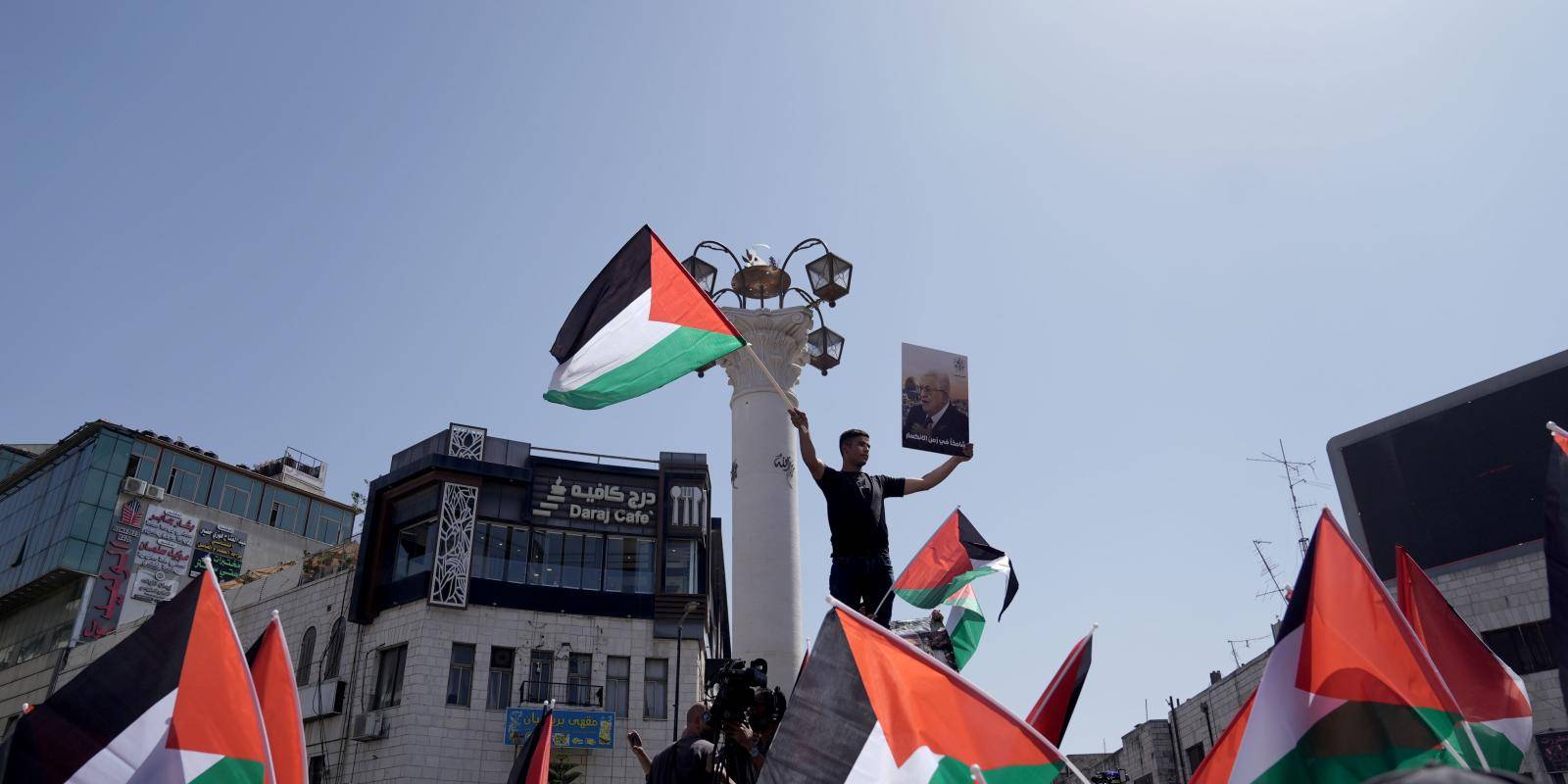
The emergence of an electoral calendar has raised expectations of political renewal. However, restrictions on participation, deep political divisions and occupation all limit the prospects for restoring legitimacy and rebuilding the national project.
The failure to hold elections has come to define the current political impasse in the occupied Palestinian territories (OPT). With the last national elections taking place in 2006, no Palestinian under the age of 38 has ever voted in nationwide elections in the West Bank or Gaza. Young Palestinian civil society leaders interviewed by the authors singled out the generational gap between the leadership in power and the majority of would-be voters, noting that it restricts political renewal and sustains stagnation.
Under mounting domestic and international pressure President Abbas declared 2026 ‘the year of Palestinian democracy’ and introduced an electoral calendar that included municipal elections in April, Fatah elections in May, elections for the PLO’s National Council at the beginning of November, and elections for the PLC at the end of November, which were later postponed.
In September 2025, President Abbas committed to hold parliamentary and presidential elections within one year from the end of Israel’s war on Gaza. In the words of a former senior Palestinian minister, these pledges ‘reflect a political momentum towards democracy and an accelerated transition towards statehood’.
With the last national elections taking place in 2006, no Palestinian under the age of 38 has ever voted in nationwide elections in the West Bank or Gaza.
Consequently, the PA updated electoral legislation, published a draft interim constitution and worked with the Palestinian Central Elections Commission to implement the stages of the electoral processes.
While the PLC elections were postponed, other electoral processes took place, beginning with municipal elections held on 25 April 2026.
Municipal elections
With a limited field of candidates, voter turnout in the occupied West Bank was 56 per cent in 2026, only slightly below the level recorded (58.19 per cent) in the 2021–22 local elections. In contrast, participation in Deir al Balah, the only city in Gaza where elections were held, was considerably lower, at just 22.8 per cent, a figure that the Central Elections Commission attributed to the use of an outdated civil registry and the displacement of residents from the city. Other factors contributing to the low turnout included the fragile security environment, loss of identification documents during the war and absence of several political parties from the process.
According to media and election observation reports, Hamas and leftist PLO factions linked to the Popular Front for the Liberation of Palestine (PFLP), the Democratic Front for the Liberation of Palestine (DFLP), the Palestinian People’s Party (PPP), and the Palestinian Popular Struggle Front (PPSF) did not participate, as acceptance of the PLO programme was a condition for inclusion.
Palestinian analysts interviewed for this research paper noted that Hamas avoided public endorsement of candidates, while non-participating PLO factions allowed members to run as independents or within local coalition lists, reflecting a shared concern that candidates openly linked to Hamas would face restrictions or possible arrest by Israel and the PA.
For similar reasons, the Central Elections Commission agreed that Hamas security forces would not be involved in securing the polling stations following recent Israeli targeting. Instead, Hamas-run Palestinian civil police were deployed at a distance from the polling stations and private security providers were deployed in Deir al Balah to manage the queues.
The municipal elections resulted in a clear victory for Fatah, whose candidates secured the majority of seats in the West Bank and Gaza. Fatah claimed a ‘landslide’ and presented the result as a decisive victory.
However, Palestinian researchers we spoke to noted that Fatah only faced non-Fatah competition in less than half of the constituencies, including Ramallah and Nablus. In the remaining areas, there was no contest and Fatah or Fatah-affiliated lists won by default.
The outcome pointed to Fatah’s continued dominance at the local level, while also drawing attention to persistent divisions and limited public engagement with the Palestinian political system. The result offers only a partial view of the broader political picture. In the absence of a direct contest between Fatah and Hamas, the elections provide limited insight into the national balance or Hamas’s actual electoral weight. Nevertheless, these elections demonstrate the profound impact of the political, humanitarian and economic conditions in the OPT on democratic participation and future electoral processes.
Fatah elections
The Eighth Fatah General Conference was held on 14 May 2026, with 2,595 members voting in the West Bank, Gaza, Cairo and Beirut. Turnout reached 95 per cent, and Mahmoud Abbas was re-elected as head of the movement.
Sixty candidates competed for 18 seats on the FCC, the movement’s highest leadership body. The results led to the replacement of half of the old guard. This was evident in the outcome for Gaza representatives, where all but one lost their seats. Ahmad Helles, a close ally of President Abbas, was the only member from Gaza to retain a position.
Marwan Barghouti, who remains imprisoned in Israel, topped the poll with 1,893 votes. The results also brought new figures into the leadership, including Zakaria Zubeidi, Taysir Bardini and Yasser Abbas, the son of Mahmoud Abbas.
The exclusion of two prominent figures – Mohammad Dahlan, who had been expelled from Fatah following a long-running dispute with President Abbas, and former Palestinian foreign minister Nasser al-Qudwa, who had broken ranks with the leadership – narrowed the field and limited the scope for internal contestation. Al-Qidwa, publicly boycotted the elections, criticized the process and accused the PA leadership of usurping power and sabotaging Fatah. Similar criticism was voiced by other prominent figures, including former government minister Qadura Fares, who argued that the process was marked by deliberate and systematic manipulation designed to determine outcomes.
Many Palestinians, including Fatah members, expressed concern to the authors that the lack of inclusivity and transparency in recent elections will deepen internal divisions and distance the movement from other PLO factions. Frustration has grown within Fatah, especially among members linked to sidelined or dissident factions, following President Abbas’s failure to follow through on a pledge made at the Cairo Summit in March 2025 to pardon Fatah separatists.
The election of Yasser Abbas to the FCC drew criticism from within Fatah and from wider Palestinian circles, where it was viewed as further evidence of power consolidation within a narrow leadership circle.
Nevertheless, internal elections within Fatah carry wider political significance. According to a Fatah figure interviewed for this paper, these elections impact the question of succession to President Abbas and further the divisions between competing currents inside Fatah. Access to senior leadership positions is therefore closely tied to outcomes within the movement’s core institutions. As the interlocutor noted, ‘the route to the presidency runs through Fatah’s Central Committee’.
Legislative elections
The PA Legislative Council (PLC) elections that had been scheduled for 28 November 2026 were postponed by a presidential decree on 10 October and are now set for 11 September 2027, to be simultaneously held with presidential elections. Meanwhile, elections for the legislative body of the PLO, the National Council (PNC), set through a presidential decree in February 2026, were scheduled for 1 November 2026, though these did not take place.
PLC elections
President Abbas’s presidential decree postponing the legislative elections followed a decision by the PLO’s EC and consultations with Palestinian factions, including Hamas, which reportedly agreed to the decision. The decree cited Israeli military operations and restrictions in the OPT, the security and humanitarian situation in the Palestinian territories, Israel withholding PA revenues, and the failure to reconstruct Gaza and deploy international forces as per UNSC Resolution 2803, as reasons for the delay. Moreover, the decree stated that the postponement will give an opportunity for a comprehensive factional Palestinian dialogue to take place.
The postponement of the PLC elections drew criticism from civil society organizations that consider the continued deferral of elections a risk for institutional accountability, as it undermines public confidence in Palestinian institutions. Civil society organizations have said that they will lobby to bring the elections forward.
A recent poll indicates that two-thirds of the public believe that, if PLC and presidential elections are held they ‘will not be free and fair’.
In research interviews held before the postponement of the PLC elections, Palestinian electoral experts highlighted the importance of this process for sustaining unity between the West Bank and the Gaza Strip, while listing several factors that would likely prevent these elections from taking place. These included expected Israeli restrictions on the entry of electoral material to Gaza and other West Bank areas, as well as a ban on elections in East Jerusalem. However, interlocutors cited internal divisions within Fatah as well as Hamas’s announcement that it will participate in the electoral process as major incentives for the postponement of the elections, with one interlocutor adding that, ‘As long as Fatah fears defeat, it will continue to drag electoral competition’. Furthermore, despite the broad public demand for elections, public expectations are not positive. A recent poll indicates that two-thirds of the public believe that, if PLC and presidential elections are held they ‘will not be free and fair’.
While challenges for holding elections under military occupation remain a major impediment, Palestinian leadership must address internal institutional and structural gaps that, if unaddressed, could hinder the conduct of any future elections even if Israel does not prevent elections from taking place. These include political divisions within Fatah and between the different factions, uncertain electoral legislation, and unclear institutional relationships between the various PLO and PA structures.
An important factor that would need to be considered is the absence of clarity about the relationship between the NCAG (an unelected body) and any potentially elected legislative body. The former’s mandate is due to expire in December 2027, and it remains unclear whether any PA or PLO institution would be allowed to function in Gaza in the meantime.
PNC elections
Postponement of PLC elections carries implications for the PNC’s structure and ability to function. A presidential decree on 14 June 2026 expanded the number of PLC members from 132 to 200. This followed an earlier electoral amendment issued by President Abbas on 4 June 2026 setting the total number of PNC seats at 350, out of which 200 seats were going to be filled by the expanded number of PLC members who were scheduled to be elected in November 2026. The additional 150 seats were allocated to the diaspora. While the 4 June decision remains intact, a presidential decree from August revoked the 14 June decision and restored the number of PLC seats to 132. This was then followed by the decision in October to postpone the PLC elections. Palestinian interlocutors interviewed for this paper noted that these consecutive changes confused voters, cast uncertainly over the implementation and timing of the PNC electoral framework, undermined the local–diaspora representation aspect of the PNC, and blurred institutional links between the PA and the PLO, when the PLC and the PNC are distinct institutions with different mandates.
Criticism was also levelled at the proposed formation of the PNC. The ratified PNC electoral framework stated that in case elections cannot be held in any of the diaspora constituencies, members will be selected through electoral colleges, consensus or appointment. While the PNC elections that were due to take place on 1 November have not taken place, or been officially cancelled or changed, the PLO has already initiated a process of selecting PNC diaspora representatives in a number of constituencies, including Kuwait, Bahrain and Qatar, through limited electoral colleges and appointments. These processes have been widely criticized by Palestinians in the OPT and the diaspora who claimed that their right to choose their representatives has been undermined. A Palestinian political activist interviewed by the authors noted that President Abbas’s son, Yasser Abbas, who was elected to the FCC in May, has presided over the PNC selection process in Kuwait adding that these appointments undermine trust in the entire process, which was supposed to be held through direct elections. Palestinian electoral experts we spoke to stated that while the 4 June 2026 decision enables the PLO to resort to electoral colleges, consensus or appointments to select the PNC diaspora representatives, due process was violated by starting the process without announcing the cancellation of the elections scheduled for 1 November.
Institutional links
The June electoral amendment issued by President Abbas created a formal institutional link between the PLO and PA legislative bodies, with the stated purpose of regulating the relationship between them, ‘on the basis of functional integration and institutional coordination, while preserving the independence and respective mandates of each body.’
Closer alignment between the PNC – the legislature of a national liberation movement representing all Palestinians inside and outside the OPT – and the PLC – a parliament of a governing OPT entity – could better regulate and clarify the relationship between the PLO and the PA. However, if not carried out as part of an overall institutional reform strategy for Palestinian political structures, such a move could risk further blurring of the lines between the PLO and the PA and conflate the roles and responsibilities of each entity. In addition, it could raise concerns about the substitution of PA institutions by those of the PLO. This is particularly a concern in relation to succession and especially at a time when the PLC elections have been postponed until September 2027.
Particular attention should be paid to how the legislative hybrid structure could impact the issue of succession given the PNC and PLC roles in the process.
Particular attention should be paid to how the legislative hybrid structure could impact the issue of succession given the PNC and PLC roles in the process. At present, clarity is required on how the independence of each body will be preserved while credible institutional coordination can be maintained, and on the implications for the PLC composition and role following the postponement of the PLC elections.
Therefore, the relationship between the PNC, PLC and the NCAG, including how the PLC elections are placed within the reform process (for example, would the elected PLC be endorsed by the international community and regional states as part of a reformed PA), requires further clarification before elections can take place. This is particularly important for the acceptance of electoral results.
The new electoral timetable gives Palestinian leadership and factions almost one year to reach broad agreements on institutional reform and an electoral framework that, with the support of regional and international actors, can place them in a better position to face potential Israeli restrictions for holding elections.
Leadership contest
Fatah’s internal elections offer a useful guide to power and popularity in the movement, with implications for wider Palestinian elections. Marwan Barghouti, despite remaining in an Israeli prison, secured the highest number of votes in elections to the FCC, Fatah’s executive decision-making body, while his wife Fadwa Barghouti came second in votes for the Revolutionary Council, Fatah’s broader legislative body. Barghouti was followed on the FCC election list by Majed Faraj, a newcomer to the FCC, with Jibril Rajoub coming third and Hussein al-Sheikh fourth.
Barghouti’s strong performance is consistent with recent opinion polls, which have identified him as the most popular candidate for the presidency and one of the few figures able to command a degree of consensus among Palestinians. He is serving five life sentences, and had already signalled his intention to run for the presidency from prison ahead of the cancelled 2021 elections. However, one interviewee questioned whether Barghouti’s appeal has been overstated and expressed doubt about whether his physical and mental condition would allow him to assume an effective leadership role; before querying the practicalities of being president if Israel refuses to release him from prison.
Majed Faraj, head of the Palestinian General Intelligence Service and a close confidant of President Abbas, stands out as the only security chief to hold a political role within Fatah’s senior leadership. According to an independent senior Palestinian official we spoke to, ‘Faraj joining the Central Committee sends a clear message to all presidential hopefuls that the race for the presidency is not guaranteed to anyone.’
At the same time, Hussein al-Sheikh’s promotions to deputy PLO chairperson in April 2025 and deputy head of Fatah in June 2026 have been viewed by some analysts as an attempt by President Abbas to position a clear successor and pre-empt challenges from other senior Fatah figures, including Mohammad Dahlan.
For some within Fatah, al-Sheikh’s promotion was seen as necessary to preserve stability and avoid potential future power struggles. Others, including members of Fatah as well as the Popular Front for the Liberation of Palestine, Democratic Front for the Liberation of Palestine and Palestinian People’s Party, were more critical. They viewed it as a unilateral step, backed by external actors, aimed at consolidating President Abbas’s political agenda and blocking the emergence of a potential rival to Fatah. Several interviewees argued that al-Sheikh’s promotion has brought no tangible benefits for the PA, adding that his presumed close ties with Saudi Arabia have neither translated into financial support nor strengthened the PA’s role in post-war Gaza planning. There is speculation among Palestinians interviewed for this paper that once the presidency seat becomes vacant, al-Sheikh’s authority is likely to be challenged immediately.
There is speculation among Palestinians interviewed for this paper that once the presidency seat becomes vacant, al-Sheikh’s authority is likely to be challenged immediately.
Mohammad Dahlan, a former Fatah security chief in Gaza who was expelled from the movement by President Abbas in June 2011, remains a contender. Despite public statements that he will not run for the presidency, he is widely seen as continuing to pursue the position and to invest in networks across Gaza, the West Bank and Palestinian refugee camps in Lebanon.
In fact, his close ties to the UAE have enabled him to provide financial support to humanitarian efforts in Gaza over the past two years. He is also thought to to maintain contacts with both Hamas and Israeli security authorities. His close associations with members of the NCAG and with the Trump administration have further raised his profile as a potential successor to President Abbas. However, sources familiar with the UAE’s senior leadership told the authors that support for Dahlan is not unwavering, though he remains influential within the UAE’s decision-making circles on Palestinian affairs.
Palestinians interviewed for this paper noted that Dahlan’s domestic and regional networks could place him in a favourable position to advance Palestinian interests with the US administration. Others suggested that his personal rivalry with President Abbas, seen as one of the main drivers of his political ambitions, alongside a controversial history during his service as the head of Palestinian preventive security in Gaza, make Dahlan a divisive figure.
While political ambitions are at play, regional and international actors must refrain from promoting individual Palestinian figures for leadership positions at the expense of Palestinian unity. Instead, external actors should be enablers of democratic processes that would allow the Palestinian people to choose their own leaders.
Political participation
Presidential and parliamentary elections remain a popular demand among Palestinians across the OPT. However, even with two elections already completed in 2026, Palestinian interviewees from civil society, former officials, Fatah supporters and independents remain sceptical that these processes will revive democratic life, let alone build a path towards statehood. The ambitious electoral calendar in its current form is widely seen as ‘performative’, with little expectation that the elections that have already taken place will restore legitimacy or alter prevailing patterns of institutional decline.
Several Palestinian interviewees argued that these measures help maintain existing institutions and consolidate Fatah’s control over them. A January 2026 amendment to the local elections law, which required all candidates to submit a written commitment to the PLO’s political and national programme, provided further support for this perspective. The provision drew criticism from Palestinian factions and civil society actors, who argue that it confers an undue advantage on the ruling party. This sentiment was reflected in a recent poll according to which two-thirds of the Palestinian public oppose requiring candidates to accept the PLO’s commitments, including its agreements with Israel, as a condition for running in the elections. Others, including non-supporters of President Abbas, by contrast, defend the requirement as an affirmation of the PLO’s status as the sole legitimate representative of the Palestinian people.
Furthermore, young Palestinians we spoke to note a lack of appetite for political engagement among their generation. They attribute this to the contraction of political life under occupation, increased settler violence and the absence of a political horizon. Consequently, many Palestinians associate politics with ineffectiveness and corruption, and therefore increasingly see the leadership
as inadequate.
A young Palestinian entrepreneur interviewed for this research paper added that, ‘Young Palestinians fear that political engagement will result in either getting killed, imprisoned, or being corrupted’ adding that concerns for personal safety are ‘not limited to the [threat posed by] Israeli authorities’. The death of Palestinian political activist Nizar Banat in custody in 2021 has since heightened fears among many younger Palestinians that they may face arrest or violence from the Palestinian security services. Banat had been a member of the Freedom and Dignity list, a civil society organization formed to contest cancelled elections in 2021 and a well-known critic of the PA.
Young Palestinians have been largely excluded from discussions over post-war governance and political arrangements, despite representing a critical constituency for renewing and revitalizing Palestinian politics. According to the Palestinian Central Elections Commission, out of the 2.97 million eligible voters, more than 48 per cent are between 18–35 years old. Their marginalization has further weakened confidence in both official domestic leadership and external actors.
These dynamics have constrained the emergence of a new generation of Palestinian leaders. Younger figures are either excluded from formal political structures or discouraged from engaging with them, leaving few credible candidates. The lack of opportunities for political renewal weakens Palestinian democracy and limits its ability to respond to public expectations, further restricting the potential of new political leaders to emerge. Palestinian authorities must provide a safe and conducive environment for political activities to take place free of intimidation and restrictions of personal and universally protected freedoms.
Despite widespread scepticism, the announcement of elections and the initial preparations have stimulated debate within Palestinian society about the condition of Palestinian politics. The electoral calendar and related legislation prompted renewed discussion on political representation, legislative reform, the dominance of Fatah within the political system and competing visions for the character and governance of a future Palestinian state, even if the scope for meaningful change remains constrained.
Elections are a democratic obligation central to restoring Palestinian institutional legitimacy, breaking political stagnation, preserving the unity between the West Bank and the Gaza Strip, and consolidating a credible pathway to statehood. With national elections postponed to September 2027, the legal, technical and consultative groundwork must begin as soon as possible, undertaken in a transparent and inclusive manner, with a clear international commitment to accept the results. Such an effort would require robust coordination between national institutions, political factions, civil society and regional and international stakeholders.
Preparation for national elections across the occupied territory should be treated as a time-bound priority. The 2026 electoral calendar has also brought forward important questions concerning the political system, youth representation, transparency and inclusivity that require attention. Engaging the Palestinian population, including women and young people, in a broad discussion on these issues, alongside the introduction of clear, accessible, safe and transparent mechanisms for participation, would strengthen trust in and the credibility of the electoral processes.
The viability of conducting elections in Jerusalem remains a major issue. Therefore, preparatory discussions must include the feasibility and scope of elections in East Jerusalem and their centrality to the entire election process. Limited and/or phased voting for East Jerusalem could be considered. International actors have a significant role in securing access for domestic and international observers as well as in the planning for elections in East Jerusalem. Securing a clear international commitment to accept the results should be part of this groundwork.
Establishing credible, inclusive and transparent pathways for the transfer of power must be at the top of the Palestinian reform agenda and undertaken in wide consultation with the Palestinian public.
Establishing credible, inclusive and transparent pathways for the transfer of power must be at the top of the Palestinian reform agenda and undertaken in wide consultation with the Palestinian public. Enabling Palestinian youth to access political structures, local governance bodies and professional associations without fear of prosecution would help create a safer environment in which to exercise political freedoms.
These measures should form part of broader reform priorities and be supported by appropriate and non-discriminatory legislation, including the introduction of a youth quota in electoral law.
Electoral sequencing must be part of the wider consultations guided by the national interest, and the logistical and technical feasibility of ensuring credible processes. Setting an electoral timeline must not be a substitute for ensuring that clear and consistent succession measures are in place. International pressure on Israel is needed to enable the electoral process to take place throughout all stages.
The decision to incorporate the PLC members in the PNC must be approached and implemented with the above principles in mind.
The constitution-making process
On 11 November 2025, French President Emmanuel Macron received President Abbas at the Élysée Palace in Paris, where the two leaders discussed the full implementation of the US-brokered Gaza ceasefire agreement. Following the talks, they announced the launch of a joint committee to work on a Palestinian provisional constitution that would consolidate the State of Palestine. Since then, the committee has produced a first draft of ‘the interim constitution of the State of Palestine’, which was put forward for public review between 9 February and 10 April 2026. Many Palestinians argue that constitution-making under occupation is a futile effort, suspecting that the initiative is being driven by international and regional actors to bolster the current political leadership.
However, in a research interview for this paper, a former Palestinian official close to the PLO pushed back on this, asserting that the process is both important and timely, as it places discussions on reform within a Palestinian national framework. In their view, the constitution-making process reaffirms and protects the Palestinian aspiration for an independent state, capitalizes on support from France and Saudi Arabia, and builds on growing international recognition of the Palestinian state.
Nevertheless, we interviewed Palestinian and international stakeholders engaged in the process, who recognized its limits, with some expressing doubt that it will be completed or result in a Palestinian provisional constitution in the near term. Indeed, a number of stakeholders even described the effort as being driven primarily by international pressure, viewing it as performative rather than grounded in domestic political realities, but with many acknowledging the important discussions that were initiated by the process.
Drawing on interviews conducted for this paper and feedback from the public review, views can be grouped into three broad observations. The first is that the scope and substance of the draft extend well beyond a temporary framework. Its provisions set out long-term constitutional arrangements that preserve existing institutional conventions and governing practices. In doing so, the draft limits the prospects for political renewal.
Second, the draft grants extensive centralized authority to the president, notably through provisions that allow for the dissolution of the PLC without a court ruling (Article 84) and enable presidential control over the appointment of constitutional court judges and senior civil servants (Article 87). The lack of effective mechanisms to hold presidential decisions to account remains a central concern.
A third concern is the stipulation that Sharia principles constitute the primary source of legislation (Article 4), which has generated unease among members of the Christian and Samaritan communities. Some Palestinian interviewees also noted that the draft addresses only Muslim and Christian constituencies, missing an opportunity to articulate civil rights and protections for citizens of Jewish faith who may wish to live in a future Palestinian state.
Additional observations raised by Palestinian interviewees involved in the constitutional discussions centre on unresolved questions surrounding the definition of Palestinian citizenship, the absence of any reference to state borders, and the future role and status of the PLO.
These gaps point to the limits of the first draft and suggest the need for a broader national charter. Such a document could articulate the shared aspirations that unite Palestinians worldwide, across political divisions and places of residence.
Whether the interim draft constitution will be adopted at the conclusion of the current process remains uncertain. A national referendum appears unlikely in the near term, given political and logistical impediments imposed mainly by the Israeli occupation followed by internal Palestinian political divisions. Two more plausible scenarios remain. The draft could either be adopted by presidential decree or set aside until it becomes politically feasible to move forward with it. Any decision taken in that regard is likely to depend on a combination of international pressure, internal Fatah dynamics, succession considerations and broader regional developments.
Regardless of the outcome, the debates, analysis and feedback generated through the constitution-drafting process carry lasting value. These discussions bring into focus the Palestinian political system, highlight dissatisfaction with existing political arrangements and point to the scale of the challenges facing Palestinian people.
The constitutional debate highlights a disconnect between Palestinian priorities and the framework through which reform is being advanced. Questions raised by Palestinian interviewees on legitimacy, accountability and national purpose now intersect with international efforts to condition support, funding and governance arrangements on specific outcomes. It is in this context that the expectations of regional and international actors towards the Palestinian leadership must be understood, not as abstract reform agendas, but as factors that define the limits and direction of the current transition.
The constitution-drafting process is a foundational state-building measure that must not be rushed or manipulated for political gains. Public consultation is a central component of democratic constitution-making and must be broad, inclusive, transparent and accessible to all segments of society. Even if the current process does not produce a constitutional document, public consultations around the draft’s provisions remain valuable and should be built upon to reform political institutions.
President Abbas has stated that the review process is intended to include Palestinians inside and outside the State of Palestine. To give effect to this, the drafting committee must establish a robust communications and outreach plan, supported by clear, accessible and transparent feedback mechanisms. Palestinian civil society and international organizations can play an important role in facilitating these consultations and broadening participation.
Given the political and security constraints across the OPT, including Gaza, online consultation should be used where necessary, and timelines adjusted to ensure wider participation.
The following chapter sets out the reforms that key international actors expect the Palestinian leadership to undertake and the tools they intend to use to press for their implementation, including the global diaspora.