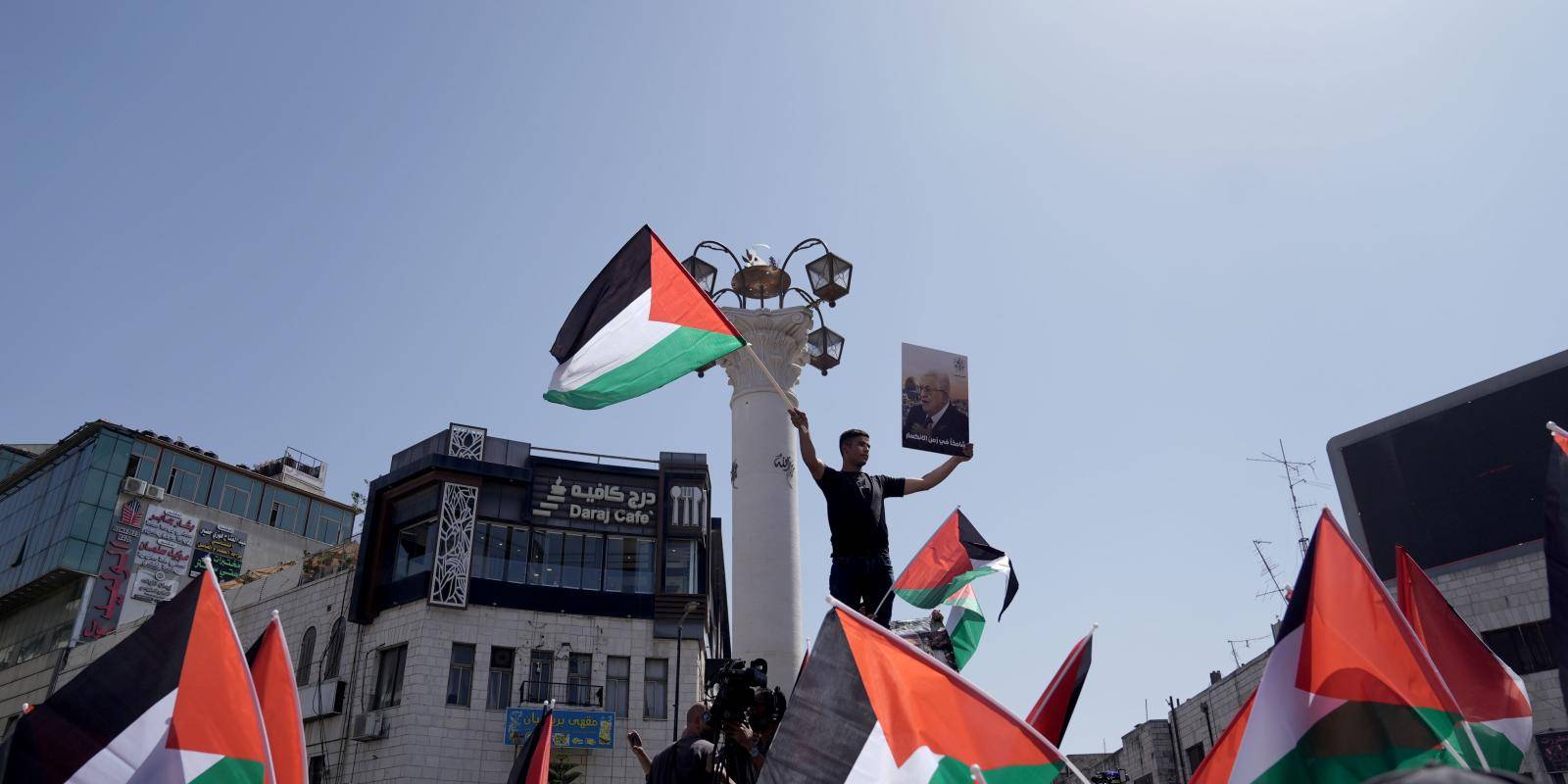
UN Security Council Resolution 2803 offers a narrow opportunity to preserve the pathway to Palestinian statehood. The resolution’s viability depends on Palestinian political renewal, unified governance and coordinated international support, despite the constraints posed by the continued Israeli occupation.
Sovereign statehood has long been the objective of the Palestinian national project. Although the State of Palestine is now recognized by more than 150 countries, recognition has not resolved fundamental issues concerning territorial scope, governance arrangements, or the political process required to give statehood practical effect. UN Security Council Resolution 2803 (UNSCR 2803) provides a distinct framework for addressing these issues. The challenge is whether the steps taken for its implementation can preserve the conditions necessary for a viable Palestinian state and enable Palestinians to determine the territory’s political and institutional future.
The decisions taken during the remaining 13 months of the initial transition period established by UNSCR 2803 will be critical in shaping the political future of Palestine for a generation, as well as the peace and security goals of interested regional and international actors. The period until December 2027 offers a limited and highly constrained opportunity to keep the pathway to statehood open. This requires Israel and Hamas to fulfil their obligations, alongside progress on Palestinian political renewal, credible mechanisms for leadership succession and democratic legitimacy, and institutional reintegration between Gaza and the West Bank. Crucially, reform must be Palestinian owned, while international support must be coordinated and directed towards unified Palestinian governance, rather than parallel or externally controlled structures.
Against this backdrop, this research paper examines how the official Palestinian leadership can use the initial transition period to preserve the conditions necessary for statehood to remain attainable. While implementation of the resolution largely depends on the US, Israel and Hamas, progress towards Palestinian statehood is constrained both politically and economically by Israel’s military occupation of the West Bank, including East Jerusalem, and the Gaza Strip. This structural constraint is heightened by a right-wing Israeli government that openly rejects both a Palestinian state and the Palestinian Authority (PA). Although the Israeli elections on 27 October 2026 may produce a different government, the outcome is unlikely to result in significant or meaningful immediate changes in policies towards the Palestinian state and institutions. Within this challenging environment, the paper focuses on the Palestinian leadership’s capacity to prepare for credible elections, undertake institutional reform, and rebuild the domestic and international legitimacy required to govern a reunified Palestinian territory.
Reform will carry weight only if it is owned and driven from within, grounded in Palestinian national interests rather than imposed by external powers.
Despite its many shortcomings, UNSC Resolution 2803 provides a narrow window of opportunity for Palestinian institutional renewal, one that requires urgent attention before developments on the ground make progress virtually impossible. Reform will carry weight only if it is owned and driven from within, grounded in Palestinian national interests rather than imposed by external powers. We argue that reform is an opportunity for Palestinians to revitalize national institutions and clarify national priorities.
Moreover, any interim governing arrangement in Gaza must sit within a clear political, legal, economic and administrative relationship with the PA and the Palestine Liberation Organization (PLO) in the West Bank. Without this connection, governance in Gaza will develop on a separate track from the West Bank, deepening territorial division and further weakening the foundations of statehood.
However, external powers, particularly regional and European states, matter because they can provide political support, funding and institutional backing that Palestinian reform cannot generate alone. Regional capitals retain influence over Palestinian actors and can exercise agency and leverage in setting the terms for how Gaza’s governance and security is brought under the umbrella of the PA and the PLO. Furthermore, Europe remains central to sustaining Palestinian institutions. The continent is the principal provider of budgetary support and technical assistance, and it continues to promote governance standards for longer-term state-building.
International and regional powers continue to see the PA as the main governing body for Palestinians. The PA is expected to assume responsibility for Gaza after the transitional period and to lead Palestinians towards statehood. This expectation places reform at the centre of the transitional process, as the PA’s ability to govern Gaza and advance a credible pathway to statehood will depend on its willingness and capacity to undertake meaningful institutional change. This research paper therefore assesses whether this role is viable under current conditions and what would be required for the PA to fulfil it in practice.
Chapters 2 and 3 assess what President Mahmoud Abbas referred to as the ‘year of Palestinian democracy’, examining elections, constitutional debates and efforts to renew political representation and strengthen domestic legitimacy. Chapter 4 explores how external actors influence Palestinian reform and governance through political engagement, financing and conditionality, and whether their support strengthens Palestinian institutions. Chapter 5 analyses the Board of Peace and the National Committee for the Administration of Gaza (NCAG), examining the implications of Gaza’s transitional governance arrangements for Palestinian agency, institutional unity and statehood. Chapter 6 draws together the findings and identifies the minimum conditions required to preserve a viable pathway to Palestinian statehood. The final chapter consolidates the research paper’s recommendations by actor and time frame, setting out priorities for Palestinian leaders, Arab states and international partners.
Throughout, the paper focuses on the relationship between Palestinian agency and the role of regional and international actors. These actors influence developments through funding, security coordination and political recognition, but that influence is uneven and at times contradictory. Outcomes during the transition period will depend on the actions of international actors, the constraints imposed by continued Israeli occupation and on how the Palestinian leadership responds. This will determine the PA’s capacity to govern Gaza and whether a viable path to statehood remains.
The time frame is tight and the risks are considerable. Developments in the West Bank continue to undermine the territorial basis for a future Palestinian state, while temporary governance arrangements in Gaza risk hardening into permanent features of authority. This research paper offers recommendations on what can be done to preserve the conditions necessary for Palestinian statehood to remain attainable.
Methodology
This research paper draws on both secondary and primary research. The secondary research involved a review of existing literature, including academic articles, policy reports, media coverage, and relevant publications on Palestinian governance and leadership reform.
Primary research was conducted over the course of the study period. Between December 2025 and June 2026, the research team held in-depth interviews and consultations with a wide range of interlocutors, including former government officials, civil society actors, political activists and professionals engaged in Palestinian leadership reform. These conversations were complemented by discussions with regional and international experts with deep knowledge of the subject and proximity to key decision-makers. Given the rapidly evolving political environment – in which Palestinian local elections, elections within the ruling party Fatah (the most dominant faction of the PLO) and a constitution-drafting process have taken place – many of these exchanges took the form of repeat interviews and ongoing discussions between July and October, allowing the research team to track shifting dynamics and capture the most current assessments from those closest to events on the ground. A glossary of key terms is provided at the end of the paper for reference.
In addition to one-to-one interviews, the research team convened a series of expert workshops bringing together practitioners and analysts to interrogate and stress-test the findings and arguments developed in this paper. This iterative and consultative approach was central to the methodology: rather than treating the research as a single-pass exercise, the team returned repeatedly to its interlocutors as circumstances changed, ensuring that the analysis remained grounded in real-time developments. In accordance with the Chatham House Rule, the views expressed by participants in interviews and workshops are not attributed to named individuals or their affiliated organizations, enabling frank and candid exchange. All findings, conclusions and recommendations in this paper remain the sole responsibility of the authors.