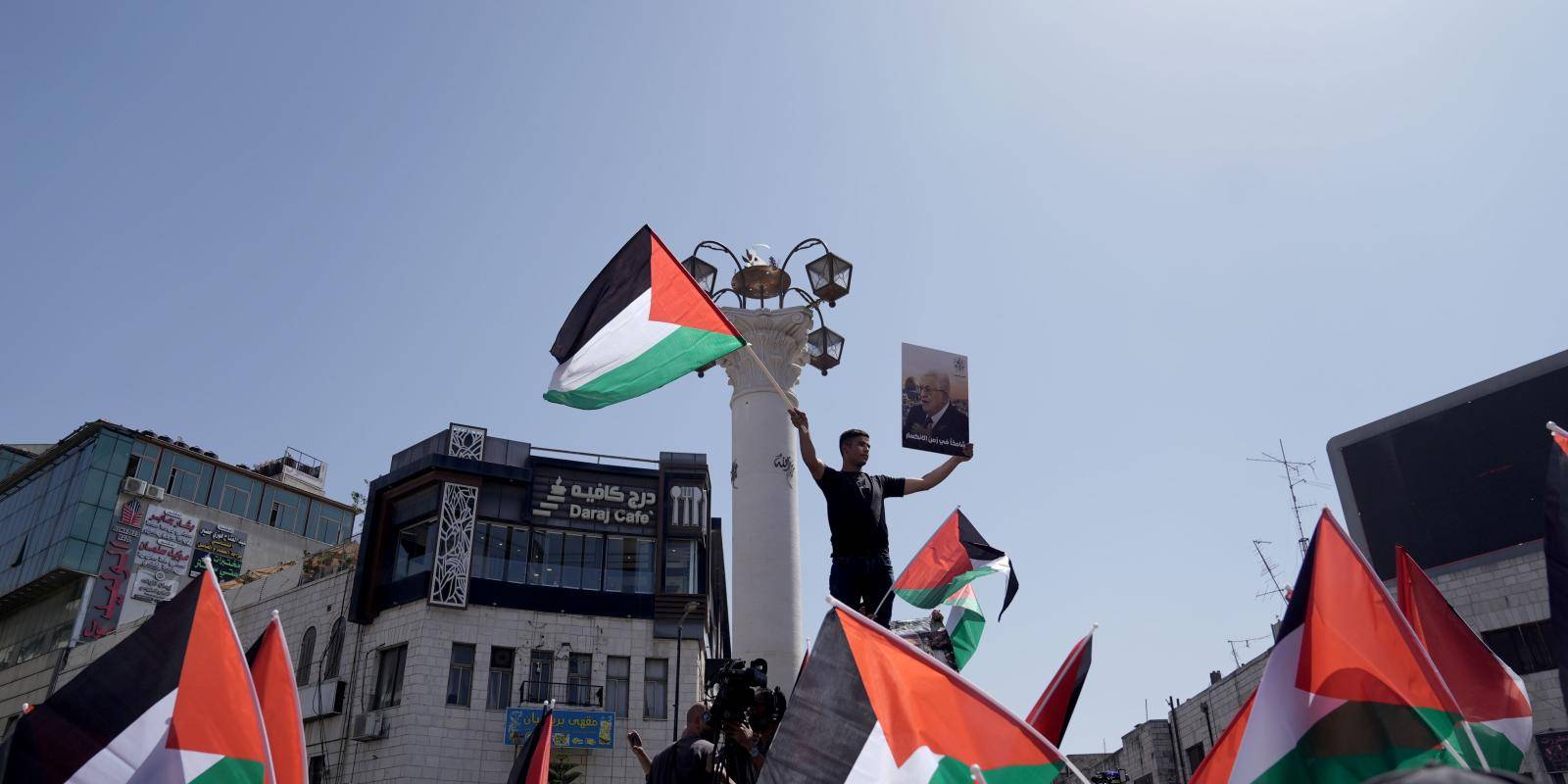
Institutional unity, fiscal viability and credible political participation are critical to preserving the foundations of Palestinian statehood. Reform and transitional governance will strengthen Palestinian legitimacy and national cohesion.
The two-year transition period established by UNSCR 2803 places the PA at the centre of a demanding and tightly constrained process. The PA is expected to pursue leadership reform, restore administrative credibility and prepare to resume governance in Gaza, all while operating under occupation, sustained external scrutiny and in the context of a deepening fiscal and banking crisis. This research paper has shown that while political reform is widely recognized as necessary, including by Palestinians, it remains contested in substance, process and purpose. The gap between international expectations and domestic legitimacy continues to define how reform is interpreted, resisted or selectively implemented.
The assessment of Palestinian leadership reform in this paper highlights enduring structural weaknesses and limited domestic support. Succession arrangements remain contested, electoral processes uncertain and constitutional debates open to criticism for consolidating authority rather than revitalizing the political system.
Initiatives such as the public consultation on the draft interim Palestinian constitution, launched in February 2026, have created opportunities for debate on future governance. Such processes, however, do not by themselves establish broad public confidence or a shared national direction. Without credible avenues for political participation and leadership renewal, reform risks being viewed as procedural rather than substantive, and as externally driven rather than Palestinian-led.
Previous efforts clearly show that reforms do not work without domestic support. For reform to take hold, Palestinian leadership must draw on a credible domestic base. This should be a priority, as active participation by Palestinians enhances legitimacy and is more likely to produce sustainable outcomes. Legitimacy therefore remains central. To rebuild it, the PA must act in an inclusive and transparent manner, invest in institution-building and open space for more active political participation. This in turn may enable a credible democratic transition and bring new leadership into a political system that has struggled to renew itself.
The analysis of transitional governance arrangements for Gaza highlights a set of risks. The BoP and the NCAG are intended as temporary mechanisms, but their operation carries longer term implications if administrative separation between Gaza and the West Bank becomes normalized. While these bodies may provide short-term functionality, they lack a clear framework for political integration. Preserving institutional continuity between the two territories remains essential if the transition is to support rather than undermine a unified Palestinian political future.
Palestinian reforms were never intended as a standalone project. Donors have long understood that the success of these initiatives depended on progress along parallel diplomatic and political tracks.
Regional and international actors retain significant leverage through funding, security coordination and political recognition. However, that leverage is not applied consistently and is often pulled in different directions by competing priorities. Arab states broadly converge on the PA as the eventual centre of authority but differ in how best to use financial conditionality and approach political inclusion. European and US engagement reinforces reform benchmarks but often prioritizes stability and compliance in ways that risk narrowing Palestinian agency if applied inflexibly.
Progress will depend on regional and international actors working towards a clear and consistent objective. Funding, political engagement and security support should be coordinated to strengthen Palestinian institutions, rather than fragment them or create parallel structures. Financial support must be tied to agreed reforms and applied consistently, while pressure is maintained to prevent further territorial fragmentation. The role of the international community should be to support Palestinian leadership in regaining control over governance, not to displace it.
The consequences of failure extend beyond the shortcomings of a particular reform programme or transitional arrangement. If the PA cannot rebuild legitimacy, establish credible succession arrangements, remain fiscally viable and demonstrate its capacity to govern, the transition risks accelerating the political and territorial fragmentation it was intended to prevent. Gaza and the West Bank would continue along separate political trajectories, while ongoing settlement expansion and de facto annexation further reduce the territorial basis for a future Palestinian state. In that scenario, the transitional framework established by UNSCR 2803 would not preserve the conditions for Palestinian self-determination but contribute to their gradual disappearance.
Success should not be measured by whether a Palestinian state emerges during the transition period. It should be measured by whether the transition preserves the conditions necessary for statehood to remain achievable. Even modest progress would matter.
First, the institutional link between Gaza and the West Bank must be preserved: the NCAG must operate visibly within the PA and PLO framework, civil registries and administrative systems must remain integrated, and no governance arrangement in Gaza should develop into a self-sustaining parallel authority.
Second, the PA must carry out sufficient reform to retain donor confidence and Arab political backing rather than comprehensive transformation, while demonstrating enough visible progress on financial transparency, security consolidation and inclusive political processes to sustain the legitimacy required for international engagement. Delivering these reforms is itself contingent on the PA’s fiscal survival: an institution unable to pay salaries or maintain access to the banking system cannot sustain the very reforms being asked of it. The UAE’s condition that reform be real rather than rhetorical, and Saudi Arabia’s readiness to supervise the process, signal that the bar, while demanding, is not impossibly high.
Third, the electoral calendar must produce at least one credible test of Palestinian democratic life, PLO or PA legislative elections that are inclusive, or a constitutional process that generates genuine national debate rather than consolidating existing power. Even these limited outcomes, if achieved together, would preserve the institutional coherence, territorial integrity and international legitimacy on which any future claim to statehood depends. Failure to achieve even this could accelerate the fragmentation and annexation dynamics that would make Palestinian statehood permanently unachievable.
The outcome of the current transition will depend less on the volume of reforms announced than on whether reform restores confidence among Palestinians and safeguards the institutional unity required for statehood. The window created by UNSCR 2803 is limited. If leadership reform and transitional governance fail to strengthen legitimacy and preserve the link between the West Bank and Gaza, the process is more likely to close the pathway to Palestinian statehood than advance it.