Orysia Lutsevych OBE
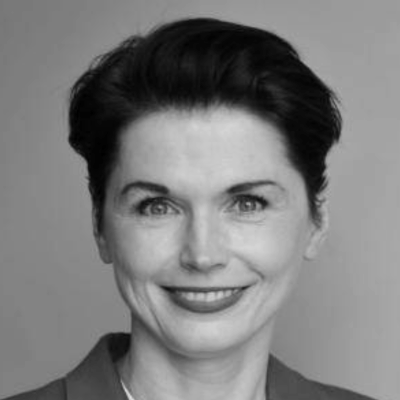
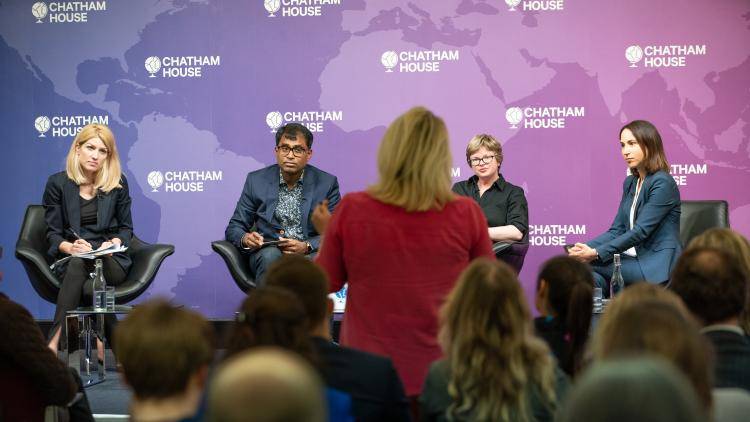
Good morning, ladies and gentlemen. Welcome to all of you here in London and around the world, as our audience is also joining online. My name is Orysia Lutsevych. I am the Head of Ukraine Forum here in Chatham House, and today we will be discussing, “Is Russia-Ukraine War Winnable?” This discussion is on the record, and you are free to share information and insights, also it’s livestream on the website.
It is 1,317 day of a full-scale invasion, and there has been a rollercoaster of events and perceptions about how this war will proceed, or how it may end. And we who watch this carefully more than ten years, when Crimea was annexed, see it in also different phases. Some people were saying at the beginning when the first bombed – bombs hit Kyiv that “It’s the end of Ukraine,” some were saying that “It’s the beginning of the end of Putin.” You had all, kind of, fears this year that Trump may sell Ukraine down the drain to Russia, then suddenly, Russia was a paper tiger and Ukraine can win. You have now expansion of this war, to a degree, through the drone incursions into NATO airspace, and now for more than 100 hours, a blackout at Zaporizhzhia nuclear power station, which actually few prime media is reporting about.
So, are we settling into the normality of this horrible total war in the geographical heart of Europe, and where are we? So, I have a great panel today of people who are not only watching it from the distance, but actually, were at the midst of this from 2014. They will bring us some clarity, I’m sure of that. Next to me is Arseniy Yatsenyuk, who has held all political positions possible but the President of Ukraine, I’d say. He was the Governor of the National Bank, he was the Foreign Minister, he was the Speaker of the Parliament, and when Russia attacked Ukraine back in 2014, after the Revolution of Dignity, he was the Prime Minister of Ukraine. Welcome, Arseniy.
Arseniy Yatsenyuk
Thank you.
Orysia Lutsevych OBE
Now he is the Founder of Open Ukraine Foundation. I had an honour working with him and starting in 2007 Kyiv Security Forum. It’s not the first time Arseniy speaks to us, I actually can tell exactly that it was 317 days ago, because it was 1,000 days of Russian invasion when we had an online session about where we are.
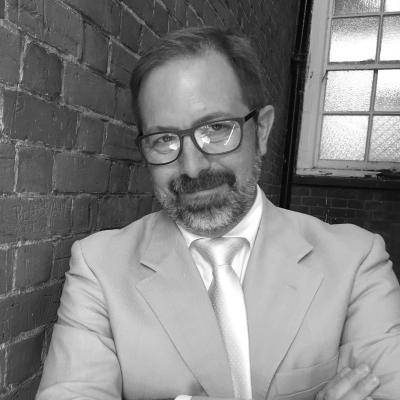
And next to him is our own and only Keir Giles, who is the Associate Fellow with Russia and Eurasia Programme, and he is a longtime Russia watcher and explainer, sometimes to a frustrated measure, because his analysis is well read but rarely acted upon, I’d say. But he keeps at it, and he is the Author of the – his most recent book is called “Who Will Defend Europe?” And I must say, I’m moved that this book is dedicated, as Keir says, “To the Ukrainian people who at immense cost, have formed the frontline for the defence of Europe.” So, we thank all the Ukrainian defenders for what they are doing today to keep Russia’s threat at bay for all of us here in London.
So, Arseniy, I would, like, to start with the – because of the title of our session, how would you define what is a ‘win’ for Ukraine in this war?
Arseniy Yatsenyuk
Well, first, Orysia, I am very grateful that you made it possible to address the Chatham House, and frankly speaking, I am very lucky, ‘cause you did the same with President Zelenskyy, and I am sitting near Sir Keir. We have two Sir Keirs, here and Prime Minister of the United Kingdom, so, I feel like being practically not far from my President.
Orysia Lutsevych OBE
Right.
Arseniy Yatsenyuk
So, how would I define it? The very survival of the Ukrainian state is the victory for Ukraine. NATO membership is the victory for Ukraine, EU membership is the victory for Ukraine, and ironclad security guarantees – and that’s the reason why I mentioned NATO membership, because I don’t buy any, kind of, another special purpose vehicles for the security guarantees, Article 5 of the Washington Treaty. This I would assess as – and last but not least, to bring Russia to justice. Justice must be served and designated war criminal Putin and an entire – Putin’s regime have to be hold accountable. So, this is the set of measures and my vision of Ukraine’s victory.
Orysia Lutsevych OBE
You mentioned, just to develop a little bit, Ukraine’s ‘survival’, but surely some people say, “Survival isn’t enough.” Do you believe that if Ukraine integrates with the European Union and NATO, it will be able to actually, you know, build back better, flourish economically, bring back its people? Because it has lost quite a lot, it is taking a heavy cost of this invasion.
Arseniy Yatsenyuk
Well, that’s exactly the reason why I indicated both EU and NATO membership. Survival means a flourishing and vibrant Ukraine.
Orysia Lutsevych OBE
Okay.
Arseniy Yatsenyuk
Survival means security for the Ukrainian people. Survival means prosperity for the Ukrainian people and for the Ukrainian economy. So, it is a comprehensive definition, but the reason why I mentioned survival, because war criminal Putin, he wants to annihilate Ukraine. So, for him, this is a genocidal war. Have you seen him yesterday delivering some, kind of, stupid stuff in Valdai? So, for the second time – it actually isn’t – it is not for the second. For a number of times, Putin has mentioned Nazi criminals as ‘heroes’. I don’t know whether you remember when he said that “Goebbels was quite a smart guy,” it is in the YouTube, and you know what yesterday he said? That “It is due to Poland, Nazi regime started the Second World War, because Polish people refused to cede Danzig corridor.”
Orysia Lutsevych OBE
Hmmm hmm.
Arseniy Yatsenyuk
He said it publicly. So, the guy is completely obsessed with – it’s not even imperial, but with the fascist and Nazi policy against the free world, and he is very open about that. He always speaks openly about everything. Even in 2007, at the – this notorious Munich security conference, you remember, when he said that it was “The biggest disaster of the late – the last century was the collapse of the Soviet Union,” and my beloved Western France were just deaf. They were thinking that he is kidding, you know. In the end, we have what we have.
Orysia Lutsevych OBE
So, what you are saying is reminding us that his – Putin’s goals go beyond Ukraine. Clearly, he wants to annihilate Ukraine, but his ideological and imperialist agenda stretches beyond the borders of Ukraine, threatens other neighbouring countries and those that are already in NATO and European Union. That’s why it’s good to bring in Keir now, because what we hear often, that “It will be up to Ukraine to decide the parameters of this victory and how it wants to end the war.” But surely if this war takes place in Europe, we in the West also have some vested interest in the outcome. Could you say what kind of outcome you would like to see for Europe in this war that would secure Europe rather than make it more vulnerable?
Keir Giles
Well, since we’re talking about Russia, Ukraine and Europe, if you’ll forgive me a minor digression, it’s probably a good time to mention how Chatham House is going to be addressing that problem. Because we have a new leader of a combined programme, bringing together the remnants of the Russia-Eurasia Programme, including the Ukraine Forum, and the Europe Programme, into a Europe and Russia Programme with a new leader. We should welcome Mr Grégoire Roos, who has just arrived in this building, and will be perfectly placed to treat that question as a priority, because it is the outcome of the War on Ukraine that will define the future of Europe for decades.
Now, we are told by Bronwen Maddox, our Director, Mr Roos does speak Russian, which is natural enough, since it will be essential for the job he is going to do. And I’m very much looking forward to meeting him and to hearing his vision for how Chatham House can bring together those two elements, Europe, including Ukraine, Northern Asia, including Russia, and foster those two vital interlinked goals of promoting Europe’s defence and Russia’s defeat.
Which brings me back to the question. It’s one of those questions which has had the same answer since February 2022, or before, but it keeps getting asked because the answer is not one that our decision-makers in Europe and North America can understand the implications of and act on. It has always been the case that the scale and extent of Russia’s strategic setback, whatever it suffers in Ukraine, will determine the scale and extent of Europe’s breathing space before Russia moves again. And that covers a huge range of possible outcomes. There is the survival of Ukraine, which in itself, is a victory when Russia is seeking so hard to destroy it, at one extreme, however you define it. Whether it is the full engagement of Ukraine with all of these structures to which it has the right to belong, or simply continuing to resist, to be resilient, to defy Russia, any of those is a victory.
At the other extreme, there are options that are probably by now off the table. Now, a lot of people in this room have heard already the story of how a senior Diplomat in London a few days ago – a few, excuse me, years ago, briefed people from this organisation at the end of his tour on what it would take to turn Russia into a country that was no longer intent on invading and destroying its neighbours. He had a policy prescription. He said, “What you need to do,” referring to the Western allies, “What you need to do is do to Russia what you did to Germany and Japan. Wage total war on it, bomb it flat, invade it, occupy it for a period not just of decades but of generations, completely rewrite its constitution, overhaul its educational system, re-educate the public, and then after several decorat – de – generations, you will have a country that can live at peace with its neighbours.”
Now that is not going to happen, so the best-case outcome is somewhere else along that spectrum. But the worst-case outcome, in the long-term, is for there to be something that appears like a victory, in the terms of end of hostilities, which allows European leaders to convince themselves that the problem has gone away. If there is a ceasefire without conditions, if there is an end to the war which cements Russian gains in place, if the major combat operations cease and then Europe thinks we can take our foot off the throttle for rearmament, for building our resilience, for preparing ourselves for the next time Russia seeks to attack a neighbour, then we will be in even deeper trouble than we were before. So, that question of what exactly the Ukrainian victory looks like is absolutely crucial for Europe’s future defence and security, as it always has been.
Orysia Lutsevych OBE
Thank you very much for, kind of, outlining it, and here I would like to move to the area that has been taking – pre-occupying, a lot of, you know, people hopeful that there could be a settlement. Especially when Trump came to office this year, he was very resolute that he wants to end this war, that he’ll somehow have this relationship with Putin that will stop the killing of people. I, for one, think genuinely he wanted to stop the killing. It’s not going according to the plan, and actually, I see the relations between the Alaska Summit, when Putin was brought out the cold, and now the escalation and disruption of major airports, the drones and the cyberattacks within NATO territory. But if we take for a moment this assumption that you can – that the only way this war will end is through the negotiated settlement with Russia, right? “Surely it cannot be defeated,” some people say, “so Ukraine will have to sit at the table, will have to negotiate with whoever is in the Kremlin.”
Arseniy, you have spent a lot of time, you know, with Minsk agreements that Ukraine had about 200 rounds after the annexation of Crimea and the beginning of the war in Donbas. For you believe there could be any pressure that will – could be put on Putin to actually negotiate in a honest way with Ukraine?
Arseniy Yatsenyuk
Well, the first time I met Putin face-to-face, it was in 2005.
Orysia Lutsevych OBE
Hmmm hmm.
Arseniy Yatsenyuk
He has changed, definitely, but the thing is that this is a very canny, foxy and sneaky KGB operative, and we have to realise, I mean, we, our Western friends, have to realise.
Orysia Lutsevych OBE
Whoever deals with…
Arseniy Yatsenyuk
It is too late to realise, and he plays with the people, he easily scrutinise them, he reads the psychology of the counterparts, so he’s good at that. That’s what he was actually studied in the KGB institutions. You mentioned ‘negotiations’. Look, give me a break, there is no negotiations at all.
Orysia Lutsevych OBE
Hmmm hmm.
Arseniy Yatsenyuk
They’ve pretended, it was a sham negotiations. They sent a no-name to Istanbul, if I’m not mistaken, to pretend that they are acting in a good faith, and there was only one person aimed at getting this, kind of, signal, and it was President Trump. So, Putin’s idea was very clear, to drag his feet, to play all of us, and mainly President Trump, and to do his best in order to avoid the next round of sanctions, and in order to avoid escalations with the new US administration. So, that’s the first point.
The second one, you mentioned that there are a number of pundits and folks who say that “Look, this war could be settled at the negotiating table via the diplomatic solution.” I don’t buy it at all. This war won’t be settled by diplomacy, and here is the reason why. We are completely irreconcilable. He wants to kill us, and we want to live. Tell me where could we find the common ground? Maybe we should find some, kind of, extraordinary Diplomat who will provide us this, kind of, common ground, but I am not sure that he exists on this Earth.
So, going back to the question you have raised, there is only one way to make Ukraine to win, and with all due respect, you said that it’s up to Ukraine to decide the terms and conditions of the peace.
Orysia Lutsevych OBE
That’s what we hear often.
Arseniy Yatsenyuk
Yeah, and I like this, I like this kind of statement, and I really admire it, but here is the thing, if we are let alone to decide, Putin will get what he wants, and he wants an entire Ukraine. He wants – and he is ready to cut the deal. He is ready to get so-called peace at any price for Ukraine, but at the best price for him, with the capitulation of Ukraine. So, we desperately need your support, I mean, the support of the Western world, and that’s what he was playing for. He expected that the US administration will turn its back on Ukraine and that there will be a huge fragility within the European Union, which we actually witness right now, okay, undecisiveness, you know, never-ending talk shops. And in this way, this, kind of, the war of attrition will deliver the most – the best result for Putin, which is Ukraine and the restoration of the Soviet Union. And last but not least, you just mentioned Putin – I mean, Russia…
Orysia Lutsevych OBE
Yeah.
Arseniy Yatsenyuk
…that it is Russia that is waging the war. Let me provide you with the bigger scope, it is not Russia. This is an international conflict. China is providing a lifeline to Russia. China is supporting this war. China is an accomplice in this war. China is a key partner of North Korea that deployed its troops against Ukraine and provides an ammo in this war against Ukraine. China is an ally to Iran. So, given that, look, China, Russia and another pariahs, they present a totalitarian regime that is fighting against the democracy and the free world. So, this is definition of this conflict, it is not just Russo-Ukrainian war, it is bigger.
Orysia Lutsevych OBE
Yes. Thanks for bringing that perspective. And now if, Keir, I ask you the same question, but more building on Arseniy’s response, how can we – can we change the calculus on Putin in this war through hard power if it’s not through negotiations and appealing to the costs that he’s already encountering? I remember I was told at the beginning of the war by one of the East European Foreign Minister that he thought “If Russians would lose half a million men in Ukraine, they would end the war.” But I said, “Surely Russians are counting losses more in tanks and in equipment than in men, and we are not inflicting high enough damage to Russia?” So, what it is that could either deny Russia capability to wage the war or change its calculus?
Keir Giles
Well, sadly, in spite of all the evidence, the idea that this war can be brought to an end through negotiations refuses to die. I’ve lost count of the number of times I was doing media interviews, over a period of extended months, asking me to comment on “the peace talks,” the negotiations. And when I said, “What negotiations? They are not happening, there is no point of contact, there is no discussion that is actually going to lead to any kind of outcome that you have in mind,” everybody was terribly confused. Because the presentation of what Russia was doing was not just for the audience of Trump, it also was very natural for global media to engage in this process and pretend that something was happening.
But it was well before the end of 2022 that the then Ukrainian Commander, Valerii Zaluzhnyi, identified that the re – centre of gravity for confronting Russia was in fact bringing it home to ordinary Russians that the war was not something that was being waged on their behalf a long way away for exterminating Ukrainians and we can all cheer and it won’t affect us, but would in fact affect Ukrainian society and…
Orysia Lutsevych OBE
Russian society.
Keir Giles
Excuse me, Russian society. And the calculus behind that is that the only way to induce the Russian leadership to end the war is to present a challenge which is a threat to that grip on power of Vladimir Putin. Now, this is something which we see Ukraine developing on a daily basis, bringing home to ordinary Russians that this affects them, for example, by making sure that they cannot buy petrol to fuel their cars, but it’s also…
Orysia Lutsevych OBE
That is already happening, to a degree.
Keir Giles
Exactly. It’s also something which Ukraine’s foremost Western backers were trying hard to oppose, under the previous US administration, for example, that had reached the conclusion, partly as a result of how Russia was presenting this war, reached the conclusion that it was more dangerous to allow Russia to be defeated than for a neighbour of Russia to be destroyed. And that is still a mental block that it is hard for some backers of Ukraine to overcome. Is it possible to defeat Russia? Of course it is. Will people do it? That’s a whole other question.
Orysia Lutsevych OBE
Hmmm hmm.
Keir Giles
Whether there are – is the will across Europe to actually recognise what is at stake and take steps accordingly is a whole other question. Now we know what Russia is concerned about. Let’s look at what’s been happening in Denmark over the course of this month. Denmark identifies what it is that deters Russia, long-range precision strike, to hold at risk things that matter to Russia. Russia has hysterics as a result, starts the nuclear threats and then a few days later, drones mysteriously appear over Copenhagen Airport. We know this matters to them because not only of the concepts of deterrence and war termination that they have written about at enormous length over the previous decade, but also how they react when it happens. So, it can be done. Question is, will it?
Orysia Lutsevych OBE
Yeah, and just to bring in the question from James Nixey, the former Director of Russia and Eurasia. He says, “Good morning to all of you, gentlemen and ladies,” and the question is a bit hypothetical and he understands that, you know, it’s a speculative alternative history, but, “What might have been – where – what would our world look like today if Ukraine were provided all the necessary military kit, the Taurus, tank-stopping landmines, air protection, possibly the Sky Shield that there has been a discussion a lot, would we be bringing Ukrainian victory closer?”
Keir Giles
Well, let’s take it back even further than that, because what if in October/November of 2021, when Western powers were fully aware what Russia was planning, they had decided, instead of deciding that there was nothing they could do about it, to actually do something?
Orysia Lutsevych OBE
Yes.
Keir Giles
If there had been the kind of support for Ukraine that was designed to deter Russia from attacking, as opposed to the endless diplomatic processions to Moscow to try to cajole President Putin out of doing something that he had his mind set on, by saying, “We know exactly what you’re going to do, but we’re not actually going to do anything to stop you”…
Orysia Lutsevych OBE
Yeah.
Keir Giles
…then we could possibly have had the start of the process, the long process of turning Russia into a country that is deterred and has had boundaries set for its behaviour. And that is the only way we are, over the long-term, going to remove the only hard security threat to the European continent. But instead, that process did not start and so, Russia continues the pattern of its post-colonial wars, bringing it what looks like success on Russian terms. Until that changes, this will never stop, and until Russia itself changes, we are always going to have this problem.
Orysia Lutsevych OBE
And that actually – I want to bring Arseniy, because I would even go further to October 2021, but to a spring of 2014, when Russians invaded Crimea in the first place. And we do know now, from open archives and sources, that Americans were openly dissuading Ukrainians from mounting resistance, and the price that Russia paid for that great transgression of international law was non-existent, to be honest.
So, I mean, Arseniy, what do you think at that time, back from 2014 to 2021, was stopping Western partners of Ukraine, if you can call them like that, to actually see that if Ukraine is not armed – you remember the whole discussion about whether Ukraine should and shouldn’t be given lethal weapons, we are far away from that. But it was the case, could Ukraine be given lethal weapons to defend itself? This was the legitimate question all over the media. What did you hear then from Ukraine, from Berlin, from Paris, from London, and how did that lead to where we are today?
Arseniy Yatsenyuk
You know, I admire all these ifs and buts, but here is the thing, we don’t have the time machine.
Orysia Lutsevych OBE
Yeah.
Arseniy Yatsenyuk
So, we can draw the lessons out of what has happened a decade ago, ‘cause let me remind you that this war has been going on for 11 years, but not for three and a half years. Putin illegally invaded Crimea in 2014, and there was no political will on the side of our allies to provide Ukraine either with the lethal weapon or to give a real membership perspective in NATO for Ukraine. I was the Speaker of the House in 2008, and I hosted the then President of the United States in Kyiv, who did everything in order to get this MAP, but in the end, in Bucharest, we were refused to get MAP for Ukraine.
Orysia Lutsevych OBE
Membership Action Plan for NATO.
Arseniy Yatsenyuk
Yeah, Membership Action Plan for NATO, it’s a, kind of, entrance to NATO. What happened in the end? Putin invaded Georgia and moved to Crimea and to the east of Ukraine. So, let me put it this way, we are well aware this inconsistency and a lack of guts and balls drive us to the situation we are – where we are right now. Right now, we are at an inflection point.
Orysia Lutsevych OBE
Hmmm.
Arseniy Yatsenyuk
The price is skyrocketing, if we waste the time and if we drag our feet. So, here is the lesson. If the West decides, I mean, the West, the US administration and the European Union and the UK – and I really commend the United Kingdom. Yesterday, I met your former Chief of Defence, Admiral Radakin, your decision to provide Storm Shadow missiles and Challenger tanks to Ukraine was a sea change, it was a game changer in the decision-making process of the entire West.
So, here is the thing, what is needed? So, first, we need an additional security supplemental for Ukraine from the US administration and from the European Union. Second, we need to get real financial support. The budget gap is around $170 billion in the forthcoming three years. Fourth, we urgently need to increase the military production capacities, both in the European Union and in Ukraine. We make cheaper, better and quicker, I mean, in Ukraine, so please give us cash in order to provide Ukrainian military with the necessary ammo.
Fourth, we need urgently to confiscate Russian assets, ‘cause you guys are facing tremendous financial problems, and we have the source which is completely in line with in – with the international law. And I can elaborate on this, why it is in line with the international law, to make Russia accountable and to confiscate Russian assets. And last but not least, China and India, those who support Russia and those who help Russia to circumvent sanctions. So, we need to hold the dialogue with India and to press on China. This is the menu I’ve got out of these 11 years of indecisiveness, okay, that we’ve faced.
Orysia Lutsevych OBE
Hmmm hmm.
Arseniy Yatsenyuk
In terms of, Sir – Keir, with all due respect, you said about Russia and Russia’s defeat. I know that you worked in Moscow, so you have the reading on Moscow, the problem is I was born in the Soviet Union, I have the reading of Muscovites too. So, we have to realise that Russia is not the normal state since 2014, because we are still applying all these patterns of the institution, flag, state anthem, democracy, elected government, Duma. Look, from the time Putin blatantly violated an international law and illegally annexed Crimea, even starting with the Georgia, it became a mafia-style state chaired by KGB operatives. So, as of now, this state is completely on the war footing. He isn’t eager to accomplish this war because in case if he get any kind of ceasefire or peace deal with Ukraine, this will be a clear-cut threat to him personally.
Orysia Lutsevych OBE
Yeah.
Arseniy Yatsenyuk
That’s the way dictators live, and we have to realise this. And we still look at Russia as, look, it is the country, it is a P5 member, they created the UN, that – it’s not no longer. So, we have to look at Russia as a warmonger, as a mafia state, which has nothing to do with the real – I mean, normal country, with the normal institutions. Because Putin always used these, kind of, misreadings and this is the best way how to play us. If we look, if it quacks like a duck, it is a duck. So, it’s a duck, okay?
Orysia Lutsevych OBE
Yeah, I think this is important to have a clarity of judgment to call the spade a spade, like you are basically…
Arseniy Yatsenyuk
Yeah.
Orysia Lutsevych OBE
…saying. Because part of the narrative power of Russia, which some people are already aware of, previously it wasn’t so much even aware of, is in playing with our perception of reality and trying to convince us that perhaps their reading or their version of reality is more correct. And I think this is the danger where Trump is, in a way, where he was validating Putin’s version of events, Putin’s interpretation of Russian invasion of Ukraine, that, you know, I’m sure will come up in questions. But Keir, I – would you like to add more things to Arseniy’s list of what do you want to see or should – what should we be watching to know that things are moving in the right directions for Ukraine, or perhaps being warned of that things may deteriorate in the future, near future?
Keir Giles
I’d like to actually respond to that not quite with a laundry list, but instead, with an underlying principle that I still think we need to apply in a lot of capitals in Europe and in Canada and around the world. Because let’s not forget that although this is a global conflict, it is not just in Europe and North America that there are democracies that stand for…
Orysia Lutsevych OBE
Yes.
Keir Giles
…the rules-based international order and want to arrest the slide into that global conflict that we’re seeing. We regularly interact with colleagues from countries like Japan, Australia, North Korea – South Korea.
Arseniy Yatsenyuk
Yeah.
Keir Giles
South Korea, looking for…
Arseniy Yatsenyuk
But they did it with Trump, North Korea, you’re right.
Orysia Lutsevych OBE
Yes.
Keir Giles
Looking for ways in which these countries can come together to protect their shared interests and then realising with a certain amount of bemusement that there is limited engagement with Europe for understanding the problem and then doing something about it. But I think that, in itself, is a symptom of the problem that I’m coming onto, which is overcoming the mental capture of past ideas of how Europe works, the mental capture of this picture of Russia that has been so successfully sold, despite being so different from reality.
Orysia Lutsevych OBE
Hmmm.
Keir Giles
The idea, in particular, that Russia is too powerful, too unpredictable, too dangerous to be confronted, and that it is impossible to defeat or deter Russia, which is an idea that is still deeply rooted in a lot of the conversations we have about possible futures for confronting Russia, because it has been built up over so many decades.
Orysia Lutsevych OBE
Hmmm hmm.
Keir Giles
And it doesn’t matter how much evidence you bring from past performance, not only of the current leadership, but of the country through decades and centuries, it is still deeply, deeply embedded.
So, it is a case of changing not just minds but mindsets, changing assumptions about, first of all, the scale and nature of the challenge and how bad it will be if Europe and like-minded friends around the world do not respond, and secondly, that Europe has agency. That it is possible to insert European countries into a conversation about their future in a manner that is relevant, instead of them sitting by helplessly and talking about “coalitions of the willing,” but willing being different from able and being different from capable of stepping in before the problem is resolved, rather than after. All of these things are just symptoms of that mental paralysis, that mental capture, that has dogged Western responses to Russian aggression over the course of decades, and the trick, I think, is getting over that before it is too late.
Orysia Lutsevych OBE
Yeah, I think one of the realisations inside Ukraine, if you go and talk to people, is that there’s a clear understanding that Ukraine has opened a window of opportunity to create a different future, both for Ukraine and for Russia for the same matter, if Russia is defeated in this war in Ukraine. And the West is too timid to, you know, grasp it and to exploit it and to work with Ukraine, not just as a – you know, at arm’s length, but as a true ally in order to reshape what we all want, how we co-exist on the European continent. You know, this is the continent of the smallest size and the biggest diversity, whereas Russia is the big landmass with no diversity, at all. So, there are all kinds of conceptual conflicts entrenched already in that existence. But I think what also – I’m sure, Arseniy, you would agree, there’s a lot of anger in Ukraine that we are wasting time, that we are doing everything that we said impossible at the beginning, too late. And this drip feeding of Ukraine’s battlefield capability actually turns war in Russia favour of creating it as a war of attrition, which they think so far, they can win.
But I’ll open now the floor to questions from the audience. I see already lots of hands, so let’s bring on the lights. Let’s – please introduce yourself, and I’ll take two/three questions. Try to be brief, because as you can see, there’s a lot to come. Please, ladies in the first.
Tea Tutberidze
Tea Tutberidze, King’s College London, War Studies Department. First of all, thank you so much, it’s a fascinating discussion. Unfortunately, in the West, we don’t have sometimes clear understanding what this war is about. I would like to point few things from the discussion. I remember long ago when the war started, full-scale war, I asked questions one of the panellists here about Russia’s defeat and answer was, “No, no, no, we don’t want to defeat Russia.” However, history teaches us without clear defeat, Russia can’t be changed. And if we see when it’s happened, when Russia more or less tried to democratise and modernise, it was when, for example, in Paris, 1956, we assigned…
Orysia Lutsevych OBE
If you can just…
Tea Tutberidze
Yeah, okay.
Orysia Lutsevych OBE
…be briefer because we will go on…
Tea Tutberidze
Yeah, yeah, yeah.
Orysia Lutsevych OBE
A lot of people here are…
Tea Tutberidze
Okay. My point is I think it’s a time now to talk about what actually Ukraine’s win means and what actually security means for Europe in long-term.
Orysia Lutsevych OBE
Yeah.
Tea Tutberidze
Because without Russia’s political and not only military, but political defeat, we would not have any peace in long-term in the future in Europe.
Orysia Lutsevych OBE
Yeah.
Tea Tutberidze
Because Russia is not only the country state who can deal with it, it is imperialistic nation.
Orysia Lutsevych OBE
Yeah, I think we well taken the point, do…?
Tea Tutberidze
So, do you think…
Orysia Lutsevych OBE
Yes.
Tea Tutberidze
…in the future we can see different new countries inside the Russian Federation…
Orysia Lutsevych OBE
Okay.
Tea Tutberidze
…because we know there are more than 28/30 different nations occupied historically by Russia.
Orysia Lutsevych OBE
Okay.
Tea Tutberidze
Do you consider this as a defeat in the future term?
Orysia Lutsevych OBE
Very good question, you know.
Tea Tutberidze
Thank you so much.
Orysia Lutsevych OBE
Okay, let’s take a bit more. Yeah, here, gentleman in the third row, please, over there. Yeah, no, the gentleman next to you, sorry, just take a bit – yes.
Keir Giles
He’s taller.
Orysia Lutsevych OBE
Yeah, taller, yeah, I think, yeah.
Jordan Bauman
My name is Jordan Bauman. I’m from the University of Waterloo, and I’m a Governor there. I’d just like to discuss, like, the nuclear problem, I don’t think I’ve heard much discussion about that, how does that impact this? You talk about Russia being ‘defeatable’. The argument I hear, at least back in Canada, what about the nuclear bombs?
Orysia Lutsevych OBE
Yeah, okay. Yeah, very good point, and here, the ladies in the first row, please.
Latika Bourke
Thank you. Thanks, Latika Bourke from The Nightly Australia. I just want to pick up your point on this being an international war and China’s involvement.
Orysia Lutsevych OBE
Hmmm hmm.
Latika Bourke
What does that mean for a global response, and actually, doesn’t that hamper Ukraine’s efforts? Your own government is not that forthright when it comes to China compared to, say, Russia, and actually, the involvement of China in this means other countries who may understand the threat of Russia are more reluctant to get involved if it means China, given their own trading relationships. Thank you.
Orysia Lutsevych OBE
Yeah, well, excellent, a big diversity of questions. So, what may happen inside Russia with the de-imperialization of its own proper territory, nuclear, whether it stops on the – stems on the way, and China. Maybe we’ll start with, I don’t know, Keir.
Keir Giles
Sure. I’ll try to keep this super brief, although there’s a lot to talk about…
Orysia Lutsevych OBE
Yeah, a lot.
Keir Giles
…especially in the first two questions. Tea, thank you for agreeing violently with us. The fragmentation idea, Russia will break up if it’s defeated, and the nuclear idea, Russia will lob nukes if it’s defeated, actually have something in common. It is a myth that has been very successfully sold to the world by Russia, because there are different constituencies that link those two arguments together, and they’ve been an incredibly powerful tool for Russia, deterring anybody from getting in Russia’s way.
The idea that the – that Russia now replicates the circumstances of 1991, and if you do cause Russia to suffer a strategic setback, it’ll break up into, sort of, mini statelets or warring parties, all of whom nu – have nuclear weapons and it’s a disaster, is not based on fact because none of the circumstances that applied then pertain. But it’s very satisfactory to people who want to argue, “You can’t defeat Russia because it’s too dangerous,” or if you want to tell Russians, “The outside world is conspiring to destroy and fragment us and therefore, we need to fight this war even harder.” And so, it’s been sold to different constitueys – constituencies and it’s self-perpetuating.
On the nuclear side, Jordan, that we didn’t – I didn’t mention it is because it’s not relevant, which surprises a lot of people, just as it surprised you. With a – we…
Orysia Lutsevych OBE
There were some questions…
Keir Giles
…could…
Orysia Lutsevych OBE
…related to that online.
Keir Giles
I know. Could talk about this…
Orysia Lutsevych OBE
At least two.
Keir Giles
…forever. Let me, instead of spending the remaining 22 minutes on that topic, which I very easily could, point you to a Chatham House publication from March 2023 called “Russian Nuclear Intimidation and How It Shapes Western Policy,” and if you still have questions after reading that, do please ping me.
Orysia Lutsevych OBE
Okay. Arseniy.
Arseniy Yatsenyuk
You are so smart, not like we Politicians. Yeah, so I fully share your take. So, here…
Orysia Lutsevych OBE
Next time you’ll go first so you don’t have such an easy time here.
Arseniy Yatsenyuk
So, here is the thing, I don’t have crystal ball what’s going to happen to Russia, but I know for sure that the only chance to change Russia is to make Ukraine win, period.
Orysia Lutsevych OBE
Hmmm hmm.
Arseniy Yatsenyuk
If Ukraine wins, this would bring dramatic…
Orysia Lutsevych OBE
A chance.
Arseniy Yatsenyuk
A dramatic changes in Russia, this – not a chance.
Orysia Lutsevych OBE
You think it will…
Arseniy Yatsenyuk
I would…
Orysia Lutsevych OBE
…deliver change?
Arseniy Yatsenyuk
I strongly believe…
Orysia Lutsevych OBE
Okay.
Arseniy Yatsenyuk
…that we – this will definitely change Russia. In what direction, that’s another issue, okay, but this will bring real changes in Russia. In terms of nukes, here is the thing. I fully share your take, Putin is bluffing, but there is one problem. These lunatics, they have nukes, and if you have nukes, you have so-called ‘button’ and if you have this so-called button, there is a minor chance that these bunch of idiots can press the button. The good thing is that China is doing everything to tied his hands. It’s not in the interest of China. The same goes with the Americans.
Orysia Lutsevych OBE
Hmmm.
Arseniy Yatsenyuk
And my message to you, I mean, to the United Kingdom, and a similar message to France, folks, you are the superpowers, you just underestimate yourself. You have military, cash, resources, economy, and nukes. So, why the hell we are scared of Putin?
Orysia Lutsevych OBE
Hmmm hmm.
Arseniy Yatsenyuk
So, to put it in a nutshell, yes, he has nukes, but I believe he is bluffing. We have always to be vigilant, careful, but he is bluffing, and that’s the very thing that he was playing with the US administration.
Orysia Lutsevych OBE
Hmmm hmm.
Arseniy Yatsenyuk
Just reaching out to the White House under Biden administration and under Trump administration with this nuclear cyber-rattling, and that’s the reason why the previous administration dragged its feet but at least delivered support to Ukraine. And I hope that administration will do at least something, because we are still getting the support from US, but the – from the previous appropriation package passed by the previous House.
And in terms of China, look, I am not an expert in China. I never comment on the stuff I don’t understand. But what I do really understand is that China wants to create a new global order, and it is so obvious for me. It is as plain as the day. Look, they have 1.4 billion people, they have nukes, they have army, they have cash. They are – they’ve been humiliated by the Western-led order, but in the last two decades, they made an tremendous progress due to this Western-led order. So, that’s the reason why I don’t buy these, kind of, statements, negative statements, about the Western-led order.
So, the thing is that can we, as Ukraine, handle China’s issue? No, we can’t, we don’t have leverage, but can the EU and the US make it? Absolutely. If you guys present one united front and you pre – and if you even negotiate or press on China together, you have a huge – a vast majority of different tools.
Orysia Lutsevych OBE
Yeah, I’ll take a few questions from here, Ben and then Dom, yeah.
Ben Hall
Thanks very much, Orysia. Ben Hall from the Financial Times. A lot of the discussion so far has been on what the West and Ukraine’s allies need to do to make the war winnable, but I have a question for Mr Yatsenyuk. What does Ukraine need to do, and particularly on the issue of military leadership, political leadership, to make the war winnable? Thanks.
Orysia Lutsevych OBE
Thank you, yes, and here to Dom, and then over there…
Dominic Nicholls
Thanks.
Orysia Lutsevych OBE
…please, in the front row, yeah.
Dominic Nicholls
Thank you. Dominic Nicholls from the Telegraph. Donald Trump can’t stand President Zelenskyy, partly because he didn’t come up with or invent some dirt on Hunter Biden. How much of an impediment is President Zelenskyy now to a better relationship with Donald Trump?
Orysia Lutsevych OBE
And here, the last.
Anne Thunberg
Anne Thunberg, private member of Chatham House. You correctly said that Putin is never hiding his plans, he’s very open about his plans. He says he will do it, he does it. What about his plans of this incursion in Europe? Cyberattacks, drones, what’s his ultimate objective of this plan? What is his plan? What does he want, and how far can the West wait before responding, and what respond would mean without triggering the Third World War?
Orysia Lutsevych OBE
Yeah, okay, very good. So, we’ll start with Ukraine domestic, very good question. If Ukraine has an agency, it is fighting, it’s – it has also a to-do list. What is it inside Ukraine?
Arseniy Yatsenyuk
This time, could you…
Orysia Lutsevych OBE
No.
Arseniy Yatsenyuk
…switch the question to Keir?
Orysia Lutsevych OBE
You start, no.
Arseniy Yatsenyuk
He’s doing better. Okay, here is the thing. I do understand what are you asking about. You’re asking about the domestic political…
Orysia Lutsevych OBE
Yes.
Arseniy Yatsenyuk
…position in Ukraine. Am I right, folks, or I am out?
Ben Hall
Yeah, mobilisation and…
Arseniy Yatsenyuk
Correct, so…
Orysia Lutsevych OBE
Economy.
Arseniy Yatsenyuk
…let me put it this way. I will start with my President. Okay, we are frenemies with my President, but I support him, as he is the Commander-in-Chief, and we have to rally around the flag. Ukraine’s democracy is not flawless, far from that, the same goes with the British democracy, and we are under the martial law, and I’ve got the latest polls. Just before my trip, I asked Razumkov Centre to conduct these polls. Could you imagine that the majority of Ukrainians still believe that Ukraine is a vibrant democracy? Yes, the numbers went slightly down, but we’ve managed to maintain around 60 percen – 65% of those who strongly believe that the Ukraine is a democracy, and more than 80% believe that Ukraine will be the vibrant democracy after the war.
So, what is needed? We need a very strong political unity in Ukraine, and we have to maintain this political unity, and I wish my President and the government to do their best in order to get everyone on board in this fight against Russia. So, we are not allowed to have any, kind of, fissures or being at loggerheads inside Ukraine. This is the very thing that Russians were always playing with, and I do remember this in 2014, 15, and 16, and this was one of the reasons why for the first time in Ukraine’s history, I was the first Prime Minister who resigned voluntarily. It…
Orysia Lutsevych OBE
Yeah.
Arseniy Yatsenyuk
Well, one can say that I’m an idiot, okay, maybe, but for the sake of the country. So, it is important to maintain this, kind of, political stability. The second one, it’s about the morale of Ukrainian people. Once again, do you – under the latest polls, 74% of Ukrainians still believe in an unconditional military victory over Ukrai – over Russia, you know, unconditional military victory over Russia. So, this gives me some, kind of, very positive sentiment about an overall morale, both among Ukrainians and the – in the Ukrainian military. But I want to be open with you, my – and fair, we are tired, sir, and we are exhausted. We are not broken, but that’s not an easy thing. Being at the state of war for 11 years and being under never-ending barrages of missiles for three and a half years, and it affects even psyche, you know.
The third issue, what is needed? We need some – look, we need to underpin Ukraine’s economy. We can’t do it without you, just no way. Ukraine needs to spend around 60% of its budget for the military expenditures for the next year, and this year, we expect around 50%. 50% of everything we are spending in Ukraine goes from the either grants or loans from our Western partners. So, political and social stability are needed, and good governance, okay, which is very important, strong and good governance, professionals running the country. And we need to have guts and to stay resilient and to be on the very high, I would say – on the strong side of the real morale. ‘Cause if we are getting into any, kind of, gloomy sentiments, this is another way how to defeat Ukraine, and that Putin knows very well as a KGB operative.
Orysia Lutsevych OBE
Trump, Zelenskyy.
Arseniy Yatsenyuk
Zelenskyy and Trump. You are well aware about this dressing down in the White House, okay. I don’t want to go back to what has happened. I wish it would never happen, and frankly, I don’t want to comment who is to blame, okay. But the thing is that my President did everything to get along with President Trump, and your Prime Minister, your Advisor to your Prime Minister, President of France, they participated in this, kind of, peacekeeping operation.
Orysia Lutsevych OBE
Mediation.
Arseniy Yatsenyuk
It sounds better, mediation, okay.
Orysia Lutsevych OBE
There wasn’t open war.
Arseniy Yatsenyuk
So – and the reason why I’m telling you this, because look, it was obvious, there were – that were – there were different ideas in the Oval over how to prosecute – over how to work with Ukraine. Whether to turn its back on Ukraine and to wash its hands or to be engaged, and the first case scenario was more, I would say, viable rather than the second one. As of now, we have at least verbal U-turn of the United States President, but this verbal U-turn have to be underpinned by actions. That’s what I expect to see, and incursion in the EU.
Orysia Lutsevych OBE
Yeah, maybe we’ll give Keir a…
Arseniy Yatsenyuk
No.
Orysia Lutsevych OBE
…chance to – no.
Arseniy Yatsenyuk
I have to – no.
Orysia Lutsevych OBE
Okay.
Arseniy Yatsenyuk
With all due respect. So, you’ve asked about the incursion. There were a number of aims that Putin followed. The first one is to test Article 4, Article 5, to test military protocols of the European Union, but the main idea he had is to send a signal to every single nation of the European Union, “I am ready to send fighter jets, drones, and I am ready to fight against you, unless you abandon Ukraine.” My message to you, if you abandon Ukraine, he’s going to send everything, fighter jets, tanks and his military to your sovereign soil.
Orysia Lutsevych OBE
Keir.
Keir Giles
Just briefly, please forgive me, but the way you phrased the question is a perfect example of the result of the, kind of, mental capture that I refer to. It’s not just you, our policymakers also have been asking, “If we confront Russia, does that not risk World War III?”
Orysia Lutsevych OBE
Hmmm hmm.
Keir Giles
It’s the wrong way round. It is through not confronting Russia…
Orysia Lutsevych OBE
Yes.
Keir Giles
…not setting boundaries, that we have arrived in the position of intense vulnerability where we are now. Where it turns out that despite decades – one decade, of warnings that airports are vulnerable to hostile UAV operations, European airports don’t have countermeasures. Despite years of rearmament in Poland, trying to learn the lessons from the war that is happening next door, there’s still not an integrated air and missile defence system ready to cope with drones. Despite the cyberattacks, the arson, the sabotage across Europe that has been going on not since the start of the war, but for much longer, for decades, there’s no response from European capitals that actually appears to make a difference, except in very single isolated circumstances. All of that has its roots in this idea that Russia somehow is a force of nature, something that you have to live with, as opposed to run by people whose decision-making can be influenced.
Orysia Lutsevych OBE
Yeah, and actually that – I want to bring in Moldova, where I think there’s a reason…
Arseniy Yatsenyuk
Yeah, absolutely.
Orysia Lutsevych OBE
…to celebrate something, that Moldova resolutely countered Russia interference and exposed that it’s not that Russia is so strong and powerful. It’s because previously they had the free passage…
Keir Giles
Yeah.
Orysia Lutsevych OBE
…through electoral systems, through…
Arseniy Yatsenyuk
Right.
Orysia Lutsevych OBE
…political corruption, through energy, and if you counter that, you actually can defend your country.
Keir Giles
Hmmm.
Orysia Lutsevych OBE
So, that is the good news of this week in Moldova. But let’s take a few more question, gentlemen there, and then I’ve seen a hand – yeah, the lady here. Yes, please go ahead, introduce…
Dr Houman Sadri
Yes, thank you very much. My name is Houman, I’m A PhD Researcher on financial crime with focus on Russia, China, and Iran. There are indications that some European and post-Soviet states continue to provide financial channels, enabling Russia to evade sanctions. How should Ukraine and its real partners respond to what many see as hypocrisy with the international coalition? And I want to say Slava Ukraine. Thank you.
Orysia Lutsevych OBE
Heroiam slava.
Arseniy Yatsenyuk
Heroiam slava, yeah.
Orysia Lutsevych OBE
Okay, very good. Thank you. The lady here, yeah, in the second row, please. Yeah, I’m sorry, I cannot take all questions. It’s good to see such a good interest.
Aja Beckham
Hi, my name is Aja Beckham. I am a former BBC Journalist and also with Global Diplomatic Forum. I have a question about specifically Trump was overheard saying that Putin wanted to make a deal with him. Can you just elaborate a little bit on what that deal is? But also, is Trump – excuse me, is – do you all believe that Trump is going about, like, trade and tariffs the right way because he’s taking power from China and repositioning the US so that it’s not – maybe even influencing other countries to not trade with China the same way and not be afraid of their military power? And is there anything that you regret not doing, any action that you regret not taking when you were Prime Minister?
Orysia Lutsevych OBE
Very good question. We’ll take one more and then, I think we will be wrapping up. Oh, maybe over there. I wasn’t paying much attention to in the corner, sorry.
Dr Roch Dunin-Wąsowicz
Thank you, Roch Dunin-Wąsowicz, Associate Professor, University College London. What are your views on the changes to the deep and comprehensive free trade agreement with the EU? And what do you th – how do you think the EU is faring in bringing in Ukraine into the single market prior to its official accession to the European Union and how it’s strengthening Ukraine’s economic resilience?
Orysia Lutsevych OBE
So, big economic bloc, secondary sanction evasion, what could be done, tariffs, whether this is the way to curtail Chinese power, and EU and DCFTA. There were a couple of questions. One here says, “Would you agree that EU integration process is a significant motivation for the government and citizens of Ukraine and one of the components of Ukraine’s victory?” You mentioned it at the beginning. And then maybe we’ll finish, both of you on, what kind of deal could be made? Arseniy, economy.
Arseniy Yatsenyuk
So, let me start with the sanctions. First, Russians are spewing and spreading this narrative that “sanctions are useless.” It’s not true. One expected that as sanctions is to be imposed, Russia’s economy will collapse. It’s an exaggeration. Look at North Korea, Iran, even Cuba, but the thing is that in the long run, Russia right now is paying the price and will pay the price. But the thing is, the biggest, I would say, problem that we are facing right now is that Russia still has an ability to finance its war chest with the hydrocarbs. Look at the numbers. In the last five years, Russia’s budget revenues from the hydrocarbs are practically flat. It’s around $130 billion per year. This is the same amount of cash Russia spends for the war against Ukraine.
Orysia Lutsevych OBE
Yeah.
Arseniy Yatsenyuk
And the reason is very clear, that all these sanctions that have been imposed on the Russian oil and different types of ceilings, they are not efficient. What has been effective? That Russia has been deprived of the primary market of hydrocarbs in the European Union, it is really effective. So, what needs to be done? Look, we can do it. We can just sanction all Russian refineries, all those refineries and all the companies that purchase Russian oil, we – and there is an ability – we have even technical ability to do it via the American banks and European banks. And the idea that President Trump launched against – not an idea, an action that President Trump took against India is not the best one. I believe that it’s better to co-operate with India and to incentivise them to buy US oil rather than the Russian one, and Americans have a lot of leverage over this.
So, in terms of sanction and what is needed, we need actually to double check what’s really effective and what isn’t. So, we need a joint body in the European Union and in the United States, and there is not this, kind of, body, experts and analytical folks who are able to figure out whether it is effective or not, because as of now, Russia is the most sanctioned state in the world. Russia’s economy is nosediving, okay, it is nosediving, but they still have resources to prosecute the war. I want to be very clear about that.
In terms of Putin’s Trump deal, the question you raised about President Trump, look, I will not comment on my beloved President Trump as I am heading to D.C.
Orysia Lutsevych OBE
Yes, sure. Are you having a meeting with him?
Arseniy Yatsenyuk
Not sure. But it seems that there was a, kind of, misreading of President Trump of Putin. So, he expected that he can easily cut the deal with Putin, just to chat, to talk and to convince him. That’s not the way it works. It is not a trade deal. Putin is not prosecuting any kind of economic war.
Orysia Lutsevych OBE
Hmmm hmm.
Arseniy Yatsenyuk
This is the mission of his life, ‘cause Putin lost Ukraine a number of times. In 2004 – they lost Ukraine in 1991, when Ukraine declared an independence. Then they lost Ukraine in 2004, when Putin three or four times – two or three times congratulated the pro-Russian President Yanukovych, but in the end, he failed, okay. They lost Ukraine in 2014, and they lost Ukraine in 2022.
Orysia Lutsevych OBE
Yeah.
Arseniy Yatsenyuk
So, it is a personal trauma for Putin, I mean Ukraine is a personal trauma, and…
Orysia Lutsevych OBE
And he’s very vengeful as a person.
Arseniy Yatsenyuk
Yeah, he is not a good guy, yeah. So, you know – and the thing is that Trump really wanted to get some, kind of, concessions and to cut the peace deal and to get the Nobel Prize in Anchorage. But what he got instead, Putin played him, Putin actually tried to humiliate him, and that’s what was happening. So, I hope, fingers crossed, that my beloved President Trump has realised this, and we expect to get some kind of real actions from The White House.
Then you asked me about what should I – what I – what kind of…?
Orysia Lutsevych OBE
Regret not doing.
Arseniy Yatsenyuk
Regret?
Orysia Lutsevych OBE
Not doing.
Arseniy Yatsenyuk
Not doing, that I didn’t run for President.
Orysia Lutsevych OBE
You didn’t, that’s true.
Arseniy Yatsenyuk
But put…
Orysia Lutsevych OBE
After the year Revolution of Dignity?
Arseniy Yatsenyuk
Yeah, but put it in general terms, look, I had a lot of flaws, okay, a lot. But on the other hand, well, we did what we can, and I’ve done what we can. I decreased the budget deficit from 10% to three. Okay, could you imagine in the times of war? The same goes with…
Orysia Lutsevych OBE
What was the amount of currency Ukraine had after the Revolution of Dignity? It’s…
Arseniy Yatsenyuk
It is funny, so I like this – the kind of job that I got. In the state coffers when I was sworn in as a Prime Minister, you know how many – how much cash I had in the state coffers? €10,000. It is an official data, you can check it in the internet. So…
Orysia Lutsevych OBE
That’s…
Arseniy Yatsenyuk
…we’ve done a lot, but I had to do more. Maybe in the next life or in the next term somewhere, I will try to fix the flaws that I had.
Orysia Lutsevych OBE
And you can…
Arseniy Yatsenyuk
And…
Orysia Lutsevych OBE
…bring Ukraine into European Union.
Arseniy Yatsenyuk
Well, it’s a hard toil, yeah, and answering your question on DCFTA and the EU, so as we are out of ti…
Orysia Lutsevych OBE
Yeah.
Arseniy Yatsenyuk
…as we are pressed for time, here is the thing. We urgently – it was a milestone when we signed DCFTA and visa-free regime with the European Union. This was about our choice to join back, and I want to reiterate, to join back our European family. But what is needed right now? We urgently need to open negotiations on an EU accession, and Trojan horse Mr Orbán is a key impediment. He’s a close ally of Putin, and I can’t figure out what the hell he is doing in the European Union. He has to move to Moscow.
Orysia Lutsevych OBE
Yeah, maybe joining Eurasian Union. Keir, would you like…?
Keir Giles
We still have time?
Orysia Lutsevych OBE
Yeah, we can just – yeah, to – for you to wrap up on the deal, because I think that’s something people are expecting or falsely expecting.
Keir Giles
Well, sadly, it doesn’t matter.
Orysia Lutsevych OBE
Yeah.
Keir Giles
It doesn’t matter what kind of deal Trump may have been flattered by thinking he was going to get by Putin, because it was a symptom of what was happening. And what was happening was interaction between an individual who is extremely good at manipulating people, backed up by an entire state apparatus that puts immense emphasis and resources into manipulating people, with an individual who gives every impression of being as easy to manipulate as a five-year-old. So, the problem was the mindset within which this was approached, and the result, of course, is that Russia runs rings around the current administration, even if it is not in ideological sympathy with what – with Putin’s vision for Europe, still it is disinclined to oppose it.
But of course, there are opportunities and advantages there, and we’ve seen from the behaviours of this administration how it can be turned to European advantage. If we see that Qatar, for example, can get a unilateral guarantee of security from the United States simply by giving a second-hand aeroplane to the President, there is a proposal, one of the best proposals that I’ve seen, for ensuring that US forces continue to be allocated to the defence of Europe, specifically air defence. And I would really, like, to know who came up with this idea in the first place, but it’s a beautiful one, build a Trump Tower in every single European capital…
Orysia Lutsevych OBE
It will be defended…
Keir Giles
And then…
Orysia Lutsevych OBE
…US Air Force.
Keir Giles
…the future security of Europe will matter to the United States.
Orysia Lutsevych OBE
Here you go. I think that…
Arseniy Yatsenyuk
Good point.
Orysia Lutsevych OBE
So, as you can see there, we don’t like creativity in Chatham House, as Keir has just proposed one of the perhaps unconventional approach to new security architecture, but worth considering. And I hope our event today has illuminated what that strategy, hopefully combined between Europe and United States, would look like, and we’ll – we will – we’ve taken away some of the excuses that you may have for not doing the right thing. So, I’d like to thank Arseniy and Keir for their contributions, for you to coming, for people to joining online, and stay tuned with Chatham House in our work on Ukraine, and thank you for all your attention, care, and Slava Ukraini.
Arseniy Yatsenyuk
Heroiam slava.
Keir Giles
Thank you.