Simplifying veterans’ access to services
A key barrier faced by veterans – a direct result of the current legislative and administrative fragmentation – is scattered information. While individual programmes show promise, systemic state support continues to fall short of veterans’ expectations. In a 2025 survey by the Ukrainian Veterans Foundation, individual government programmes received relatively positive assessments, with 51 per cent of veteran respondents rating them completely effective or quite effective. At the same time, 55 per cent believed the state is failing to fulfil its obligations to veterans.
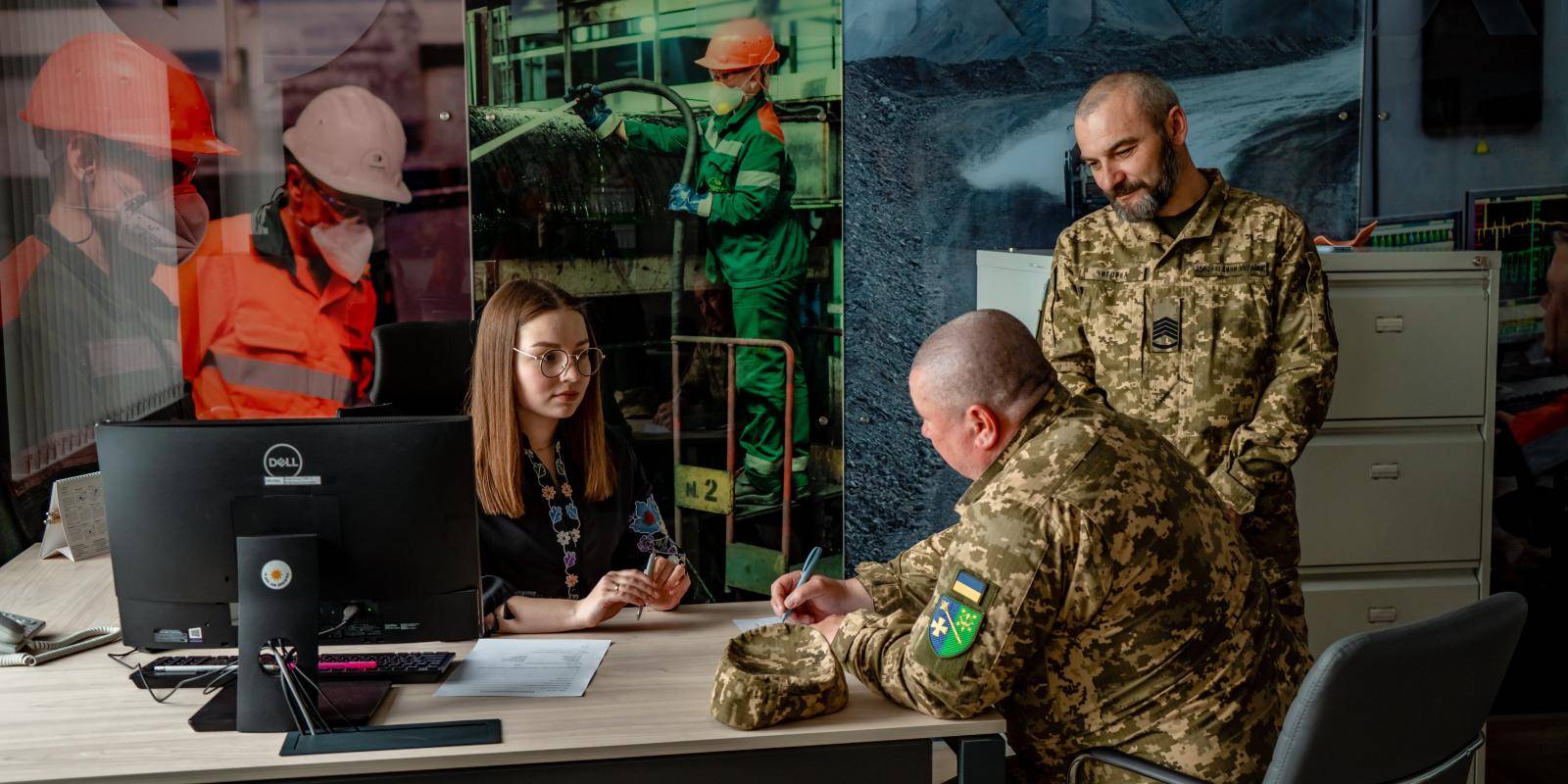
To improve access to veteran-support information and veteran services, the MoVA has been developing the Veteran PRO digital ecosystem since the spring of 2025.
To improve access to veteran-support information and veteran services, the MoVA has been developing the Veteran PRO digital ecosystem since the spring of 2025. Different versions of Veteran PRO are available through Ukraine’s national digital public infrastructure system, Diia, and through a standalone information portal. Diia is an e-services system that allows citizens to access a range of online government services and perform various tasks (such as filing tax returns, registering vehicles, applying for and storing digital ID, or storing and accessing business documents). The MoVA has created a dedicated veterans’ section within the Diia system, accessible exclusively to veterans following identity verification. As of October 2026, this space contains 10 services that users can access fully online (either via app or web portal) without having to interact with human service providers.
In contrast to the Veteran PRO section in Diia, the standalone information portal – which was created in October 2025 – not only lists information on services and opportunities for veterans and their families at the national level but also includes listings of regional and local services (created at the initiative of local leadership). The platform features an AI-assisted support tool alongside a localized search engine that maps national and regional veteran support services, including relevant contact details of service providers. This tool is not a substitute for advice from a veteran support specialist, but it helps beneficiaries work out more quickly what steps to take and where to turn for help.
A key limitation of the Veteran PRO platform, however, is that it provides information only on the government’s services for veterans. Users cannot simultaneously search for services provided by CSOs or the private sector.
A number of civil society initiatives are seeking to fill this information gap. One is the Veteran Help portal, developed by Beehive Logic, a commercial digital agency, in collaboration with the Zaporizhzhia-based CSO ‘Platform of Joint Actions’. Like the government’s Veteran PRO platform, Veteran Help provides access according to the user’s veteran status; the difference is that the portal provides information about civic and business veteran support initiatives as well as government programmes.
Another such initiative is ‘legal Navigator’, a digital self-help platform and mobile application designed to provide service personnel, veterans and their families with information on their legal rights. Meanwhile, the NGO ReSTART has collaborated with IREX, a US-based non-profit, on a ‘Hromada Readiness Index’ to track the technical, infrastructural and administrative capacities of communities in relation to post-war rebuilding, urban planning and socio-economic stabilization, including the reintegration of IDPs and veterans. This tool is designed to help assess and enhance the capacity of Ukrainian municipalities to navigate wartime and post-war recovery.
Together, these three examples show how Ukrainian civil society is consistently filling service gaps where the state may be unable on its own to provide support, and driving innovations in veteran services and care.
Addressing veterans’ physical and mental rehabilitation needs
Mental health challenges and untreated psychological war trauma are increasingly viewed as a direct threat to Ukraine’s future security and national economic recovery. Widespread PTSD, depression and anxiety directly diminish workforce participation, lower productivity and exacerbate the country’s acute labour shortages.
War injuries in Ukraine differ significantly from those seen in past conflicts like Afghanistan, Iraq and Vietnam. Injuries are almost always combined traumas, and extended or inadequate tourniquet use has resulted in higher amputation rates. While tourniquets are essential for stopping severe bleeding, troops often apply them incorrectly or for minor wounds. Moreover, because Russian forces routinely target medics, evacuation delays can result in tourniquets being kept on well past a safe duration, causing irreversible tissue death. Military medical experts have stressed the urgent need to retrain soldiers in combat first aid in order to prevent avoidable limb loss. The Superhumans Center, a nationwide war trauma treatment unit, estimates that at least 100,000 people – both military personnel and civilians – in Ukraine have suffered amputations due to injuries from shelling, landmines or other types of blast.
The Superhumans Center, a nationwide war trauma treatment unit, estimates that at least 100,000 people – both military personnel and civilians – in Ukraine have suffered amputations due to injuries from shelling, landmines or other types of blast.
Meeting the rehabilitation and adaptation needs of veterans is a continual challenge. In a survey by the Ukrainian Veterans Foundation, 47 per cent of participating veterans reported that public spaces in their place of residence are somewhat or totally lacking in accessibility for disabled visitors. In the same survey, the primary concerns identified by veteran respondents about the transition to civilian life centred on psychological and social reintegration. Psycho-emotional instability topped the list of worries (84 per cent of respondents considered such problems to be moderately or highly likely to occur), closely followed by substance abuse (79 per cent), and physical health or medical access issues (75 per cent). Another survey showed that deep mistrust of the healthcare system, limited access to war trauma specialists, and insufficient information prevent veterans from getting the psychological support they need. Research shows the importance of combining physical and mental rehabilitation in restoring a person’s independence and sense of identity.
While flagship rehabilitation centres such as UNBROKEN and private facilities such as Superhumans Center – both of which operate in major cities such as Lviv – set high standards, regional and rural healthcare centres lack the specialized staff and modern equipment needed to maintain long-term care. As a result, veterans’ access to services has been uneven, and dependent on their community of residence; the problem is compounded by the current shortage of trained specialists in psychological support, physical rehabilitation and prosthetics.
Again, civil society is showing its indispensable role in filling gaps in service provision. According to an IREX report, 66 per cent of Ukrainian CSOs provide psychosocial support and rehabilitation, while one-third provide medical services. CSOs are also starting to set the wider agenda: one organization, Veteran Hub, has published a report defining the key requirements for veterans’ well-being.
Adaptive sports have emerged as a cornerstone of physical and psychological recovery for Ukrainian veterans. A ground-breaking report by Come Back Alive, an NGO, explains how physical activity serves as a crucial tool for regaining confidence in a changed body, restoring emotional balance and fostering psychological resilience. The report emphasizes how adaptive sports help counter post-service isolation by reconnecting service members to their community, while simultaneously bolstering the country’s defence capacity by reintegrating future fighters. By helping wounded defence personnel reject a victim mindset and re-establish structured camaraderie, adaptive sports are a vital instrument for veterans’ physical and psychological healing. On an international level, major adaptive competitions such as the Invictus Games – in which Ukraine started competing in 2017 – also play a vital role in helping veterans heal wounds both visible and invisible; such events also amplify the message of Ukrainian dignity and resilience on the global stage.
When adaptive sports are integrated directly into clinical rehabilitation programmes alongside standard care, veterans’ recovery accelerates significantly. Research from the Centre for Strategic Communications has shown nearly 70 per cent of veterans reporting stronger social ties after completing sports-integrated rehabilitation.
Supporting veterans’ employment and entrepreneurship
Ukraine faces a severe demographic crisis. Nearly 5.8 million Ukrainian refugees are abroad, and an estimated 3.9 million people are internally displaced. In a 2025 study, 75 per cent of Ukrainian businesses reported labour shortages. Given these figures, keeping working-age veterans in active employment is an economic necessity. Civil society leaders insist that Ukraine’s new veteran support system should be framed as a ‘policy of opportunities rather than privileges’, one that rejects a paternalistic model in which veterans are treated as passive recipients of welfare; rather, the idea should be for policy to help veterans regain autonomy and develop a new civilian identity.
Opportunities such as training programmes and business grants help veterans regain a sense of purpose and control after leaving the military. Such initiatives provide financial stability and empower veterans to manage their own futures. Professional development opportunities can also help to replace the peer networks which veterans may have lost since leaving active service, in turn supporting mental health rehabilitation.
The European Commission’s Ukraine 2025 Report and a 2026 European Parliamentary Research Service briefing highlight the urgent need for a comprehensive support system to integrate veterans into the labour market, and to protect the workplace-related rights of those with disabilities caused by war injuries. As with the approach outlined elsewhere in this paper (see, in particular, the section on ‘Modernizing the veteran support model’ above, as well as Chapter 1), these reports frame veterans not just as beneficiaries but as a vital resource for Ukraine’s post-war recovery. The government’s Ukraine Facility Plan – a technical document designed to guide implementation of the EU’s programme of financial aid to Ukraine – also mentions how this reformed system will have a positive impact on economic growth ‘by increasing the supply of labour’.
A 2025 survey by the Ukrainian Veterans Foundation showed that 76 per cent of veterans believe lack of employment is likely once a soldier leaves service. Only about 27 per cent of respondents reported having experienced a smooth transition to civilian work, while nearly 25 per cent cited having encountered discrimination when applying for jobs. A study by IREX has shown similar results, with over a third of respondents revealing that they had encountered obstacles in their employment search, mostly due to insufficient skills (28 per cent), physical limitations (30 per cent) and employer prejudice (29 per cent). These data reveal a need for targeted and individualized career counselling, and underline the importance of businesses adapting physical premises to veterans’ needs. Compared to the EU, Ukraine has a significantly lower employment rate for people with disabilities. While roughly one in two disabled people in the EU is in employment, in Ukraine the share is only about one in six.
In another study led by the MoVA in collaboration with Robota.ua – one of Ukraine’s top online job search platforms – 57 per cent of Ukrainian veterans reported significant barriers to civilian employment after military service. It is noteworthy that the veterans self-reported having skills that are traditionally highly valued by businesses, such as adaptability (73 per cent), certified first-aid training (67 per cent), teamwork (67 per cent) and people management (65 per cent). Despite this, veterans are routinely underestimated as candidates because employers struggle to recognize the value of military experience or understand how it can be applied to specific corporate roles.
Ukrainian companies have attempted to address this problem. The Nazustrich (‘Toward’) initiative created by Work.ua – the largest online job board in Ukraine – provides a centralized digital platform that connects returning Ukrainian veterans with prospective employers through a dedicated portal of veteran-friendly job openings and searchable candidate CVs. In collaboration with the MoVA, Work.ua also created a handbook on how to translate military experience into skills applicable to civilian jobs. The handbook helps veterans convert the skills and training acquired through their military service into recognizable corporate competencies on their CVs, while simultaneously equipping Ukrainian employers with guidance on properly assessing military backgrounds and building inclusive workplace cultures. The platform also provides businesses with an operational checklist to evaluate internal accessibility and inclusivity policies.
Psychological assistance, private health insurance, professional career counselling and flexible work arrangements are all vital corporate tools for facilitating veterans’ successful transition back to the workplace. But a lack of preparedness among businesses remains a major challenge. According to a 2025 survey, 48 per cent of companies employed people with disabilities, but more than half of Ukrainian employers were not ready to adapt workplaces accordingly. In another survey, by the European Business Association, 46 per cent of Ukrainian employers reported having no veteran support or adaptation programmes in place, while 44 per cent indicated they had not introduced a dedicated role overseeing internal veteran policies. Due to their more limited resources, small and medium-sized enterprises (SMEs) tend to establish a separate veteran-related role or department, typically embedded within the human resources (HR) function; bigger companies, in contrast, are increasingly introducing the new role of chief veterans’ officer (CVO) to oversee internal veteran policy.
Psychological assistance, private health insurance, professional career counselling and flexible work arrangements are all vital corporate tools for facilitating veterans’ successful transition back to the workplace. But a lack of preparedness among businesses remains a major challenge.
Ukraine’s largest businesses are leading the way in terms of re-evaluating how the corporate sector can assimilate veterans and address their needs. Major firms are rolling out comprehensive support packages both for mobilized staff and for newly hired veterans. For example, Ukraine’s retail giant Aurora offers a comprehensive support package that includes full funding for psychological therapy, for legal consultations, for physical rehabilitation support, and for customized workplace schedule adjustments during medical recovery. The company has created remote positions for veterans with limited mobility, providing training and the necessary technical equipment. It was also one of the first to introduce the position of CVO. The company provides peer mentorship, funds external retraining courses and is improving accessibility across all its offices. A separate focus is on the creation of inclusive workspaces and on educating the company’s civilian teams, thereby helping to form a culture of mutual respect and understanding of veterans’ experiences. Partly because of the above initiatives, Aurora ranks among the country’s most veteran-friendly employers.
Another company with a prominent record in supporting veterans is DTEK, Ukraine’s largest private energy operator. DTEK pioneered MOZHU (‘I Can’), a digital tool designed to match veterans with disabilities to the company’s industrial roles. This enables HR teams to align a veteran’s health profile and technical skills with specific, risk-free industrial tasks. DTEK’s management has also requested extensive workplace accessibility audits and has invested in re-skilling demobilized personnel for the energy sector.
The government is also getting involved in helping veterans to find employment and adjust to the corporate world. In December 2024, the Ministry of Education and Science of Ukraine launched the ‘Education for Veterans’ online platform, developed with the support of the Skills4Recovery programme funded by the German government. The platform helps veterans transition to civilian jobs, and offers tools for job training and career growth.
In parallel, the MoVA established ‘Veteran Career’, a national initiative aimed at easing the transition of war veterans back into civilian life. The primary goal of this online platform is to align veterans’ skills with civilian career opportunities, which in turn should help to reduce unemployment and expand the tax base. The platform allows veterans to access free vocational training, university degree courses and other certifications to help veterans match their skills and experience to current labour market needs. To help veterans acclimatize to corporate life, it assigns dedicated career advisors and workplace mentors to support veterans through their first six to 12 months in a new job. Just as significantly, the programme helps businesses to adjust to an influx of veterans – setting guidelines and offering financial incentives for employers to modify physical workplaces and foster inclusive company cultures. More than 3,000 veterans have signed up to use the service to build resumes and find matching jobs. Nearly 1,000 businesses use the Veteran Career platform to post job listings for returning service members. Veteran Career also offers grants and business advisory services for veterans who want to start their own business.