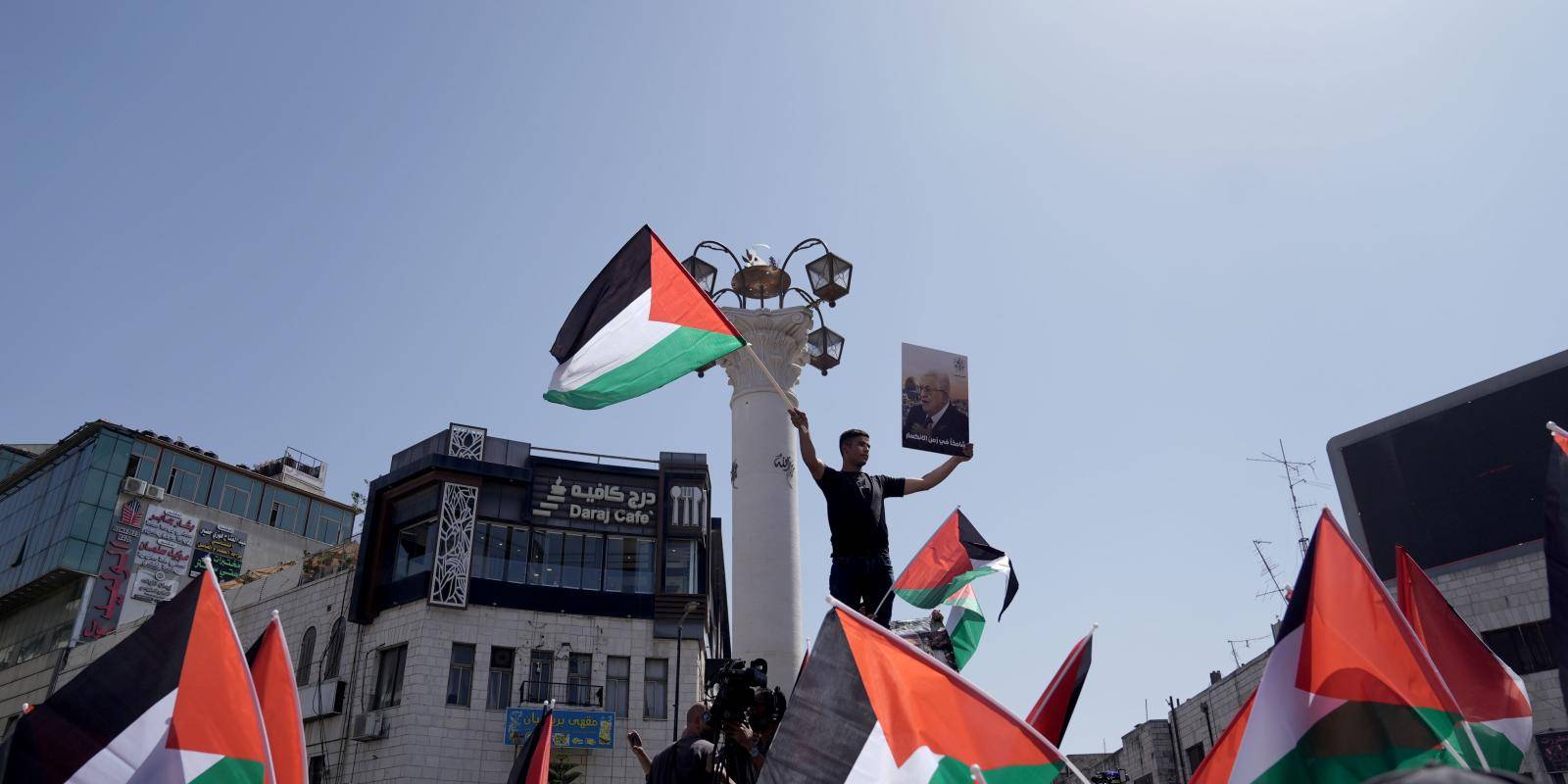
The Palestinian leadership faces overlapping challenges of succession, representation and legitimacy. Meeting them will require an inclusive process of political renewal that responds to Palestinian priorities and is supported by a credible pathway towards statehood.
Palestinian institutions require political re-legitimation, not only administrative or technical reform. The pattern traced below, from the Oslo Accords through more than three decades of technocratic governance experiments to today’s leadership, electoral and constitutional questions, illustrate a consistent lesson: administrative fixes alone have failed.
The international community has consistently prioritized Palestinian governing bodies led by officials selected for administrative and technical competence, which have focused on service delivery, public finances and institutional management rather than political mobilization, as a means of advancing a two-state solution.
The Oslo Accords, signed between Israel and the PLO in 1993 and 1995, established the PA, which had limited governing powers and was originally intended to be in place for an interim period of five years. A decade later, in 2003, the Quartet Roadmap introduced the position of prime minister in the PA to constrain Yasser Arafat, who remained president. In his statement, US president George W. Bush publicly preconditioned the founding of a Palestinian state on establishing ‘a new and different Palestinian leadership’ and ‘entirely new political and economic institutions’. Mahmoud Abbas was appointed as the first prime minister and afterward assumed the presidency through the 2005 elections that followed Arafat’s death in 2004. Three years later, in 2007, then-prime minister Salam Fayyad led a technocratic PA government based in the West Bank, which was set up as a ‘national emergency’ response after Hamas’s takeover of Gaza. A similar logic informed the Palestinian National Consensus Government in 2014 under Rami Hamdallah, as a result of a reconciliation agreement brokered by Egypt and Qatar. However, this was also a short-lived endeavour. In 2024, a technocratic government led by Mohammad Mustafa was formed under external pressure in the context of the Gaza war following 7 October 2023. More recently, in January 2026, the Trump administration’s Board of Peace (BoP) established the National Committee for the Administration of Gaza (NCAG) (see Chapter 5) to serve as ‘a technocratic, apolitical Palestinian committee, responsible for delivering the day-to-day running of public services and municipalities for the people in Gaza’.
A consistent pattern runs through these cases. The international community has used technocratic governance to sideline political actors deemed unacceptable, including Yasser Arafat and Hamas, while leaving the underlying drivers of the conflict unaddressed and deprioritizing Palestinian democratic legitimacy. Israel has alternated between tolerating and obstructing these arrangements, depending on whether they strengthen Palestinian political authority. Palestinian factions excluded from each process have contested the legitimacy of these efforts and challenged their outcomes. In each case, the gap between technocratic administration and genuine political sovereignty has remained unresolved.
What has been missing from these processes is empowered, representative and inclusive Palestinian agency, working towards a clear and agreed national goal. This pattern has contributed to a growing conviction within Palestinian society that without coherent political agency, no sustainable political pathway can emerge.
Interviews conducted for this paper show that long-standing concerns about the weakening of key institutions have prompted a broader internal debate about the future of Palestinian politics. This has centred on whether existing political structures remain viable and capable of advancing the national project, with closer scrutiny of their structure, purpose and effectiveness. For many Palestinians, as demonstrated by extensive polling, needed governance reform extends beyond technical fixes to deeper questions of representation, accountability and political purpose. From their perspective, reform centres on the need for political legitimacy, national unity and the conduct of credible parliamentary and presidential elections.
This includes establishing an inclusive leadership and creating a process that actively engages Palestinian youth. Such an approach is consistent with the broader argument that Palestinian reform depends on domestic resonance and a viable diplomatic horizon, as technocratic measures alone cannot generate legitimacy.
At the same time, the internationally driven reform agenda for Palestinian governance is met with strong scepticism by those directly affected by it. Interviews with Palestinian and regional official and non-official interlocutors point to a prevailing perception that Israel, the US and other Western actors have instrumentalized demands for PA reform to discredit the Palestinian leadership, avoid dealing with the underlying causes of the Palestinian–Israeli conflict and delay progress towards statehood. Consequently, internationally driven reform is widely considered to be an open-ended condition imposed on a Palestinian leadership constrained by occupation and denied political agency, rather than a pathway to Palestinian statehood.
There is nevertheless broad recognition, among both Palestinian constituencies and the international community that reform of the Palestinian leadership is necessary, not least if progress towards statehood is to remain plausible.
Current internationally driven reform efforts are tied to a set of overlapping external frameworks, including President Trump’s peace plan in 2020 and the Saudi-French Proposal as per UNSCR 2803, and the Palestinian–EU reform matrix, as agreed with the PA in November 2024. These initiatives have created layered and at times competing expectations of what reform should entail.
As a result, the PA is expected to undertake comprehensive change to satisfy local, regional and international audiences, even as the requirements and underlying motivations of these actors diverge, adding further complexity to the process.
One thing is clear. Hamas’s attack on Israel on 7 October 2023 and the war that followed in Gaza have stripped the Palestinian national project back to first principles. In the aftermath, a wide debate has emerged within Palestinian society, among intellectuals, activists and diaspora communities, on the need to reassess the path to liberation and statehood. Central to this debate is the condition of Palestinian political leadership and its ability to give direction and an energized vision and strategy to the national project.
The PA’s fiscal crisis
The PA’s fiscal crisis is not one constraint among several, but arguably the single largest determinant of whether reform, and preparation to govern Gaza, are possible at all. A PA unable to pay salaries reliably, manage its exposure to Israeli banks, or maintain access to the international banking system cannot sustain institutional reform, nor extend services into Gaza. Israel’s near-total withholding of clearance revenues, taxes and customs duties collected on the PA’s behalf, which have historically covered around two-thirds of its income, has been the immediate trigger. Transfers were effectively halted through much of 2025 and into 2026, forcing the PA to pay only a portion of public sector wages while arrears accumulate. By late 2025, the PA owed roughly $2.5 billion to public employees and the pension fund, $1.6 billion to private suppliers, and $4.8 billion in domestic bank debt, pushing total indebtedness to $14.6 billion, which is 106 per cent of the PA’s 2024 GDP.
A PA unable to pay salaries reliably, manage its exposure to Israeli banks, or maintain access to the international banking system cannot sustain institutional reform, nor extend services into Gaza.
A newer and more destabilizing risk has since emerged. In July 2026, Israel’s two largest banks, Bank Hapoalim and Israel Discount Bank, notified Palestinian banks of their intention to terminate correspondent-banking relationships – essentially disabling the ability of Palestinian banks to provide cross-border financial services – from September and October 2026, respectively, after Israel’s finance minister, Bezalel Smotrich, narrowed the legal indemnities protecting the Israeli banks from liability. The deadline for termination was later extended to the end of the year.
The Palestinian banking system remains structurally tied to Israeli banks and the shekel, under the 1994 Paris Protocol. Any disruption to these arrangements is likely to affect the financing of fuel, medicine and food imports, as well as the payment of wages well beyond the PA’s own payroll. This systemic risk has prompted explicit warnings from the World Bank and international monitors.
These pressures compound a further unresolved question. The respective financial responsibilities of the PA and transitional bodies such as the NCAG have not been clearly defined, leaving uncertainty over who will bear the costs of administering and rebuilding Gaza as these responsibilities grow. How reconstruction financing is designed matters as much as its volume. If international assistance is channelled through parallel, donor-managed mechanisms that bypass Palestinian institutions, it risks weakening the PA’s institutional authority at precisely the moment when reform depends on demonstrating its capacity to govern effectively. This concern is not new. Analysts have warned that weak oversight of Gaza-specific financing mechanisms could deepen the territorial separation that the transition is intended to overcome.
The central challenge for Palestinian leaders is to take ownership of the reform agenda rather than accept it as an externally imposed condition. Doing so would enable them to use reform as a means of shaping the external environment and advancing Palestinian interests, rather than remaining the object of external pressures and events.
A reform agenda that comes from within Palestinian institutions will carry greater legitimacy, prove more durable in implementation and be harder for external actors to selectively interpret or instrumentalize. Without this grounding, reform risks being defined and controlled from outside, limiting Palestinian ownership and weakening its long-term effectiveness.
Political leadership
The formal Palestinian leadership is composed of three principal structures. The PLO, founded in 1964, is recognized as the sole legitimate representative of the Palestinian people and was formally acknowledged by Israel under the 1993 Oslo Accords. The PA, which was established through the same set of agreements, functions as an interim governing authority. The Palestinian presidency constitutes a third component of the leadership structure. All three institutions are dominated by a single political faction, Fatah, and exercise only limited authority within parts of the West Bank.
Currently, President Mahmoud Abbas (who is 90 years old) holds four leadership positions serving as head of the PLO, the PA, Fatah and the State of Palestine. Many fear that once the president’s position becomes vacant, competition within Fatah and among other Palestinian factions could trigger a power struggle, which would disrupt a peaceful transition and deepen political divisions.
The legal framework for institutional leadership succession has undergone significant changes in the past two years. A number of Palestinians who were interviewed for this paper viewed the updated procedures as an attempt to maintain and consolidate key power positions within Fatah.
While institutional rules are largely in place to govern the succession process, ambiguity continues to prevail when it comes to the State of Palestine.
Therefore, leadership succession is a pressing concern. Indeed, Palestinian interlocutors we spoke to noted that it is one of the key national agenda items in need of urgent attention. Current succession mechanisms for leadership transition in the PLO, PA, Fatah and the State of Palestine are as follows:
- The PLO – The PLO is headed by the chairperson of the organization’s 18-member executive committee (EC). The PLO’s statute does not explicitly address the vacancy of the chairperson. Article 13 generally states that the EC chairperson is elected by the EC. It is worth noting that the PLO National Council (PNC) or the Central Council (PCC) elects the executive committee members.
In April 2025, the PLO created a new position of EC deputy chairperson, though critics saw this as a response to Arab and international pressure on President Abbas to appoint a deputy in an attempt to shore up the succession process. President Abbas appointed Hussein al-Sheikh to the position. However, the decision to appoint a deputy did not explicitly state that the deputy would assume the position of PLO chairperson in case of a vacancy. Therefore, the creation of this position leaves the existing arrangements for selecting a new chairperson unchanged.
- The PA – Under a constitutional declaration issued by President Abbas in October 2025, if the office of the PA president becomes vacant while there is no Palestinian Legislative Council (PLC), the deputy chair of the PLO EC, who also serves as vice president of the State of Palestine, assumes the duties of the PA president. The interim period lasts 90 days and can be renewed once, pending presidential elections. This provision recognizes that the PLC, which was suspended in 2007 and then dissolved in 2018, is no longer functional and removes it from the succession process, transferring authority to the PLO framework instead.
- Fatah – Fatah is headed by the chairperson of the 23-member Fatah Central Committee (FCC). As stipulated in Fatah’s internal charter of 2009 (Article 41), the chair and 18 FCC members are elected by the Fatah General Conference while the additional four members are proposed by the chairperson and must be approved by two-thirds of the FCC and endorsed by Fatah’s Revolutionary Council (Fatah’s governing body). The charter does not explicitly stipulate the process in case of a vacancy but implies that the leadership seat would be occupied by the deputy chairperson as interim until the next general conference is convened. On 3 June 2026, during the first meeting of the recently elected FCC, Hussein al-Sheikh was elected as Fatah’s deputy leader.
- President of the State of Palestine – There are no specific rules or a constitutional structure that govern the appointment of the president of the State of Palestine. In 2005, Mahmoud Abbas was elected as president of the PA and in 2008 he was officially confirmed by the PLO’s PCC as the president of the State of Palestine. A 2013 presidential decree stipulated that the ‘State of Palestine’ should officially replace the term PA and that the State of Palestine logo be used on all Palestinian official documents and transactions. This decision followed the UN general assembly’s recognition of Palestine as a state. The overlap may suggest that the governing succession rules of the PA presidency apply to the State of Palestine. However, electoral experts interviewed for this paper highlighted the ambiguity resulting from the interchangeable use of the terms ‘President of the PA’ and ‘President of the State of Palestine’ adding that the successor to the national leadership role would most likely require PLO approval in the form of PCC designation as president of the state, in order to claim domestic authority.
The serving president’s advanced age and the critical juncture of the Palestinian national project increase the urgency of establishing transparent, professional and credible succession mechanisms in all Palestinian political institutions.
A Palestinian constitutional expert interviewed for this paper noted that constitutional declarations affecting succession processes were introduced unilaterally by the sitting president, without oversight from legislative bodies or the judiciary. Interlocutors noted that the president’s reliance on these unilateral measures has compounded the loss of public trust in the political system and its leadership. Unilateral presidential decrees and constitutional amendments are no substitute for a functioning parliamentary system (the PLC) or for a political environment conducive to national elections. Therefore, a transparent mechanism for inclusive consultation with relevant segments of Palestinian society is needed to ensure that decisions command broader legitimacy and are not taken unilaterally.
Legal experts we spoke to described a ‘three-body problem’ within the system, referring to the lack of a clear framework to regulate relations between its three main institutions: ‘The way things stand, the PLO represents all Palestinians, including the diaspora, the PA receives international funds and the State of Palestine engages in diplomatic relations, but there is no framework to coordinate the relationship between all three.’ Without agreed rules to govern relations between them, it remains unclear how decisions would be made on behalf of the Palestinian people if the PLO and the PA were led by different individuals, a plausible outcome under current succession arrangements. In essence, Palestine’s body politic is currently managed by one person. When he leaves his posts, there will be no system to coordinate how the different entities would work together.
In essence, Palestine’s body politic is currently managed by one person. When he leaves his posts, there will be no system to coordinate how the different entities would work together.
This points to the need for Palestinian lawmakers and policymakers to undertake a comprehensive review of the existing legislative framework, including the Palestinian Basic Law of 2003, subsequent presidential decrees and constitutional amendments, to establish a clear, credible and coherent legal and institutional framework consistent with democratic principles. For the best chance of success, the process must be grounded in inclusive consultations with political factions and civil society organizations and treated as a priority within a programme of genuine reform. Consultations conducted with experts and the wider public as part of the constitutional process must feed into this debate. The constitution drafting and related consultations are an opportune platform for identifying the existing gaps and consolidating the legislative and institutional frameworks.
The acceleration of territorial loss through Israeli annexation and settlement policies, coupled with the scale of fatalities and destruction in Gaza, should serve as a catalyst for Palestinian political factions to move beyond internal rivalries, come together and form a national strategy to address pressing priorities including preserving unity between the West Bank and Gaza. Hamas, alongside Fatah and other Palestinian groups, should be part of discussions on political renewal and the future of the national project. While deep differences remain, the goal of self-determination exists as potential common ground.
A realistic starting point would be for the leadership to initiate a comprehensive, inclusive and structured dialogue that brings together the PA, major political factions, civil society organizations, and representatives from Gaza, the West Bank, including East Jerusalem, refugee communities in neighbouring countries, and the wider diaspora.
The objective should not be to resolve all differences immediately, but to build consensus around a limited forward-looking set of national priorities, governance reforms and arrangements for elections.
Palestinian leadership, institutions and society should then move to translate these arrangements within the framework of UNSCR 2803 and produce a detailed, workable national action plan with clear objectives, structures, timelines, roles and responsibilities. Without such an effort, Palestinian decision-making is likely to remain fragmented, limiting its ability to influence transitional governance arrangements and weakening its capacity to respond to the risks posed by continued conflict, occupation and potential annexation.
Active international and regional support for this effort, particularly from the US and Arab countries, is essential. Without it, Israel will most likely obstruct this initiative.