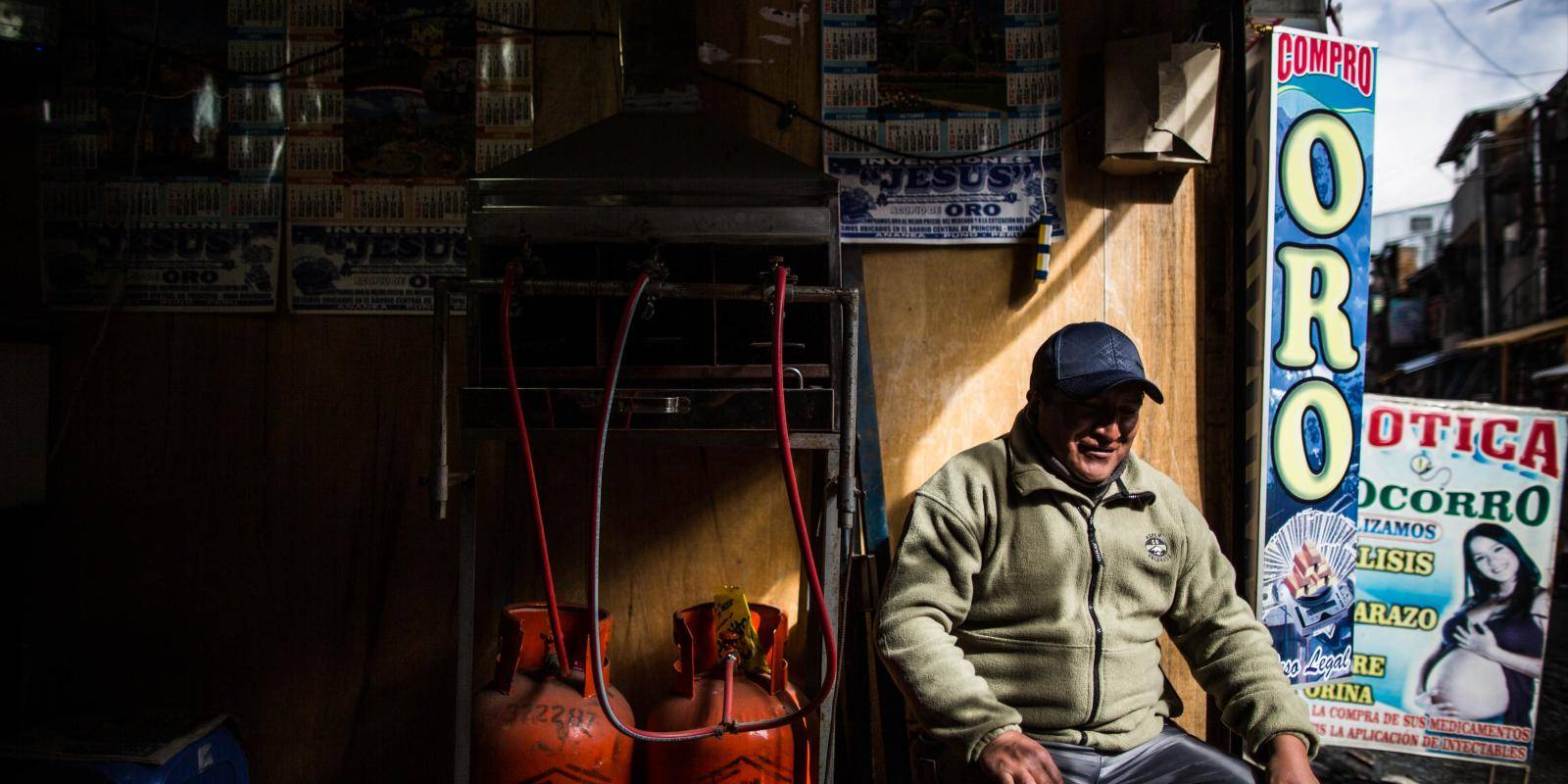

In the heart of the Peruvian Amazon, a mother breastfeeds her baby, without realizing she is damaging her child’s ability to learn. On the other side of the country, in Trujillo, another mother cradles her toddler, knowing the child will never see her father again.
Both are casualties of a gold rush stained with blood that is claiming innocent victims across Peru. Remote communities on the Nanay River in Loreto, Peru’s largest rainforest region, are being poisoned by mercury, the toxic liquid metal used as a magnet to bind with gold dust sucked out of riverbeds. In Pataz, where the mountains are holed like a Swiss cheese, men risk their lives for a few dollars more to guard mine shafts from raiders looking to steal the precious metal.
Illicit flows
As the price of the gold soars to record highs, peaking in April at $3,500 an ounce, death and disorder reign across many parts of Peru. Criminal gangs and tens of thousands of small-scale miners vie to get their hands on the yellow metal in an illicit trade that is now many times more valuable than cocaine and which is shaping Peru’s destiny.
‘I expected to find him alive, we had so many things to do together,’ sobs 23-year-old Paty Carranza. Her partner Frank Monzón, aged 24, was among 13 men massacred in May inside a Pataz mine shaft they were guarding. In this gold-rich region, Poderosa, a formal mining company, battles illegal miners and murderous criminal gangs for ore. Carranza was left with their three-year-old daughter and a half-built home in Porvenir, a crime-ridden slum in Trujillo. She had travelled to Pataz hoping rescuers could bring her husband out alive but found herself in the morgue identifying his body.
‘He grew up without a father; he only had a mother to get him ahead,’ she says. ‘Now that he’s gone, our daughter will have to live through the same.’ With scores of miners and security workers killed in Pataz – and many more unaccounted for – the place is a touchstone for the tremendous economic might of the illegal gold trade, its deadly power, as well as the venality of some of those charged with reining it in. Since May, a state of emergency has been in place and troops now patrol the Andean province.
In July, Peru’s foreign minister Elmer Schialer said the illegal gold economy was seven times bigger than that of the cocaine trade – Peru is the second biggest producer of the drug. Illicit gold accounted for 60 per cent of Peru’s total laundered assets between January 2014 and October 2024, worth $9 billion, according to the country’s Financial Intelligence Unit, dwarfing the next biggest sources of laundered assets.
Peru is South America’s biggest gold producer and ranked 9th in the world in 2025. Yet, the profits from illegal gold rival those of the formal sector. The Peruvian Economics Institute (IPE) forecasts that illicit gold exports could reach $12 billion this year, equivalent to between 105 and 115 tons and more than 40 per cent higher than the 2024 figure.
‘The rise of gold prices should be a boon for the Peruvian economy,’ said Alonso Macedo, an economist with the IPE. ‘But what should be creating jobs, what should be creating revenue, is creating violence and inviting corruption. It is also inviting these negative forces that can make it harder for the country to progress.’
The challenge of regulating
Regulating the sector is a formidable challenge. In 2012, Peru’s government set up Reinfo, a registry for miners who want to join the formal sector, pay tax and comply with regulations. But, in practice, it shields illegal operators from criminal sanctions while only 2.3 per cent of more than 84,000 ended up completing the process and obtaining permits.
‘It’s a register of impunity,’ said César Ipenza, an environmental lawyer. Powerful lobbies in Peru’s widely despised congress favour the illegals’ lucrative interests, Ipenza adds. Between 2021 and 2024 alone, 25 bills on informal mining were presented, 23 of which favoured deregulation of this activity, weakening the state’s ability to control it.
The government has promised a crackdown. ‘This government is fighting against illegal mining. But this is a long battle,’ Jorge Montero, Peru’s mining and energy minister, told journalists in June. He added that the record price of gold – the result of geopolitical and economic uncertainty driving central bank demand – was an ‘enormous incentive for criminal gangs’.
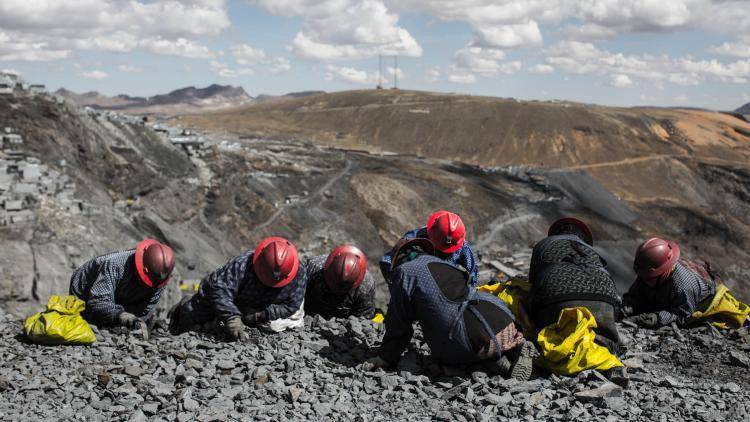
Illegal gold passes easily through many of Peru’s 138 registered ore processing plants. Once processed, the gold is, in effect, legal and can be scooped up by buyers and exported to countries such as India and the United Arab Emirates, whose lax due diligence indicates they are not too concerned about where it comes from.
In July, Peru removed 50,565 miners from Reinfo, leaving around 31,560 on the register. Small-scale miners clashed with police outside the congress building, demanding the registry continue. Weeks later, the deeply unpopular President Dina Boluarte appeared to cave in to their demands and authorized Peru’s chief of police to suspend all police raids against illegal mining activities across the country, except for Pataz.
Far from the high-stakes struggle over Peru’s gold, scientists in June visited six villages along the Nanay River to deliver sample results that showed nearly 80 per cent of the people tested the previous year had levels of mercury far above safe limits. Only 3 per cent of the 273 men, women and children tested had levels of mercury in their hair under the 2.2 ppm ‘safe’ limit established by the World Health Organization. Even here, criminal gangs use mercury to separate gold sucked up by dredgers from the river silt.