
On February 28, I resigned as Minister for Development and for Women and Equalities, when it was announced that an increase in UK defence spending would be funded entirely by reducing the overseas development budget to 0.3 per cent of gross national income. I set out the reasons for this at the time.
My successor is doing her professional best in difficult circumstances, and I do not intend to step on her toes. However, I believe we need a broader debate about the role and purpose of aid – one that extends beyond those within ‘the sector’ to include other policymakers and the public.
Beyond the sheer scale of the cuts, the decision to slash official development assistance (ODA) seemed divorced from the need to face up to geopolitical challenges – including the rise of China, the aggressive expansion of Russian influence and the stark increase in countries at war. These more dangerous circumstances require the UK’s development, diplomatic and defence levers to be strengthened and coordinated, not reduced. We also urgently need a better understanding of the modern nature of aid, humanitarian need and development.
Human security
Development is critical for human security – not only for the poorest people in the world but for our own citizens. It will be essential to recognize this as the UK’s approach to aid is remodelled in a world of reduced budgets and intense contestation around global influence.
When announcing the cut, the UK government could point to other nations scaling back for ideological reasons (for example the United States, Netherlands, Sweden), due to fiscal challenges (France and Germany) and/or pressures from military expenditure (Switzerland). Some polling suggests the cuts were not unpopular but the reasons for this are murky, with levels of support for aid roughly similar to those in the 2010s. Concerns about the effectiveness of ODA appear a constant. Beyond that, it is less clear what the public want from aid.
I agree, as Justine Greening recently argued in these pages, that aid spent effectively can increase the UK’s economic opportunities and reduce the population displacement that leads to migration. The path from ODA to these outcomes can be complex and long. Nonetheless, focus groups conducted by More in Common suggest there is public support for measures which ‘clearly benefit the UK’, as well as those that protect ‘safety for women and girls’. Support for spending on women and girls has been underlined in other polling as well.
However, research from the Development Engagement Lab, found that many measures that use ODA to promote growth overseas are not seen by the public as effective. Indeed, its findings support purely moral arguments, favouring the use of ODA for humanitarian purposes only. This view appears to support David Miliband’s recent lamenting about the reduction in the proportion of ODA spent on the extremely poor, and – in his view – its ‘diversion’ towards other public policy outcomes.
Divergent public opinion
I believe the public’s apparently divergent views on aid depend on how aid and its alternatives are presented. Despite many outcomes from aid ultimately supporting security, the implicit logic of the recent government decision to ‘cut ODA to fund defence’ was that spending on UK aid is an alternative to increasing domestic security, not a corollary to or foundation of it.
The context for this trade-off was the way in which fiscal decision-making was portrayed at the time, on which I’ve already commented. But beyond crises such as Gaza, there has been a lack of media coverage – traditional and social – of the current state of aid, humanitarian need and their linkages with security.
The dreadful Gaza crisis is linked in the public mind with a reduction in our country’s security. But few are aware of the wider and worsening global funding gaps for humanitarian needs beyond Gaza. Even the UN’s new ‘hyper prioritization’ model – which focuses on just under 40 per cent of those in need of humanitarian assistance –had only received 20 per cent of its funding as of June of this year. Where research exists on public perceptions of need, it suggests an underestimation of, for example, the extent of global food insecurity.
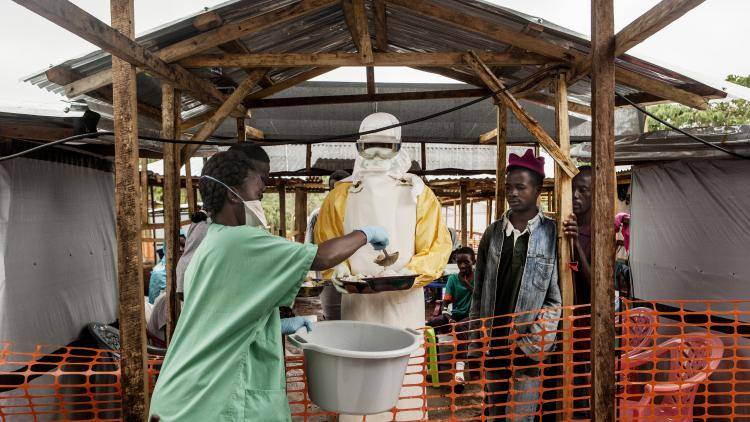
These challenging circumstances require a fundamental rethink of the UK’s approach to aid. There must be a very visible response to concerns about effectiveness, and increased coordination. But there must also be transparency about the political importance of aid and its connections with human security.
Many of my parliamentary colleagues appeared to assume that inefficient or untargeted projects could just be slimmed down to absorb the cuts while protecting humanitarian aid, support for health and climate finance. Yet the days of funding ‘Chinese opera singers’ – a much-cited case – are long gone, and I do not believe the government will be able to maintain even the areas of activity it said would be protected, given the magnitude of the cuts. It is absolutely critical, therefore, to deal with persistent concerns about effectiveness.
First, the way we communicate about aid spending should shift from showcasing just the amount of taxpayer money allocated, to reporting the precise outputs and outcomes of UK aid in direct, human terms. There must be far greater visibility for the contribution of thousands of British citizens to development, from clearing mines to helping disaster-affected communities to devising treatments for Mpox. To answer public concerns about development, MPs and UK aid workers need to talk more about aid and all that it achieves, not less.
Better coordination has been mentioned as a means of ‘bridging the global gap’ in ODA funding. It is encouraging that the UK–EU summit agreement included commitments around development and disaster-related cooperation. Yet even before the cuts many programmes were already collaborative. Coordination might help offset some losses but can’t deliver ‘more with less’.
As well as seeking to better calibrate the impact of cuts for especially hard-hit countries such as Somalia, which could see a reduction in its gross national income of 6.1 per cent according to the Centre for Global Development, coordination is urgently needed to reform multilateral institutions. ‘UN80’, a recently announced UN efficiency drive, must consolidate the almost 40,000 UN mandates, ruthlessly and speedily, while rebuilding support for global norms especially on humanitarian access. This process is not purely technical but involves fundamental geopolitical questions with which the UK must engage, in our own country’s interests as well as those of the poorest people in the world.
Stronger partnerships
When in office I sought to increase the visibility of development within the Foreign, Commonwealth and Development Office. I did not call for ‘divorce’ between foreign and development policy, but for the marriage to be strengthened. It was depressing to see how aid in the past was sometimes used for short-term political reasons, such as providing a ‘comms hook’ for a ministerial visit. That said, we should not and must not ignore the connections between development and geopolitics.
In that context, the UK must build stronger relationships with countries beyond the Global North. Nations such as Brazil, under President Lula da Silva, have become increasingly active while some Gulf countries have played a critical humanitarian role, especially in their immediate neighbourhood. The UK should intensify work with both.
This must include improving access to climate finance alongside Brazil’s COP30 presidency and creating a broad coalition to support women and girls, against attempts to rollback their rights.
