World leaders will gather at the Ukraine Recovery Conference in Gdańsk, Poland, on 25 June to rally support for the country’s reconstruction, with the focus on security and defence for the first time. The two-day summit comes as Ukraine’s fortunes in its defence against Russia are widely thought to have improved. At the same time, Kyiv has emerged as a new security partner in the Persian Gulf.
The conference, co-hosted by Donald Tusk, Poland’s prime minister, and Volodymyr Zelenskyy, Ukraine’s president, aims to secure further investment in Ukraine’s economic and social recovery. Recent World Bank figures estimate that, four years after Russia’s full-scale invasion, war-related damage in Ukraine exceeds $195 billion, although experts say the long-term cost of rebuilding the country’s energy infrastructure and human capital will be far higher.
New security partners
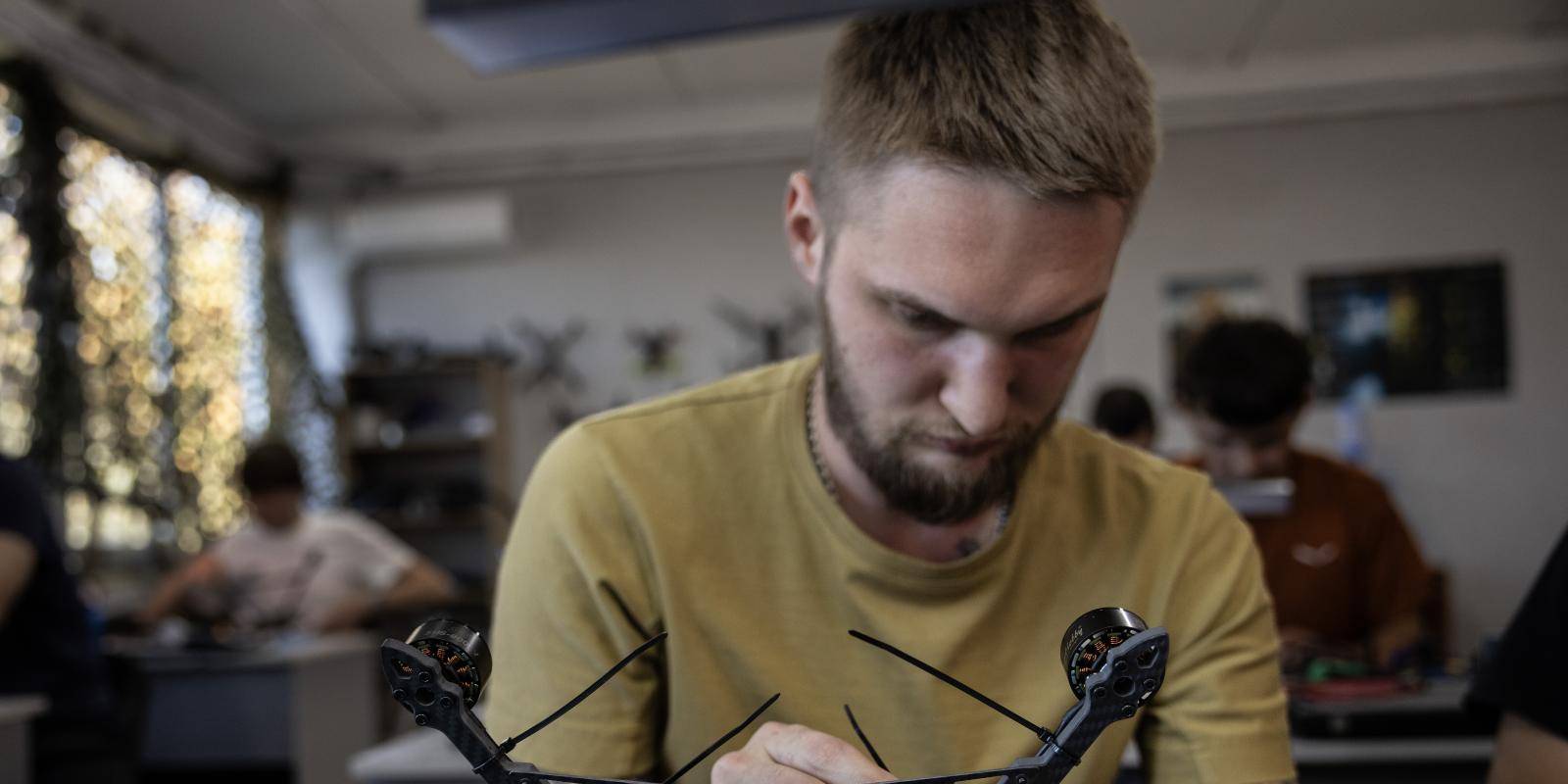
Ukraine’s military profile and reputation as the world’s leading drone producer have been significantly boosted by the Iran war, said Orysia Lutsevych, director of the Ukraine Forum at Chatham House. In late March, as countries in the Persian Gulf began to turn to Ukraine’s interceptor technology to counter Iranian drone and missile attacks, Zelenskyy travelled to the region to sign a series of ‘historic’ 10-year defence agreements with Saudi Arabia, the United Arab Emirates and Qatar.
‘Before the conflict in the Middle East, Gulf countries sat on the edge of the war in Ukraine,’ said Lutsevych. ‘None of them supported Kyiv.’ Zelenskyy’s tour of the region this spring quickly changed that, she said, adding that the multi‑billion‑dollar partnerships aren’t just raising Ukraine’s profile in the Gulf, but ‘helping Ukraine position itself as an asset to global security rather than a liability’.
Since the start of Russia’s full-scale invasion, Ukraine’s defence industrial production capacity has grown 50‑fold, enabling it to manufacture more than half of its military needs. In 2025, defence spending rose to 40 per cent of GDP. ‘Ukraine is exporting its expertise in drones and interceptor technology – something far more valuable than the hardware itself,’ said Francis Dearnley, The Telegraph’s executive editor and host of the ‘Ukraine: The Latest’ podcast. ‘Zelenskyy isn’t giving away weapons Ukraine can’t afford to lose. From Kyiv’s perspective, this is a win-win.’
Ukraine also benefits militarily by sharing this technology with new partners, said Lutsevych. ‘When your technology is deployed in different regions against different targets, your weapons improve because you have more data,’ she said. ‘Ukraine is very good at using this information from the battlefield to innovate. This is how it has achieved its military revolution.’
This innovation may be behind Ukraine’s recent successes on the battlefield. In May, Ukrainian drones successfully penetrated Russia’s strongest air defences to hit targets in Moscow, prompting President Vladimir Putin to scale back his Victory Day celebrations. Military tracking also shows that in May, for the first time in more than two years, Russia lost more territory than it captured.
Arsenal of democracy
These advances and Ukraine’s growing military confidence are also reshaping its relationship with European allies, said Dearnley. ‘Ukraine is positioning itself as an indispensable part of western security architecture,’ he said. ‘It wants to become the arsenal of democracy – playing the role the United States did during the Second World War, by providing the factories, the expertise, and the technology that an increasingly depleted Europe needs.’