

On 12 May, the Kurdistan Workers’ Party (PKK) announced its dissolution and the end of its more than 40-year armed struggle against Turkey. This is a historic decision. The Kurdish issue has fundamentally shaped the character and threat perception of the Turkish state and has influenced Turkey’s domestic and foreign policy more than any other issue. A lasting peace would therefore have wide-ranging implications.
Reshaping Turkey’s domestic politics
The new peace process is unique in that there are no external actors or third parties. Furthermore, it begins rather than concludes with the termination of the armed struggle and the disbandment of the insurgent group. Although the armed struggle has come to an end, the Kurdish issue will now evolve into a more political, civilian and democratic matter. It is the start of a new process and resolving it will take time.
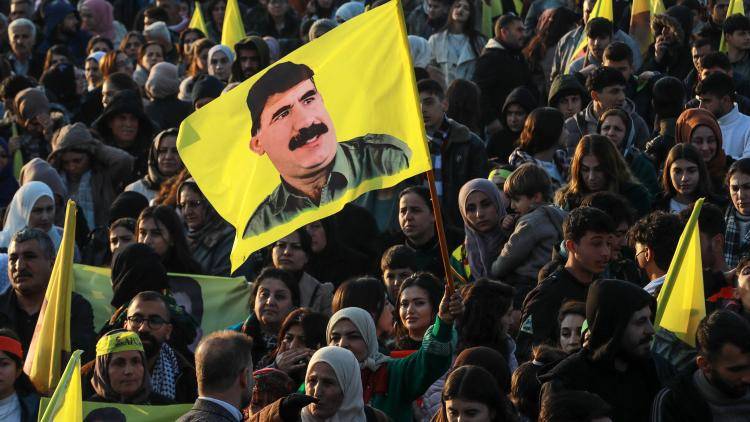
Turkey has long studied the experiences of countries like Colombia, Ireland, Spain and Sri Lanka. If this process is successful, Turkey and the Kurds will develop their own model for conflict resolution and addressing the armed expression of a long-standing identity question.
Post-PKK Kurdish politics can be transformative because resolution of the Kurdish issue requires a reimagination of Turkish citizenship and nationhood that includes and accommodates Kurdish identity.
Although the Kurdish issue is not the sole source of Turkey’s democratic crisis – this has many roots – it is the most potent in terms of duration and depth. One outcome has been the over-centralization of the state and public administration alongside numerous regressive laws concerning freedom of expression, and political parties and activities. The idea of ‘Kurdish separatism’ and PKK violence have also made Turkish society more accepting of the state’s undemocratic measures. The PKK’s dissolution could in the medium to longer term lead to a less securitized political and public sphere. Removing the long shadow of this conflict will be good for Turkish democracy.
Reimagining the neighbourhood
Ankara’s approach to its neighbourhood has long been influenced by its conflict with the PKK and the presence of the PKK or its affiliates in Iraq, Syria and Iran, viewing its neighbourhood and Kurdish political ambitions as a threat. At times, it has viewed the Kurds as a barrier between itself and the rest of the Middle East as the communities that live on both sides of Turkey’s borders with Syria, Iraq and Iran are predominantly Kurdish. The success of the Kurdish peace will not only redefine Turkey’s relations with Kurds within Turkey, but also with Kurds in the wider Middle East region. It will require Turks and Kurds not to have opposing geopolitical identities.
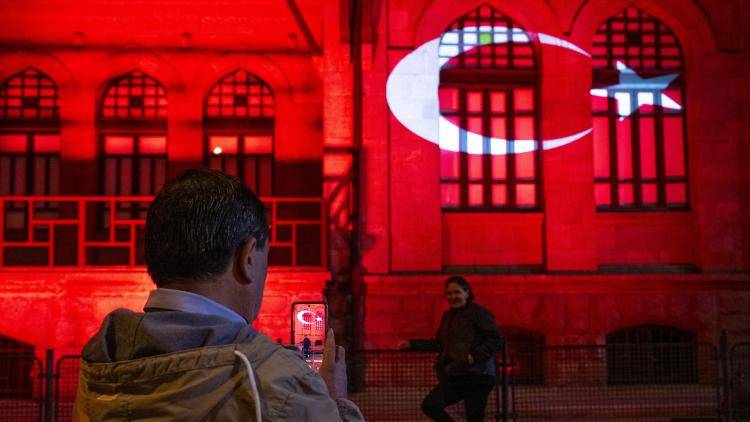
In practical terms, this means Turkey’s relations with Syrian Kurds must evolve to resemble its relations with Iraqi Kurds, which has gone from acrimonious to close and cordial (not least that between Turkey and the Kurdistan Democratic Party (KDP)). Syria will be both a testing ground and a microcosm of a new form of relations between Turkey and Kurds in the region. If the peace process succeeds, this could lead Turkey’s political elites to reimagine their neighbourhood as one in which the Kurds become a natural ally for Turkey and a bridge between Ankara and the rest of the Middle East.
Turkey’s international future after the PKK
The peace process could also have a profound effect on Turkey’s broader international relations. At the regional level, Turkey and Iran have long competed and, at times, cooperated over regional Kurdish geopolitics. Iran has well-developed relations with the more left-leaning and secular Kurdish parties, not least the Patriotic Union of Kurdistan (PUK) in Iraqi Kurdistan and the PKK and its regional affiliates. In contrast, Turkey enjoys close relations with the more conservative or traditional Kurdish politics, such as the KDP and its regional affiliates. The Turkey–PKK conflict has been an advantage for Iran and a vulnerability for Turkey. Should the PKK dissolve itself in earnest, this will redefine the place of Turkey and Iran in regional Kurdish geopolitics – probably in favour of Turkey.

Similarly, the PKK’s dissolution could deal a blow to Israel’s policy towards Syria and Turkey. Israel wants to instrumentalize the aspirations and fears of the Druze and Kurdish communities to keep Syria fragmented and to gain advantage in its competition with Turkey.
The future of Turkey’s Kurdish issue and its relations with regional Kurds will also reshape Ankara’s relations with the US, Russia and Europe. No single issue has poisoned US–Turkey ties as much as the Syrian conflict has. Similarly, Syria was also the birthplace of closer Turkey–Russia relations. But it was not really about Syria; the core issue in both cases was the Kurdish issue.
It was the US partnership with the Syrian Kurdish People’s Protection Units (YPG) – an affiliate of the PKK, which later morphed into the Syrian Democratic Forces (SDF) – that caused the deep rift in Washington–Ankara relations.
Similarly, Ankara’s drive to halt and subsequently reverse the YPG’s territorial gains in northwestern Syria in 2016 led Turkey to alter its approach in Syria. It began to prioritize the rollback of YPG gains over regime change and, to achieve this goal, mended ties with Moscow, a long-standing ally of the Assad regime.