Ishiba will likely hold on as Japan’s prime minister, despite his repeated failures

Modi’s recent visit shows how Japan could profit from upheaval in US policymaking. But Ishiba, clinging to power due to a lack of options, may be too weak to take advantage.

Expert comment

Published 4 September 2025 — 4 minute READ

Image — Shigeru Ishiba gives a speech during a luncheon with Indian Prime Minister Narendra Modi in Sendai city, Miyagi Prefecture on 30 August, 2025. (Photo by STR/JAPAN POOL / JIJI PRESS/AFP via Getty Images)

Kazuto Suzuki

Former Associate Fellow, Asia-Pacific Programme

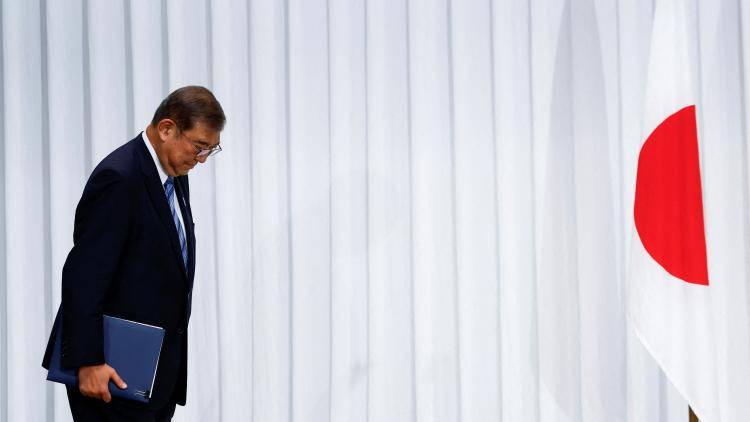
Japanese politics has entered uncharted territory. Prime Minister Shigeru Ishiba shows no sign of resigning. That is despite suffering three significant consecutive electoral defeats: in October 2024’s general election, June 2025’s Tokyo Metropolitan Assembly election, and the July 2025 House of Councillors election. The last result meant the ruling coalition lost its majority in both houses. 

This was a serious series of setbacks for his Liberal Democratic Party (LDP). In late July many thought the prime minister would be forced to quit. But more than a month later, Ishiba shows no sign of taking responsibility and stepping down.

Instead, the prime minister remains largely unchallenged. Leaders like Indian Prime Minister Narendra Modi, visiting Japan at the weekend, likely see Ishiba as a vital partner for the foreseeable future.

Ishiba’s position rests in part on continuing public support for him personally. An August NHK survey found 49 per cent want Ishiba to stay as prime minister. A Mainichi Shimbun poll shortly after showed 43 per cent support his continuation. 

Why do so many Japanese citizens want Ishiba to remain in office, after presiding over so much failure? And how effective can such a weakened leader be, in a dramatically shifting international landscape?

Won’t support him, but hoping he stays on

One likely reason for Ishiba’s popular support is that there is a segment of voters who have no issues with him personally, but could not bring themselves to vote for the LDP in recent contests.

For many…the Sanseito threat and the prospect of Taikachi’s elevation, combine to make Ishiba the least objectionable available option.

The party’s image was tarnished during the administration of Ishiba’s predecessor, Fumio Kishida, which collapsed in 2024 following a fundraising scandal.

Ishiba was not directly implicated in those irregularities. And his practice of holding town hall-style meetings in local areas, listening to ordinary people, contributes to the impression that he is different from other LDP politicians. This makes it possible for some voters to dislike the LDP while backing Ishiba, shoring up the prime minister’s popular support.

The threat of the Sanseito Party

The prime minister is also helped by party politics – and the threat posed by the Sanseito Party (The ‘Party for Participation’)

Sanseito won only 3 of 127 seats in the Tokyo Metropolitan Assembly election, but the result granted it significant media attention – contributing to the greater electoral shock in July’s House of Councillors election, which saw the party win 14 seats.
That result made Sanseito the fourth-largest party after the LDP, the Constitutional Democratic Party of Japan, and the Democratic Party for the People. Sanseito’s momentum has been remarkable, its growth into a top-tier opposition party a tectonic shift in Japanese politics.

Conservative factions within the LDP, alarmed by this development, are concerned that their support base is shifting to the new competition. To win back support, there is a movement to replace Ishiba with the more hawkish Sanae Takaichi. Some believe she could rally the party’s right wing.

But a significant number of LDP politicians oppose Takaichi as prime minister because her hawkish position might jeopardize Japan’s external image and foreign policy. And supporters of the center-left (such as the Constitutional Democratic Party) are calling for Ishiba to stay on. For many, therefore, the Sanseito threat and the prospect of Taikachi’s elevation combine to make Ishiba the least objectionable available option.

Don’t pick chestnuts from the fire

That position might change were other significant figures to emerge seeking the LDP leadership. Many party members, including those who lost their seats, hold Ishiba responsible for the election defeat. 

However, competing for the party leadership is not an attractive prospect. The LDP has lost majorities in both houses of the Diet, making negotiations with the opposition a prerequisite for governing. Meanwhile, any prime minister will constantly face the threat of a no-confidence vote.

Few are willing to step forward and become party leader at such a time, when policymaking will essentially be ‘picking chestnuts from the fire’.
Article 2nd half

Unless dissolved, there will be no national elections for the next three years. Consequently, there is also the issue that there is no need to change prime ministers for the purpose of an election.  

Ishiba as a global player

Japan therefore finds itself with significantly weakened leadership at a time of extraordinary global upheaval.

The US relationship has become an urgent priority since the election of President Donald Trump. The president at one point threatened to impose 25 per cent tariffs on Japanese imports – a particular danger to Japan’s car industry. 

Ishiba left tariff negotiations entirely to Ryosei Akazawa, the Minister in Charge of Economic Revitalization. A reduction to 15 per cent was agreed in July, but the agreement contains many unfavourable terms for Japan, and the promise to reduce tariffs on automobiles and auto parts to 15 per cent has yet to be fulfilled.

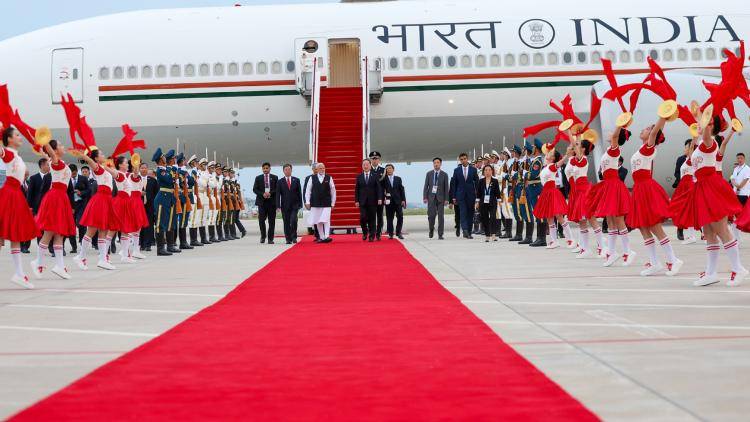
However, the effect of Washington’s disruptive policy could create an opportunity for Japan – as demonstrated by Prime Minister Modi’s weekend visit. India’s tariff negotiations with the US have failed, while Modi’s attendance at the Shanghai Cooperation Organization (SCO) meeting in Tianjin, demonstrates New Delhi’s wish to improve relations with Beijing. 

Modi’s visit to US ally Japan on his way to China can be seen as a risk hedge, helping to cast India’s improving China relations as part of a broader policy of strategic autonomy, as opposed to alignment against the US.

Japan is an ideal target for such hedging. As an ally of the US possessing significant economic and technological strength, it can be an useful partner for countries seeking to work around a difficult and unpredictable American administration.

The prime minister is not a natural diplomat. He has limited international experience, is unable to speak English, and struggles with interactions at summits.

South Korea’s President Lee Jae-myung visited Japan on 23-24 August on the way to Washington, agreeing to continue shuttle diplomacy and keep up momentum on defence cooperation. The UK is also deepening its relationship. The aircraft carrier HMS Prince of Wales is docked in Tokyo, and the UK is jointly developing the next-generation fighter, the GCAP with Japan – while seeking to join the CPTPP trade grouping.

Thus, Japan is becoming a vital partner for countries looking to rebalance their security and economic priorities in the wake of Trump’s unpredictable policymaking.

But having Mr. Ishiba remain leader at this time is problematic. The prime minister is not a natural diplomat. He has limited international experience, is unable to speak English, and struggles with interactions at summits. His ability to create a positive working relationship with Trump seems uncertain: he failed to hold substantive discussions with the president at June’s G7 summit in Kananaskis.

Ishiba has argued he should remain in office to implement the agreements reached with the Trump administration. But it is difficult to see how enforcing these agreements justifies his continued hold on power. His claim that he remains prime minister to ‘realize the national interest’ implies that failure in diplomacy will cost him his premiership. The coming months will certainly test his position.

Popular and party support may prove brittle if US tariffs damage the economy. And President Trump’s foreign policy could well present new and unpredictable challenges. There will be many more chestnuts for Ishiba to pluck from the fire.