
Starkly contrasting visions of world order and global governance are being prominently displayed this September at the Shanghai Cooperation Organization Plus meeting and the United Nations General Assembly.
Rather than the outright victory of one vision over the other, the likely long-term outcome will be a more complex blended reality. Established structures of global governance such as the UN are struggling to adapt to a more multipolar reality. Ushering in a more stable future world order will be a generational undertaking. During that time, the risks of insecurity and further wars will simmer.
US retrenchment, Chinese ambition
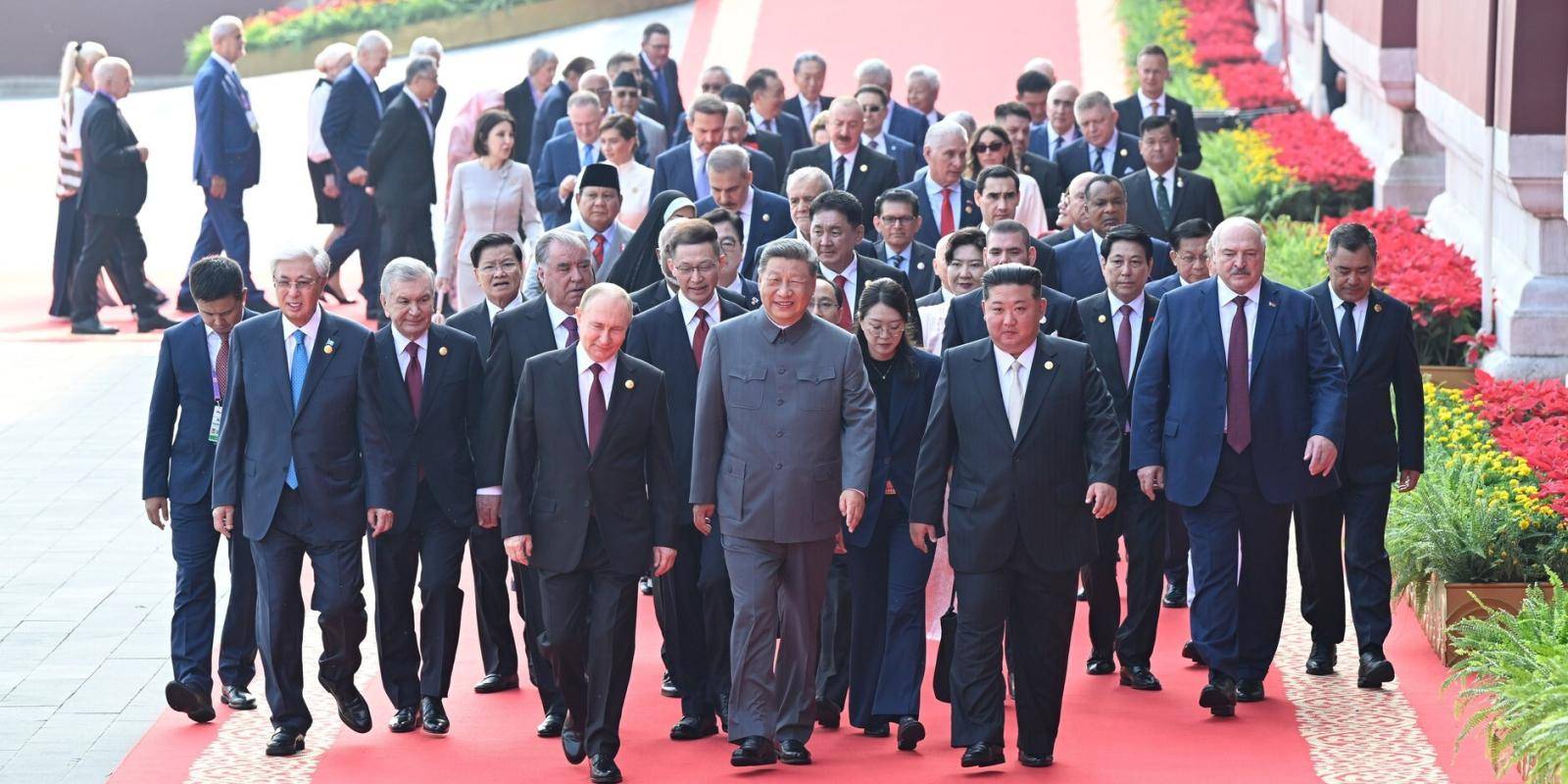
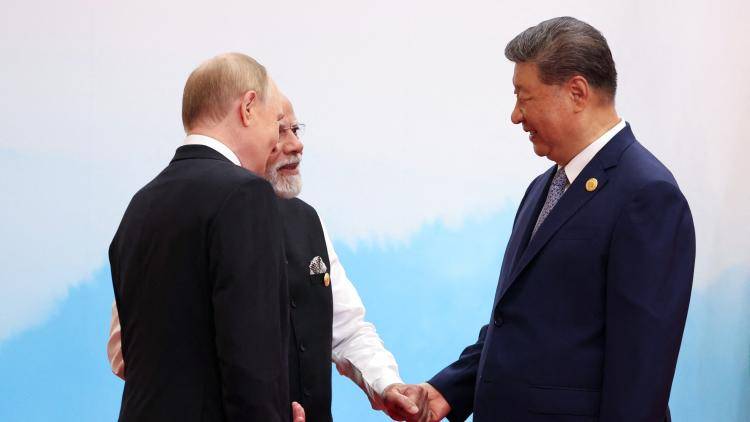
China’s hosting of the Shanghai Cooperation Organization Plus meeting in Tianjin on 1 September brings these points home. 20 world leaders from different parts of the non-Western world attended, allowing Xi Jinping to present China as a paragon of stability. This comes at a time when US foreign policy is anything but, given the Trump administration’s aggressive trade policies, including towards its closest allies, and its withdrawal from some multilateral institutions.
As the US cedes important features of its global leadership role to China, both countries are also focusing on military competition in the Indo-Pacific. China’s huge military parade, staged immediately after the SCO meeting, saw Xi flanked by Vladimir Putin and Kim Jong Un.
Ostensibly the event was intended to commemorate the eightieth anniversary of the Second World War’s end. But it mainly served to project a fearsome display of Beijing’s growing military power.
Meanwhile, the US is taking the next steps in its strategic tilt towards the Indo-Pacific by reducing some security assistance to Eastern European countries, shifting the burden of deterring Russia ever more rapidly to European countries.
Security questions are not the only form of competition underway. The post-1945 US-led world order has also relied on the stabilizing force of its economic leadership – now undermined by the Trump administration’s tariff policies – and the moral and practical powers resulting from its leading place in multilateral institutions.
There will be evident incongruity when the eightieth session of United Nations General Assembly (UNGA) convenes on 9 September, given the Trump administration’s openly expressed cynicism toward the gathering. There are 180 separate agenda points in the Provisional Agenda of the Eightieth Regular Session of the General Assembly. Although only a handful pertain specifically to the Palestinian territories, the mood around UNGA will be dominated by outrage toward Israel’s continuing war in the Gaza Strip. The mood, and attitudes towards the US, will not have been helped by the suspension of US visas for Palestinian passport holders.
Fractures within the Western alliance over this matter are widening. The Trump administration is steadfast in its support of Israel’s continuation of the war. In July, by contrast, the UK, France and Canada renewed their calls for a two-state solution. This follows the lead of many Global South countries that have been loudly criticizing Israeli policy in Gaza for some time, with some rallying around South Africa’s genocide case brought at the International Court of Justice in the Hague in December 2023.
The impression all this creates is deeply concerning: of a world riven by superpower competition, by bitter ongoing wars and of older, established global governance structures that are unable to deliver effective responses that reflect a workable quorum of world opinion.
Spreading rot
Other areas of global governance are also withering, such as security. There is an absence of new arms control treaties, for instance, to mitigate the risks of militarizing outer space or the growing automation of weapons systems. Meanwhile treaties on existing arms, from nuclear weapons to land mines, are also fragmenting with countries withdrawing and failing to agree new terms. The absence of international norms, regulations and standards around these issues opens a path to increasingly unfettered competition and proliferation that risks greater insecurity in the future.