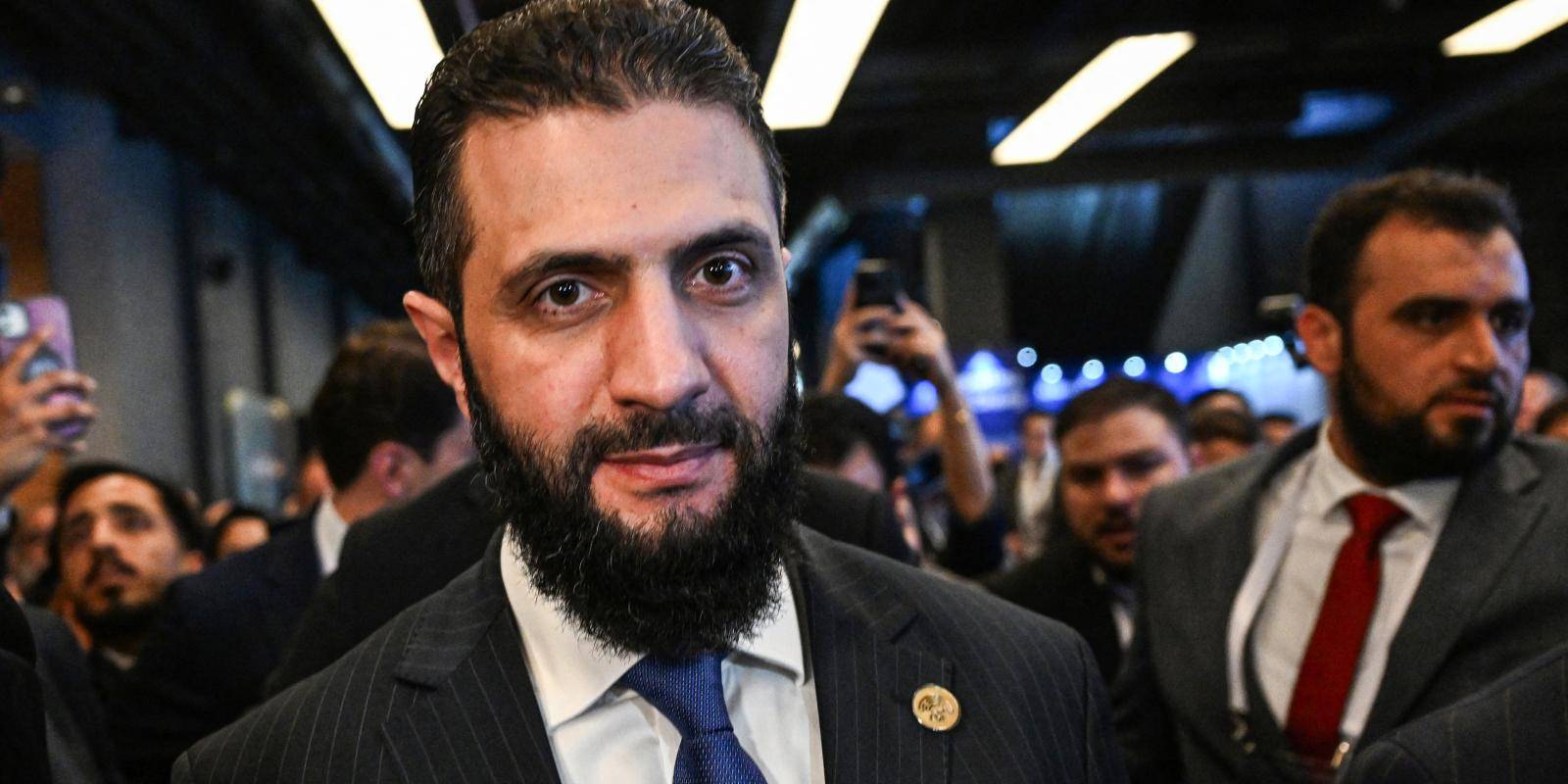

Nine months on since the fall of Bashar Al Assad in Syria, China is yet to formally recognize the country’s new government, led by President Ahmed al-Sharaa.
Beijing, a ‘strategic partner’ of the former regime, is particularly concerned about the prominence of Uighur foreign fighters within Syria’s security and defence structures.
While Beijing has engaged with the new Syrian government via its ambassador, its concerns mean it will likely continue to act with restraint and may be hesitant to support any moves to lift the remaining UN sanctions on al-Sharaa and other officials.
In turn, al-Sharaa is unlikely to clamp down on foreign fighters that make up an important part of his support base amid ongoing instability and conflict with other groups.
This deadlock comes during a crucial month for al-Sharaa, with elections scheduled for mid-September before the new Syrian leader is set to address the UN General Assembly for the first time. In the long-term, it could also undermine Damascus’s hedging policy, aimed at avoiding over-reliance on the US.
Foreign fighters in Syria
Beijing’s approach to the new regime is motivated primarily by security concerns, not commercial interests.
Beijing is concerned about the new government’s appointment of Uighur fighters from the Turkistan Islamic Party (TIP) in its security and defence forces.
The TIP is a militant Islamist group that fought alongside al-Sharaa’s former group, Hayat Tahrir al-Sham (HTS), against the Assad regime during the country’s 13-year civil war. It is made up primarily of ethnic Uighurs from China’s Xinjiang province.
An estimated 3,500 fighters – mostly Uighurs from the TIP – have reportedly been integrated into a newly formed unit within the Syrian army, the 84th Division. The TIP’s leader in Syria, Abdulaziz Dawood Khudaberdi (known as Zahid), was made a brigadier general in the army.
In January and April, and again in August, China’s UN envoy Fu Cong publicly warned the Security Council that ‘foreign terrorist fighters’ remain active in Syria and urged Damascus to fulfil ‘counter-terrorism obligations,’ calling out the TIP directly.
Fu also explicitly linked foreign fighters to the violence in Syria’s western coastal region in March and in Sweida in July.
Beijing’s perception of threat
China’s concerns about the presence of foreign fighters reflect a pessimistic outlook on Syria’s future. Beijing fears a scenario in which Uighur fighters turn their attention towards China or Chinese interests.
These fears draw upon the TIP’s own words. A video released by the organization after the fall of Assad’s regime in December 2024 asserted that their primary mission is to ‘liberate the Muslims of East Turkistan from the Chinese occupation’, in a reference to Xinjiang. Previous UN reports have alleged ‘serious human rights violations’ against the Uighur population in Xinjiang, reports which Beijing categorically rejects.
Another scenario could involve Chinese commercial interests in the Middle East being targeted, echoing attacks on Chinese companies and citizens in Pakistan.
Potential targets could include Belt and Road Initiative (BRI) investments and energy supplies from Iraq. These are particularly important, as Beijing imports around 35 per cent of Iraq’s total oil output, and Chinese energy firms hold the largest share of foreign investments in Iraq’s oil and gas sectors.
China’s dual-track approach
These concerns have played into China’s lack of recognition of al-Sharaa’s government.
Chinese Ambassador Shi Hongwei has reiterated respect for Syrian sovereignty in a series of meetings with al-Sharaa and other officials. However, China appears to be reluctant to fully embrace the country’s new leaders and has restrained its level of diplomatic engagement.
Beijing maintains that Syria is still in a transition and supports a ‘Syrian-led and Syrian-owned’ political process in accordance with UNSC Resolution 2254.

China’s diplomatic dual-track approach in Syria appears to mirror its approach to other countries that it classifies as a threat or too close to the US. Beijing is maintaining diplomatic channels at the bilateral level via its ambassador to stay engaged with the Syrian government, while at the same time taking a lukewarm position on Syria at the UNSC to increase its leverage.
Contrary to the narrative that this approach is reminiscent of Beijing’s policies towards the Taliban (which may have been accurate in the first weeks after Assad’s fall), it ironically more closely resembles China’s dual approach towards Israel. Since last year, Beijing has pursued a diplomatic thaw in bilateral relations while maintaining rhetorical pressure on Israel over Gaza at the UN.
Risk management
China is unlikely to shift away from its current cautious, low-cost approach in favour of a serious push for future influence in Syria.
After all, historically, Beijing has not viewed Syria as a central pillar in the BRI or a high-yield arena for competing with Washington. Syria has not been a strategic priority for China, as a distant country with limited economic opportunities and a fractured political economy. Beijing therefore favours restraint.
China may now be hesitant to agree to lift UN sanctions on Syrian government members unless Damascus shows signs of taking Beijing’s concerns on the Uighur fighters seriously.
The sanctions against al-Sharaa and the officially disbanded HTS fall under the UN’s sanctions regime, known as ‘the 1267 list.’ This includes other designated terrorist organizations such as al-Qaeda and the Islamic State. Those designated are subject to an asset freeze, arms embargo and travel ban (although al-Sharaa was permitted by the UNSC to travel to countries including Saudi Arabia and Turkey and is set to attend the UNGA in the US).
In June, Fu urged the UNSC to maintain the UN counter terrorism sanctions, saying that they ‘must be implemented, and the seriousness of relevant sanctions regime upheld’. Beijing retains a veto over any move to end sanctions at the UNSC.
In the meantime, Beijing will likely hold off from any potential major reconstruction commitments, BRI investment or financing deals. China may also seek to put pressure on Damascus via its diplomatic channels with Turkey and the Gulf states.