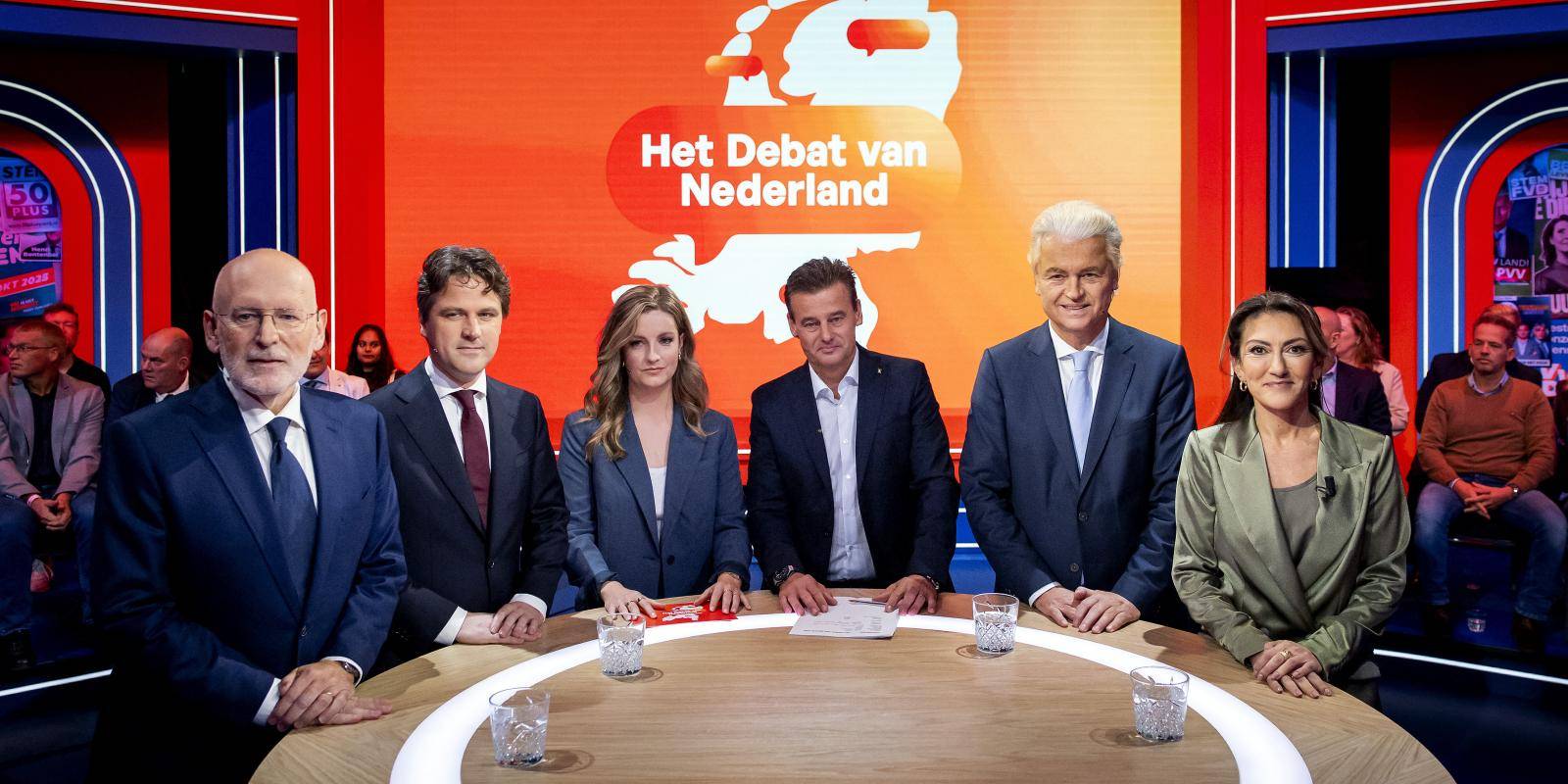

On October 29, Dutch voters will be heading to the polls for the second time in just two years, following the collapse earlier this year of the short-lived right-wing government under technocrat prime minister Dick Schoof.
A week can be a long time in the volatile and fragmented Dutch electoral landscape, in which 27 parties vie for 150 seats. A poll earlier this week found 47 per cent of voters report are still undecided on who to vote for. Nevertheless, it currently seems that the traditional moderate parties may emerge best placed to form a new government, as voters seek a return to normalcy after the recent period of instability.
A resulting ‘middle coalition’ would find itself with the difficult task of having to restore trust at a time when the public’s faith in politics is at an all-time low. It will also seek to restore the Netherlands’ influence on issues like Ukraine and European security – a return no doubt welcomed in Brussels and beyond.
A failed experiment
The previous right-wing coalition government was formed under non-party-aligned former intelligence chief Dick Schoof’s compromise premiership, after Geert Wilders withdrew his bid to become prime minister. Wilders’ far-right PVV (Party for Freedom), which won the election in 2023, became the largest party of the four-party coalition government under Schoof.
The Schoof government lasted only 11 months and was hobbled from the outset by inexperience (three out of four parties had never governed before), instability and deep divisions between the coalition partners. It achieved little (with some exceptions, such as on defence). It was eventually brought down by Wilders over perceived disagreements on his migration policies.
None of the four parties that joined the Schoof government will look back fondly on their time in power. The PVV may walk away from the experience most unscathed. According to polls, it may lose some seats but will likely remain the largest party overall.
However, most other parties have already ruled out joining another government with Wilders, pointing to his extreme politics and unreliability as a coalition partner. This means that the PVV is unlikely to play a major role in post-election coalition negotiations. This may well suit Wilders better: no need to compromise on signature issues like immigration when you’re back on the sidelines.
The three other parties that made up the Schoof government will likely fare worse. The farmers’ rights party BBB (Farmer–Citizen Movement) and centre-right NSC (New Social Contract) are both expected to lose most – if not all – of their seats. The VVD (People’s Party for Freedom and Democracy), a right-wing liberal party, secured four back-to-back election victories under former leader (now-NATO Chief) Mark Rutte. This time, it may well end up in fifth.
Towards a ‘middle coalition’?
After this ill-fated populist experiment, it seems that this time around a growing share of the Dutch electorate is looking for stability and experience. This will likely mean that, counter to prevailing trends across much of the rest of Europe, traditional parties will be making a comeback.
However, they are expected to command far smaller vote shares than in the past (a decisive victory over right-wing populism, this is not), meaning a broad-church coalition is likely needed to reach a majority.
Three main parties are currently in the running to take the lead on shaping such a coalition: the alliance between the Green-Left and Labour (GroenLinks-PvdA), the centre-right Christian Democrats (CDA) and the centrist liberal D66.
Under the experienced leadership of former European Commission Vice-President Frans Timmermans, GroenLinks-PvdA is currently second in the polls. Following closely behind are the CDA, which suffered a historic defeat in 2023, but appears to have turned its fortunes around under popular newcomer Henri Bontenbal, who has promised to make politics ‘boring’ again.
An unexpected dark horse is D66, which has seen a late surge in the polls, propelling it to fourth place. The party has gained momentum following strong debate performances by its leader Rob Jetten, who has offered a more optimistic, moderate alternative for disgruntled VVD voters in particular.
A middle coalition of these three parties may need to form a minority government as they are currently polling 11 seats shy of the 76 seats required for a majority, possibly relying on support of several smaller centrist parties to pass votes. They could potentially also eke out a small majority by bringing in a party like the VVD. Though the VVD has ruled out entering a government with the left, such proclamations in Dutch politics tend to prove more malleable once it’s time for actual coalition negotiations.
A right-wing coalition – consisting of the CDA, D66, VVD and hard-right JA21 – may also be a possibility, though this grouping would currently also not enjoy a majority, and would have to bridge some significant divides on issues like Europe and immigration.
A return to the table?
While the 2023 elections were all about immigration, in this campaign no single issue dominates. The topics on the agenda – the country’s pressing housing crisis, healthcare affordability and, again, immigration – are all primarily domestic in nature. Beyond discussions about defence spending, issues that reach beyond Dutch borders feature vanishingly little.
For an open economy reliant on global trade, existential challenges like the fraying transatlantic relationship and Europe’s future security and competitiveness should not be afterthoughts. Remarkably, the fact that the Netherlands is currently embroiled in a high-stakes geopolitical standoff with China over chipmaker Nexperia – which has been generating global headlines and risks triggering a global supply chain crisis – has barely been mentioned.
