

US President Donald Trump and Xi Jinping, China’s leader, are scheduled to meet this October. Taiwan is once again likely to be on the table as a bargaining chip between the superpowers.
The fate of this self-governing democracy of 23 million people, which Beijing claims as its territory and threatens to annexe by force if necessary, is often presented as a question of US–China relations.
But this framing puts too much emphasis on the risk of a Chinese military invasion, as opposed to the coercive, grey-zone pressures that Beijing is using to try to undermine Taiwan’s unity and resilience.
Viewing the island chiefly through the lens of great power competition obscures Taiwan’s agency and the ability of other nations, including in Europe, to help maintain Taiwan’s de facto independence and peace in the Taiwan Strait. Taiwan and Europe have shared national interests in boosting cooperation, in the context of an assertive China and increasingly unilateral US.
No European state, apart from Vatican City, has formal diplomatic relations with Taipei. But there is much more that European countries can do within the bounds of their unofficial partnerships with Taiwan.
Common interests
On a recent trip to Taipei, Taiwanese officials and security experts told me that they are very worried about the scale and speed of China’s military modernization and its repeated threats to invade. In response, they are pursuing a ‘not today’ policy, designed to deter President Xi from believing that now is the right time for military action.
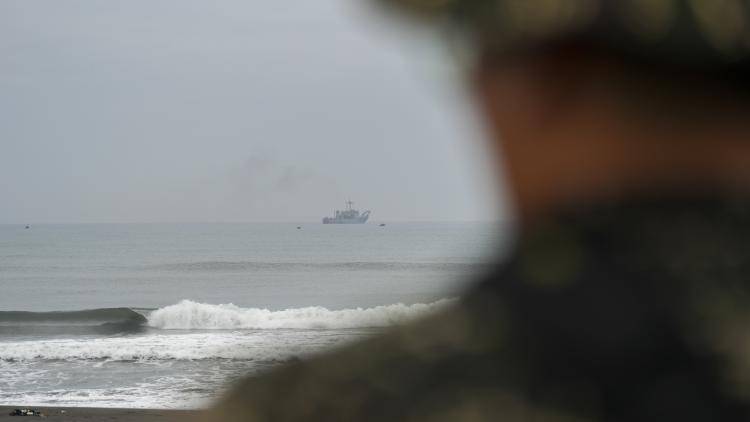
But the bigger immediate concern is China’s escalating grey-zone tactics, using coercive methods below the threshold of war. Beijing is increasing the frequency and intensity of live-fire military exercises, drills and sea and air incursions around Taiwan’s waters.
It is expanding its information operations in Taiwan, attempting to exacerbate splits in Taiwanese politics and society. And, globally, it is trying to further curb Taiwan’s limited international space and cloud the fact that Taiwan is a de facto independent democracy.
European nations cannot stop Beijing from squeezing Taiwan harder. But they can help to preserve and even increase Taiwan’s global connections, and share lessons in how to stay resilient in the face of external influence operations.
Deepening relations
Over the last decade, most European governments have slowly but steadily deepened their unofficial relationships with Taiwan – a UK trade minister visited Taipei for trade talks in June, for example. European officials are under constant pressure from China to limit ties with Taiwan. But they need to insist to their counterparts in Beijing that they want a good relationship with both sides of the Strait and will not trade away Taiwan for a promise of improved links with China.
Beyond officially unofficial diplomacy, Taiwan and Europe should broaden their economic and technological cooperation. Taiwan, the Netherlands and the UK have an opportunity to build on common strength in the semiconductor industry, for instance. Other areas for collaboration include the effectiveness of international trade rules, supply chain resilience and the regulation of artificial intelligence.
While legally binding agreements are difficult, the Taiwanese government and its European counterparts can – and should – catalyse private sector and research linkages that are mutually beneficial.
