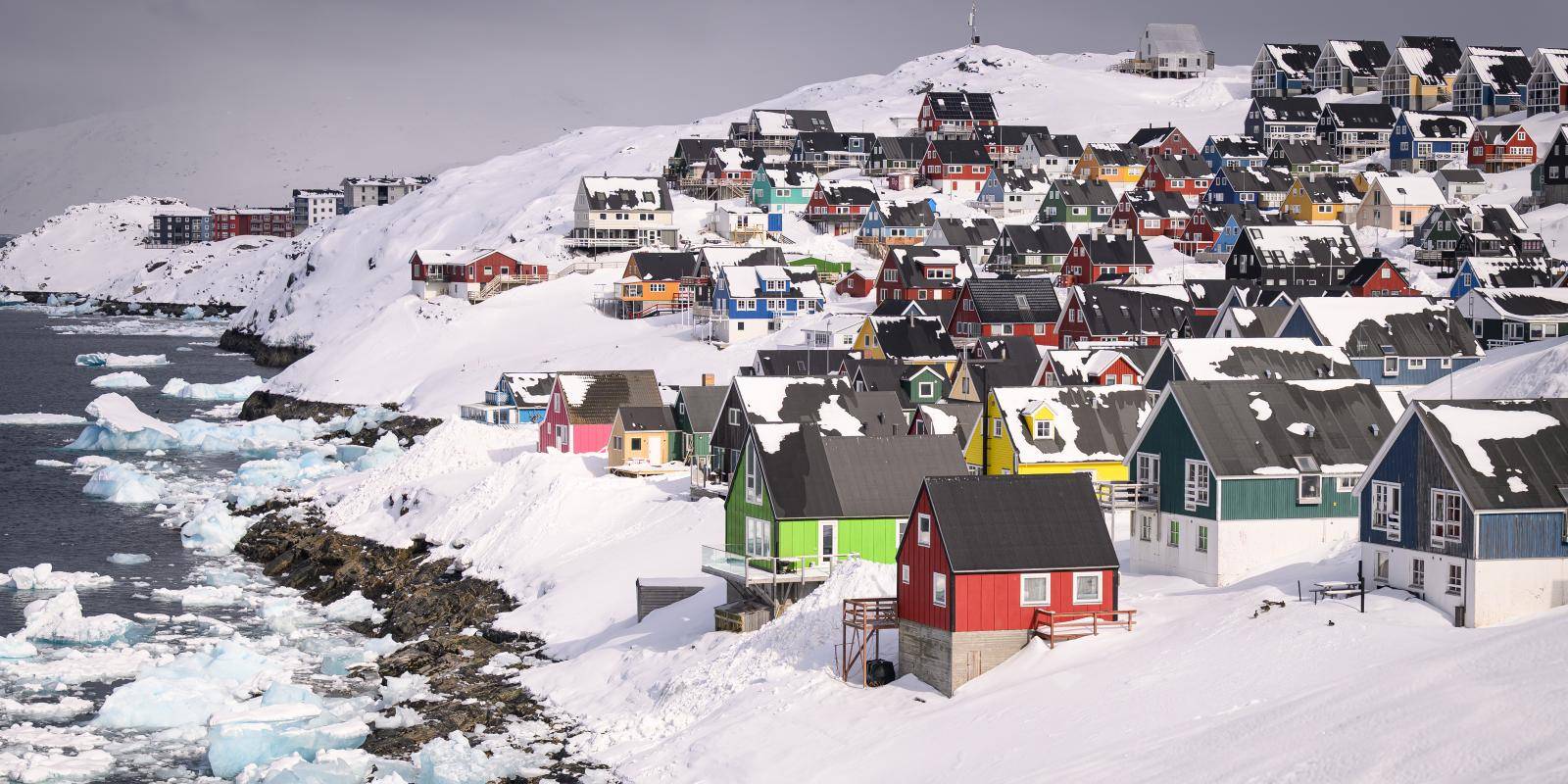


Last week, the UK government announced fresh trade negotiations with Greenland, the day after European leaders, including Keir Starmer, gathered in Copenhagen for the European Political Community Summit. Alongside talks over reducing tariffs on seafood imports, the British government said it ‘will seek to strengthen cooperation on critical minerals.’
The UK is entering a crowded field, with the US and the EU competing with China to access Greenland’s rare earths as they attempt to diversify away from Beijing’s dominance of the global critical minerals supply chain.
The UK’s best approach would be to cooperate closely with European partners, including Denmark. The EU has close relations with Greenland and has already signed a partnership to develop its sustainable raw material value chains.
While the UK may want to secure critical minerals for its long-term supply chain needs, it should approach any mining ventures in Greenland within wider considerations of both Arctic security and the climate crisis.
Extracting critical minerals without the right environmental safeguards risks causing further harm in a territory whose ice sheet is already rapidly melting, with disastrous results for the global climate. But if it prioritizes Indigenous rights and environmental safeguards, a UK-Greenland minerals trade deal has the potential to become a global benchmark for responsible sourcing.
Climate risks and geopolitics converging
The UK-Greenland trade talks come as the territory finds itself at the crossroads of the climate crisis and geopolitical competition for resources.
Greenland is warming faster than almost anywhere else on Earth. Latest data from the 2025 thawing period shows that Greenland is experiencing ongoing ice loss for its 29th consecutive year, with a significant increase in melting rates compared to the early 1990s.
As global temperatures climb, the Greenland ice sheet is approaching a critical tipping point. Once this threshold is crossed, the ice sheet will no longer be able to fully recover. Further melting could trigger irreversible global sea-level rise of more than seven metres, raising oceans and profoundly altering the world’s coastlines. This would put tens of millions of people in low-lying areas worldwide at risk, with far-reaching impacts on global security and migration.
The melting of Greenland’s ice sheet has also made its resources more accessible for extraction, drawing international attention. Greenland is home to largely untapped deposits of critical minerals. The Tanbreez project, Greenland’s most significant rare earth deposit, contains a mix of high-value, heavy rare-earths, zirconium and niobium deposits.
China, which has positioned itself an ‘important stakeholder’ in the Arctic region, dominates global critical mineral supply chains. Chinese companies are already invested in developing Greenland’s resources, for example Shenghe Resource’s development of the Kvanefjeld project in 2019.
Others, notably the US and EU, have also looked to Greenland’s resources as they seek to diversify their mineral supply chains. President Donald Trump has repeatedly expressed his interest in annexing Greenland, which he said the US needs ‘for international security.’
Gaining access to Greenland’s mineral resources would be in line with the Trump administration’s drive to secure critical minerals as a national security imperative. Earlier this year, the concession of the Tanbreez project was sold to New York-based Critical Metals Corp. This came after the US and Denmark reportedly lobbied for it to not be sold to a Chinese company.
Despite the interest from China and the US, Greenland’s closest partner is the EU. In a speech to the European Parliament on Wednesday, Greenland’s Prime Minister Jens-Frederik Nielsen described the bloc as a ‘stable, reliable and important partner.’ He urged it to invest in Greenland’s mineral resources among other sectors, which would build on the existing strategic partnership signed in 2023.
Given the EU’s close relations with Greenland, the UK will need to coordinate closely with European partners, especially Denmark and the other Nordic countries, to avoid the perception of competing against Europe for access to minerals.
Working with Europe will also help the UK avoid reliance on Chinese supply chains for refining rare earths. Currently, almost all refining capacity for rare earth metals is in China. The UK does not have rare earth metal processing capacity, but Europe has two rare earth processing facilities (in Estonia and in France).
The need for environmental safeguards
A UK-Greenland minerals trade deal offers a unique opportunity to establish high environmental and social standards that could set a global benchmark for future mineral trade partnerships. Rare earth mining involves toxic chemicals and can produce radioactive waste, making strong environmental safeguards essential.
Greenland’s government and communities will also be scrutinizing the environmental impact of any deal. After the Inuit Ataqatigiit party came to power in 2021, the Greenland government stopped a uranium mining project in the Kvanefjeld project over ecological and social concerns. Any new deal must avoid repeating past mistakes of disregarding these concerns.
The UK-Greenland deal should also include requirements to monitor the conditions under which minerals are extracted and processed, including via satellites and by local communities. This will be essential to detect pollution or other harmful environmental impacts, especially on water resources and the marine environment.
These measures will strengthen accountability and align a potential deal with emerging European and global standards for responsible sourcing and supply chain traceability, while also supporting the transition to a more circular economy of minerals and metals.
