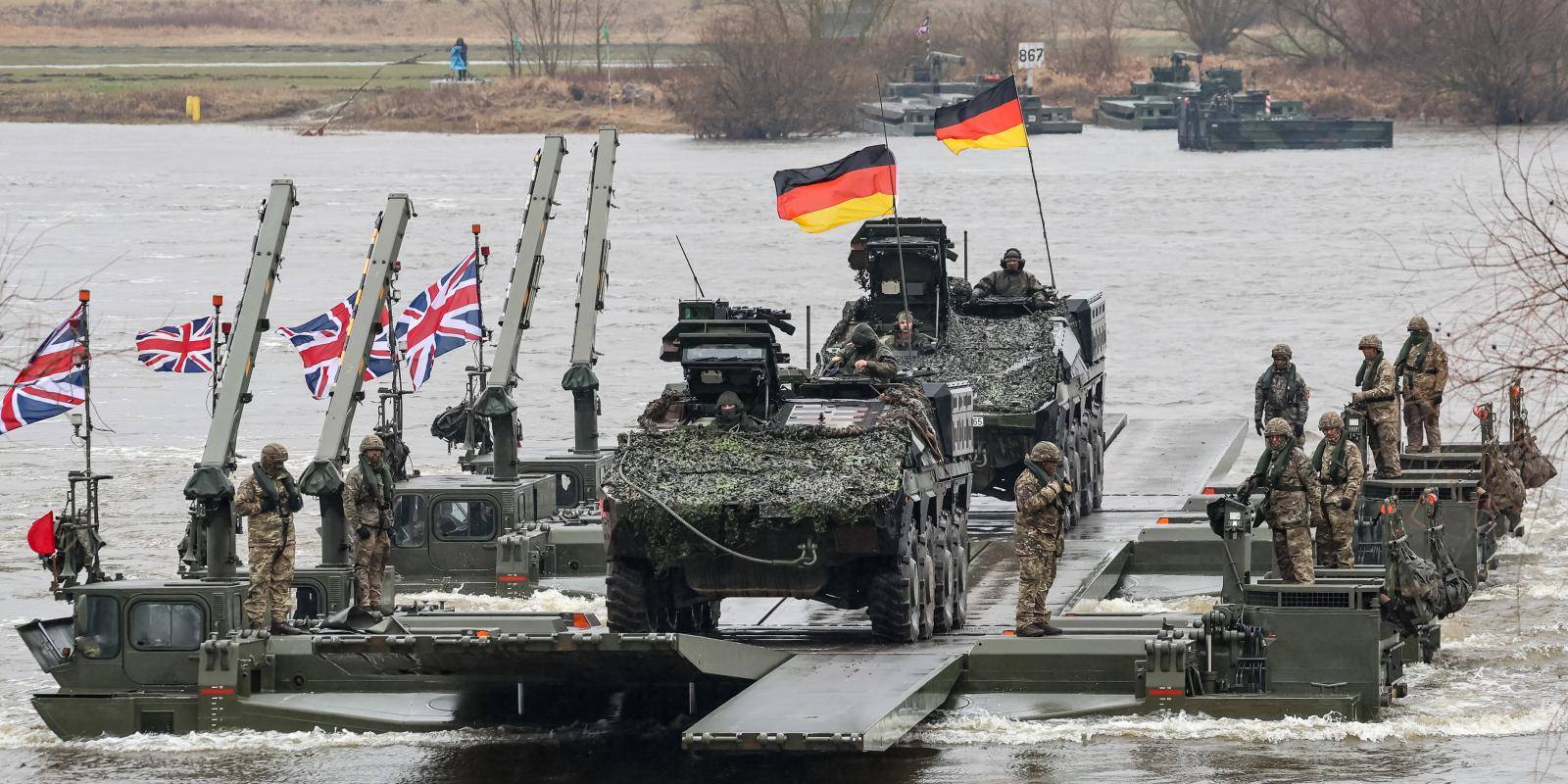

The UK is finding it hard to implement its 2025 Strategic Defence Review (SDR). The review set out the depth and breadth of transformation needed to account for the most profound change to how armed forces are conceived, built and operated for well over 100 years. But money will take much longer to arrive than the risks the SDR identified will allow.
Meanwhile, Germany is spending its way to becoming the preeminent conventional military force in Europe over the next five years – but so far without the kind of transformative ambition the UK aspires to. Both countries could do better.
British struggles
The UK’s SDR was set two requirements which were always at odds. The first was to determine what needed to be done for deterrence and, if necessary, fighting in the new strategic reality. The second was to establish what could be done to deliver this outcome within a 10-year financial profile.
That profile reflected the UK’s very difficult fiscal circumstances: almost no growth, a public sector beset by major challenges and stiff limits on the scope for more taxation and borrowing.
The tension was resolved through a government funding approach that begins with no new money at all (which actually means less) until 2027, then a small increase to 2.5 per cent of GDP in 2027 leading to a 3.5 per cent of GDP in 2035 – plus another 1.5 per cent of GDP for defence related infrastructure.
That means that, while UK Defence should get to broadly the right place in 10 years, it faces a massive struggle to even stand still for the first two – followed by only very gradual improvement. More is needed much sooner. Many of the UK’s NATO allies are convinced that the alliance needs to make significant advances within 3 to 5 years – not ten. They say the UK is planning with ambition and rigour, but taking twice as long as is available to do it.
The UK’s troubles
This dichotomy, between urgent defence needs and constraints on speedy spending, accounts in part for what appears to have been a very difficult first six months for SDR implementation.
No additional money for the first two years meant short term savings and reductions had to be found. The combined effects of inflation, foreign exchange movement, shortcomings in programme delivery, and the re-costing of recommendations in the 10-year Defence Investment Plan (DIP), make for some grim news. Perhaps £2 billion has to be saved in-year to balance the books. This means screwing down on areas such as training, routine activity and maintenance. It also means not much money is available for the new requirements identified in the SDR.
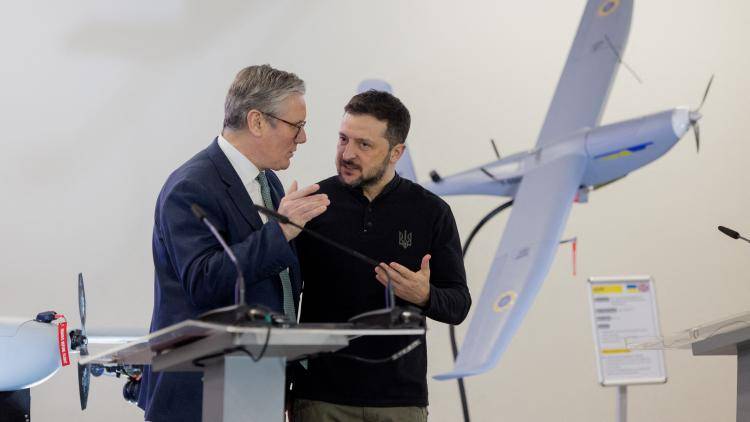
Meanwhile it has taken six months since the publication of the SDR to complete the appointment of the Permanent Secretary, Chief of Defence Staff and National Armaments Director – joining the well-established Director of the Nuclear Organization – key roles to drive SDR implementation.
Without the new senior leadership in place there has been scope for delay, obfuscation and evasion by those who are resistant to the big restructuring changes the SDR calls for – into a new Department of State model, Military Strategic Headquarters, and National Armaments Director Group. Left unchecked, the SDR’s much-needed reforms may yet be strangled to death by institutional inertia – sharing the fate of many of its predecessors.
This sluggishness is reflected in government. Six months is not a long time in Whitehall, but the sense of ambitious change prescribed by the SDR has yet to manifest into a clear signal to industry and the City.
Some damage has resulted. Small companies cannot sustain themselves as enterprises if the nearest order is three years away, no matter how much the Ministry of Defence (MoD) wants what is an offer. Bigger firms are more able to subsidize the kind of experimentation needed to fulfil the SDR’s transformative agenda. But they have found that successful contributions do not result in orders – only a demand to go through a lengthy competition process.
Banks, private equity and venture capital firms are still waiting to understand how investments in defence can be attached to the DIP outcome. They need to know not just the outcome, but also the modalities for investing for a sound commercial return.
German speed
Germany, by contrast, will spend a vast amount on its armed forces over the same ten year period, meaning that it will quickly eclipse the conventional force contributions that the UK and France are able to afford. Indeed, Chancellor Friedrich Merz pledged on 25 May that Germany would build the Bundeswehr into the ‘strongest conventional Army in Europe’.
Germany is expected to spend 3.5 per cent of GDP on defence by 2029, which is €162 billion including support to Ukraine. It plans to spend €649 billion over the next five years, financed by borrowing €400 billion enabled by constitutional reform to loosen the country’s stringent debt rules.
A leaked 39-page shopping list details €377 billion of equipment across all domains which will be detailed in the 2026 budget. Of 320 new items listed, 178 already have a contractor named against them – with 160 of these being German firms.