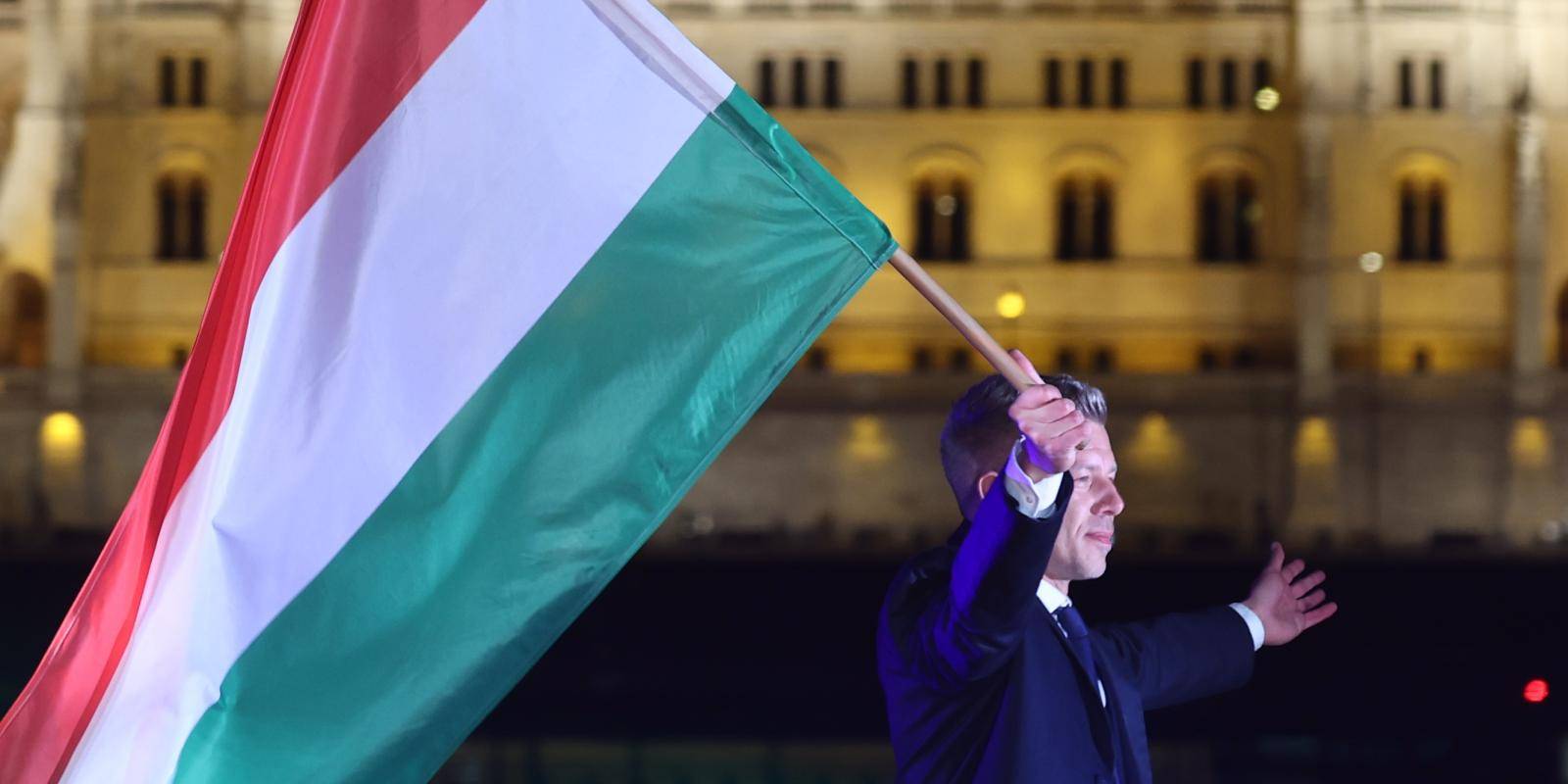

In Sunday’s election, Péter Magyar’s Tisza party won nearly 70 per cent of the seats in Hungary’s parliament, putting an end to Viktor Orbán’s 16-year rule. This landslide victory is not just a change of government, but a historic rejection of the most entrenched political system in the European Union (EU). The political model of Orbán and his Fidesz party had looked durable because it successfully fused political authority, institutional control and a powerful national narrative.
So why did voters turn against Orbán? While his campaign asked voters to think geopolitically (and not always in the most honourable fashion) – war or peace, Brussels or sovereignty, Ukraine or Hungarian stability – voters were more concerned with issues closer to home, such as economic stagnation, inflation and falling living standards. This shows that Orbán may have lost his populist touch because he clearly lost sense of his voters’ concerns. His defeat sends a warning to populists across Europe that even systems built to last can be beaten when economic concerns drown out their grand narratives.
Will Orbán’s model survive?
While it is clear that Viktor Orbán has been rejected by Hungarian voters, it is less clear that his political model, or Orbánism, has. Over more than a decade, Orbán profoundly reshaped Hungary’s political order, but the system he built also rested on wider political reflexes and deeply rooted social preferences: a strong state, scepticism of external constraint, transactional politics, and sovereignty as a governing method. These traits are deeply embedded in Hungarian political culture and do not vanish on election night.
That matters even more because Orbán is not leaving politics but will continue to serve from the opposition. That means Magyar will have to confront a defeated, wounded and still highly organized adversary. Fidesz remains embedded in local networks, institutions and media ecosystems; Orbán, for his part, is one of the most skilled political operators in Europe. This was also not Orbán’s first electoral defeat: he stepped down as prime minister in 2002, only to come back stronger in 2010. So, this is not a clean break with the Orbán era. It is the beginning of a new phase in which Orbánism may yet survive in opposition as a source of resistance, political sabotage and narrative warfare.
Relief in Brussels

For the EU, the election result is plainly good news. Hungary under Orbán had become a chronic point of friction on sanctions, Ukraine and rule-of-law disputes. A Magyar government is likely to be less obstructive, more predictable and more interested in repairing ties with Brussels. That could ease decisions on Ukraine and improve the atmosphere around frozen or conditional EU money – although Brussels is waiting to see reforms by the Magyar government before releasing such funds.
Hungary will likely remain cautious on migration, focused on sovereignty, and approach Mario Draghi’s ‘pragmatic federalism’ with circumspection. But the result is still good news for the EU’s centre-right European People’s Party (EPP). While it does not change the balance of seats in the European Parliament overnight, it strengthens the EPP politically: it gives the group a major national-level victory, reinforces its claim to represent the EU’s governing centre-right, and weakens one of its most powerful illiberal rivals.
This all points to easier European coordination on the horizon. It could also help to improve conditions for a UK rapprochement with the EU.
Ukraine and European defence
For Ukraine, the result matters significantly and immediately. Orbán had kept Hungary formally within the Western camp while also using his position to slow, dilute or politicize support for Kyiv – not least during the campaign. A Magyar victory should mean a less ambiguous Hungarian stance on Ukraine and fewer internal EU headaches. For Moscow, this is clearly a setback: Orbán had become, if not an ally, then certainly a useful outlier inside the EU. The result does not remove Hungary’s structural dependencies, but it does make Budapest less useful to Moscow as an internal point of leverage within Europe.
Defence, of all crucial areas for the EU, is where a Magyar government could bring visible change. Tisza has pledged to raise defence spending to NATO’s 5 per cent of GDP benchmark by 2035. But the balancing act is here to stay: Magyar ruled out both troop deployments to Ukraine and a return to conscription. However, plans to reduce Russian energy dependence by 2035 and review the Paks nuclear project – largely built and financed by Russia – points to a Hungary that would be less obstructive inside NATO and the EU, and therefore more useful to Europe’s wider security posture.
A warning for European populists
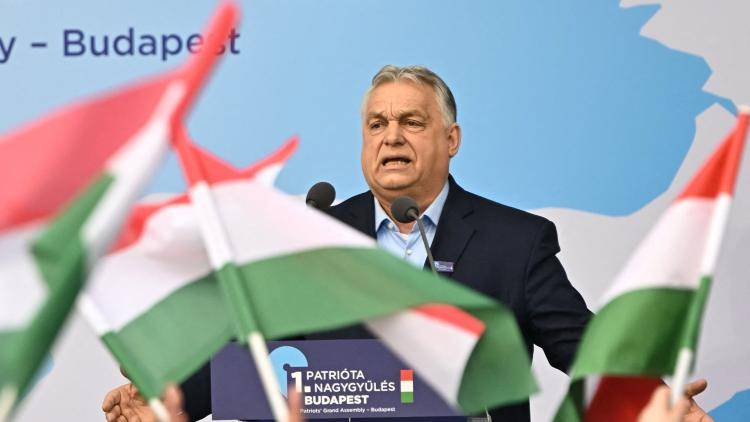
The wider European significance is hard to miss. In recent weeks, Italy’s Giorgia Meloni has suffered a clear setback with the referendum defeat on proposed judicial reforms, while France’s National Rally failed to convert its national standing into control of major cities in the municipal elections. Hungary now sends an even stronger signal: not stagnation, but outright reversal. The lesson is not that populism is finished but that even well-entrenched systems are reversible when they stop delivering materially and become too closed, too tired or too self-serving.
Meanwhile, Magyar’s victory shows that there is still room for a centre-right politics that is conservative without being illiberal, and pro-European without being politically anaemic.
Washington’s wager – and its failure
For Washington, Magyar’s victory comes as a significant blow. The election was monitored closely in the Oval Office and US Vice President JD Vance even came to Budapest days before the vote to boost Orbán’s chances of victory, denouncing supposed EU ‘interference’ and praising Orbán as an ally of Donald Trump. That intervention now looks more like a political own goal. More broadly, it undercuts an idea in Trump-aligned circles that strengthening European sovereigntists would weaken the EU from within and make Europe more pliable. If anything, Hungary suggests the opposite. Several European far-right parties have already begun distancing themselves from Trump over his more erratic foreign-policy moves and this result may further accelerate a trend towards greater autonomy from MAGA. The question now is whether Washington adjusts its methods of influence in Europe or simply doubles down.