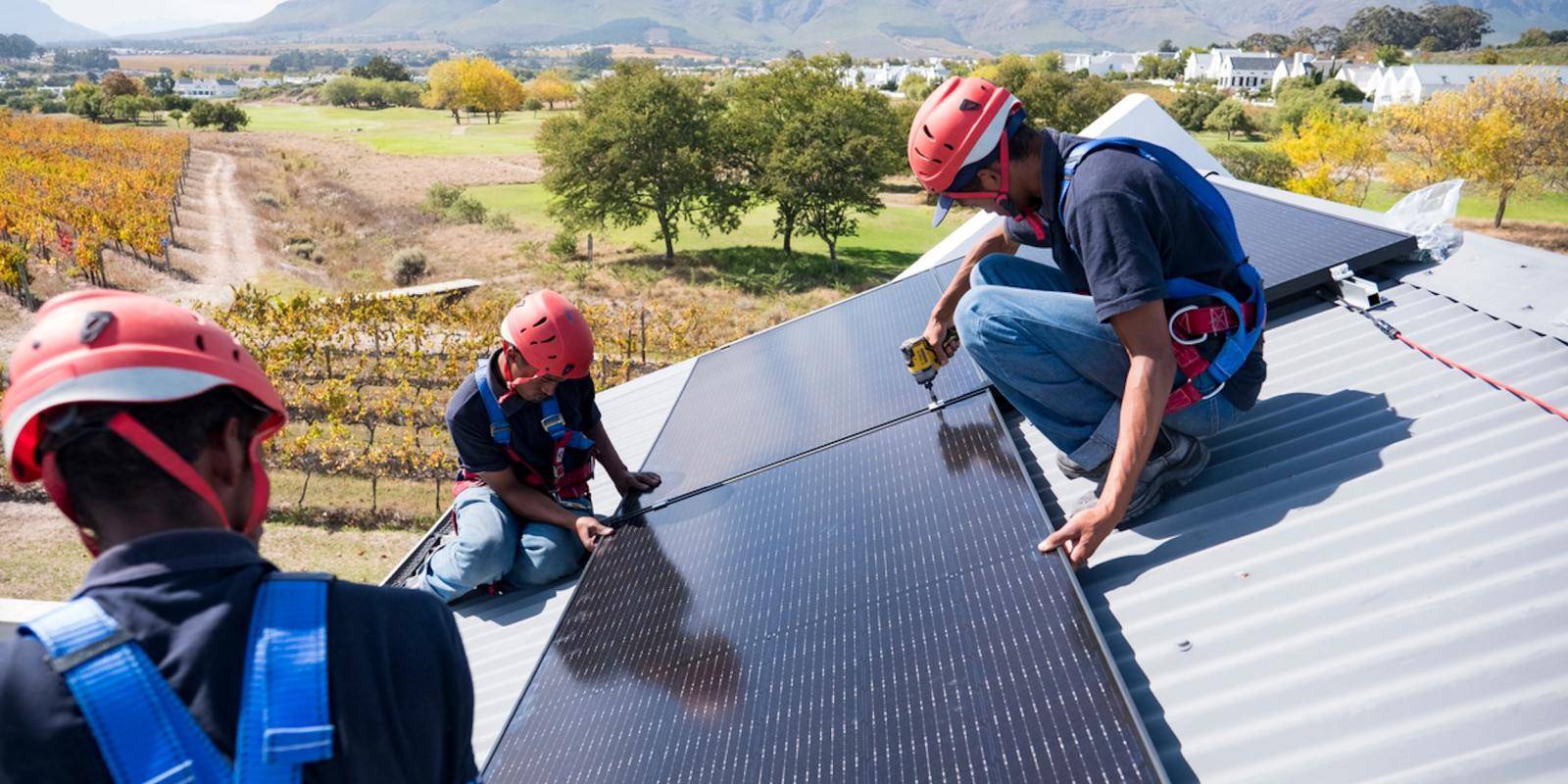

A recent survey commissioned by Chatham House and conducted by GlobeScan, assessed global sentiment towards Chinese-made clean technologies, namely solar panels and electric vehicles, in 33 countries.
Compared to the 2025 survey findings, the 2026 survey results found significant sentiment increases in several regions around the world, in just one year.
The resulting energy shock from the US-Israel war on Iran and the effect on global chokepoints such as the Strait of Hormuz and the Red Sea may be contributing factors, alongside China’s steadily growing reputation as a supplier of high-quality, low-cost technology products.
For instance, results demonstrated a significant increase of consumers’ likelihood to buy Chinese solar panels and Chinese electric vehicles in several European countries, just in the past year, even as the European Union coalesces around trade and industrial measures aiming to strengthen domestic manufacturing and reduce Chinese imports.
In Germany for instance, a country famous for its auto industry, consumer likelihood to purchase a Chinese electric vehicle still increased by 13 percentage points from 2025-2026. This is against a backdrop of a historic German industry in crisis caused by plunging sales in China, on the one hand, and surging imports of low-cost vehicles from China, on the other.
Chris Aylett, Senior Research Fellow, said:
‘It is striking to see European consumers warming up to China’s clean tech offer, just as the continent’s political and industrial leaders reach consensus on the need to take robust trade measures. Europe will need to make sure it doesn’t choke off the uptake of clean tech, which is already combating inflation, improving air quality, and cutting emissions’.
Elsewhere in Europe, purchase likelihood of Chinese EVs in the Netherlands increased by 9 points since 2025, and the UK by 7 points. The same trend can be seen in how likely consumers are to purchase Chinese-made solar panels, with a 9-point percentage increase in the Netherlands, an 8-point increase in Germany and 6-point increases in the UK and France.
In North America, Canada stood out for increased likelihood to purchase Chinese clean technologies, following a sharp decline in relations with the US. Canadian likelihood to buy Chinese-made electric vehicles increased by 12 points and the likelihood to buy Chinese-made solar panels rose by 8 points.
This trend echoes in parts of the Asia-Pacific, with more consumers expressing interest in Chinese solar panels, including an 8-point increase in Australia and 6-point increases in India and Hong Kong.
However, the trend does not echo everywhere on the globe. In the MENA region, Chinese EV purchase likelihood among Saudi Arabians has decreased by 7 points in the past year. The likelihood of Thai citizens to purchase Chinese solar panels also decreased by 7 points, although in both cases, the fall has been from relatively high levels.
Another key finding of the survey is that, compared with a year ago, fewer consumers say solar or EVs (irrespective of origin) are out of their price range, suggesting a weakening of longstanding perceptions of clean technology as the preserve of the well-off.
At COP31, co-hosts Turkey and Australia are promoting widespread electrification as a means of curtailing the greenhouse gas emissions responsible for climate change.
Chris Aylett, Senior Research Fellow, said:
‘Solar panels and electric vehicles are needed to electrify and decarbonize our economies. Our data shows that these key technologies are rapidly going mainstream. In almost every country we surveyed in 2026, fewer people reported cost as a barrier compared with a year earlier. At a time of widespread cost of living pressures, this is remarkable.’
The results of the survey are available in full here:
To ask any questions or to speak to an expert on the results, please email [email protected].
Notes:
Representative online samples of approximately 1,000 adults in each of 33 countries (500 each in Hong Kong, Kenya, Nigeria, and Singapore, and 1,500 in China and USA) (n=32,106).
Samples are representative of online population, weighted to reflect general population census data.
Online surveying in July and August 2026