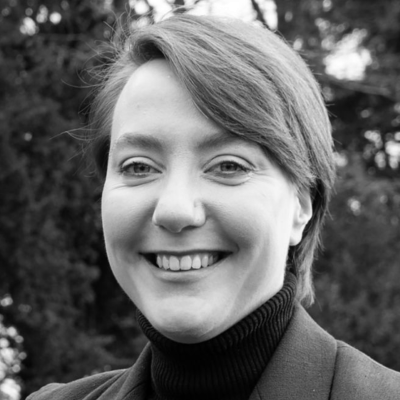
Marion Messmer
Okay, good evening, everyone. It looks like we have a few last people still entering the room, so I’ll give everyone a second to find a seat, but in the meantime, welcome to Chatham House. I’m really delighted to see so many of you here, and we also have a great audience online. So, as some of you may know, I’m Marion Messmer, I’m the Director of the International Security Programme here at Chatham House, and I’m really delighted to welcome you all tonight to hear from Oana Ţoiu, the Minister of Foreign Affairs of Romania.
So, before we begin, I just wanted to remind everyone that this conversation is being livestreamed and is on the record. So, if you wanted to post on social media about the event, you can. Please use the hashtag, #CH_Events, and tag us if you do so. We are about to hear from the Minister. While you listen, please think of questions that you may want to ask. If you are in the room, you can raise your hand and once I call on you, one of my colleagues will come to you with a microphone. Please introduce yourself briefly and then state your question, and if you are joining us online, then please put your question in the Q&A box and I will pick a few questions to read out on your behalf.
Now, without further ado, I’m really delighted to introduce Oana Ţoiu, who is, as I mentioned, the Minister of Foreign Affairs of Romania. She previously served as the Vice President of the Chamber of Deputies, where she was also President of the Labour and Social Protections Committee of the Romanian Parliament. And the Minister is going to speak to us for about ten minutes, followed by a question and answer session, first with some questions of myself and then questions from the audience. So, please join me in welcoming the Minister [applause].
Oana Ţoiu
Thank you so much. Here or here?
Marion Messmer
You can do…
Oana Ţoiu
Here.
Marion Messmer
…your remarks up there if you want…
Oana Ţoiu
Do my remarks up here.
Marion Messmer
…and then sit back down.
Oana Ţoiu
Thank you. It is such an honour to be here today with you, although I have nothing new to say, and I know that that sounds like a disastrous start of a conversation, but it is true. I think the power of this conversation is not necessarily saying something new, but rather in reaffirming what we already know, which is that we’re here together, standing as an international community. We’re here together as, in my case, a representative of Romania, to stand by Ukraine in their effort, in their extraordinary courage, resilience, perseverance, in their extraordinary moment of history where they are always mixing this realistic perception of the risk and of the war they’re part of the tragedies of the everyday conflict, but also, of the hope and of the future plans, and how they design the future in the same time as they protect their survival.
But maybe the part of the power we’re having, it’s exactly the fact that this is not something new. We are four years into a war that was announced by Russia to be “won in three days.” They have been 500 times mistaken. It’s 1,500 days almost since that moment. So, it’s not that they’ve been a little mistaken, or that they have overestimated a little what their power was, but they are 500 times more apart from the actual reality. And part of that is, of course, first of all, the resilience, the courage and the power of the Ukrainian people, but then together with that, what we have managed to do as an international community.
Now, that being said, I don’t want to create too much glory on where we are, ‘cause we are not where we are supposed to be either. We are not at the moment where we – children there feel safe, we are at the moment where maternity leaves are targeted, although there is no one in the world that can say that women giving birth can actually possess a threat to someone. So, every rule has been broken by Russia. You have workers that were just commuting to work that have been targeted directly, and what is happening now with the energy grid in having old people, or people that are undergoing different medical treatments, freezing in their homes, that again is absolutely unexcusable. And something that should never have happened in an international community that has worked so long to create rules that we can rely on, that has worked so long to create institutions that we can have a dialogue in a diplomatic format, and yet here we are.
Now, I have come to also share a bit the perspective of where we stand as a neighbouring country, as the longest border with the war, the longest NATO border, European Union and Schengen border to the war. And we stand by our neighbours, helping in any way we can, obviously part of the international effort, as well, but also acknowledging that the task at hand needs even more pressure and needs even more support for the resilience there. And, also, one message that I want to put forward is the fact that if we look at the history of Ukraine, and we have watched it carefully as neighbours, it is quite clear that Russia has tried first to conquer the country by taking over their democracies with instruments that were outside democratic rules. They have reached this moment of actual military conflict, even back since Crimea 2014, because they have failed with the other instruments that they have tried.
Now, why do I mention that? It’s because I think we need to be aware that in many parts across the world, there is an ongoing hybrid interference, as we have acknowledged within the common NATO statement, actually initiated by the United Kingdom last year. And there is an ongoing hybrid challenge where we must co-ordinate as an international community, as well, to be able to find the proper instruments to prevent that, but to also to have the proper instruments to increase the resilience of our societies, to increase the resilience of our democracy.
And here, of course, we can also lean back into the lessons that Ukraine has learnt, into the lessons that Moldova has learnt, into the lessons that we have learnt, in Romania. And we’re actually, by the end of this month, going to sign a trilateral agreement in terms of sharing our lessons in that and to be able to advance in our cybersecurity instruments, the way our teams are learning of what are the threats, the risks, and how we can put forward part of that learning as our contribution to the international community, as well. So, that is one message.
And another message on our side is that it is very important also together that we keep the economic system going for Ukraine, and that we create the leverage and the pressure to diminish the profits that Russia is currently creating and has the ability to flow back into their war machine. Now, that, for us, means that we have moved last year to very concrete, definite punishment if you go around sanctions. Before the beginning of our term in government, if you would go around the sanctions we have imposed against Russian oligarchs or Russian businesses, you would be faced with a financial fine. Now, since we’ve started the term, we’ve been able to deliver this in Parliament, as well, you actually face prison time, and we believe that to be the proper discouragement that is needed. So, that’s one factor.
And, also, we have been strong supporters of the increase of – in the sanction packages of the alignment between the sanctions of likeminded partners, allies, the sanctions we’re developing in the European Union, and where it is possible to align that with the sanctions of G7 or United States, ‘cause we believe that is the way to create the proper pressure going forward. And in that sense, something that we can also continue doing and do better is to make sure that once we stop the energy flows from Russia, in terms of the demand that comes also from the countries here, then that we shouldn’t just use as a temporary instrument now as we have the war going on. It should be an intense instrument to pressure in this period of time, but also, once we realign the commercial flows, once we realign the logistical pathways, it is very important that we create that as a continuous economic flow that goes around Russia, essentially. So, we’re able to create the financial – well, so that we’re able not to allow them to gain the financial resources that then would feed into the defence industry, well, in their case, their war industry, as such.
So, that is the second part, and what we’re working on is investments to have a better energy grid with Moldova and Ukraine. What we’re working on is to advance the role we’re having as Romania in the vertical corridor, for example, to be able to allow for the energy sources, such as LNG coming from the United States, to be an alternative to the countries that are now, or have been until now, buying Russian gas and Russian oil. So, the economic part is very important, and here we actually welcome the announcement that President Zelenskyy has made in terms of the export that they’re willing to – the exports that they’re willing to develop in the defence industry. ‘Cause we think when we are speaking about Ukraine that we need to look there also in terms of the resources that they have developed and what we all have to learn in terms of air defence capability, something that we need on the eastern flank, and that we’re working more together to co-ordinate, to have in terms of financing, but also in terms of better collaboration among us, the states on the eastern flank.
And on a final note, before we go to questions and answers, we are hosting in Bucharest the B9 summit in the second half of May. President Nicușor Dan has announced this, and we believe this is going to be a key moment to be able to share among the leaders of the B9 countries and also, the other countries on the eastern flank being invited, what are the plans ahead and the lessons learnt, then feed those lessons into the NATO summit in Ankara this summer.
Then the last thing is, also, again, because we are in this special space, and there are not many organisations in the world that are in the same time, both with such a rich history, as you have, have more than a century of thought leadership, and are in the same time, relevant for the present moment and relevant for where the future takes us. And with that lesson of your strong leadership of Chatham House, I think we can go into the next phase of the conversation where we need to do the same. We need to be mindful and clear-eyed about the lessons that history has taught us, especially as a country that has parts of our history with Russia, parts of our history that I wouldn’t say are reported as being full of joy by those that have lived them.
We need to look into the lessons that list – history teaches us, and one of them is we should never be naive when it comes to Russia, but also, in the same time, have a future perspective, have the optimism that is generated by this international community, that has similar hopes, that has acted in a united manner, and that obviously, 500 times longer than Russia expected, has proved that it doesn’t give up.
Marion Messmer
Thank you…
Oana Ţoiu
Thank you.
Marion Messmer
…so much, Minister [applause]. So, I think there was so much there in your remarks, but I just wanted to pick up on a few of the things that you mentioned and perhaps go a little more deeply into that, before we open it up to everyone in the room and online. You mentioned the threat to democracy that Russia poses and the…
Oana Ţoiu
Yeah.
Marion Messmer
…various instruments of power that Russia has been using, first in Ukraine, and also, increasingly, in Europe. So, I wanted to ask you where you think the biggest risks are coming from, especially for European states, when we look at Russia and when we look at this year and what we need to be ready for.
Oana Ţoiu
Well, I think it’s self-evident in the case that the biggest risk is their war of aggression, their unprovoked war of aggression against Ukraine. And we also always need to remind ourselves, and remind our citizens, that the sacrifice, the effort, the leadership that Ukraine has in this also has, as an effect, the fact that our security is increased through that, because that is the biggest risk. Not necessarily in terms of territorial challenge, ‘cause here, I’m a strong believer in NATO and in the power of deterrence that Article 5 has, in the power we have collectively to create the proper deterrence on the eastern flank. And, also, what is a responsible decision that we have taken at the Hague Summit to increase our commitment for budget allocation for our own defence, where we’re now modernising our military, modernising our defence industry.
But I think it is the highest risk, because any type of advancement that they have there, anything that they consider that they’re winning through this process, indirectly creates the encouragement that they will repeat in the future this pattern.
Marion Messmer
Hmmm.
Oana Ţoiu
And I’ve been clear on this even since then, I think the international reaction we had in 2014 after Crimea hasn’t been strong enough, and I think if it would have been strong then, maybe we wouldn’t be today where we are.
Marion Messmer
That makes sense, and you mentioned the Ukrainian defence industry that has grown quite strong, you mentioned the efforts in The Hague to increase defence spending. What priorities is Romania setting when it comes to defence modernisation, and where do you see opportunities for co-operation with NATO allies?
Oana Ţoiu
Yes, I think here we have managed to have a fast-paced modernisation of our military and of our defence industry. We are not yet at the final process of that. So much still needs to be done in the year and in the years ahead, but we have the resources to allocate in that direction, not just in terms of our own budget and the decisions we have taken in that direction, but also in terms of the SAFE, which is a financing mechanism within the European Union, where Romania has secured the second allocation after Poland, 16.8 billion. And we believe that to be a very clear instrument for us to accelerate what we need to do, not just in terms of procurement, but especially in terms of modernising our defence industry, together with international likeminded partners, obviously part of our allies. So, we are able to also create through this process good paying jobs, which I…
Marion Messmer
Hmmm.
Oana Ţoiu
…think is an imperative for all of us in our communities, and, also, to create through this process the common projects in the defence industry that allow for the economic flow needed. Because – and I think this is the case not just for Romania, but maybe for other countries, part of the allied effort to step up our budgets to 5% of the GDP, we need to be able to do that without affecting the investments that are needed in education, the investments that are needed in healthcare, the investments that are needed in our social structure and other public services that we’re having. And in order to make that possible, you would need to also have economic flows that allow for those resources to at least partially be generated through them.
Marion Messmer
Yeah, I think that’s one of the areas where everyone in Europe is unfortunately, struggling a little and trying to figure out how to find their way through it. So, it will be interesting to see how Romania is solving it and how others can do that, as well. You mentioned ‘hybrid’ threats a little, and that’s of course something that we’re seeing increasing across…
Oana Ţoiu
Hmmm hmm.
Marion Messmer
…Europe. So, how do you think we can increase our resilience to hybrid threats across NATO, and how is Romania thinking about this challenge?
Oana Ţoiu
There are many, many parts of the answer to your question, but I think one thing that is important is to name and recognise them as such.
Marion Messmer
Hmmm.
Oana Ţoiu
And although that seems very simple, that seems the basis – the baseline of it all, I don’t think we are yet there everywhere. Because it’s not so easy as to recognise a gun, or as to recognise a drone flying into your airspace, or a ship in your territorial waters. It’s not as easy in the online space as it is in the offline space to recognise the threat or to recognise the author of that threat. Also, because it doesn’t pose such an imminent danger…
Marion Messmer
Hmmm.
Oana Ţoiu
…sometimes, or it’s not seen as posing such an imminent danger, I don’t think it was always high on the list of priorities. And we’re gradually realising that we need to co-ordinate among ourselves in terms of what we see, of the analysis that we have, in terms of what are the instruments to increase the resilience in our societies. Be it critical thinking, be it fact-checking instruments, be it very practical cyber resilience when it comes to cyber threats, and here in Romania, we also have a strong cybersecurity community. Also in the private arena, we have companies that have proved to be very strong in that arena and have expanded globally and provide solutions across the world. So, we can rely on that.
At the institutional level, we are hosting some of the strongest European teams and computer centres in that direction, as well. And we’re advancing our partnerships with, yeah, as I was mentioning, Moldova and Ukraine, because we believe, obviously, we see common patterns in those hybrid interferences.
Marion Messmer
Yeah, makes sense. One of the threats that I think we are particularly not used to having to deal with is physical sabotage, right?
Oana Ţoiu
Hmmm hmm.
Marion Messmer
You mentioned the difficulty in attribution. I think this is also something that’s…
Oana Ţoiu
Yeah.
Marion Messmer
…incredibly difficult…
Oana Ţoiu
Yeah.
Marion Messmer
…to attribute. Is Romania prioritising defence of, for example, energy…
Oana Ţoiu
Hmmm hmm.
Marion Messmer
…infrastructure, anything like that, when it comes to physical assets?
Oana Ţoiu
Yes, and, for example, part of our diplomatic efforts throughout this year have been on co-ordinating more at the Black Sea, because that’s where we have a very important energy project, the Neptun Deep. We are currently the number one natural gas producer within the European Union, and with the resources there, we are almost going to double the amount that we’re able to provide with – for our internal market to lower the energy prices. But also to allow for the resource that’s going to be needed when we step more into the industries of the future. Anything that is AI and that is datacentre is also huge consumer of energy but also provided for the region to decrease practically the instruments that other ha – others have to use energy as a weapon.
Now, that being said, it doesn’t mean we have done everything that needs to be done. This is a category where we’re still investing, still learning, we still have to develop capabilities.
Marion Messmer
Makes sense. I think we’re all still learning on this, and there’s a lot of NATO exchange on this point. One of the areas where we’ve seen quite a lot of Russian influence take place is in the Western Balkans…
Oana Ţoiu
Hmmm hmm.
Marion Messmer
…and of course, Romania, due to its geographic position…
Oana Ţoiu
Yeah.
Marion Messmer
…and strong relationships has done quite a lot in helping counter Russian influence. Do you think there are any lessons that you can share with the rest of us in Europe that we can take on?
Oana Ţoiu
Yeah, so, first of all, if there are Romanians in the room or watching the conversation, when they hear you say we have done quite a lot and what are the lessons we are sharing with the world? I think they would raise an eyebrow, not in underestimating the effort or the amazing success that our society has had in protecting the European path of our democracy, but rather because we also acknowledge that we are still facing those interferences.
Marion Messmer
Hmmm.
Oana Ţoiu
We also acknowledge that we still have to build up our institutions, we still have to build up our co-ordination or our answer, and our President, Nicușor Dan, has been very clear on what he put forward in the conversation with our society, but also in the international formats among world leaders, essentially. Which is to acknowledge together that there is a learning path that we’re on, that there is still a debate in terms of how we all practically put our instruments together, how we are able to corroborate what we are learning. But the fact that we need to acknowledge the threat as it is and we need to respond to it, I think that’s very important, and here I think Romania is in a place where we can share that with other countries.
And also, we have shared the report at the leaders level, in terms of what the judicial system has put forward, and also, our President has been again very clear on the fact that he is willing to put forward a more detailed report so that is available to the Romanian society, but also to the community that needs to be able to learn from that.
Marion Messmer
Thank you. I think we’ll now open it up to questions from the audience. I see one hand up already. See my colleagues are just grabbing the mic. So, if we could go to the gentleman in the middle here first. Thank you.
Angelo
So, thank you very much. I’m Angelo, I’m an Independent Analyst. So, I would say that until four years ago, the EU was considered a political economic power where Brussels, Berlin, and Paris were the centre of the system, and then there were some regions which were considered somehow to be peripherals, like the Mediterranean, the Eastern region and the Balkans. So, in the recent years, we have understood the geopolitical relevance of these so-called peripheral countries, like Finland, Estonia, Poland, of course, Romania. So, how do you think that the balance of political and economic power in the EU will change after the war, so how these recent years will have an impact on the future of the EU distribution of power and, you know, economic relevance, and all the attention? Thank you.
Marion Messmer
Thank you.
Oana Ţoiu
Thank you. You have mentioned analysis and a lot of labels about countries. Who those analysis belong to?
Angelo
Sorry?
Oana Ţoiu
You have mentioned analysis and used a lot of labels about different countries, and I was wondering what’s the basis for that?
Angelo
That wasn’t analysis, that was perception, I mean…
Oana Ţoiu
Of whom?
Angelo
…that was all – of – I would say a perception of media, social perception that the economic, the political powers, was all concentrated in some source of power which were located in…
Oana Ţoiu
Hmmm.
Angelo
…the more institutional. I mean, I’m from Italy, so I understand that there was a period, also before the war, where the attention was only given to certain parts of Europe. And now we all understand that there are other regions that we have to pay attention also to, I would say, somehow consider peripheral countries. So, this is my reflection, how this will impact in the future of the EU, and I would hope that this would lead to a more heterogeneous distribution of attention, of relevance.
Oana Ţoiu
When you say ‘peripheral’ you mean from a geographic point of view?
Angelo
Yeah, from a geographic point of view, hmmm, but yeah, and political point of view also.
Oana Ţoiu
In what sense, political point of view? I’m trying to understand, ‘cause the question is based on a set of assumptions that I don’t think they’re universally shared among us here.
Angelo
I don’t know, it’s – I mean, this is at least my perception, so I wou – I can talk by myself, but I’m just trying to understand how these recent developments will have an impact also in the future, after the conflict.
Oana Ţoiu
So, I think we have different economies. Within the European Union, you have economies that are larger and you have economies that are medium, or we have different paces in which our economies grow, for example, in the case of Romania, since the ‘90s until today, our GDP has increased ten times, since we joined the European Union, tripled. Now, we are not the top economy of the European Union, but if you look at the speed of growth of our economy, then, again, the order is quite different. When you speak about the ‘power’ that each country has within the European Union, then obviously you have different formats. In the European Parliament, for example, where the number of citizens is very relevant, we’re the sixth country. When you look at when our Prime Ministers, or in our case, our President, represent us in terms of decisions, then you have an equality of decisions among them.
If you look at different technical files and negotiations, of course, here, there is also the matter of the actual negotiation influence that everyone has, and here, the size of the market matters, the integration of the industries matter. But what I think is happening now is, first of all, if you look at the EU membership benefits, I think it’s a net positive for every member of the European Union. So, I think, irrespective of where you are in the size of your economy, if you look at the decision to join the European Union, or to stay in the European Union – I didn’t mean to go that way.
Marion Messmer
I don’t know what…
Oana Ţoiu
I realised…
Marion Messmer
…you might be referring to.
Oana Ţoiu
…in the middle of the phrase. So, if you join the European Union, or if you decide to stay in the European Union, I think it’s quite clear, especially from a financial point of view, or an economic point of view, that that is a positive decision for the country and therefore, for its citizens.
If we are to look into the future, I think here, as well, if you look at the dynamic in the world and the fact that the relationship between big countries has become more complicated. Again, I think a stronger co-ordination within the European Union and the fact that we negotiate as a bloc creates more power, and I think this is important. That makes us a stronger negotiation partner, and I think we need to use that, and I have been very clear in my political career on that. And now, once we see these trade deals advancing, we need to look at them not just from an economic perspective, but also from a geopolitical perspective, and I think this is important.
And that’s also, for example, why I think it matters and it makes sense that we support the project of an enlarged European Union, not just because that means we’re in a competition for the aspirations of the citizens of the countries around us. The – it’s a competition between different futures, and I think it matters that we invest in that competition, in a future that the Western Balkans or Moldova or Ukraine, the countries that want to join the European Union, see as possible, see as within reach, and that is a European future.
And I think it makes sense for Romania, as well, to be a partner for these countries and to be a strong voice for the enlargement, not just because we know what would mean if others would enlarge their sphere of influence, but also, because we have our own experience. When we joined the European Union, we didn’t have the perfect institutions. We still don’t have the absolute perfect institutions, but we are a story that proves that once you do the work, once you make sure you have most of the criteria, then within the European Union, it’s easier to go on that path, to grow on that path, to have the transformation needed for the institutions, the overall instruments that you need. And also, that the work is never done, and I’m not saying that just on behalf of my country. I think we all realise that it’s not a threshold that you pass, and then you’re there, irrespective of what happens. It’s an ongoing work that we need to do.
Marion Messmer
Hmmm, yeah, also…
Oana Ţoiu
And, also, one thing that I want to add, ‘cause I was having this conver – the conversation this morning with a couple of Journalists. Now, I also think we’ve created this complex structure with different levels of decision, where something that was possible throughout time was that you had national Politicians – and I say this as a Politician, I don’t say this as – at arm’s length from Politicians, has been very fast to take credit for achievements. And that makes sense, ‘cause you work for them, you’re part of the decision, but have been reluctant to speak on behalf of the decisions – of the European decisions that have been more complicated.
And that, in a sense, in some cases has created this idea that the European Union is sometimes something distant from the member states themselves, or from the power of the national Politicians themselves. Whereas I think it’s very important and the responsible thing to do to say, “This is a decision – this is a group where the decisions we’re taking have everyone at the decision table.” Now, not with equal power in terms of the economy, not with equal influence, not with equal history, but still, it is one decision that is taken in formats where everyone participates in this decision.
And with this strong wave of, let’s say, stronger stance on saying countries should be more independent nationally, and I’m a strong supporter of national identity, being a strong negotiator for a national interest, but still, if you look at countries in our region that are not part of the European Union and have not given through the treaties any common or shared responsibility on decisions, they want to join the European Union. They don’t want to go the other way. So, I think that speaks very clearly on why that creates more value.
And the one thing that I think it’s very important if we are to compare with, let’s say, other big powers in our region, I think it’s – the European Union has this power of attraction, which very few big powers have, because first of all, they’re not all open, that’s one thing. And then the model of the economy, as imperfect as it is, the model of the way we’ve built up our social services, public services, and all that, as imperfect as they are, with all the work that still needs to be done, I think it still creates an attraction factor for the countries in the region that we need to use by speeding up the enlargement, opening negotiation clusters, decisions.
Marion Messmer
Thank you very much. Now for a question from the online audience, which I think is…
Oana Ţoiu
Yeah.
Marion Messmer
…you know, is one that’s often been discussed this year already because it’s been quite a big year for European security. “How ready would you say European states are to defend themselves, and what do you think are priorities that European states…
Oana Ţoiu
Hmmm.
Marion Messmer
…need to tackle?”
Oana Ţoiu
So, I think, as I’ve been saying on behalf of my country, we’ve realised that we need to be very serious about our own reforms, about our own defence industry, about the budgets that we allocate. What we are seeing now is also a lot of effort at the political, at the diplomatic, but also at the NATO level, to integrate more of what we are doing on the eastern flank, and I think this is very important. Something that I need to acknowledge is if you look at the eastern flank from the Black Sea to the Nordic, we need more political co-ordination at the Black Sea, even if it’s more complicated, to be able to balance these points of the eastern flank, in terms of representation, at least. But if the underlying question is whether Europe can defend itself without the rest of the allies in NATO, here I’m a strong supporter of NATO, and I’m a strong supporter of the Transatlantic Partnership.
Marion Messmer
Thank you. I’ll just add a second question from online, because it’s related to what you just said. “How is Romania prioritising Black Sea security co-operation, and what would you say are the most important next…
Oana Ţoiu
Hmmm hmm.
Marion Messmer
…steps for Black Sea security?”
Oana Ţoiu
Yeah, so we’re working with the other countries at the Black Sea, specifically with Bulgaria and Turkey, for a common demining operation, also with Ukraine a lot. Ukraine is doing a lot of work on demining, and I think that is not mentioned enough in terms of their contribution to also keep the commercial lanes on the Black Sea safe. We have started to pay more attention to the way we are monitoring and what we need to invest to protect in the future, as well, the undersea infrastructure.
Marion Messmer
Hmmm hmm.
Oana Ţoiu
We think this is very important, and although, again, if you look at the Black Sea compared with, like – there’s – there are not yet so many things that have developed in terms of undersea infrastructure, but we believe that is something that we’re definitely going to develop even more in the future. And we also see this area as being essential in terms of commercial flows, but also in terms of, yeah, essential corridors, so we want to invest more in that and also create the political co-ordination for that to be possible, and the military co-ordination.
For example, in the last NATO ministerial, Romania was the country that initiated what we hope to keep as a continuous format, and we’ve had it in the past, as well, a trilateral meeting with the Ministers from Bulgaria and Turkey to be able to advance at that level what we want to do together, as well. And we are actually paying attention, and it’s very important for us to talk to countries that include the Black Sea in their defence and security strategy, in their strategic approach. Your own strategy that came out this summer mentions it, and we think this is something important. France, as well.
We recently have a European Union strategic approach to the Black Sea, Romania has been one of the countries that have pushed forward for that to happen. And we want to see, as fast as possible, the needed resources from the European Commission, together, of course, with our own investments, to make the European Union Security Hub at the Black Sea operational. Now it’s an idea in a strategy, we’ve done our part to create – put forward the concept, we’ve done our part to secure part of the financing that is needed, but the Commission needs to be more serious in moving from a strategy concept that we currently have into something that is actionable.
Marion Messmer
Thank you. Okay, back to the room. We have a few people who have been waiting very patiently, so I’ll go to the gentleman in the third row, this block here. Thank you.
Euan Grant
Taken an awful lot of notes. Thank you. The name’s Euan Grant, UK Defence Forum. I was a founding member of the EUBAM Mission in Kyiv and then in Chisinau. So, I’ve seen how things evolve, and I did put a copy of Tom Clancy on the desk in the EU delegation just after Crimea and said, “I think you should read this book.” But my question is based on, I think, a factor which has been far too often ignored, that many people, particularly in – further west, and particularly UK, don’t realise that you’re a Latin-speaking nation. You are a boundary nation between the Slavs and Latin speakers, with huge implications. So, who is listening to your message at nation state level across the western and southern parts of the EU? And perhaps, more importantly, who isn’t listening to you?
I noticed there was an awful lot – very little said among human rights groups and anti-corruption groups about the collapse of the UN mission in Eastern DRC about a year ago, where of course, there were Moldovan recruited mercenaries around. So, I think more people need to listen much more closely to what Romania is saying. Thank you.
Oana Ţoiu
Yeah, and thank you for that, and, also, thank you to all of you that have come this evening to listen to what we have to say and have an open conversation. I would say, though, maybe this is different throughout my term, but I would say, though, that now one of the things that is happening, because we’re all acutely aware of the risk posed by the aggression war that Russia started and provoked against Ukraine, that we have created a space where we speak with each other quite often, where we listen to each other quite often. I do not feel necessarily that there is a lack of attention or a lack of openness to our perspective.
Actually, I would say that the Security Council and the General Assembly in September at the United Nations was one of those moments where it was clear, from the Ministers of Foreign Affairs and Prime Ministers and Presidents present there, how clear they are on the fact that they pay attention to the risks that Romania faces, on the fact that they pay attention to the fact that we are part of this international solidarity where we see that the risk posed on one requires a diplomatic answer from all of us, but also better co-ordination and a clear deterrence factor among NATO and among allies.
And I think there have been many countries there that have spoken clearly on behalf of the peace that we need on Ukraine, but also on behalf of the eastern flank countries that have faced our own, let’s say, challenges in that respect. And Romania has been named many, many times by the leaders of these countries, UK, as well, and that has been one of the moment where it was clear how strong our conversation is, how strong the attention that we pay to each other is.
And, also, what we’ve seen in formats such as NATO, the European Commission, but also formats that were co-initiate ourselves, such as, the trilateral I mentioned at the Black Sea, or to name a format that’s very dear to me, the Odesa Triangle, which is the trilateral format between Romania, Ukraine, and Moldova. Now I can actually – I think it’s the first time I say it publicly; we’re meeting now in Munich, we have our next trilateral Odesa Triangle meeting in Munich to share our common perspective. We’ve done the same in Vienna a couple of months ago. And even in these formats that we co-initiate, or the regional formats that we’re part of, I think we also play this special role as being members of the European Union, but also, part of the Balkans, part of understanding the countries at the east of the European Union and the path that they want to go on.
We have this year the presidency of the Central European Initiative, where we want to use this platform throughout the year, together with Italy, we’re going to be in Trieste marking three decades since the beginning of this initiative with – I’ve spoken with Antonio Tajani in Washington now this week to prepare for the event, as well. Because we want to use this platform to make sure we use the fact that we’re members of the Union – European Union, but also part of our region to advance what we see further in terms of integrating more in terms of security, but in terms of economic and logistical flows, as well.
Marion Messmer
Thank you, and I’ll also just quickly throw in a question from the online audience, just because…
Oana Ţoiu
Sure.
Marion Messmer
…it also relates to the Munich Security Conference. Someone asked what you are “hoping for from the Munich Security Conference.”
Oana Ţoiu
Oh, I would hope for it to be boring.
Marion Messmer
Well, I think it won’t be.
Oana Ţoiu
I know, no, that was a personal note. No, but I think because the Transatlantic Partnership is in the spotlight of the Munich Security Conference, and I’ve spoken with many people from Congress, the United States is going to have one of the largest, if not the largest, delegation at the Munich Security Conference, there are many leaders across the world being present there, and I’m meeting a lot of my fellow Ministers of Foreign Affairs, I think it’s going to be a very important moment in time to address what we see together as challenges and how we co-ordinate from a security point of view. But also, to have an open format where we can discuss what we see differently, and I think this is going to be focused quite a lot on the online space, for example.
Marion Messmer
Thank you. Okay, a few more questions from the room, we’ve got a gentleman at the very back of the room. Yeah, thank you.
Houman
Thank you very much. My name is Houman, I’m a PhD Researcher on financial crime. I focus on Russia, China and others. How does Romania’s current policy framework address financial crime and sanction evasions linked to Russia, and how is this integrated into the country’s broader strategy for deterrence and security on NATO’s eastern flank? Thank you.
Oana Ţoiu
Yeah, thank you for the question. I mentioned briefly in my initial statements, but I welcome the opportunity to expand a bit more on that. So, we have a European Union decision that’s transformed into a directive to be able to have the inter-institutional collaboration, to be able to monitor what is happening in that space, but also, in terms of those that want to elude the sanctions, to be able to have the proper consequences in place. And the way we look at consequences is not necessarily from the angle of a punishment, but rather from the angle of a discouragement factor, ‘cause we think it’s very important that the potential cost that you face, if you try to organise – to elude sanctions, is high enough so that it discourages you from doing that. And one of the thirst – first things I did when I took over my term in June is to assess a bit what we’ve been doing in that direction and to increase with a new law, supported by the government and recently voted by a huge majority in our Parliament, and that is a law that creates clearer and tougher consequences, including potential jail time, if you organise – you create an organised system to go around sanctions. And we believe that will continue to act as a discouragement factor. So, that’s one thing.
Another element that is important to mention in terms of sanction, and here again, I think the important work that UK has done and the United States and us in the European Union, collectively, we welcome the sanctions posed by UK and the sanctions posed by the United States on Lukoil and Rosneft, ‘cause we see they operate in Romania, as well.
Marion Messmer
Hmmm.
Oana Ţoiu
And I have put forward, together with my fellow Ministers of Economy and Energy, again, the legal changes that are needed to be able to monitor the way that they operate in such a way that we do not allow for the financial flows generated to go back as profits into Russia, and then potentially into the war at our border. And we think this is a moment in time where this international pressure can act as a catalyser for those assets to be sold to more likeminded companies from likeminded countries.
Marion Messmer
Thank you. Okay, we have another question in the front.
Jamil Koussa
[Pause] Jamil Koussa, Chatham House member. Minister, the question is in relation to what the Vice President of European Commissioner last week, on the 6th of February, she says as follows, “Stop fighting. Wars end when one side runs out of money.” The question I’m asking you, do you agree with this? Secondly, what is the view of Romania in relation to this statement? Thank you.
Oana Ţoiu
Hmmm, I agree on the fact that the common strategy that we have established, the twofold strategy, which is to support the resilience of Ukraine and increase the pressure on Russia, is a strategy that we need to continue. Now, in terms of increasing the pressure on Russia, I think the instrument that we have at hand is the financial instrument. I mean, not just that, we need to – and we have done work to look into the visa, the sanctions, but the sanctions themselves act as an instrument to decrease the financial resources that they’re having. We have seen the oil cap price as an instrument that worked, maybe not fast enough, maybe not strong enough as we would have want. So, that’s why we’ve gradually increased that pressure, and we have welcomed other countries across the world that have done the same. When we say “we increased,” I refer now to the European Union as a whole.
Now I think the next sanction package with tougher decisions on a specifically maritime component to it, I think that can have an add-on response. I also have been very clear on this in Washington, as well, when I’ve been, now that I think we can create a stronger effect if we have alignment with the United States when possible, on these sanctions. So, yeah, I think that is something that needs to continue. If you can do it faster and tougher, that’s a conversation, an ongoing conversation, because everyone in the same time, especially across the world, when we engage with our international partners, conveys back to us the message of their responsibility towards their own economy.
So, I think here we need to engage with international partners to also convince them, when possible, to join the sanctions, and therefore, the pressure we collectively put on Russia and on Russia’s financial resources, and in the same time, be able to give them alternatives.
Marion Messmer
Hmmm.
Oana Ţoiu
Energy is maybe at the top of this list.
Marion Messmer
Thank you. Any other questions from the room? We’ve got one here.
Nicholas
Thank you very much, Minister. My name’s Nicholas. I’m a master’s student at King’s College London.
Oana Ţoiu
Hi.
Nicholas
And I wanted to ask you, how does Romania see – you mentioned during your speech the threat of hybrid attacks by…
Oana Ţoiu
Hmmm hmm.
Nicholas
…Russia against European democracies. We saw this in your own country last December in the first round of the presidential elections, and this summer and fall in neighbouring Moldova, where Russia spent…
Oana Ţoiu
Yeah.
Nicholas
…an exorbitant amount of money to try to overthrow the pro-Western government.
Oana Ţoiu
And failed.
Nicholas
Yes, thankfully. My question to you is, what lessons can Romania and the EU at large learn from Russia’s failure in Moldova? And what work remains to be done so that a similar scenario can’t be repeated, not just in European Union countries, but in candidate countries where Russia still does have a lot more influence, for example, in the Balkans or in Armenia, which has elections in a couple months? Thank you very much.
Oana Ţoiu
Right, so I think Russia sees the European Union and NATO as direct challenges to their potential of expansion. So, I think it’s not just the one try and if they fail, they stop. It’s rather an ongoing strategy. It’s an ongoing deployment of different tactics. I think we’re going to see them continue to allocate resources in this direction. Therefore, on our part, I think we need to have this international co-ordination, I think we need to develop with the resources that we have, common instruments to prevent that. I think we need to be transparent on, as much as it’s possible, on what we see happening in our informational spaces.
But also, something that I think it’s important to mention, maybe it’s a bit of a more philosophical approach, but I think this is the right group of people to have that conversation with, which is the need to make sure there is also a very clear line between what is considered enemy interference, fake accounts, AI amplified algorithm with bots. And all that content that is disingenuous, is not connected to a human person or an actual opinion, ‘cause freedom of expression is something that citizens have a right to, not algorithms or AIs or fake bots.
Marion Messmer
Hmmm.
Oana Ţoiu
In the same time, I come from a country in which the generation of my parents has literally fought sometimes with their life, and they have raised their freedom through the revolution to be able to gain freedom of expression. To be able not to be censored in what they say, to be able to not to be thrown into prison because of what they think or what they say or what they put into – in their case, it wasn’t the online space, but it was, like, poems, letters, open conversations, radio. And now at our Embassy here in London, I was walking with our Ambassador, through the hallways, we have a permanent exhibition, which is with pictures from those moments in time in the 90s when people were speaking out their dreams. And one of those pictures, it’s famous in Romania, it’s with two young students that have written on a piece of paper, “Our children will be free.” That was the core aspiration of that generation, and I am part of the children of those – of that generation.
So, I think, here, it’s very important that we have a continuous conversation with our societies in which they understand that their right for opinions, irrespective of how uncomfortable they are, is protected, is guarded and it’s separated from what we want in terms of making sure that fake accounts, fake bots, are not allowed to grow with no limit, no regulation. And I think here this is something that irrespective of how we create the rules within our countries, there are some basic principles that I think we can all agree on. I think we all want to protect our children, and we do understand that a lot of these online spaces have risks and threats for them, unless we act as guardians to what they can do there, how much time is allowed there, how the algorithms use their emotion and their time there.
I think we can all agree that we need to protect also our citizens, not just from interferences in the democracies, but even from these very basic direct threats that come from fake content and online organised crime. Fake advertising that leads you to transfer your well-earned salary into accounts that don’t exist. Personalities that are used with AI-generated content that do not actually endorse specific products or specific platforms. So, I think here it’s very important that we together continue that conversation, ‘cause I think we agree on the basic principles and the goal, but in terms of instruments of regulation, I think here, also, in the transatlantic relationship, we’re going to see a lot of conversations being developed in the future.
Marion Messmer
Thanks. Yeah, a really good point. I mean, I’ve been thinking a lot in my work about what the role of values is in foreign policy, right, especially for an actor like the EU, and I think that’s a really important point to put freedom of speech so centrally, since that’s something that we can all agree on. Just to add another question from our online participants. So, the Black Sea and Black Sea security has come up, of course, quite a lot in your remarks…
Oana Ţoiu
Hmmm hmm.
Marion Messmer
…and in the Q&A, throughout the Q&A already, and one of our online audience members was wondering “what lessons” you think “we can learn from the Black Sea, for the Baltic Sea, for the Mediterranean…”
Oana Ţoiu
Hmmm hmm.
Marion Messmer
…for essentially the “other maritime spaces…
Oana Ţoiu
Yeah.
Marion Messmer
…in NATO.”
Oana Ţoiu
So, I think even the question itself is of great value and thank you to the person that has put it forward, because we need to also co-ordinate more on what we do on these differences. And here we have had in September at the United Nations a panel on maritime security, where many of us came from different continents, different realities, very different formats on how we handle maritime security. We’re going to continue that in September in New York this year, and I think that that’s very, very important. What we’re doing in the international organisations that are monitoring that, I think that’s also essential.
And here, in Romania, we are supporters of integrating more, for example, the informations that we are having from our port, from our naval monitoring information, ‘cause I think especially when we look at the shadow fleet, for example, or the illegal commercial flows that are happening across the seas, or even the interferences with the undersea infrastructure, I think here it makes a lot of sense that we share more of the information that we are having.
Marion Messmer
Thank you.
Oana Ţoiu
And, also, one last thing, I think here, something that we’ve discussed while putting forward the sanction package, but it wasn’t so high on the agenda, so maybe it’s worth mentioning, that when you talk about insurance, for example, of very old ships or the shadow fleet, there’s also a component there, an indirect component there, about the environment. ‘Cause if we have ships that are too old, that do not respect any criteria, used even, for example, to move oil outside the territorial waters, from ship to ship, all those create huge risks to the biodiversity and the environment itself. And I think that’s also something that makes sense once we put it in the sanction package and we find better instruments of insurance, of monitoring, of stopping these shadow fleets to get to land and to be able to create a commercial incentive for them to continue. We need to continue that in the future, also, from an environment and sustainability perspective.
Marion Messmer
Yeah. No, I think that makes a lot of sense, and the dark fleet poses lots of layered…
Oana Ţoiu
Yeah.
Marion Messmer
…challenges in that regard. I think, with that, we are actually at time. So, thank you all to our audience in the room and online, and of course, thank you so much, Minister…
Oana Ţoiu
Thank you.
Marion Messmer
…for coming and joining us.
Oana Ţoiu
It was an honour to be here today.
Marion Messmer
Please join me in thanking the Minister [applause].