
Any large organization, whether a global conglomerate, a government or a political party, must grapple with two perennial challenges when its top leadership gathers: people and money.
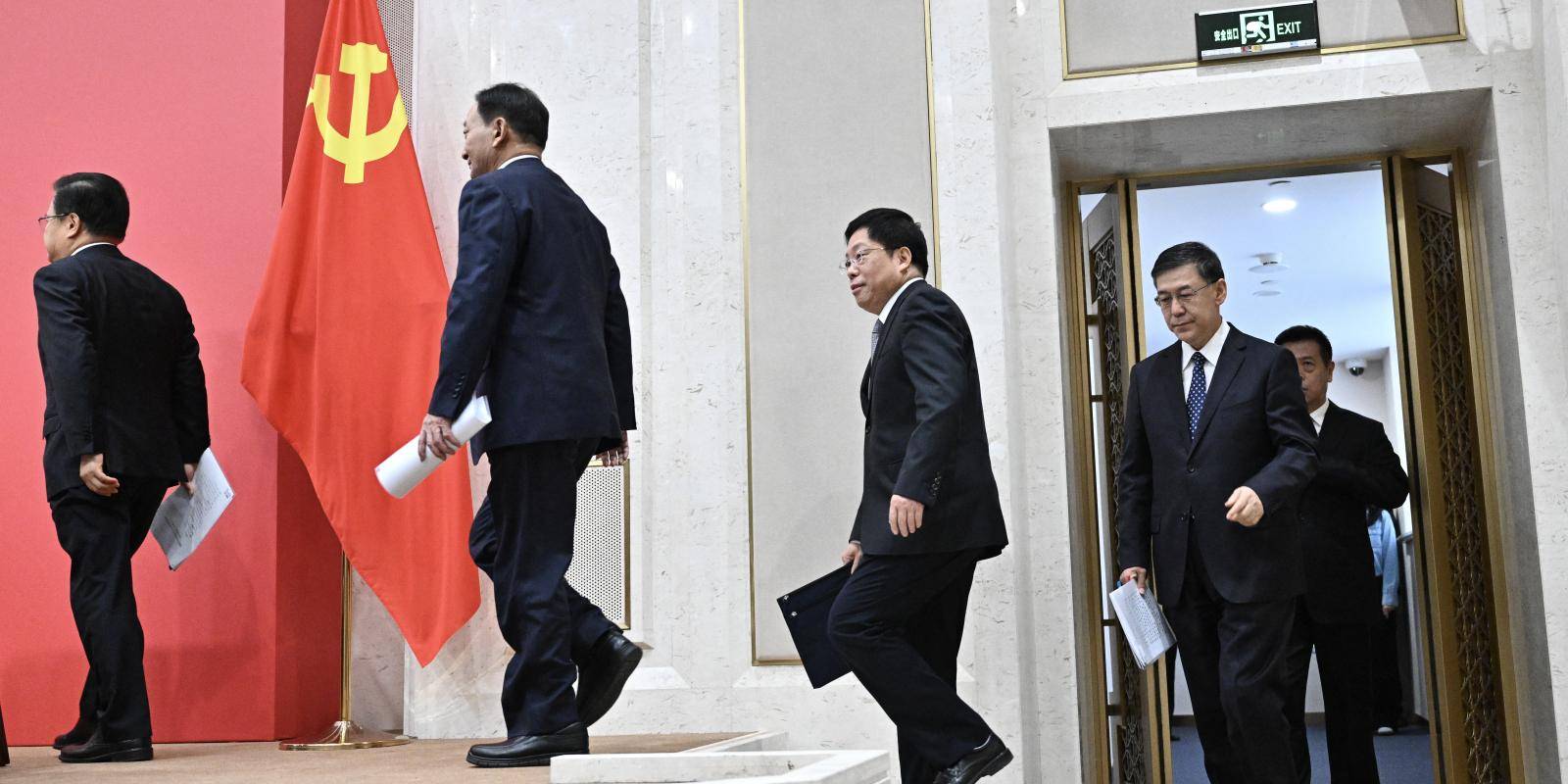
China’s ruling Communist Party is no exception. Last week’s four-day, closed-door Fourth Plenary Session of the 20th CPC Central Committee – known as the Fourth Plenum – offered a rare glimpse into how Beijing manages both. However bureaucratic the name may sound, the meeting’s global implications are difficult to overlook amid intensifying US–China tensions.
On personnel matters, international observers were quick to speculate about the winners and losers in this latest political reshuffle. The official communiqué confirmed the expulsion of 11 full Central Committee members and four alternate members (out of a total of 205 full and 171 alternate members respectively). This was the biggest expulsion of members since 2017 and shows the vigour with which the anti-corruption campaign is being carried out within the upper echelons of the party.
It also appointed General Zhang Shengmin as a new vice chair of the Central Military Commission. His elevation to this new position illustrates that President Xi will continue to place his campaign against corruption at the heart of senior PLA leadership. None of the dismissals or changes came as a surprise – most had been announced in advance – but the sheer scale of the reshuffle once again underscored President Xi’s unchallenged authority at the top of China’s political hierarchy.
On the economic front, this plenum set the stage for drafting China’s 15th Five-Year Plan – the country’s latest roadmap for its economic and industrial strategy covering 2026-2030. Since the founding of the People’s Republic, each Five-Year Plan has served as the backbone of Beijing’s policy direction. The plans have outlined not just where the leadership intends to steer the economy, but also how it wants to shape China’s place in the world.
A shift in economic priority
The Fourth Plenum proposed the core features of the upcoming 15th Five-Year Plan, which is expected to be made public in full early next year.
Judging from the published communiqué from the meeting, the key themes from the upcoming Five-Year Plan signal a clear break from every plan since the ‘reform and opening up’ era began under the leadership of Deng Xiaoping in 1978. It marks the final consolidation of the shift to use technology as the main driver of the economy. Under Deng and his successors through to President Xi, China’s Five-Year Plans have focused on nominal economic growth as a top priority.
This time, the leadership is putting economic security on an equal footing with prosperity generation. The days of single-mindedly chasing nominal GDP growth are firmly a thing of the past. Instead, the current intense focus on addressing technological chokepoints reflects Beijing’s concerns about the extent of the country’s dependence on overseas suppliers for high-end technologies.
Global economists hoping to see a renewed focus on domestic consumption are likely to be disappointed by the plenum’s direction for the Five-Year Plan. They argue that China needs to consume more to get the economy back to a reasonable level of growth and manage its trade surplus with the rest of the world. But for China’s leaders, increasing domestic consumption is no longer the top priority.
Instead, the new Five-Year Plan signals a decisive shift in China’s growth model. It moves away from a focus on headline growth rates and towards building a resilient economy anchored in domestic innovation and fortified manufacturing supply chains capable of weathering, as the communiqué puts it, ‘even dangerous storms.’ At the heart of this transition lies Beijing’s long-term pursuit of economic and technological self-reliance.
Foreign observers should not expect Beijing to revive its sluggish property market or grant more financial autonomy to local governments. The direction is clear: expect deeper central government intervention, with capital and policy support channelled into strategic and high-tech sectors. Beijing will continue to coordinate from the centre in its ‘whole of nation’ approach.
Over the next five years, the Party’s overarching goal is to make China a global champion in innovation. The vision is of a nation that not only produces technology but defines its frontiers and global standards. And this innovation must be widely applied into advanced manufacturing to generate national incomes. As the communiqué underscores, ‘the share of advanced manufacturing in the national economy should be kept at an appropriate level.’