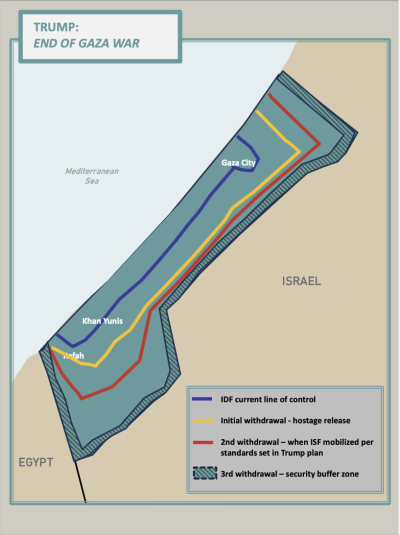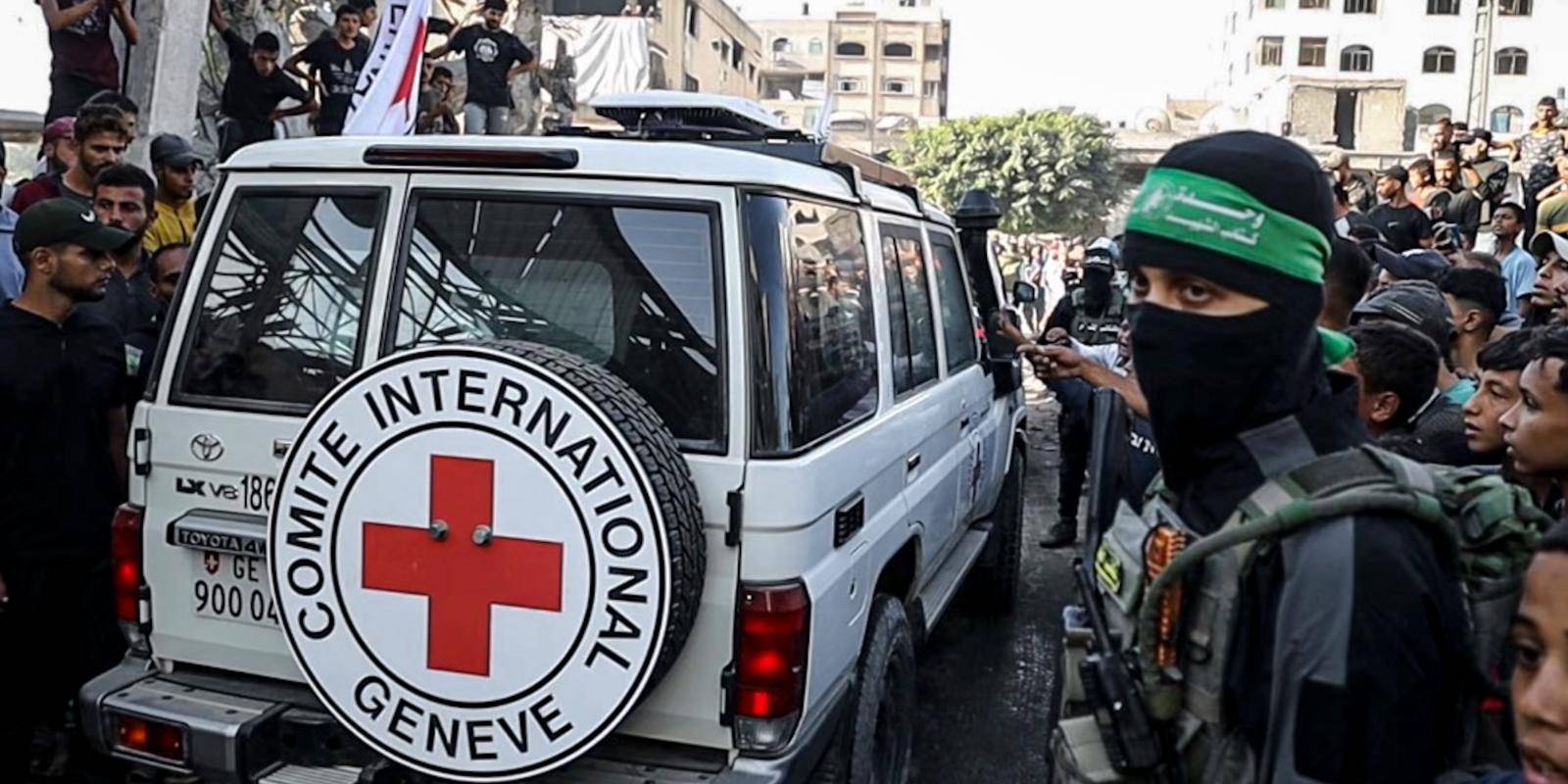

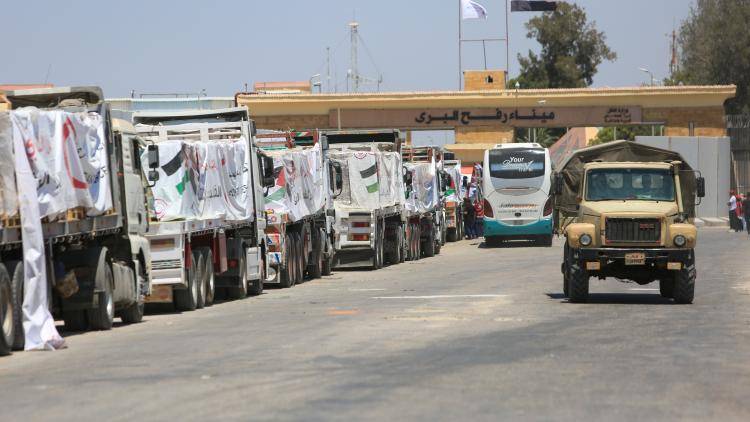
The fault lines in President Donald Trump’s 20-point plan for Gaza, plainly visible even before the ceasefire, are opening wider by the day. They could yet derail the fledgling project altogether, with Hamas gunmen carrying out public executions on the streets and Israel threatening to cut aid unless Hamas returns more bodies of dead hostages.
Certainly President Trump’s ‘eternal peace’ has a very long way to go before it matches in longevity even its closest precursor, President Bill Clinton’s similarly grandiosely named ‘Peace of the Brave’. Meticulously negotiated by professional diplomats, that 1993 fruit of the Oslo peace process also had stages, targets, timelines, conditions, and buy-in from the international community. Even so, it scarcely outlasted the 1990s.
Netanyahu opposed Oslo. So did Hamas. What is different today is that both have had their power significantly curtailed by outsiders. But, having been compelled to reach an agreement, can they be made to abide by it? And can Palestinians be persuaded there is cause for hope – the essential ingredient in a lasting peace?
Keeping Netanyahu in line, Trump engaged, and Israel safe
All sides agree that keeping Netanyahu and his expansionist far-right settler coalition partners in line is vital for success. And that it can only be done by Trump.
That makes it important that those who have the would-be Nobel Laureate’s ear – including former British Prime Minister Tony Blair – keep him engaged. That could prove difficult. There is a long way to go, through the devilish details of a multi-stage process overseen by the so-called ‘Board of Peace’ and a transitional body of Palestinian officials.

Yossi Mekelberg discusses the impact of 7 October on Israel during an event at Chatham House.
‘It’s a very precarious situation,’ Hossam Zaki, assistant secretary-general of the Arab League, said this week. ‘If the US president is encouraged enough by today’s first phase, then I think the administration will continue to be engaged’.
Israel also needs confidence that an international force in Gaza will prevent its border being overrun as it was on 7 October 2023. My colleague Yossi Mekelberg has spelled out how much Israel’s collective psyche is still scarred by what was an unprecedented and humiliating failure of the country’s much-vaunted arms and spycraft.
Hamas’s position
Hamas, meanwhile, is no more likely to disarm now than it was in 2006. That year, following its success in parliamentary elections, the international community made renouncing violence one of three conditions Hamas had to fulfil to enjoy good relations. Hamas did not comply.
In 2025, Hamas has more motivation to retain its weapons. It fears that Israel may renew its assault on Gaza now the hostages have been returned. And its military wing, the Qassam Brigades, will not want to leave what remains of its armed cadres and the political leadership in Gaza vulnerable to internal enemies taking revenge for past injustices, real or perceived.
But the fear on the streets of Gaza is not just of Hamas weapons. Videos of rival factions, clans and militias circulating on social media in recent days make the prospect of civil war a very real concern. Gazans still recall the internecine bloodshed of 2006-7 when they were caught in the crossfire of drive-by shootings that erupted into civil war.
It was a shrewd move by President Mahmoud Abbas to condemn street killings, saying they ‘undermine the unity of the Palestinian people and their social fabric’. By doing so he has sought to position the Palestinian Authority (PA) as representative of all Palestinians. Abbas, deeply unpopular and utterly marginalized during the two-year war, has a long way to go. But this was the right place to start.
Hamas itself will likely revert to what it has done in the past when not in full control of Gaza and surrounded by powerful opponents: lie low, regroup, restock, plan. And present itself as the guardian of Palestinian resistance, killing or kneecapping those it brands Israeli ‘collaborators’.
Keeping Hamas in line will be more of a group effort. Qatar and Turkey are likely to play key roles, alongside Egypt, Saudi Arabia and others. Much rests on the international stabilization force (ISF). If it succeeds in restoring order in Gaza, the task facing the technocrats and politicians will be much easier. It will be easier still if they can prevent aid and reconstruction funds being siphoned off to fund Hamas or other militias.