
This week Egypt hosted indirect negotiations between Israel and Hamas, which have yielded an agreement to implement the first stage of US President Donald Trump’s plan to end the Gaza war. This will entail the return of all the Israeli hostages held in Gaza, the release of hundreds of Palestinian prisoners, and a partial pullback of Israeli forces.
Egypt handled these negotiations in partnership with Qatari, Turkish and US officials. That is in keeping with its policy of trying to ensure that the resolution of the conflict is a collective effort.
Egypt has taken a firm position on its own national security interests in talks. It has ruled out taking sole responsibility for Gaza, which it insists is ultimately for Palestinians to take on, with international support. And it has emphasized its refusal to allow mass displacement of Palestinians into its Sinai region, which borders the Gaza strip.
Its involvement in the Gaza peace process thus far has been relatively low-key, although Egyptian intelligence officials, military leaders and diplomats have been heavily engaged behind the scenes.
However, now that the Trump plan has gotten over its first hurdles, the next steps will require significant input from Egypt. President Abdel-Fattah Sisi’s government is keen to contribute to a reconstruction effort. But the Trump plan also raises significant security concerns – not least that Egypt could be sucked into a prolonged commitment without sufficient support from other countries.
Strained Egypt–US relations
Egyptian relations with the Trump administration have been strained over Gaza. Sisi aborted plans to visit Washington at the start of this year after President Trump unveiled his ‘Gaza Riviera’ scheme, maintaining minimal contact since. Indeed, the Riviera scheme spurred Egypt to develop its own plan for Gaza’s reconstruction. Trump’s planned visit to the region to mark the initial success of his plan provides an opportunity for a reset of relations with Egypt’s leaders.

Relations with Israel, meanwhile, have sunk to a new low. On 15 September, Sisi gave a strongly worded speech in Doha, condemning Israel’s botched attempt to assassinate Hamas leaders in the Qatari capital.
Egypt’s recently beefed-up military presence in Sinai has also drawn complaints from Israel, although its purpose appears to be deterrence against any Israeli move to expel Palestinians, rather than an offensive threat.
This is a challenging context for the Trump plan: in the coming phases, Egypt will become a crucial player. Its cooperation will be vital to facilitate the flow of aid into the territory. And Egypt could potentially contribute to the International Security Force (ISF) the plan calls for.
Egyptian wariness of being drawn too deeply into Gaza is not only due to the US and Israel. Historical factors are important: Egypt’s occupation of Gaza after the creation of Israel in 1948 was an unhappy experience for all concerned, and provided no defence against Israel’s occupation of Sinai in 1967.
The Egyptian government also has concerns relating to the domestic economy, which is showing signs of improvement after a testing period. If Egypt were to get sucked into an active security role in Gaza, potentially bringing increased friction with Israel, it could have a negative impact on the recent recovery in foreign investment inflows and on the burgeoning tourism sector.
Another issue is Egypt’s reliance on natural gas imports by pipeline from Israel. These are continuing, and there is an agreement to increase them. Egypt also imports liquefied natural gas (LNG), and is boosting the capacity of receiving terminals, but these are more expensive that the pipeline supplies from Israel.
Problems with the Trump plan for Gaza
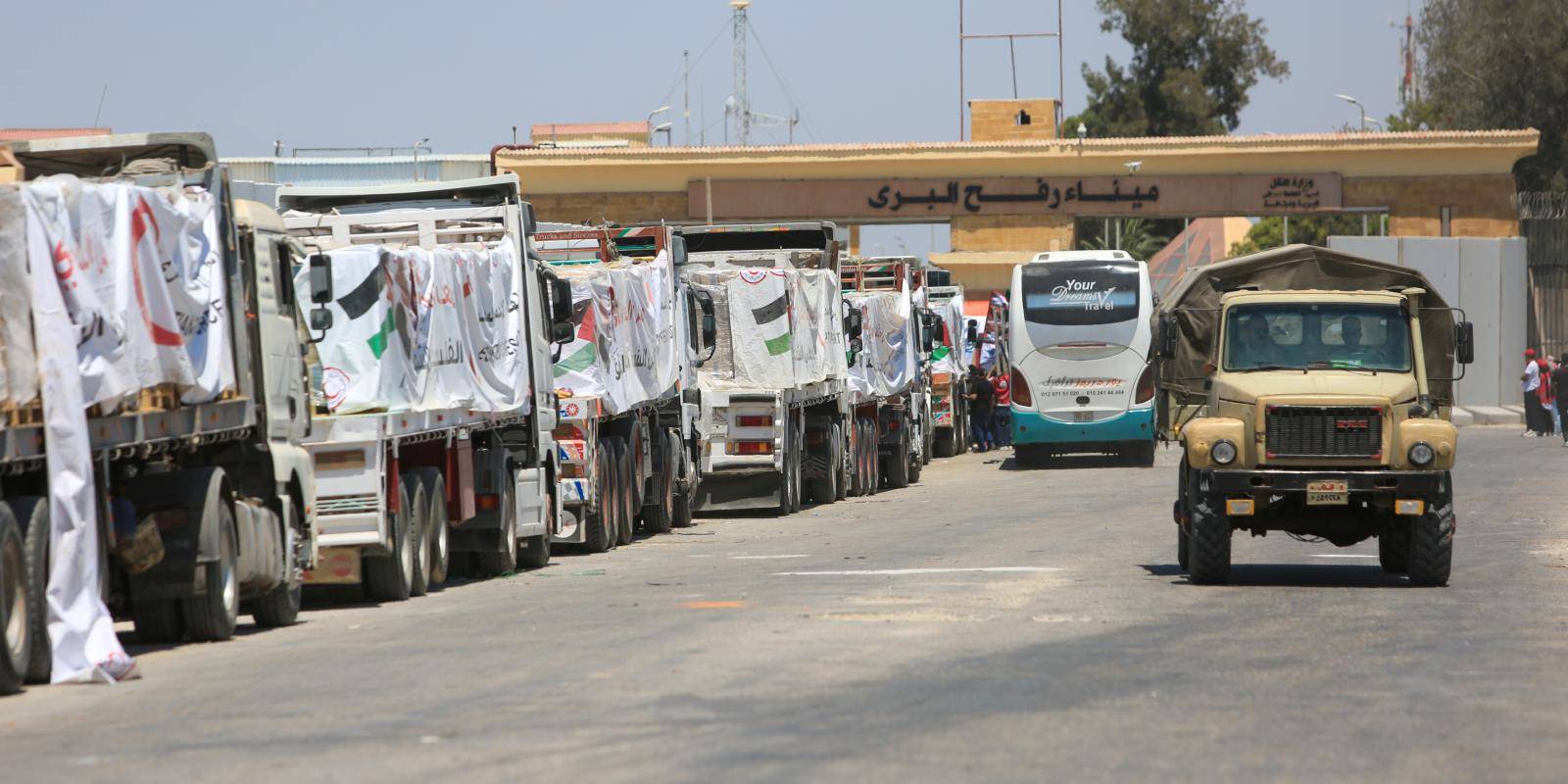
The Trump plan calls for aid deliveries to be stepped up, including through the Rafah crossing between Egypt and Gaza, which is to be opened in both directions. But the plan does not spell out what will happen to the Israeli military presence on the Gaza side of this crossing, and in the Philadelphi Corridor.

It only states that the ISF will work with Egypt and Israel to help to secure border areas, and train new Palestinian police forces. The make-up of the ISF, and its financing, have yet to be decided.
The plan sketches out a process for disarming Hamas, but without any clear enforcement mechanism. It states that as a first step, once all the hostages are released, Hamas members who forego violence and give up their weapons will receive an amnesty, while others will get safe passage out of Gaza.