

It’s commonly noted that Peru has had eight presidents in the past 10 years. That neat data point, though, obscures the political and structural reasons behind the constant upheaval. And it raises another remarkable fact: despite continuing political turmoil, Peru’s economy has grown at an average 5.5 per cent between 2002 and 2022 (excluding the 10 per cent contraction during the COVID 19 pandemic).
This year’s 7 June second-round elections between conservative, perennial also-ran candidate Keiko Fujimori and outsider leftist candidate Roberto Sánchez may well mark the moment that the balance between political crisis and economic growth finally breaks.
Shadows of old presidents
In 1990 Alberto Fujimori, father of Keiko, handily beat Peru’s Nobel Prize laureate Mario Vagas Llosa in the presidential election.
During his presidency Peru’s party system evaporated, with Fujimori ruling effectively as a dictator from 1992 until 2000, when he fled the country under a cloud of scandal.
Every presidential election since 2000 has been a cliff hanger. Each has seen voter preferences swing wildly from month to month in the lead up to the elections. Each has gone to a second round. And every election has raised fears that the country’s booming economy might not survive the fury of increasingly polarized politics.
Sunday’s second round elections are no different. But this time, there are reasons to believe that Peruvian democracy and stability may finally have reached a tipping point.
Keiko Fujimori finds herself in a familiar though potentially humiliating position. Keiko – as she is popularly known – has now run for the presidency a total of four times since her father’s resignation via fax in 2000. Each time she made it past the first round only to lose in the second.
In those past four first-round elections, who opposed Keiko has depended more on timing than loyalty to any one candidate, let alone party. In each contest, an eye watering list of candidates and what a friend once called ‘Toyota parties’ – so called because all their supporters could fit into a Toyota – jockeyed for fickle popular support.
This year’s first round ballot in April counted 32 candidates, one of whom unfortunately was dead by the time the voting took place but remained on the ballot. Most people thought the two winners would be Keiko and the former mayor of Lima, the tough on-crime, Trump adjacent, Rafael López Aliaga.
But in a surprise and contentious finish, Lopez-Aliaga lost to leftist congressman Sánchez by 21,000 votes, after logistical problems extended the elections. Lopez-Aliaga contested the results, but lost. He may yet use electoral confusion and his narrow loss to rally support against whoever wins the second-round vote – especially if it’s Sánchez.
Sánchez is an ally of former president Pedro Castillo, who was removed from office by Congress after he attempted to impose a state of emergency in 2022. Last November, Castillo was sentenced by a Peruvian court to 12 years in prison for rebellion and conspiracy against the state.
Impeachment as tradition
Peru’s fractious party system has made governing a challenge, even when there has been relative consensus over the country’s macro-economic stability. The last president to complete his term was Ollanta Humala who finished his term in 2016, though he too is now in prison after being sentenced for corruption.
Since Toledo, congressional impeachment and removal of presidents – elected and interim – has become a political tradition of sorts. The pattern of congressional obstinance, and outrage over cases of alleged corruption large and small, have often been led by Keiko’s ‘Fuerza Popular’, the party with the largest plurality in the national legislature.
The fractiousness of the single unicameral legislative body – in which 12 parties were represented in the last single chamber National Assembly – was a consistent challenge.
But the constitution was reformed in 2024, re-creating a two-chamber system, adding a Senate. And a per cent floor was placed on parties’ popular vote, intended to reduce the number of parties. It worked: as a result of the congressional elections in April, only six parties will now be seated in the lower Chamber of Deputies.
But that may not be enough to bring stability. The smorgasbord of parties in the Congress remains an issue. And Peruvian politics have become a blood sport, fuelled in part by the Fuerza Popular and Keiko’s singular desire to occupy the presidential palace – and in part by a rudderless, all-consuming obsession over even a whiff of corruption.
Some of the congressional charges have been merited. But others were just a pretext to hamstring and eventually remove a non-Fuerza Popular president.
An exception was the case of Pedro Castillo. The former president drew support from the rural interior of Peru – comprising jungles and mountainous, often indigenous communities – that have large been under-represented in national politics.
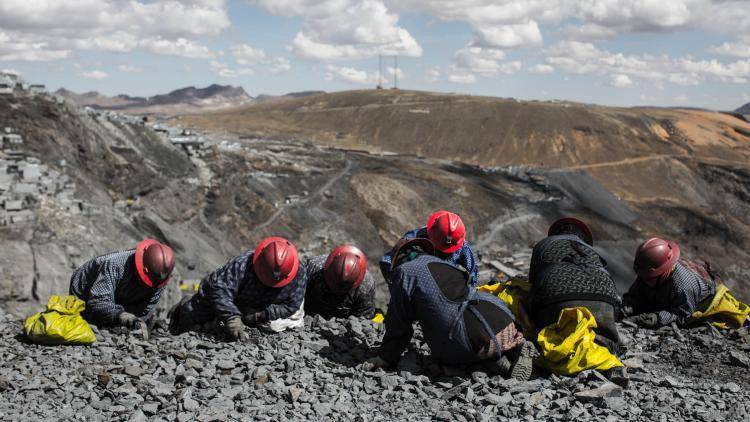
Many of them are on the frontlines of the country’s booming legal – and illegal – extractive economy. But after confronting an obstinate, opposition Congress and impeachment efforts, Castillo attempted to dissolve the legislature. That led to his removal and imprisonment, sparking social protests – primarily in the interior.
The platforms
Sánchez may have learned from that experience, going big and going hard in his campaign. The surprise first-round winner has taken to wearing the large white sombrero worn by Castillo and has called for a constituent assembly to rewrite the constitution.
He is also running on greater state intervention in the economy, including in Peru’s all-important mining sector – which accounts for 9.5 per cent of GDP and has driven its booming economic growth over the past decade and a half. Those promises, and a pledge to raise taxes on the wealthy and use international reserves to boost government spending have worried investors and the local business community.
Keiko’s platform is more modest and traditionally conservative. It includes promises to get tough on Peru’s rising crime rate and maintain macro-economic stability. But her and her party have alleged links to corruption, and it is their scorched earth policy that has taken down multiple presidents. That raises doubts about both their commitment to combatting corruption and to civic, democratic discourse.