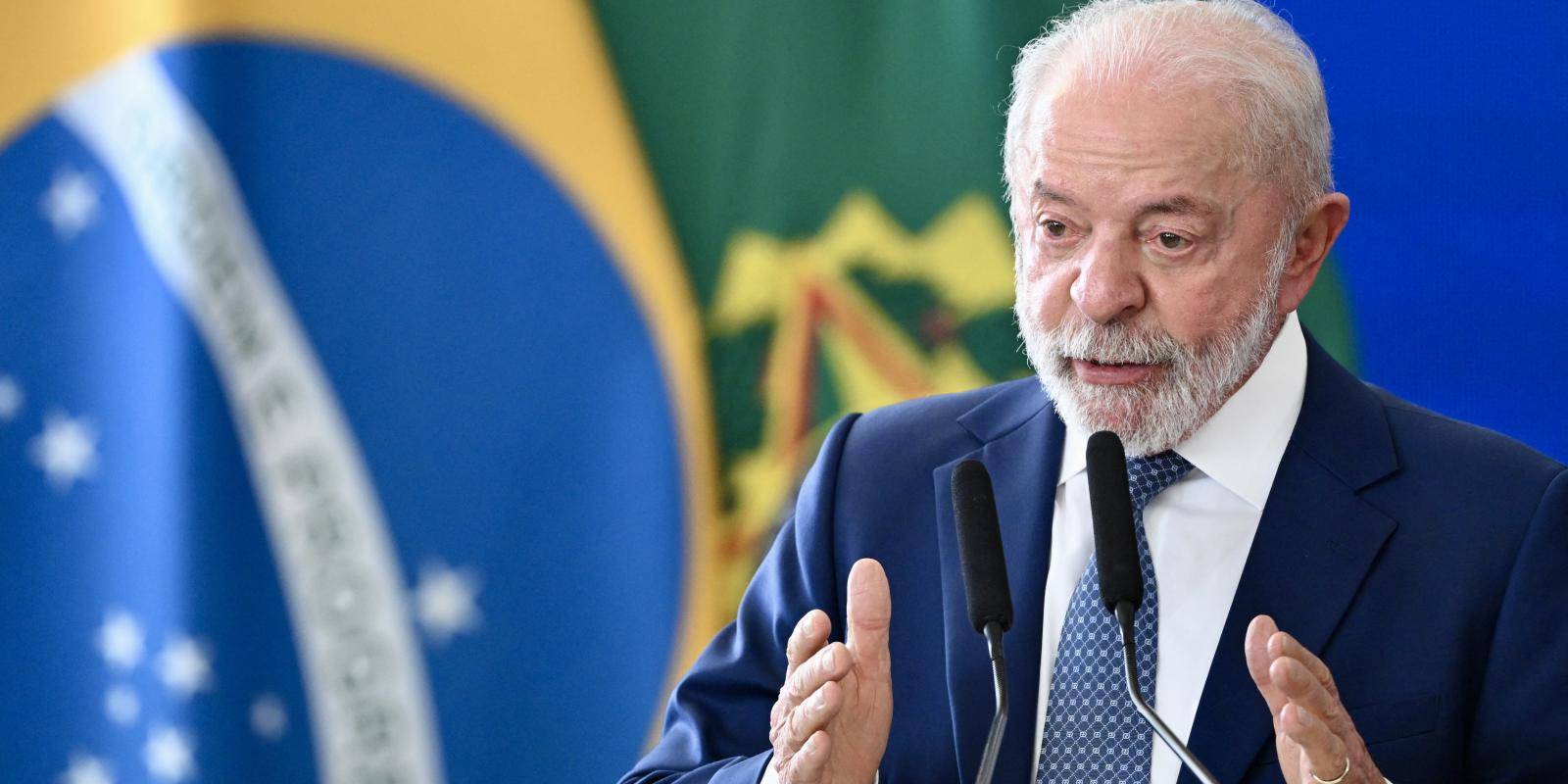

Brazilian President Luiz Inacio Lula da Silva, 80, is running for re-election in October. Lula’s leftist Workers Party (PT) has governed for 16 of the past 23 years, 11 of those under Lula. If he were to win, it would be his fourth presidential term. His election opponent is Flávio Bolsonaro – the son of his political nemesis, Jair Bolsonaro.
The spectre of former US President Joe Biden’s failed 2024 re-election bid looms large over Lula’s campaign.
Populists
In 2018 the PT lost the Brazilian presidential election to former army captain Jair Bolsonaro, a far-right populist who came to call himself the ‘Trump of the Tropics’.
In 2022, Lula re-assumed the leadership of the PT to run against Bolsonaro. Like Biden in 2020, Lula was seen as a political heavyweight – and the only man with sufficient popularity to beat Bolsonaro. Like Biden in 2020, Lula lived up to expectations, winning back the presidency in the 2022 Brazilian election. In January 2023, Bolsonaro supporters stormed government buildings in Brasilia, in an unnerving echo of the events of 6 January 2021 in Washington DC.
Today, like Biden in 2024, Lula is seeking another term – having allowed many of his supporters to believe that he would not. That decision has postponed or even retarded renovation of the PT leadership.
Lula’s mental and physical vigour is not questioned. Indeed, Lula is sharing videos of his workouts, to demonstrate his fighting fitness. But were Lula to win the next election, he would be 85 at the end of his term. Age will certainly be a question in the coming months.
And Lula’s 2026 campaign could echo Biden 2024 in one other respect: he may now be out of sync with too many voters on the most critical issues.
Polls
While the PT, co-founded by Lula in 1980, now struggles with succession, the Liberal Party onto which the Bolsonaros have grafted their personalist movement appears, for now, to have become a dynasty. Flávio Bolsonaro will stand, in an effort to avenge his father Jair’s loss to Lula.
The elections are still more than four months away, with the first-round elections to be held 4 October this year. If necessary – and it looks like it will be – a second round will take place on 25 October.
The two candidates are currently neck and neck. A Data Folha survey conducted 7-9 April showed Lula leading ‘fils’ Bolsonaro by only 4 per cent in voter intentions. Another recent survey has the two deadlocked in a second round.
A lot may change before 4 October. But in 2022 Jair Bolsonaro’s electoral performance surprised the public, exceeding survey predictions. Polls leading up to the election had given Lula a double-digit lead. But in the end, Lula only squeaked to second-round victory, with 50.9 per cent to Bolsonaro’s 49.1.
The comparison with Donald Trump’s performance relative to surveys in the US 2016 and 2024 elections should not be stretched too far. But in the US and Brazil, polls have tended to undercount voter intentions for insurgent rightist candidates. Could the same be true again this October?
Policy
At issue is more than just a generational ideological battle. There are policy differences between the two parties and presidential candidates that will define Brazil’s political and international direction. One of those has become a liability for the Lula government. And it reinforces the perception that he is out of touch with current voter sentiment.
Across Latin America, citizens’ number one concern is crime and violence, a shift that is affecting political dynamics in countries around the region.
In Chile, right-wing candidate Jose Antonio Kast was elected president on 14 December, in large part by promising an iron fist in dealing with crime and undocumented immigration.
In Peru, a ‘tough-on-crime’ posture catapulted Keiko Fujimori and Rafael Lopez Aliaga to first and third in the country’s April 2026 first-round elections – out of more than 30 candidates.
Citizen demands in Brazil are no different. In an April 2026 Quaest survey, worries over crime topped the list of Brazilian voter concerns at 27 per cent. Fears over crime and violence have reinforced the perception that the PT and Lula are out of touch. In part that reflects a regional phenomenon: in the past two decades, the democratic left in Latin America has failed to produce convincing responses to insecurity.
Brazilians’ fear of crime has led popular opinion to minimize traditionally leftist concerns over human rights and due process. In October 2025, the Bolsonarista governor of Rio de Janeiro, Claudio Castro, launched a police operation against local gangs that led to the killing of more than 120 people. Many were assumed to be innocent citizens. President Lula expressed his horror at the loss of life, but surveys conducted afterwards found that 62 per cent of Rio de Janeiro state residents supported the operation.
Bolsonaro has attacked Lula’s government for being weak on crime and called for the construction of many new prisons, praising the controversial measures seen in El Salvador. This week, Lula launched an anti-organized crime plan, likely hoping to counter his perceived weakness on crime.
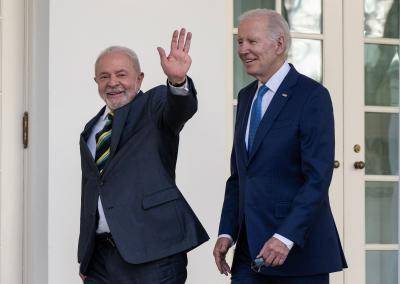
President Joe Biden and President Lula pictured in 2023. (Photo by Andrew Caballero-Reynolds/pool/AFP via Getty Images)
The comparison with the US is hard to resist. For both Republicans – and some Democrats – undocumented immigration was a primary concern in 2024. Biden was attacked by Trump as weak on border security, and in June that year ordered a border crackdown that proved too little, too late to swing voter thinking. It also gave the impression of the opposition driving the agenda rather than arising organically from the Democratic Party. Lula’s late tough on crime approach may foster the same impression.
Pardons
What makes the competitiveness of Flávio Bolsonaro all the more surprising is the shift in public opinion after the insurrection and sacking of government buildings by his father’s followers in January 2023.
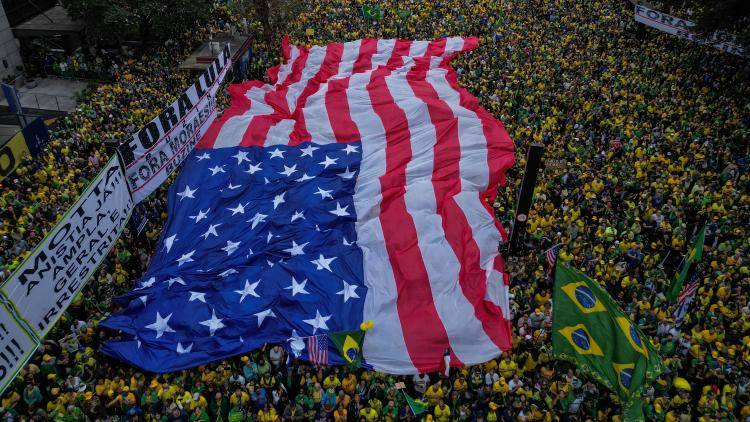
Jair Bolsonaro was convicted by his country’s Supreme Court for inspiring those events and is currently serving a 23-year, 3-month sentence. 50 per cent of Brazilians supported the conviction and other surveys expressed exasperation with the Bolsonaro family.
But that condemnation was short lived. If Flavio should win the 25 October second round, he will surely attempt to pardon his father. That would be a further deep cut against the rule of law in Brazil.
That is apparently of little concern to at least 49 per cent of Brazilian voters who intend to cast their ballot for the Bolsonaro name this year.