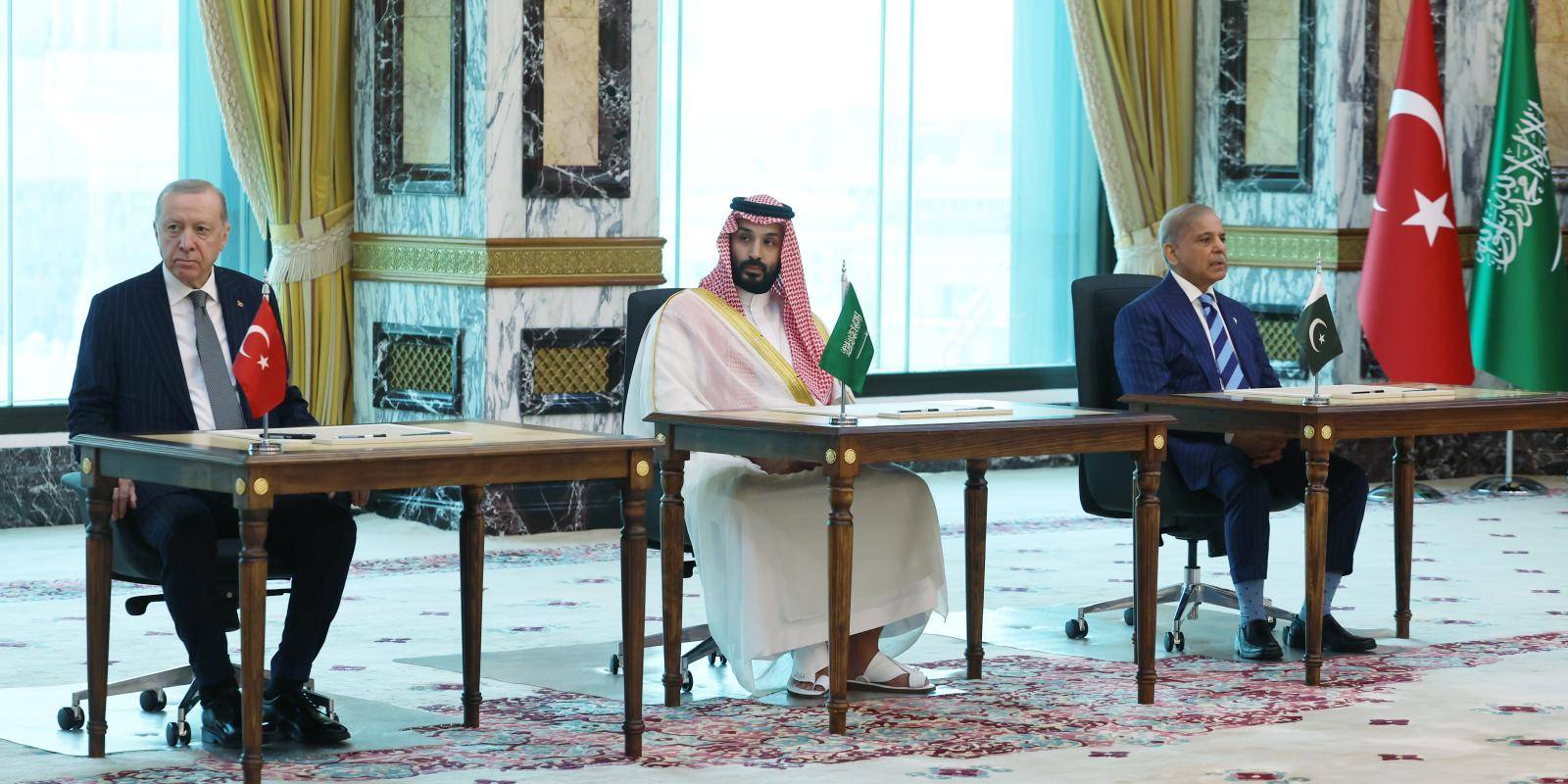

Saudi Arabia, Turkey and Pakistan signed the Mecca Joint Defence Agreement, known as the ‘Mecca Pact’, on 7 August. The pact states that any armed attack on one member will be considered an attack on all members. It sends a message to both Iran and Israel, while diversifying regional security away from the US.
However, the pact leaves two key questions unanswered: can regional countries build deterrence without the US? And why hasn’t Egypt joined the pact, at least for now, given it has worked closely with all three members?
Not a Middle Eastern NATO
The Mecca Pact builds upon the Strategic Mutual Defence Agreement signed between Saudi Arabia and Pakistan last September. However, it is a separate deal. The new agreement includes Turkey and leaves space for other states to join.
The pact has been compared to NATO; Indeed, Turkey’s Foreign Minister Hakan Fidan described the pact’s mutual defence element as being ‘technically the same’ as NATO’s Article 5 collective defence clause.
However, comparisons to NATO are overblown. Once they are put aside, the pact looks relatively modest.
Saudi officials have played down the scope of the agreement, presenting it as an exercise in ‘sustainable capabilities’ rather than a joint defence front against any country. Turkey has likewise emphasized that the pact is not directed against Iran or any other country. Pakistan described the agreement as ‘purely defensive in nature.’
While Pakistan is a nuclear power, the agreement does not mention Turkey and Saudi Arabia coming under its nuclear umbrella. And while mutual defence featured in the September 2025 agreement between Riyadh and Islamabad, the latter has continued to engage Tehran as a mediator amid Iranian attacks on Saudi Arabia.
The Mecca Pact should therefore best be understood as an experiment in regional self-reliance rather than a joint defence front or war-fighting alliance.
Wider regional impact
Yet while the agreement is modest in scope, it has deeper implications for the regional order.
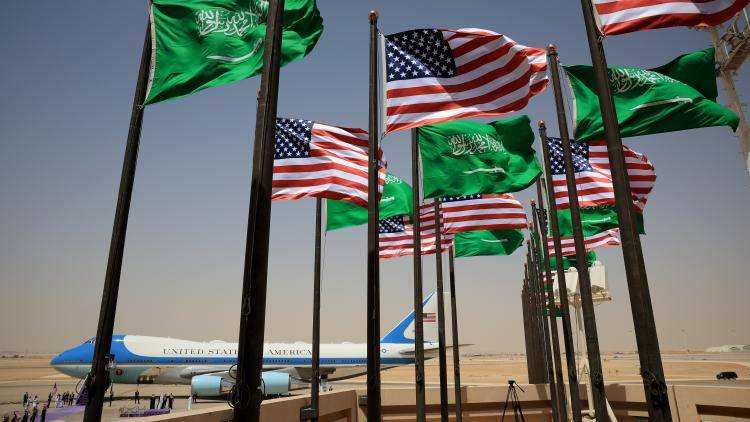
The pact provides Saudi Arabia with another means of diversifying and strengthening its security and defence architecture. It gives Riyadh leverage in any future engagement with Tehran over regional security, and reduces its dependency on the US.
For Ankara, the deal could lead to financial support and a huge market for its defence industrial technology, while Islamabad could benefit from Saudi economic backing and position itself as an active and responsible player in the Middle East.
Tehran and its proxies are likely to test the agreement in the near future, potentially by attacking Saudi Arabia via the Houthis or Iraqi militias. The three signatories’ response to that first stress test will tell the region far more about this pact than official statements.
Why Egypt hasn’t joined
Egypt is not a signatory of the Mecca Pact, despite working closely with all three countries as part of an informal four-country grouping that has been referred to as ‘STEP’ or ‘the quad’.
Egypt’s foreign minister, Badr Abdelatty, said on Friday that Cairo is studying the pact ‘very seriously’ and that deciding whether to join ‘requires deep studies in the light of Egypt’s constitution and legal commitments.’
Turkey’s Fidan previously said he believed that Egypt would join the pact ‘at the next stage’ once ‘a few technical issues’ were implemented.
Regardless of whether it eventually joins the pact, Egypt’s absence is in line with the country’s strategic hesitancy since Abdel-Fattah el-Sisi became president in 2024.
For decades, Egypt’s leaders have taken a cautious approach, embracing non-alignment and avoiding military blocs to prevent entrapment. But joining the Mecca Pact could signal that Egypt is choosing sides to the three members’ various geopolitical rivals – which together could be seen as including Iran and the Houthis, Israel, the UAE, Greece, Cyprus and India. This perceived alignment could negatively impact Cairo’s relationships with these actors without delivering a significant payoff.
This reflects the pact being more about political signalling than military value. The pact is short on public details but could potentially include air and missile defence cooperation, intelligence sharing, expanded maritime security and defence-industrial cooperation. However, Cairo already cooperates with the three countries on many of these areas through the quad grouping and its support for the Saudi-led maritime coalition in the Red Sea.
Under Sisi, Egypt views itself more as a mediator, which requires maintaining positive relations and open channels with all actors. It seeks to avoid being entangled in military alliances that would complicate this role or escalate regional tensions.
Israel and the US
Egypt may share the alliance’s security concerns around non-state actors, maritime security, and Sudan. But for many Egyptian policymakers, a potential conflict with Israel will remain the greatest future security threat, despite the two countries’ peace treaty and security coordination.
Given Israel’s status as the US’s key regional ally, there is no other security alliance that can conceivably provide Egypt with sufficient protection in a potential conflict with Israel.
Therefore, while joining the Mecca Pact may help confront Egypt’s immediate concerns in Sudan, Libya or the Horn of Africa, it won’t solve its long-term security priorities. For now, the US remains Egypt’s most important security partner.
Cairo is also concerned about its sovereignty. Integration in Saudi-led security arrangements would boost Riyadh’s pursuit of Arab leadership. From Cairo’s perspective, this risks creating a patron-client relationship with Riyadh.
The case for joining, eventually
For Egypt, the risks of joining the pact likely currently outweigh the rewards. But this assessment may change with time.
The Mecca Pact is less a military alliance than a statement of intent about the shape of the next regional order. While Washington remains the most important partner for most regional powers, including Turkey and Saudi Arabia, they are seeking to reduce their reliance on the US. This trend is likely to accelerate.
The pact also allows its members to hedge against Iran and Israel’s regional ambitions and test a new balance of power anchored in middle powers. Egypt has every interest in taking the initiative by participating in these arrangements.
Egypt will be more motivated to join the pact if the agreement’s binding mutual defence obligations are not implemented in practice. This flexibility would ensure that Cairo could join without surrendering its ability to mediate or deepen coordination with the pact’s rivals, even as it would raise questions about the alliance’s credibility.
This room for manoeuvre matters, as Egypt needs diversification and partnerships across the region’s fault lines due to its chronic economic plight and its declining standing in the Arab world. At the same time, joining the pact would enhance Cairo’s ability to assert influence by being central in regional security arrangements.
Wait, watch and keep options open
Egypt should be patient, but not hesitant. The pact is appealing in principle but not yet a pressing priority for Egypt. There is no harm in waiting.

The new accord is less sophisticated than NATO. But it is more serious than previous regional coalitions. The pact may converge into a more focused, issue-based partnership rather than a binding bloc. This would be the best-case scenario for Egypt.
The real test of any alliance lies in its implementation, especially in wartime. With uncertainty around the Iran war’s end and periodic escalation in the Red Sea, Egypt should watch and evaluate the alliance’s reaction when a member is threatened.
For now, Cairo should take its time to observe the pact’s structure, military commitments and operational integration. It should reserve judgement on membership until all these aspects are more certain.