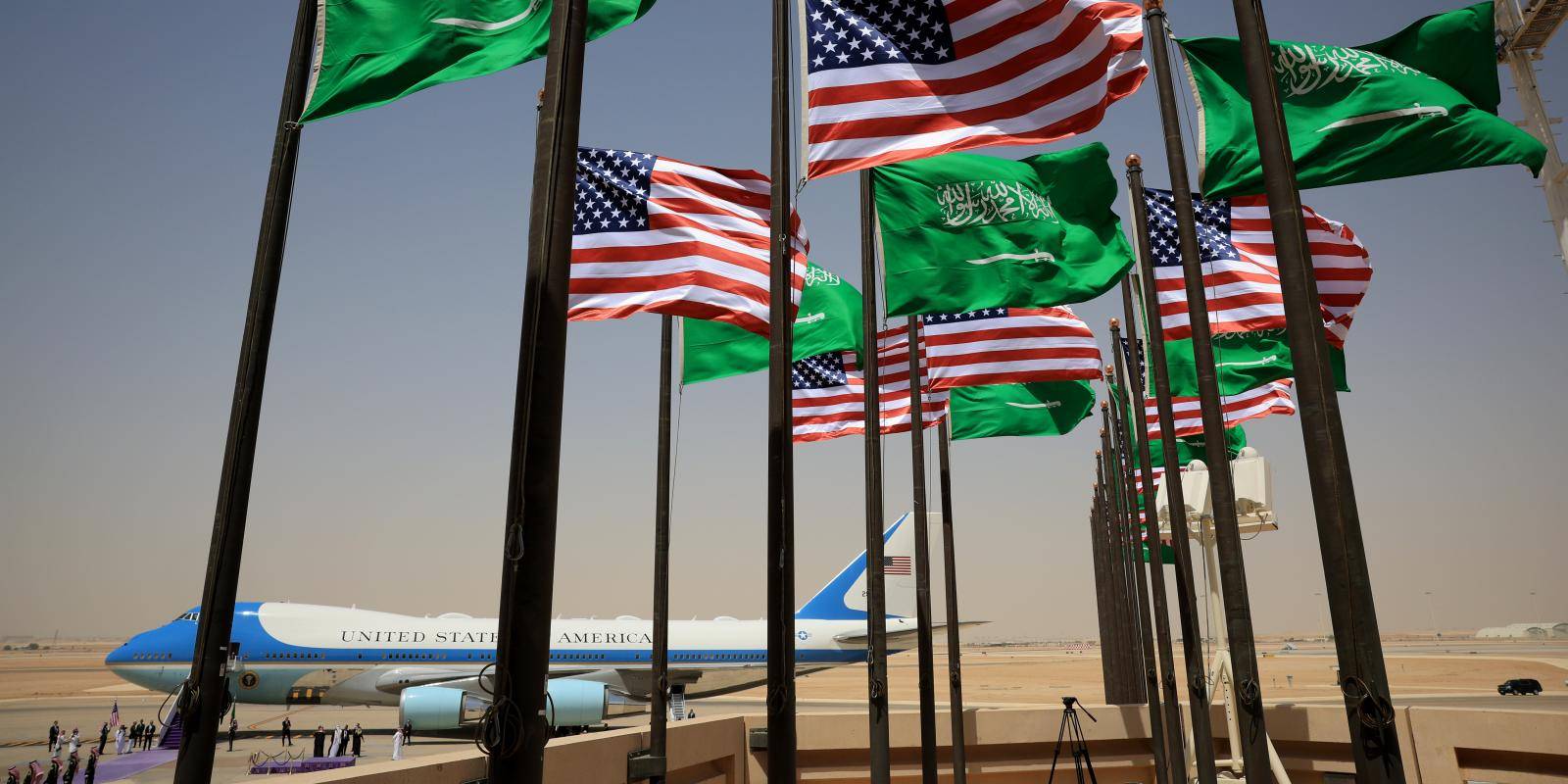

A series of seemingly disconnected developments over the past week point to a common objective in Saudi foreign policy. Riyadh is seeking to assume greater responsibility for regional security. But it also wants to reinforce its importance to the US, at a time when Washington’s long-term commitment to the Middle East is increasingly in doubt. The recent civilian nuclear agreement with the US underlines the depth of its commitment to that partnership.
For much of the past decade, successive US administrations have sought to reduce their exposure to Middle Eastern conflicts while encouraging regional partners like Saudi Arabia to assume greater responsibility for their own security.
Ironically, it is President Donald Trump’s war against Iran – involving the largest deployment of US forces since 1990 – that has prompted Riyadh to reassess its role in the regional order. Saudi Arabia increasingly views itself as a provider of security, stability and economic continuity.
This is not simply a response to President Trump’s calls for burden-sharing. Saudi Arabia’s leadership has concluded that the regional environment demands it take a more active role. The challenge for Riyadh is no longer how to secure US protection. It is how to safeguard Saudi interests in a region where US engagement remains substantial, but is less predictable than in the past.
Recent conflicts have also reinforced the risks posed by increasingly volatile regional dynamics, including the potential for actions by Israel or Iran to trigger wider instability that directly affects Saudi interests.
The nuclear deal
That calculation helps to explain the civilian nuclear agreement signed by Saudi Arabia and the US on 22 July. The agreement represents the culmination of years of patient negotiation by Riyadh, as it persisted in seeking a deal with Washington – rather than Moscow or Beijing. The Kingdom has always believed that US technology, expertise and investment would provide the strongest foundation for its ambitions.
The agreement deepens the relationship by establishing a framework for long-term cooperation on civilian nuclear technology, and positioning US companies to play a leading role in the Saudi nuclear programme. It also demonstrates that Saudi Arabia continues to regard the US as its principal strategic partner.
However, one day after it was signed, President Trump sought to link the agreement’s approval to Saudi Arabia joining the Abraham Accords – that is, normalizing its relations with Israel.
But Saudi Arabia has consistently maintained that formal relations with Israel depend on meaningful progress towards Palestinian statehood. And that position has only hardened following the brutal war in Gaza and the anger it has generated across the Arab world. Riyadh has made clear that it will not abandon that position.
The issue remains unresolved, at least in public. But behind the scenes, Riyadh wants to make sure that the question of normalization with Israel does not come to overshadow the broader foundations of its partnership with Washington.
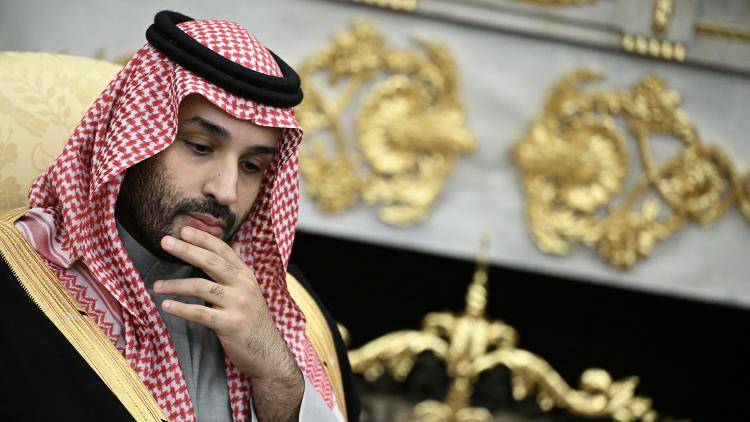
Saudi crown prince and de facto ruler Mohammed bin Salman (MBS) is, in effect, making the case that the kingdom’s contribution to regional stability, economic security and collective security efforts warrants progress in other areas of the bilateral relationship without the need for further conditions – particularly politically impossible ones like joining the Abraham Accords.
Regional security
Saudi Arabia’s more active role in regional security is already evident in the Red Sea – which has become one of the world’s most important and vulnerable waterways.
The crisis in the Strait of Hormuz has increased the Red Sea’s importance as an alternative route for energy exports and international trade. But in recent days the Iran-backed Houthi militia in Yemen has sought to drag these waters into the wider regional conflict.
On 20 July, the Houthis announced a blockade of Saudi-linked shipping passing through the Bab al-Mandab Strait. Within days, the group claimed attacks against Saudi oil tankers in the Red Sea. On 25 July, it launched missile and drone strikes against Aramco facilities in Jizan and Yanbu, Saudi Arabia’s principal Red Sea oil export hub.
These moves have exposed a significant vulnerability for the kingdom and the wider global economy, increasing costs for commercial shipping and raising concerns about the resilience of international supply chains and energy markets.
The Saudi government has stepped up. On 30 July, its Ministry of Defence convened military chiefs and representatives from 43 countries and the European Union in Riyadh to discuss the establishment of a new maritime security coalition to defend freedom of navigation in the Red Sea.
The kingdom proposed to host the coalition’s headquarters and secured the support of 14 participating states. This is perhaps the clearest indication yet that the kingdom is prepared to coordinate collective responses to challenges that affect both its own interests and those of the wider international community. While the initiative was prompted by recent Houthi actions, it also reflects a broader Saudi recognition: the security of the Red Sea is vital to the kingdom’s economic ambitions and long-term security interests.
The joint Saudi-US airstrikes of 28 July point to the same move towards a more assertive security role. Precision strikes were carried out against Iran-aligned groups in eastern Iraq, after they directed more than 30 drone attacks at Saudi energy infrastructure and US forces over a period of 72 hours.
The operation was notable not only because it was conducted jointly with Washington. It was also striking because Saudi Arabia has generally sought to avoid direct military action inside Iraq. Indeed, Riyadh has spent the past several years reducing tensions with Tehran and has little interest in a broader confrontation with Iran. By acting alongside the US, Riyadh signalled that its pursuit of regional de-escalation does not preclude a willingness to respond when its security interests are directly challenged.
There is also, notably, a competitive dimension to Saudi Arabia’s recent activism. Riyadh is aware of the Trump administration’s close relationship with the UAE, which has already normalized relations with Israel via the Abraham Accords, aligning closely with a key US policy objective.
By taking a leading role on issues that directly affect US interests, including regional security, maritime security and energy flows, Riyadh is demonstrating that its value to Washington rests on a far broader foundation than trade and investment alone.
Recent developments suggest that Saudi Arabia is seeking to redefine its role within the regional order. The kingdom will not abandon its position on Palestinian statehood. Nor will it distance itself from Washington. Instead, it is demonstrating that has crucial value to the US beyond the question of normalization with Israel.
Through security cooperation, burden-sharing and a greater willingness to address regional challenges, Riyadh is making the case for a partnership defined by shared interests rather than a single political objective.