

Egypt’s President Abdel-Fattah el-Sisi has declared he will step down at the end of his third term in 2030. Speaking during the Egyptian Military Academy graduation on 17 October, he also outlined a military-centric succession process to select the next president and senior officials beyond 2030.
The statement surprised many observers, and perhaps even state officials. If Sisi follows through on his pledge and leaves peacefully, he’d be the first Egyptian president to leave office without dying, being imprisoned or facing a popular uprising.
The unprecedented decision will have significant implications for Egypt’s political landscape, the balance of power within the regime and the military’s influence over politics and governance.
Why is Sisi leaving?
Sisi became president in 2014, after the overthrow of Mohamed Morsi’s short-lived Muslim Brotherhood government. He is currently serving his third term, after winning elections seen as predetermined in 2018 and 2023. A constitutional referendum in 2019, also seen as predetermined, increased the president’s term from four to six years, extending Sisi’s current term to 2030.
Sisi, who is 71, did not give an exact reason for why he would step down in his speech at the military academy. He said that there would be no further amendments to Egypt’s constitution to prolong his rule and declared it ‘a matter that has been completely settled and will not be discussed,’ suggesting a transition of power is inevitable.
Economic troubles
Two factors likely lie behind this surprise decision.
First, the debt-financed economic model pursued under Sisi is unsustainable. This system has sustained military dominance and stalled urgent economic reform. The government’s vast borrowing to fund mega projects has created a structural economic crisis.
In this year’s budget, debt servicing accounts for 63.9 per cent of planned expenditure, a significant increase from 43 per cent in 2014. Interest payments alone, as a share of GDP, exceed the combined allocations for education, healthcare, wages and subsidies combined. Egypt’s external debt rose from $46.1 billion in 2014 (16.4 per cent of GDP) to $164.8 billion (38.9 per cent of GDP) by the end of Q1 2026.
The Egyptian pound exchange rate has plummeted from 7.14 per dollar in mid-2014 to about 53.8 per dollar in October 2026. Urban inflation has risen from 8.3 per cent in May 2014 to 13.9 per cent in September 2026 and is expected to rise further.
This increased pressure on ordinary Egyptians has made the last decade one of plummeting living standards. Official data shows the national poverty rate has reached 35.7 per cent in 2023.
Public anger over rising living costs, combined with structural imbalances and rising debt, have made Sisi’s economic policies untenable – even among his allies.
The long-lasting economic crisis is an existential threat to the regime’s stability. Sisi himself may have calculated that Egypt urgently needs a new social contract to avoid economic-driven social unrest that could push him out or plunge the country into perpetual chaos.
He will likely want to avoid the fate of President Hosni Mubarak, who was forced to leave office amid the January 25 Revolution in 2011. It is also likely that there will be an arrangement to protect Sisi and his family members from potential future prosecutions as a condition of him stepping down.
Protecting the state
The second factor relates to Sisi’s vision for his presidency and the state. This is fundamentally shaped by the 2011 uprising, which he has described as ‘the death certificate of the Egyptian state.’
Since he was sworn in in 2014, Sisi has repeatedly warned that another popular uprising would threaten the state’s existence. He has portrayed national prosperity as depending on excluding from Egypt’s politics what he frequently calls ‘ahl elshar’ (people of evil), often understood as referring to Islamists. He has also warned of threats to ‘national memory’ on social media.
Sisi has portrayed it as his – and the military’s – national duty to spare Egypt the chaos engulfing other Arab Spring countries by removing the Muslim Brotherhood from power amid a popular uprising. He has indicated that he considers it his duty to reshape Egypt’s politics to guarantee long-term stability as he sees it.
In his speech at the military academy, Sisi revealed that he had insisted on incorporating Article 200 into the 2019 constitutional amendments. This article effectively designates the military as the guardian of Egypt’s national, secular identity and the regime.
Given this, Sisi may therefore feel that departing in 2030 is in line with his aims. The military-trained officials he has designated as his successors would serve as the practical implementers of this vision.
Military-shaped succession
Alongside his plans to step down, Sisi also announced that the armed forces will fund a 30-month military academy course to train potential future leaders. Egyptians will then be able to ‘elect and choose’ from among the graduates.
The course will train select candidates, who must have a PhD and be 40-50 years old, for positions including minister, member of parliament, governor, and potentially even president. Those who have served in government for at least six years will be exempted.
Sisi’s choice of the military academy is not surprising, since it has long been tasked with promoting a military-centric nationalism and overseeing appointments and promotions in state institutions. This has sometimes sparked resistance, for example from judges in January.
In effect, the system will replace the electoral process with competence criteria, narrowing the pool of trusted candidates and excluding anyone who is ‘tendentious, a traitor, or a criminal’ from becoming president.
Future implications
Although this process finally paves the way for civilians to become president, the military will likely retain decisive influence over leadership selection and the state’s strategic direction. The military’s constitutional mandate means its commanders’ views and preferences would continue to shape key state decisions.
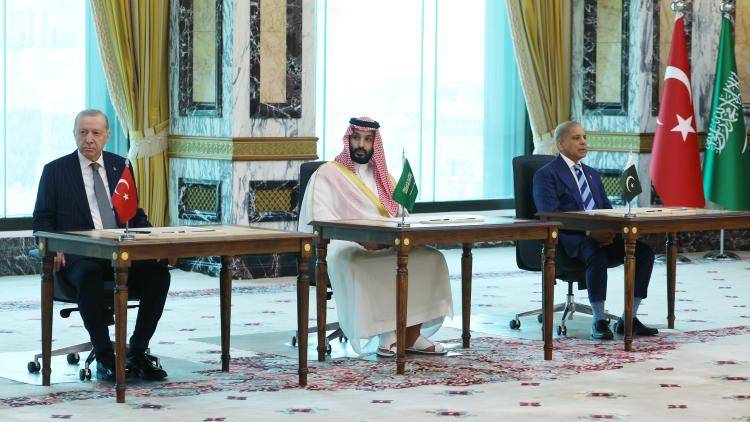
In this setup, Sisi will likely retain entrenched loyalties and broader political influence. The changes could establish an informal military guardianship model that sits above the president and government beyond 2030. This might resemble Turkey in the 1990s.
The new government training system might also invite challenges. It seems designed to side-line dissidents, the Muslim Brotherhood and rival generals. But by effectively excluding individuals without a postgraduate degree or those who fail to secure academy approval, it might be deemed unconstitutional and face legal challenges. It could also spark fierce competition among key security branches.
Will Sisi reconsider?
Sisi’s decision to step down might face resistance from key institutions and influential figures in his patronage system, who may try to convince him to reconsider to protect their interests.
These attempts may intensify if Egypt’s military becomes involved in escalating regional conflicts. Sisi recently sought authorization from parliament to deploy troops to defend Saudi Arabia against Houthi attacks.
If living conditions worsen and social unrest breaks out, Sisi may conclude that staying in power best guarantees stability for Egypt.
Potential for civilian rule?
Despite its risks, Sisi’s decision may facilitate a transition towards a less authoritarian government in the long term. It took Egyptians 15 years after the 2011 uprising to hear an Egyptian president pledge an ordinary, peaceful transition of power.
By declaring he will step down, Sisi could end up kickstarting a tradition in which no single ruler stays in power until death. Civilians might finally be seen as capable rulers.
This will not happen overnight, of course. It would depend on Sisi keeping his word and social stability holding until 2030. But if this is the case, the military guardianship Sisi is establishing may, in the long term, be seen as a transitional period toward a more stable, more open and freer society.