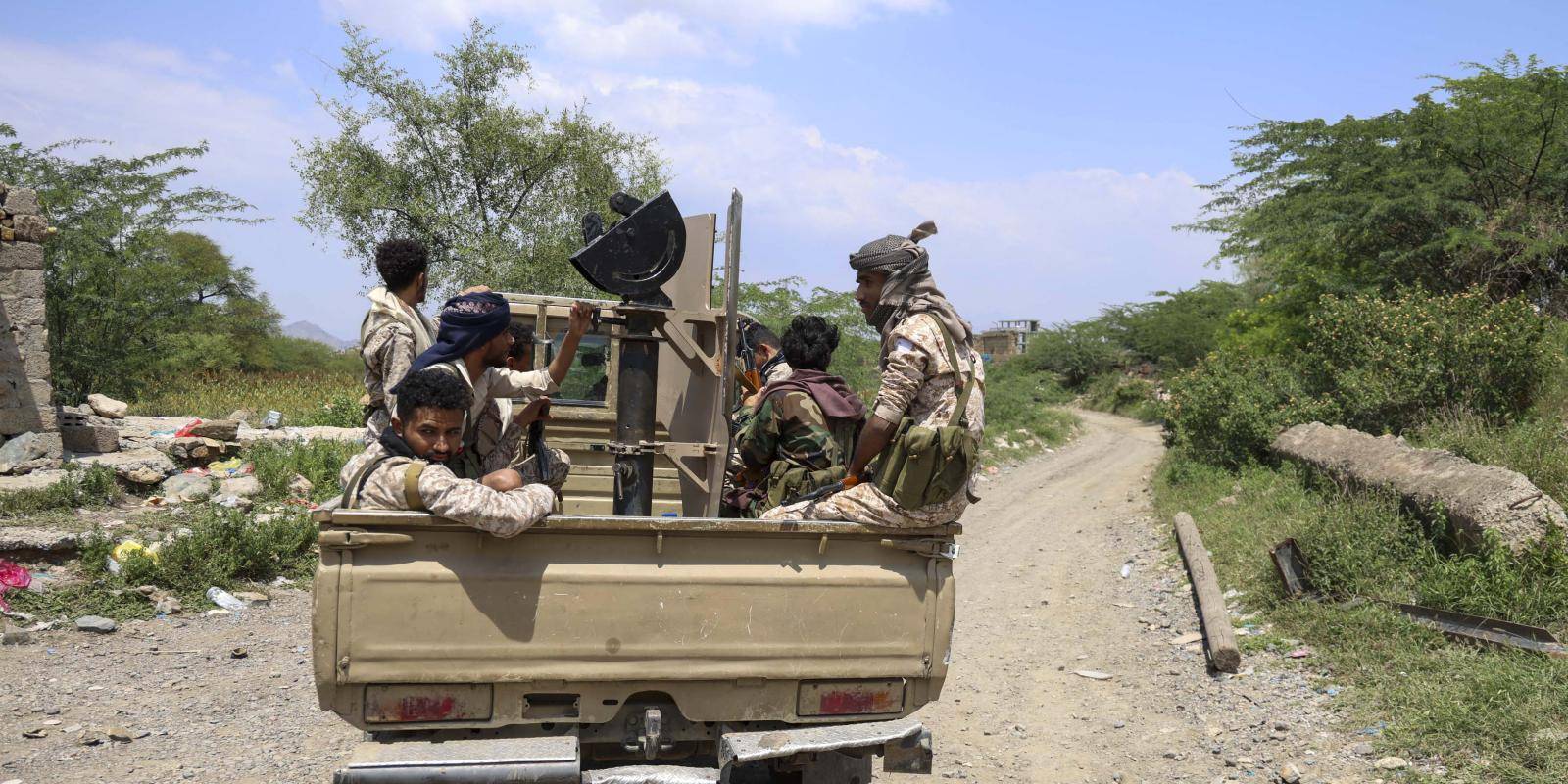


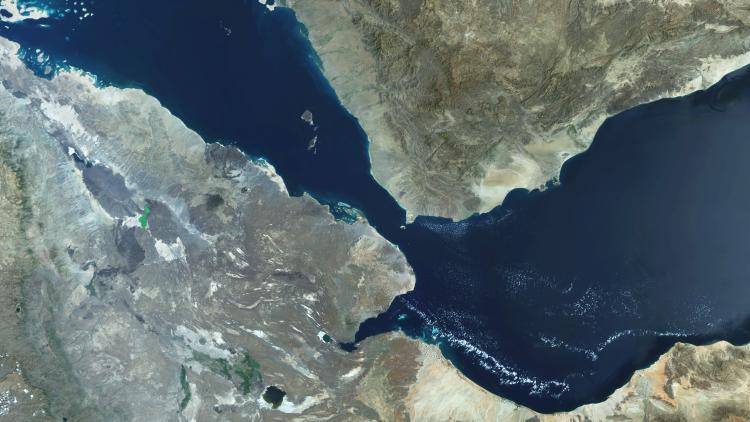
The Yemen conflict has escalated significantly in recent weeks. Houthi strikes on airports in Riyadh, Abha and Dammam have killed at least 20 people and injured hundreds. Saudi oil infrastructure has also been attacked. Within Yemen, renewed fighting following a Houthi offensive around the strategic Bab al-Mandab Strait has brought return to full-scale war.
The escalation is an alarming reminder of the 2015 Saudi-led intervention in Yemen. This came after the Iran-backed Houthis seized the Yemeni capital Sanaa in September 2014 and ousted the internationally recognized government from power. More than a decade later, the Houthis remain entrenched and clearly emboldened, while Yemen’s government is fragmented. Prospects for a political settlement currently seem remote.
Since the UN-brokered truce in April 2022, Saudi Arabia has sought to disengage militarily from Yemen and pursue a negotiated settlement with the Houthis. Talks gained momentum in 2023, but the Houthis’ involvement in the Gaza war, including attacks on Red Sea shipping and Israel, disrupted the political process. US president Donald Trump’s intensive bombing campaign against the Houthis led to a separate US-Houthi ceasefire in May 2025. But it did not advance solutions to the conflict in Yemen.
Difficult choices for Riyadh
Saudi Arabia now faces a difficult choice between flawed options.
The first option is military escalation through renewed air strikes and an offensive by Yemeni government-aligned forces. But this risks returning Riyadh to the costly, ill-planned and ill-conducted war it has spent years attempting to extricate itself from.
The Houthis have learned that even limited strikes can impose disproportionate economic and political costs. This gives the group leverage that Saudi Arabia’s conventional military superiority has struggled to overcome.
Seeking to contain the Houthis has also proved insufficient. Although the relative calm following the 2022 truce reduced cross-border attacks, it allowed the Houthis to consolidate their territorial control and strengthen their military capabilities, only to attack Saudi Arabia again.
Negotiation remains the most favourable route towards a lasting settlement. But it faces a fundamental obstacle: the Houthis believe they are winning and have little incentive to compromise.
Nor can Riyadh simply outsource the conflict. The US faces the looming prospect of a renewed confrontation with Iran and is therefore unlikely to have much appetite for opening another front or supporting a prolonged military campaign in Yemen. Saudi Arabia’s defence pact with Turkey and Pakistan may strengthen deterrence and defensive capabilities, but it does not offer a solution to the Houthi threat or Yemen’s underlying political fragmentation.
Saudi Arabia cannot win this war alone, but neither can it outsource its resolution. The lesson of the past decade is that military pressure without a coherent political strategy will only reproduce the conditions that allowed the Houthis to consolidate their position.
A Gulf problem
Instead, a collective Gulf Cooperation Council (GCC) response is needed. Yemen and the Houthis have become a collective Gulf security challenge. It would therefore be a mistake to continue treating Yemen primarily as a domestic conflict or a Saudi security problem.
The attacks on Saudi airports have further demonstrated the vulnerability of critical infrastructure across the GCC to missiles, drones and other asymmetric threats. This exposure is not confined to Saudi Arabia. In January 2022, the Houthis launched attacks on Abu Dhabi’s oil facilities and airport, killing three people and injuring six. This threat is particularly concerning for the Gulf states as most of their economic diversification agendas depend on secure aviation, logistics, tourism, investment and a stable regional environment.
Attacks on Saudi transport infrastructure also threaten the wider Gulf by disrupting vital supply routes. The kingdom’s extensive land connections have become increasingly important and provided alternative supply routes for neighbouring GCC states while the Strait of Hormuz has been disrupted.
Yemen’s economic collapse, water scarcity and demographic pressures also make its stability a long-term Gulf interest.
The GCC must therefore move beyond expressing support for Saudi Arabia. It should pursue a coordinated strategy that creates a unified GCC agenda directed at strengthening Yemen’s government and establishing a credible political pathway to ending the conflict.
Gulf unity must go beyond condemnation
A collective Gulf response must begin by addressing the divisions that have undermined previous efforts in Yemen. Most importantly, Saudi Arabia and the United Arab Emirates (UAE) must move beyond their damaging confrontation over southern Yemen in early 2026. Despite entering the 2015 intervention as allies, Riyadh and Abu Dhabi have increasingly pursued competing priorities and supported rival Yemeni factions.
Reconciliation requires more than expressions of solidarity following Houthi attacks. The UAE should reconsider its support for southern separatist ambitions and work towards a unified but decentralized Yemen that accommodates southern grievances and competing political interests.
Saudi Arabia, meanwhile, must reassess its dependence on established Yemeni partners, particularly the Islah Party, whose alleged Muslim Brotherhood connections have long generated Emirati opposition. Riyadh’s reliance on Islah-linked networks has narrowed its political options and contributed to divisions within the anti-Houthi camp.
Both countries must recognize that their competing relationships with Yemeni factions have weakened the very forces they seek to support. Without agreement on Yemen’s political future, renewed military coordination will achieve little.
Gulf coordination must also be matched by a serious reassessment of Yemen’s internationally recognized government.
The Presidential Leadership Council (PLC), established in 2022 to replace former president Abdrabbuh Mansur Hadi, was intended to unite competing anti-Houthi factions. Yet years of internal rivalries, weak governance, and limited institutional accountability, as well as alleged widespread corruption, have undermined its effectiveness.
Saudi Arabia should continue providing financial support to sustain basic services and prevent economic collapse in government-controlled areas. But this backing should go to the government and cabinet, not the PLC.
The experience of the Hadi presidency serves as a clear warning that a decade of backing an ineffective leadership did little to strengthen the Yemeni state or reverse Houthi gains. Today, Riyadh cannot afford to repeat that mistake.
A more effective governance structure is essential not only to strengthen the position of anti-Houthi forces but also to provide a credible Yemeni counterpart in any future political settlement.
Towards a larger Gulf–Yemeni settlement
Although Saudi-Emirati reconciliation is indispensable, a sustainable Gulf strategy must also involve Qatar and Oman.
Qatar should contribute to a more coherent Gulf political approach in Yemen, including through its media influence and relationships with Yemeni actors. Oman, meanwhile, should retain its role as a diplomatic intermediary. Muscat’s channels with the Houthis and preference for mediation make it particularly well placed to facilitate future negotiations without joining military operations.
The ultimate objective should be a Gulf-backed political settlement that preserves a unified but decentralized Yemen and accommodates its competing political constituencies. All factions, including the Houthis, should be able to participate, conditional on verifiable commitments to relinquish heavy weapons and accept a common political framework. This would require sustained Gulf diplomatic and financial support.
After more than a decade of war, the Houthis still control Sanaa, Yemen’s government remains weak and Gulf divisions continue to undermine efforts to end the conflict. Avoiding another prolonged war requires a common Gulf vision, investment in a functioning Yemeni government and a political settlement that addresses the causes of the conflict, rather than merely seeking to contain its consequences.