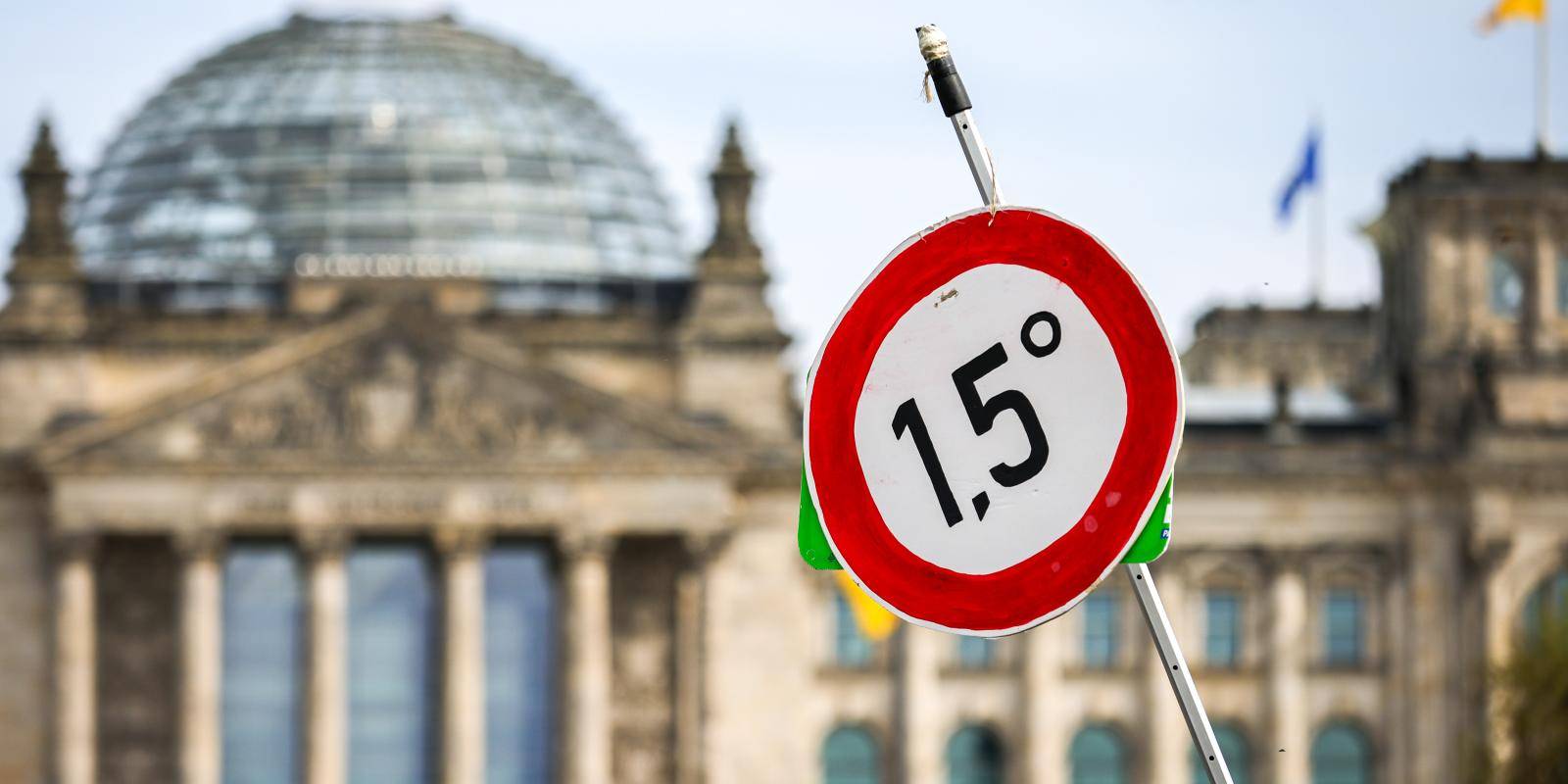


Only a decade after governments signed the Paris Agreement, the treaty’s goal of limiting global heating at 1.5°C is already slipping away. Overshooting the 1.5°C target is ‘widely assessed as unavoidable’, according to the UN. Even the Paris Agreement’s broader aim of remaining well below 2°C looks to be in jeopardy: under current policies 2.7°C is expected by the end of the century.
The climate challenge balloons above 1.5°C. COP31 president Murat Kurum said in his opening remarks at this year’s conference that even a brief overshoot would cause ‘irreversible loss and damage’ and stressed that the extent and duration of any such overshoot must be minimized.
Breaching the 1.5°C target also means climate impacts will continue to escalate, far beyond what has been seen in recent years. It will usher in a new era in which the consequences of climate change become systemic and global. Meeting this challenge – and minimizing the duration of an overshoot – will require more than redoubling efforts to tackle the causes of climate change.
The need for adaptation
This year has seen many extreme weather events, from heatwaves in Europe to catastrophic flooding in Nepal. In some cases, they have been beyond even what climate models have predicted. This rapid evolution of climate impacts is not just causing greater destruction but also brings with it several strategic challenges. Take insurance, for example. A group of senior whistleblowers recently warned that the insurance industry is increasingly struggling to insure assets – including homes – due to climate risk and raised concerns about the viability of its operating model. Overshoot will only escalate this complex and fast-moving situation.
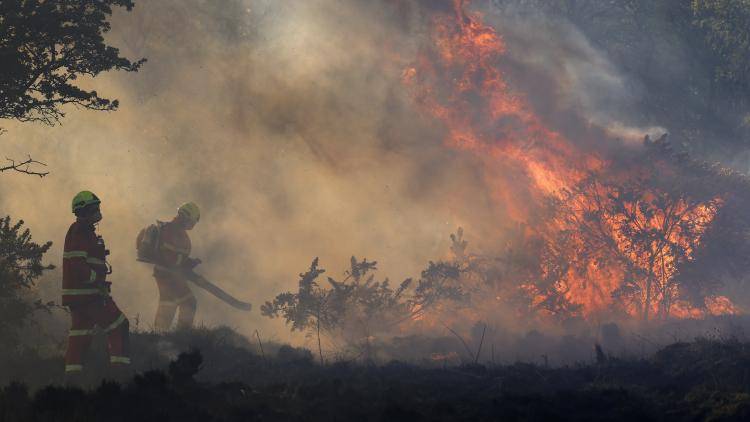
Spiralling climate impacts have meant that the climate policy discourse is increasingly focusing on adaptation: the act of protecting populations against unavoidable climate impacts. Although previously viewed as an issue largely reserved for climate vulnerable nations – or even an unhelpful distraction from emissions reductions or a form of defeatism – the speed at which climate impacts have progressed has changed the tone and focused minds.
Stark public warnings are now being issued. The EU’s climate chief recently declared that Europe must prepare for 3°C of warming by 2100, while the European Commission has developed a framework for managing risks at the scale of entire social and economic systems. UK Foreign Secretary Ed Miliband, meanwhile, has reiterated that the climate crisis and nature loss are a national security threat of the highest order. The UK government has also established a taskforce to explore options for resilience to these mounting threats and appointed the world’s first climate-security envoy. However, despite increased awareness, there is a growing gap between adaptation needs and the scale of investment.
The risk of derailment
The growing focus on adaptation is not without risk. Increasing demand for protection against climate hazards can lead governments to adopt piecemeal, band-aid solutions to emerging threats. These may exacerbate the underlying causes of climate change or generate new vulnerabilities altogether. For example, in some cases, coastal flood defences have led to biodiversity loss, ecosystem degradation and have increased flooding risks in neighbouring coastal regions.
An even greater danger might be that, as societies increasingly experience the impacts of climate change, demands for protection will divert vital resources and attention away from combatting its causes, derailing progress in this area. There are early warning signs of this dynamic in Europe. In the wake of the 2024 Valenica floods, a climate-driven disaster boosted climate-denying politicians. Following the UK’s hottest summer on record, Reform Party politicians have argued that the focus should be on greater adaptation to extreme heat at the expense of mitigation.
While the imminent breach of 1.5°C might challenge collective belief in society’s ability to mitigate future warming, mitigation will become more urgent than ever. Every fraction of a degree of further warming edges us closer to crossing environmental tipping points, which would critically destabilize societies. Focusing on adapting to climate risk at the expense of mitigating further warming risks perpetuating the conditions which create the need for adaptation in the first place. Now is the time for accelerated, and complementary, efforts on both adaptation and mitigation.
Adaptation can enable mitigation
Doing this will require politicians to anticipate how climate politics could shift in tone quite quickly as we head above 1.5°C, moving from a focus on mitigating a future problem to a demand to handle deadly consequences today. Without preparation, the derailment dynamic could become a major problem. Preventing this requires several shifts.
Firstly, politicians must be frank about the reality above 1.5°C. Destabilizing climate impacts will now only accelerate. They will go from discrete and local extreme weather events that hit agricultural regions and cities, to systemic and global episodes that hit supply chains and unsettle financial stability. Statements such as Miliband’s are a good starting point. Without such candour, what comes next will be more surprising and therefore more open to a kneejerk, short-term and maladaptive reaction.
Secondly, as impacts increase in frequency and magnitude, it is right that governments should prioritize protecting people and closing adaptation investment gaps. But this must always come alongside tackling the root causes of climate change by accelerating mitigation – which requires clear and consistent public commitments from political leaders about the need to do both.
Thirdly – to help with the above point – investments in adaptation measures should meet three criteria. One, they should maximize protection against climate impacts today and in the future. This means they must be robust across the huge range of possible scenarios ahead. Two, adaptation investments should complement, not work against, mitigation efforts. Three, the public should have confidence in these investment’s ability to provide protection.
Technologies for managing temperature extremes provide a good example of how these criteria can be applied. Air conditioning (if not powered by renewables) meets the first and third criteria but not the second. In contrast, heat pumps – which often have a dual function that heats in the winter and cools in the summer – meet the first two criteria. But they fall short on the third, at least in Britain, where they are not seen as effective protective measures by the population at large. Shifting that perception could help ensure that rightful demands for adaptation to heat extremes can accelerate, not undermine, mitigation.
Systematically identifying the options that best meet all three criteria has yet to be done. But it would help create a new merit order of options and identify what work is still to be done, like shifting the narrative on heat pumps. It would ensure that investments in adaptation measures meet the challenge posed by overshoot: protecting people – today, from the symptoms of climate change, and tomorrow, by tackling its causes.
An integrated approach to mitigation and adaptation is the key to navigating 1.5°C overshoot. Like sailors who failed to sail around a storm, societies now must change tack. They must protect populations against the literal and figurative storm of climate change, while staying focused on navigating to a calmer climate.