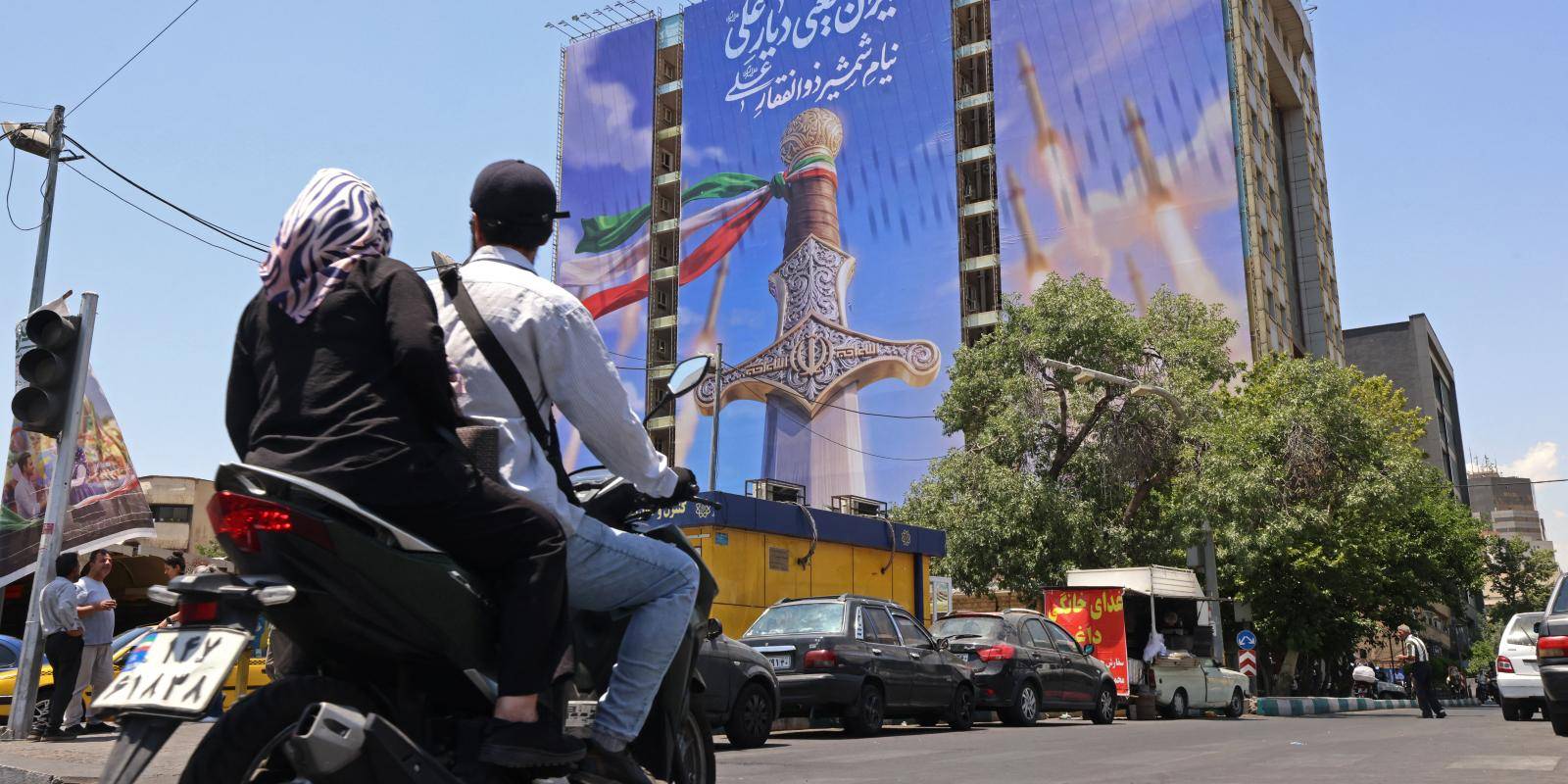

Regional orders rarely collapse overnight. More often, they erode gradually. The US-Israel war of choice against Iran may ultimately be remembered for its outcome and its challenge to the foundations of Pax Americana in the Persian Gulf – the post-Cold War order built on American predominance.
Despite military successes, Washington and Tel Aviv have yet to achieve their strategic objectives: regime change and the destruction of Iran’s missile and nuclear capabilities. Rather than surrender, as President Donald Trump demanded, Iran fought with resilience, regionalized the war, weaponized the Strait of Hormuz – the world’s most important energy chokepoint – and demonstrated that geography can compensate for military weakness. Six months on, the war appears to be accelerating a more contested Gulf order in which American primacy is increasingly challenged, China stands to expand its influence, Iran to reassert itself as a pivotal regional power, the Arab monarchies to deepen their strategic hedging, and Pakistan, Turkey and Israel to seek greater influence.
Strategic fulcrum of the Gulf
For five centuries, the Strait of Hormuz has been the strategic fulcrum of the Persian Gulf. Portugal seized Hormuz in 1507, making it the centre of its cartaz system, which required ships to buy transit permits. Persia’s expulsion of Portugal in 1622, with British assistance, paved the way for Britain’s predominance in the Gulf. After Britain’s withdrawal in 1968, the Shah of Iran, backed by Washington, became the dominant regional power until the 1979 Islamic Revolution.
Pax Americana reached its high-water mark in 1991 after the liberation of Kuwait and the Soviet collapse, resting on the military predominance of the United States, its partnerships with the six Arab monarchies and the dollar-based oil trade. The current war may mark the beginning of transformation.
After the 1979 seizure of the American embassy in Tehran, the US and Iran waged a cold war: Tehran sought to undermine the American-led regional order; Washington sought to contain Tehran. Yet both avoided direct war. From Carter to Biden, each president concluded that costs outweighed benefits. This year, while Washington and Tehran were still in talks over Iran’s nuclear programme, Trump launched a surprise attack on 28 February. Encouraged by Israel and convinced that decapitating Iran’s leadership and sustained bombardment would deliver a swift victory – and perhaps regime change on the cheap – he chose war.
Washington and Tel Aviv correctly assessed that Iran’s economy was under severe strain, its air defences weakened and its ‘axis of resistance’ degraded after the fallout from Hamas’s 7 October attack on Israel in 2023. But they underestimated the resilience of the Iranian state, the cohesion of its elites and institutions and the nationalist surge a foreign attack would unleash. They mistook regional setbacks for strategic collapse, domestic discontent for support for externally imposed regime change and weakened air defences for an inability to retaliate effectively. They assumed the Islamic Republic was run by ‘mad mullahs’ rather than calculating ayatollahs.
Washington and Tel Aviv opened the war by playing their strongest card first: assassinating Supreme Leader Ayatollah Ali Khamenei – the first Iranian head of state to be killed by a foreign power in centuries. Coupled with US-Israel air superiority, the strike convinced Washington that victory was imminent, prompting Trump to demand Iran’s surrender and to threaten to take the country ‘back to the Stone Ages’, as he put it. Instead, Tehran treated the war as existential, closed the Strait of Hormuz and struck US bases and Gulf energy infrastructure.
Washington assumed Iran could not sustain the closure because it would devastate its economy, failing to appreciate that existential wars drive states to actions they would normally reject. Tehran’s position invited comparison with the 1962 Cuban Missile Crisis: just as Washington would not tolerate Soviet nuclear missiles near Florida, Iran could not accept the strait being used as a corridor for American weapons. From Tehran’s perspective, stopping that traffic was an act of self-defence.
By closing Hormuz and attacking Gulf oil and gas infrastructure, Tehran shifted the battlefield to the global economy. Unable to match American naval power, it relied on missiles, drones, naval mines, fast ‘mosquito’ boats and selective attacks on shipping to disrupt energy markets. Geography, Tehran concluded, could compensate for military weakness. Winston Churchill’s failed attempt to force the Dardanelles during the First World War demonstrated that overwhelming naval superiority could not guarantee control of a heavily defended strait. Hormuz may prove no different.
Economic warfare
Decades of sanctions convinced Tehran that, unlike the wars in Iraq and Afghanistan, the conflict with Iran should impose heavy economic costs on the US and the global economy. Rising oil prices confirmed Hormuz offered greater strategic leverage than Iran’s missile arsenal. Little wonder Mojtaba Khamenei, who succeeded his father as Iran’s new leader, declared control of the strait ‘a core strategic imperative’. Combined with pressure on shipping through the Bab al-Mandab into the Red Sea from the Houthis, Iran’s close ally, this gave Tehran potential leverage over the world’s two most important maritime chokepoints.
In fact, the Houthis’ recent seizure of the strategic port of Mocha, followed by their advance toward Dhubab and capture of the island of Mayyun (also known as Perim) in the Bab al-Mandab Strait, has substantially strengthened their position along this vital shipping corridor. At the same time, drone attacks launched from Iraq have forced Saudi Arabia to temporarily shut down its East–West oil pipeline, a major route for bypassing the Strait of Hormuz. Together, these developments reveal growing Iran–Houthi coordination to exploit strategic geography, disrupt alternative energy corridors and drive up global oil prices.
After 40 days of war, Trump declared victory and announced a two-week ceasefire on 8 April. The ceasefire quickly collapsed as Washington imposed a naval blockade on Iranian ports and Iran intensified missile strikes on US bases. Hostilities continued until Pakistan brokered a 14-point Islamabad Memorandum of Understanding (MOU) on 14 June. Signed remotely by Presidents Donald Trump and Masoud Pezeshkian on 17 June, it established a 60-day negotiating period to end the conflict.
Tehran hailed the memorandum as a victory because it provided for the resumption of oil exports and partial sanctions relief, while some observers in Washington saw it as a strategic defeat for the US.
Ostensibly, the memorandum collapsed over disputes concerning Hormuz and Lebanon. Yet Washington may have concluded that the agreement conceded too much to Tehran and effectively nullified it. Israel, claiming it was not a signatory, continued strikes against Hezbollah despite the memorandum’s call for the ending of military operations ‘on all fronts, including Lebanon’.
An emerging Gulf order
Israel – determined to resume the war – and hawks in Washington argued that the agreement had rescued an Islamic Republic on the verge of collapse. Under pressure, Trump abandoned it.
At the same time, Washington sought to restore prewar freedom of navigation to the strait. Tehran interpreted the agreement as recognizing a permanent role for it and Oman in the strait’s administration. However, when Oman, backed by Washington, began routing shipping through its territorial waters without consulting Tehran, Iran resumed attacks on commercial shipping.
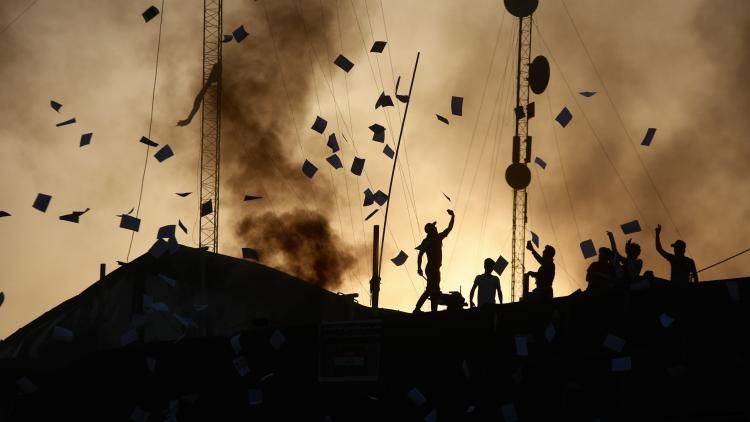
As the war dragged on, Iran adopted an increasingly preemptive posture, culminating in surprise and deadly missile strikes on US forces in Kuwait and Jordan. Neither side now appears prepared to end the war. Yet both are likely to return to negotiations, for there is no military solution to either Iran’s nuclear programme or the Strait of Hormuz.
The war’s long-term significance lies not only in its battlefield outcome but in the regional realignments it has set in motion. The prewar Gulf order is unlikely to be restored.
Washington is likely to reconfigure its Gulf security architecture. Built on forward deployments, large bases and conventional superiority, it has proved more vulnerable than expected. More than a dozen US bases sustained significant damage. Iran showed that inexpensive asymmetric capabilities could penetrate sophisticated air defences and inflict disproportionate damage.
Washington is therefore likely to shift towards fewer, less visible bases, dispersed deployments, precision-strike capabilities, missile defence and the use of artificial intelligence while preserving its conventional military superiority. Britain and France are likely to expand their military cooperation with Gulf monarchies and arms sales, complementing the American security role.
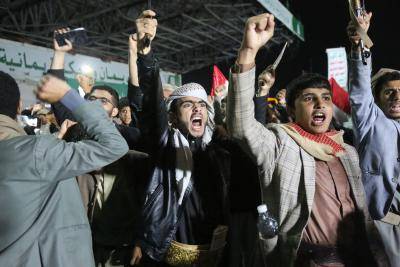
Houthi supporters in Sana’a, Yemen, celebrate the day after the group’s takeover of the strategic port city of Mocha and the Bab al-Mandab Strait on 10 September, 2026. Photo: Mohammed Hamoud / Getty Images.
The Arab monarchies will reassess their security architecture, though the contours of what replaces it remain unclear. Iran’s 2019 strike on Saudi Arabia’s Abqaiq and Khurais oil facilities, which temporarily halved the Kingdom’s oil output, exposed the limits of the American security umbrella. The current war has reinforced that lesson: indispensable though it remains, the American security umbrella cannot fully protect the Gulf monarchies.
This reassessment is unlikely to produce a strategic realignment away from Washington, however. The Arab monarchies will remain anchored in the American security system while hedging through strategic and economic partnerships. Financial dependence, however, limits that hedging. Their sovereign wealth funds manage more than $5 trillion, much of it invested in dollar-denominated assets and western markets, while ruling families hold vast private wealth in the West. The freezing of Russian sovereign assets after the invasion of Ukraine underscored that these investments create both prosperity and vulnerability.
The emerging Persian Gulf order is likely to be characterized by multi-alignment, giving the Arab monarchies greater room for manoeuvre while making it harder for Washington alone to shape the region. Yet their divergent interests make a common approach towards either Washington or Tehran unlikely.
For Saudi Arabia, whose Vision 2030 depends on regional stability, managed coexistence with Iran has become a strategic necessity. The US failure to achieve victory, together with Iranian strikes on Saudi Arabia, raised doubts about the American security umbrella, which deepened after Trump made implementation of the US-Saudi nuclear agreement conditional on Riyadh joining the Abraham Accords. Saudi Arabia also signed the Mecca Joint Defence Agreement with Pakistan and Turkey, signalling a search for additional security partners. Pakistan’s nuclear capability makes it the pivotal member of the agreement. Whether the agreement, whose provisions remain undisclosed, can provide an effective security arrangement is doubtful.
The UAE is pursuing a different strategy: deepening security co-operation with the US, Israel – and perhaps India. Having already left Opec, in which Saudi Arabia plays a leadership role, Abu Dhabi can expect its dispute with the Kingdom to widen. At the same time, its vulnerability to Iranian retaliation reinforces Abu Dhabi’s preference for managed but cautious relations with Tehran. The war’s outcome will largely shape that relationship.
An opening for Beijing
Bahrain and Kuwait, the Gulf’s monarchies most exposed to future confrontation with Iran, are likely to remain closely aligned with Washington and Saudi Arabia, while Qatar and Oman will deepen engagement with Tehran. Neither Pakistan, Israel nor Turkey is likely to emerge as a major external power in the Persian Gulf. Among external powers, China stands to gain the most. As Iran’s largest oil customer, the leading trading partner of the Arab monarchies and a country with closer security ties to Tehran than to any Gulf state, Beijing is uniquely positioned to expand its influence through trade and technology without underwriting the regional security order. Over time, protecting those interests may draw China into a larger security role. Persia’s expulsion of Portugal from Hormuz in 1622 paved the way for Britain’s predominance in the Gulf. Iran’s challenge to Pax Americana may accelerate China’s emergence as one of the Persian Gulf’s leading external powers.
If the war ends through negotiation, Iran is likely to emerge as more influential in region. With its axis of resistance weakened, Tehran will seek to restructure it while reshaping its relationships with the Gulf countries, strengthening the Houthis to gain strategic depth on the Arabian Peninsula, pressuring Saudi Arabia and extending its maritime leverage to the Bab al-Mandab. At the same time, it will probably press for a regional security framework while improving relations with Saudi Arabia, Oman and Qatar and monitoring the policies of the other Gulf monarchies.