
At the end of 2025, more than 40 million people were refugees - close to an all-time high. Almost seven in ten of them live in ‘protracted displacement’ meaning that they have been in exile for five years or more. Many depend on humanitarian assistance to survive.
Behind the statistics are young people who cannot return home, study or work, parents who cannot plan their children’s future and families facing uncertainty. Each year, an estimated 305,000 children are born as refugees. Many will grow up, marry and have their own children without ever going back home.
As we mark the 75th anniversary of the Refugee Convention - the first international treaty to outline the legal protection of refugees - we must reflect on how to prevent this staggering number of people from being stuck in limbo for generations to come.
Being a refugee was never meant to be a permanent status. Most want to go home but many are unable to do so safely while peace is elusive. According to the International Committee of the Red Cross there are some 130 active conflicts around the world. Leaving the victims of war in exile with no prospect of a better life is a humanitarian and developmental failure.
I know something about what opportunity can do. As a young Kurd in Iraq in the late 1970s, my identity was treated as a threat. I was denied freedom and a positive future felt out of reach. But I was fortunate. I was offered a path to safety, education and a new beginning in the UK, transforming my life. Crucially, I was able to return to my country and play a part in its future. Too few of today’s refugees are given the same chance.
Our new goal: ‘50 by 35’
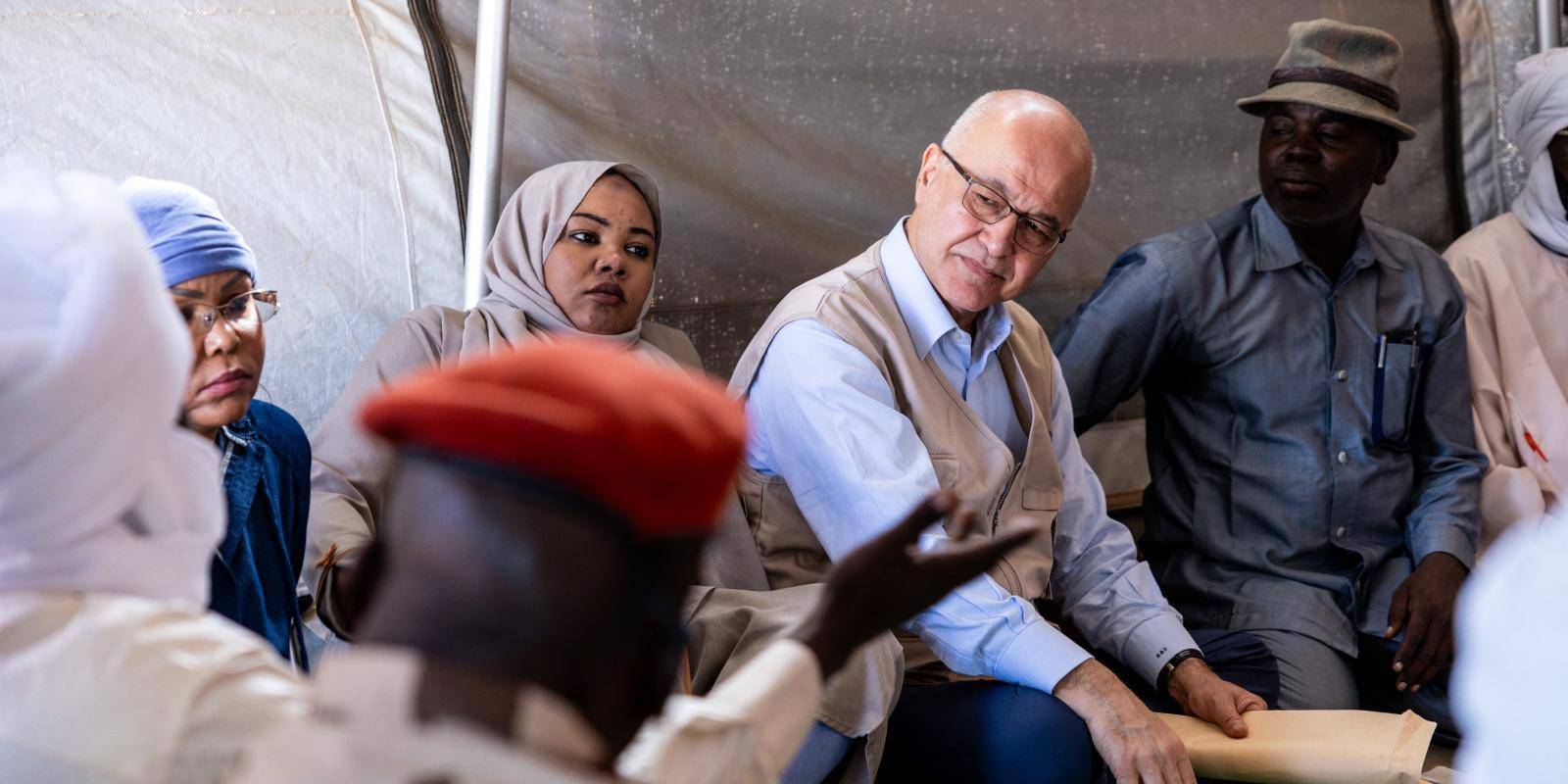
Since becoming head of the UNHCR, the UN Refugee Agency, earlier this year, I have visited some of the world’s most acute displacement crises, from Sudan to the Middle East and Afghanistan. I have met with families reliant on humanitarian aid, grateful for it, but painfully aware that they are merely surviving - and a long way from thriving.
These people don’t want to be disenfranchised aid recipients, they want opportunities to support themselves and make their own choices. That is why UNHCR is proposing a clear, measurable goal: to halve by 2035 the number of refugees trapped in protracted displacement and dependent on humanitarian relief. We are calling this goal ‘50 by 35’.
Achieving it will require a broader coalition. UNHCR’s role is to help bring it together. Over the next decade, we must build more lasting solutions for refugees, including their voluntary return in safety and dignity. At the same time, we must reduce aid dependency by giving refugees opportunities to work, become self-reliant and contribute to the communities hosting them.
The ‘50 by 35’ vision does not mean cutting aid. Humanitarian assistance, often the difference between life and death and already pared to the bone, remains indispensable. This agenda is about reducing the need for aid. Too many refugee situations begin as emergencies and calcify into permacrises. Systems built as short-term responses are now being asked to keep millions afloat for decades. If aid is all we offer, we are not solving displacement.
The most powerful solution remains peace: the ending of conflicts that create refugees in the first place. Syria makes the point starkly. Since the fall of Bashar al-Assad’s dictatorial regime in late 2024, more than 1.6 million Syrian refugees have returned home. But crossing a border is only the beginning. Return only becomes sustainable when people can safely rebuild their lives with access to the infrastructure and basic services they need.
For others, an end to displacement may come through integration in the country in which they have found refuge and, in some cases, citizenship. Resettlement can provide a vital lifeline for those who cannot safely remain where they are, while family reunification, scholarships and labour mobility can open ways to a better future.
Yet the gap between the number of people who need these opportunities and the places available keeps widening. We must keep making the case for countries to offer more.
Inclusion is key
For those who cannot yet return home, the path out of dependency is inclusion. This means access to national education and healthcare systems, financial services and labour markets in their country of asylum. The evidence is compelling: numerous studies show that when refugees participate in economic life, incomes rise and dependency falls, while host economies gain workers, entrepreneurs, consumers and taxpayers. And when return becomes possible, refugees can take home skills needed to rebuild their countries.
Several countries are proving this isn’t wishful thinking. In Kenya, the government’s ‘Shirika Plan’, launched last year, has helped convert refugee camps into integrated settlements where refugees and host communities share public services, land and markets - replacing indefinite encampment with communities that function for everyone.
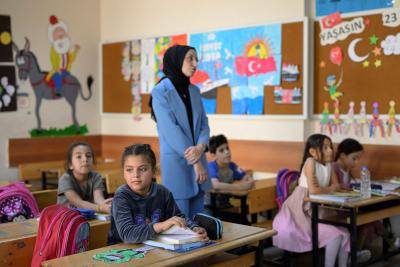
Pupils in a Turkish primary school in Sanliurfa, near the Syrian border. Turkey has admitted hundreds of thousands of Syrian children into its school system. Photo: Yasin Akgul/ Getty Images.
Turkey, host to one of the world’s largest refugee populations, has accepted hundreds of thousands of Syrian children into its national school system, helping prevent the creation of a lost generation while building skills refugees will need whether they stay or eventually go home.
Meanwhile in Latin America, governments across the region have created legal pathways for millions of displaced Venezuelans to gain regular status, work, healthcare and education.
These experiences show that investing in refugee self-reliance brings returns for their own communities by generating tax revenue, stability and greater social cohesion. Indeed, the International Monetary Fund estimates that Venezuelan incomers could increase GDP in major Latin American host countries by up to 4.4 per cent by 2030.
This pattern holds everywhere. The Refugee Welfare Report 2026, published by UNHCR and the World Bank, demonstrates that expanding refugees’ access-to-work opportunities could sharply cut refugee poverty and meaningfully raise incomes among the poorest refugee households. Investing in refugee self-reliance is also cost-effective. A separate joint report on the cost of meeting refugees’ subsistence needs estimates that allowing refugees to be as economically active as their hosts could reduce the annual assistance required to meet those needs by as much as $16 billion globally.
Changes in funding
Host governments understand how refugee protection connects to national development, but many of these countries already face poverty, debt and climate shocks of their own.
They cannot shoulder this responsibility alone. Donors, development banks, foundations and private investors must engage from the earliest stages of a crisis, helping host countries expand national services and economic opportunities before displacement becomes protracted.
There are encouraging signs that this shift is underway. The World Bank, for example, has established dedicated financing that helps governments include refugees in national systems while boosting overall economic growth. With more grants and similar financial support, hosting countries can dramatically improve life for both refugees and host communities. If we are serious about reducing dependency and leaving no one behind, refugee inclusion must be embedded within the development agenda rather than treated as a parallel track.