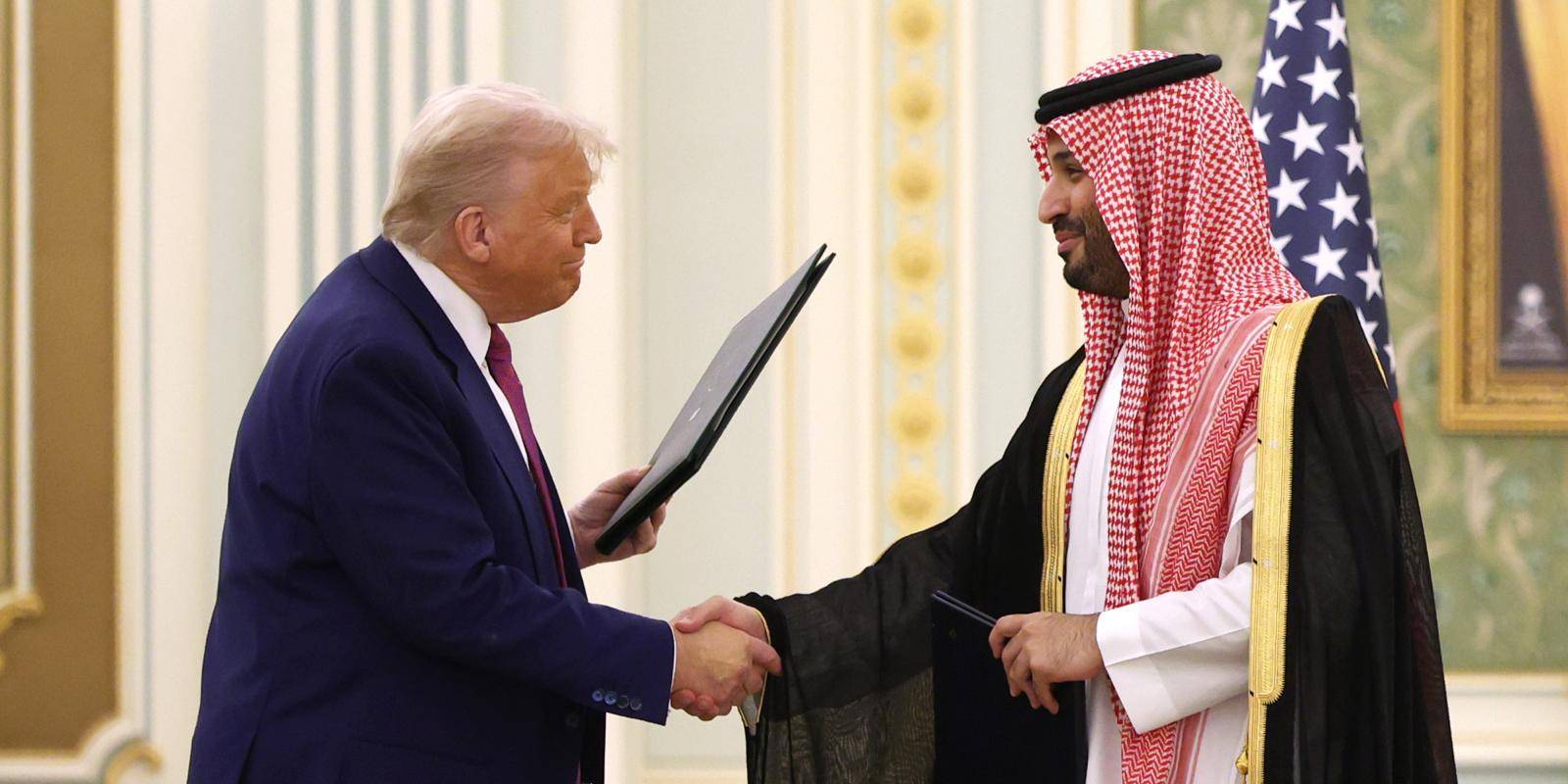

Saudi Arabia’s Crown Prince Mohammed bin Salman makes his much-anticipated state visit to Washington on 18 November. This trip is more than a ceremonial reaffirmation of the longstanding US–Saudi partnership.
It comes at a critical moment for regional security and the crown prince’s Vision 2030 economic programme, after two turbulent years defined by the Gaza war, and Israel’s widening military operations in Lebanon, its twelve-day June conflict with Iran and the September strikes on Doha.
The crown prince is ultimately looking to futureproof the US–Saudi relationship through stronger economic and security agreements. To that end, the trip will see a multitude of agreements on defence guarantees, nuclear cooperation and commercial deals. But gaps will be evident: on regional issues such as Gaza’s governance, normalization prospects with Israel, and broader regional security flashpoints. Human rights, or the Kingdom’s exceeding high rate of executions, will not be on the agenda.
An assured leader
The kingdom today is wealthier, more confident, and more diplomatically assertive than at any point in its modern history. After years of reputational strain from the 2015 Yemen war and the killing of Saudi journalist Jamal Khashoggi, Mohammed bin Salman appears to be politically more assured as the future leader of Saudi Arabia. He has also repositioned the kingdom as the guarantor of broader regional stability.
The crown prince’s mission in Washington is to translate the US and Saudi’s mutual strategic reliance into a formalized defence and political framework – one that can outlast US electoral cycles. At the top of his agenda is a binding defence arrangement – one that signals that any major attack on Saudi territory constitutes a red line for Washington.
Such an agreement was also under discussion with the previous Biden administration but was never finalized because the administration tied any formal defence treaty to Saudi–Israel normalization and faced major constraints in obtaining Congressional approval.
As part of the deal, the Kingdom is seeking access to top tier defence systems such as the F35 fighter aircraft. Riyadh also wants support for its civilian nuclear ambitions, which would place Saudi nuclear development on an internationally monitored footing and boost its long-term energy diversification plans.
This issue has proved contentious in the US Congress. Members have expressed concerns that without gold standard safeguards, they would be sceptical of giving nuclear technology to an authoritarian state that has openly expressed interest in matching Iran’s nuclear advancements. It will be important to see how the US president addresses these concerns.
Vision 2030
Economically, the kingdom wants to deepen the momentum set in motion during President Trump’s visit to Riyadh. The kingdom wants deeper economic and technological ties with the US, especially in artificial intelligence and data technology.
Saudi Vision 2030 sits at the centre of this push. Saudi Arabia’s widening budget deficit, driven by sustained low oil prices and ambitious domestic spending, has intensified its need to attract substantial foreign direct investment and advance economic diversification away from oil dependency.
The kingdom has committed more than 21 billion dollars to new data centres and even larger sums to electric vehicles, advanced manufacturing, space exploration, and AI.
The crown prince sees economic modernization as closely linked to the kingdom’s national security, and wants US firms to be deeply involved in this transformation to further guarantee the longevity of the American relationship. This is also part of a wider Saudi quest for strategic autonomy – acquiring the capabilities, technologies, and partnerships that will allow it to shape regional outcomes on its own terms, even as it remains anchored to Washington.
President Donald Trump’s visit to the kingdom in May showed that he and Mohammed bin Salman share a regional vision that champions the possibility of ‘commerce over chaos’ and technological investment over ideological confrontation.
The US president sees the benefits of a revitalized deal-based strategic partnership with Saudi Arabia as essential to his second term agenda and his broader goals of economic security engagement and building peace in the region through normalization agreements with Israel.
Gaza
The most complicated issue on the table is Israel, and Gaza. Since the outbreak of the Gaza war, Saudi Arabia no longer views normalization with Israel as inevitable or cost free.
