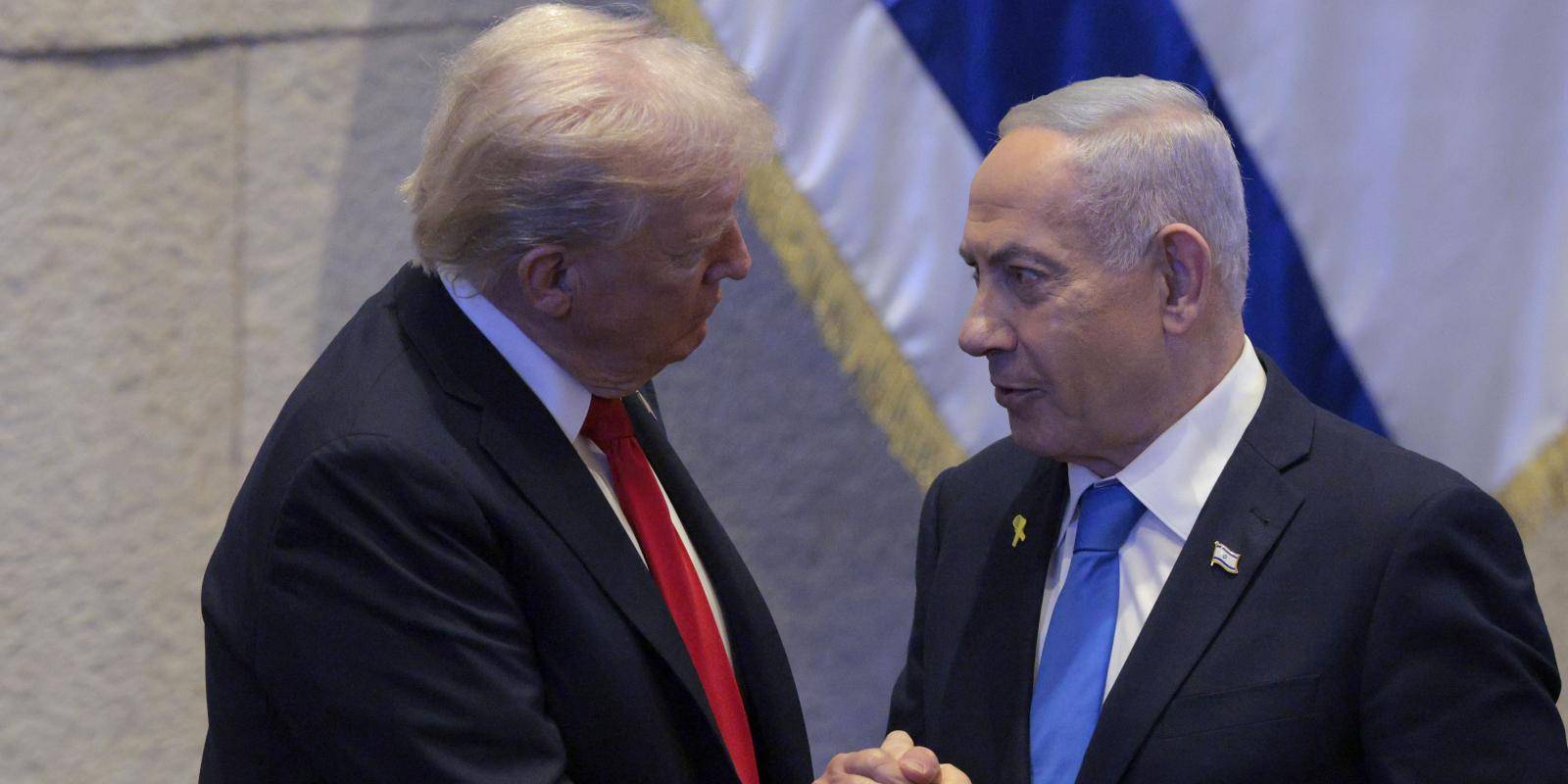

It took nearly two years of war, relentless protests demanding the release of hostages, and one energetic and determined American president to achieve what had seemed unachievable. President Donald Trump secured support from key Arab and Muslim countries, including Qatar and Turkey, and then forced an end to the war on both Israel and Hamas. Within days, the IDF withdrew most of its forces from Gaza and all 20 living Israeli hostages were released from captivity. International leaders then headed to a peace summit in Sharm al-Sheikh.
Netanyahu hadn’t been invited to the Sharm summit until he spoke with Egyptian President Abdel Fattah al-Sisi in Trump’s presence. For a second, Netanyahu actually considered sitting at the same table with Palestinian President Mahmoud Abbas to discuss peace, Gaza’s reconstruction, and what now appears to be the inevitable participation of the Palestinian Authority (PA) in this process (though he ultimately decided against attending). Watching these fast-paced events unfold was as surreal as witnessing Netanyahu’s public apology to Qatari leadership last month – with Trump watching carefully.
The prime minister’s position has changed dramatically. But how likely is it that he loses his grip on power?
The end of ‘total victory’
Just weeks ago, Netanyahu angrily dismissed anyone who suggested the war should end with a deal, insisting instead on ‘total victory’ – the promise he’d made from the first days of the Gaza war. He rejected the idea that Hamas’s disarmament should be deferred to the future, to allow the release of the hostages. He said ‘no’ to any PA involvement in Gaza’s reconstruction. And he insisted on providing only limited humanitarian aid through the Israeli-backed GHF, a failed project that has since been dismantled.
Those positions helped sustain the support of his far-right coalition partners, including Bezalel Smotrich and Itamar Ben-Gvir. But they have threatened to quit over Trump’s peace deal and voted against the first stage. The second stage – which includes Hamas disarmament, Gaza reconstruction, the PA’s return to Gaza, and a path toward Palestinian sovereignty – has not even been voted on yet.
In his recent speech, Netanyahu defended and even praised the deal, claiming Israel had received everything it wanted. That may well be true, but this deal also contradicts everything Netanyahu has preached for many years. Within days, the Rafah crossing between Gaza and Egypt will reopen, secured by Palestinian policemen trained in Egypt, according to Palestinian sources. This represents a de facto return of the PA to Gaza and marks the beginning of reunification between Gaza and the West Bank.
The uncertain future for Netanyahu
Since the early 2010s, Netanyahu’s strategy has been ‘divide and rule’ – preventing any opportunity for negotiations and any prospect of Palestinian statehood. This included weakening the PA in the West Bank while keeping Hamas alive in Gaza. Every single move – the pro-settlement policy in the West Bank and the Qatari suitcases of US dollars delivered to Hamas with Israel’s approval – served this goal.

For some time, Netanyahu genuinely believed he could have it all: lucrative peace deals with Arab states while ‘managing the conflict’ with Palestinians. This strategy disintegrated during the 7 October massacres, when 1,200 Israelis, mostly civilians, were slaughtered by Hamas.
The prolonged war that followed and the acute humanitarian crisis and human tragedy it created in Gaza caused the world to turn away from Netanyahu. Indeed, Saudi officials interviewed by Israeli media in recent days made clear that Saudi Arabia will not join the Abraham Accords as long as Netanyahu remains in power.
Ultimately, Netanyahu decided not to participate in the Sharm al-Sheikh peace summit. Nonetheless, the decisions made there will bind him and his government. His coalition members currently prefer to emphasize only the part of the agreement that returned the hostages. But there is clearly much more at stake, as detailed in Trump’s 21-point plan.
The state of the coalition
It remains to be seen how Netanyahu’s coalition partners will react to unfolding events in Gaza. The PA’s influence looks set to grow. The timeline for Hamas disarmament is delayed and indefinite. And the path to Palestinian statehood is now clearly backed by a decisive majority of the international community.
