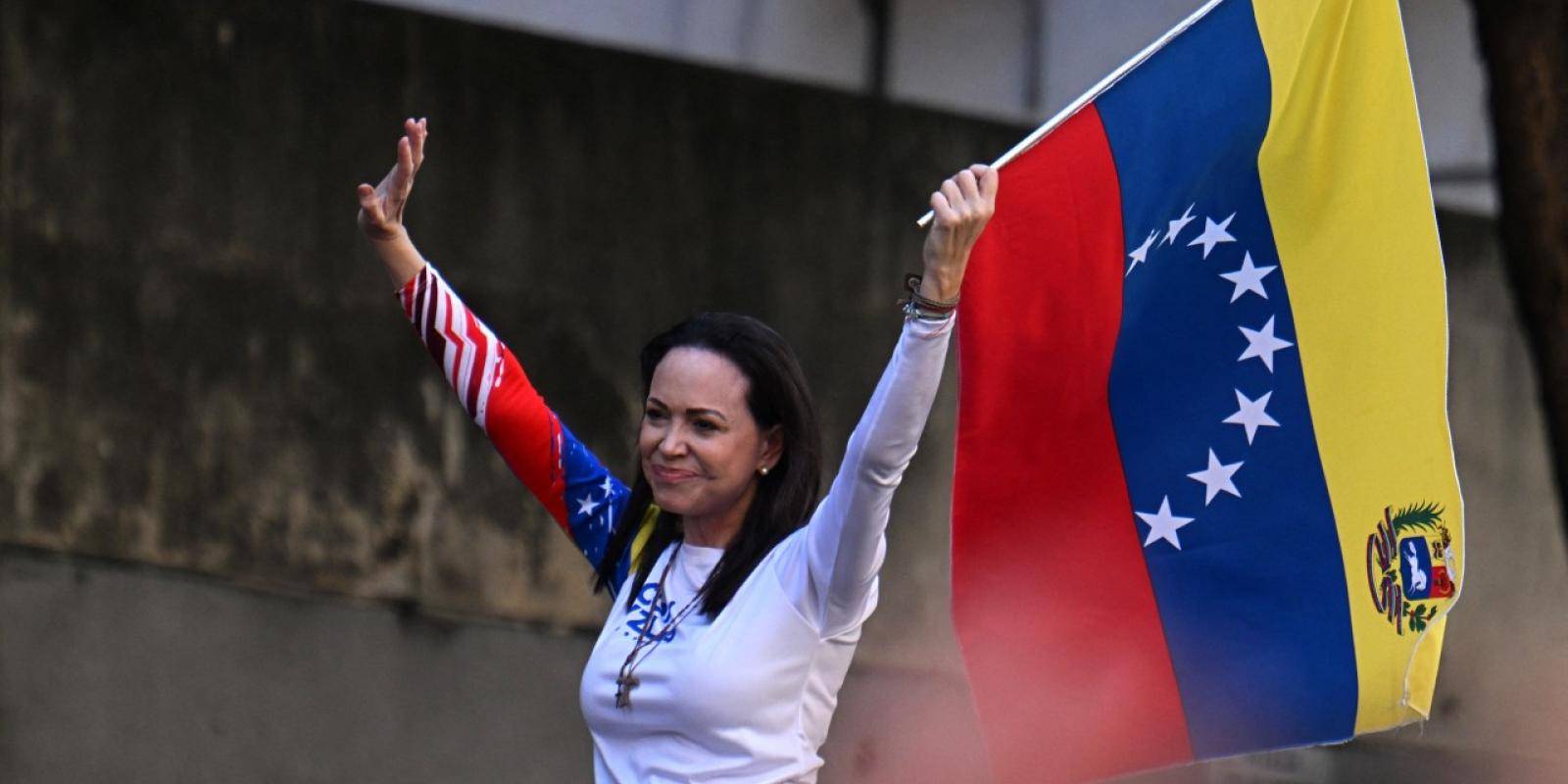

In awarding the Nobel Peace Prize to Venezuelan democratic activist Maria Corina Machado, the committee recognized her courage in standing up to the brutality and corruption of the regime of President Nicolas Maduro. The award also brings renewed attention to the struggles of the Venezuelan people.
The Maduro regime has jailed thousands of political opponents – an estimated 800 remain behind bars according to Venezuelan human rights group Foro Penal. It has also shut down independent media and driven the country into an economic collapse that has forced almost 8 million Venezuelans to flee.
The question is, what difference can the prize make – and how does it relate to the policy of US President Donald Trump, who openly sought the prize himself?
The face of resistance
Maria Corina Machado has been an important figure in Venezuelan society for decades, first as an activist, founding the civil society group Súmate, and then later in politics, first elected as a member of the National Assembly. She has been a longstanding advocate for democracy and human rights, though often stands to the right of much of Venezuela’s democratic opposition.
In 2004 Machado met and was feted by then President George W. Bush at the White House. And she became an advocate for US military intervention in Venezuela after President Trump floated the idea during his first administration.
Ironically, it was not until President Joe Biden’s push for competitive elections in Venezuela that Machado became the leader of the opposition. In the run up to the 28 July 2024 presidential election, a nationwide primary overwhelmingly selected Machado as the opposition’s popular presidential candidate. She was promptly barred from running by the Maduro-controlled Supreme Court.
Undeterred, Machado endorsed the candidacy of former diplomat Edmundo González. Despite not being on the ticket, Machado became the driving force of the campaign and the public face of resistance to the Maduro government. During the campaign she travelled the country by car – prohibited from flying by the government – filling plazas and streets with millions of enthusiastic supporters demanding change.
That popular will was snuffed out on election night, when the Maduro government brazenly stole the elections, as confirmed by international election observers from the UN and the Carter Center.

However, in a remarkable example of the organization and commitment of civil society and opposition supporters, the Machado and González team collected a majority of the vote tally sheets, showing that Gonzalez had received approximately 70 per cent of the vote to Maduro’s 30 per cent. The tally sheets were verified by outside observers and statisticians. Despite international demands for Maduro to prove his claim to victory, he never did.
Instead, in the months following the election, the government arrested more than 2,000 demonstrators and killed 25.
González fled the country facing imminent arrest, and Machado went into hiding – where she remains today – becoming the face of the democratic opposition and defender of human rights in the country. Since then, most of the international community has unfortunately lost interest in her cause.
Trump’s approach
The prize provides a much-needed new focus on the situation in Venezuela and the plight of the opposition. But the question now will be: how can it help exert pressure on the Maduro government? And how does it relate to the Trump administration’s increasingly aggressive military posture towards Venezuela?
Trump opened his second term with a two-pronged strategy. First, he appointed Ric Grenell as his envoy for Venezuela, tasking him with attempting to negotiate with the Maduro government. Second, he positioned Secretary of State Marco Rubio to lead a hard-line policy to embrace the democratic opposition and isolate Maduro.
Grenell had some initial success, securing continued contracts for US and later European energy companies that had invested in Venezuela under Biden’s sanctions liberalization policy. Licenses by Chevron and Shell have been allowed to continue in limited form.