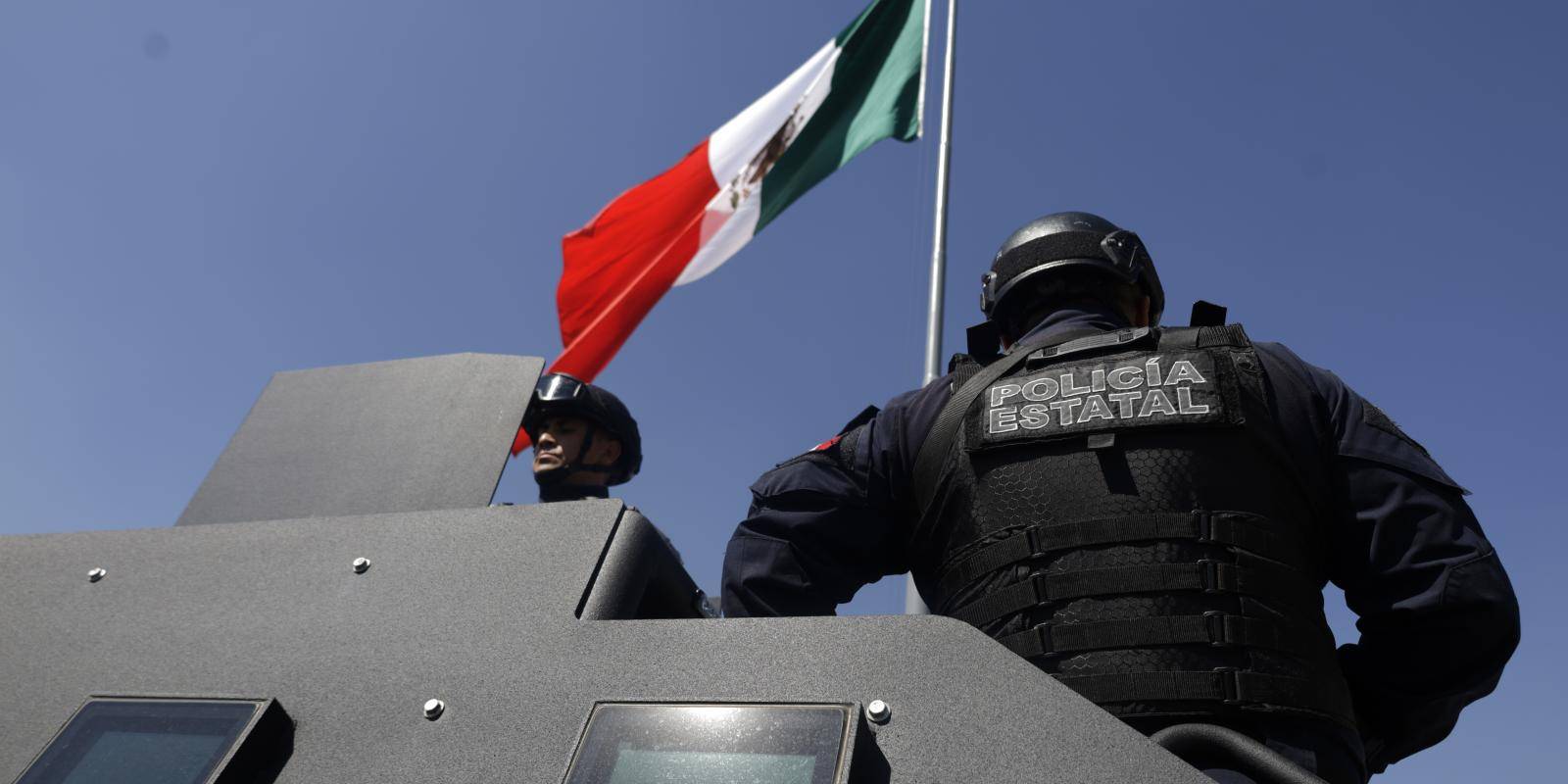

On 22 February, Mexico’s armed forces carried out a major operation against one of the most important cartels, Jalisco Nueva Generación (CJNG). The main target was El Mencho, the alias of CJNG leader Nemesio Oseguera Cervantes, who was captured wounded and later died during transit to a medical facility. CJNG members responded with disruptive acts of violence in several states, and at least 25 members of the National Guard were killed in the fighting.
Last week, Mexico’s President Claudia Sheinbaum visited Guadalajara in Jalisco state – a World Cup host city – to assuage security concerns and announce that up to 100,000 security personnel will be deployed during the 2026 World Cup.

The El Mencho operation was carried out with the help of US information and intelligence. President Trump has previously criticized Mexico’s efforts to tackle the cartels and even threatened a US attack on Mexican soil against a cartel target. This exceptional raid is part of a wider collaboration network between the two countries, which will reduce the likelihood of any immediate US action. Some analysts, however, assume such intervention would never happen, given that Mexico is home to the largest number of Americans outside the US.
Mexico and the United States have one of the closest and most complex bilateral relationships in the world. More than 30 million people of Mexican origin live in the US, while 1.6 million Americans live in Mexico. The two countries are also each other’s most important trading partner and share a 1,954-mile-long border – only slightly shorter than the distance from the UK to Syria.
But the relationship has come under increased pressure since Trump took office last year. President Sheinbaum has so far cooperated with US demands while also attempting to push for domestic reforms. While the US priorities are overwhelmingly migration and security, reforms in other areas that could also affect US interests – such as justice, energy, and political system reform – have been dealt with pragmatically and steps have been taken to ensure US companies are not negatively affected.
Under Trump, three issues have come into sharp focus: migration, security and trade. The three were dramatically intertwined when Trump made free trade contingent on actions by Mexico on migration and security. In November 2024, Trump threatened a 25 per cent tariff on Mexico until it solved the ‘problem’ of fentanyl and illegal immigration – a threat he made good on in February 2025. The lack of information on how advances in these areas would be measured resulted in huge levels of uncertainty. Illegal migration and drugs flow north across the border into the US, but US guns flow south – and into the hands of Mexican cartels.
After intense diplomatic and backchannel conversations, large carve-outs were made to these tariffs in March 2025. As result, 85 per cent of Mexican exports to the US still flow on a free-trade basis, and remaining exports have a low average tariff of just 4.5 per cent. Meanwhile, the situation on the border has changed drastically. ‘Contacts’ with migrants on the US border dropped from 2.5 million in 2023 to 443,000 in 2025, the lowest in 50 years.
On action against cartels, Mexico has made several goodwill gestures. It has renewed and intensified dialogue, cooperation, intelligence gathering and information sharing on the activities and methods of drug cartels. It has also resumed joint training for security forces and accepted an increased number of security-related attachés at the US embassy in Mexico. Between February 2025 and January 2026, 93 high-ranking cartel figures serving sentences in Mexican jails were sent to the US outside formal deportation procedures.

The more Mexico and the US cooperate successfully on security-related matters, the less likely a US drone strike on Mexican soil becomes. While future joint operations should not be entirely ruled out, it is far more probable that Mexican authorities will execute them. Successful security cooperation will show the US that Mexico is a trustworthy partner and that it is in the best interest of both countries to maintain dialogue, cooperation and coordination.
Progress on migration and security are also helping to lay the groundwork for more productive talks on renewing the US, Mexico and Canada Free Trade Agreement (USMCA), due for renewal by 1 July. Trade is a key part of the bilateral relationship. In 2025, exports from the US to Mexico reached $338 billion, while Mexican exports to the US reached $535 billion (compared to $308.4 billion for China’s exports to the US).
Other developments too have increased the probability of an agreement on the USMCA being reached in time, including bilateral negotiations carried out during numerous trips to Washington by Mexican officials. These negotiations have so far been based on a 54-point list of pending issues from the US side, formally delivered to President Sheinbaum by US Secretary of State Marco Rubio during his trip to Mexico City in September 2025. The list includes a wide variety of issues, ranging from energy, intellectual property and agriculture to relations with China.
The US’s main concerns regarding China revolve around Chinese involvement in the ownership of Mexican ports and container terminals, and Mexico’s perceived lack of accuracy and transparency on its trade with China, such as inputs in supply chains, as well as Chinese investment. Mexican authorities have responded reforming its foreign investment screening mechanism and imposing more than 1,400 new tariffs on certain goods coming from various countries – mainly from China. Progress made will hopefully avoid a protracted renegotiation process on the USMCA which could open a Pandora’s box at the worst possible time, creating uncertainty and volatility for the Mexican economy.