

Since becoming Argentina’s president in December 2023, Javier Milei has defied political gravity. A self-described anarcho-capitalist with no prior executive experience, he came to power promising to upend decades of interventionist policies and slash public spending with his famous chainsaw. In doing so, he defeated the Peronist movement, long synonymous with Argentina’s political system but weakened by economic crisis and political dysfunction during Alberto Fernández’s presidency.
The surprises did not stop there. Milei enacted one of the most ambitious fiscal adjustments in modern history, eliminating the fiscal deficit and restoring a budget surplus. He passed significant reforms and brought down triple-digit inflation despite controlling only a small minority in Congress. His success in the 2025 midterm elections strengthened his legislative position and paved the way for further reforms, including a major overhaul of labour regulations. In the process, he became an international celebrity and a reference point for the global libertarian right.
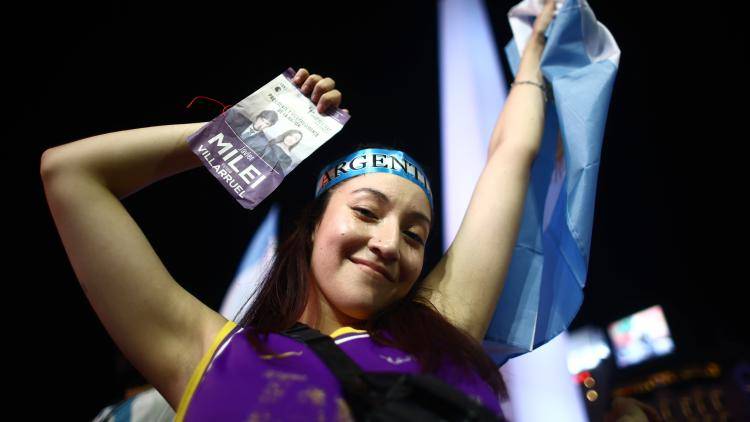
Yet 2026 has served as a reminder that this is still Argentina – where there are no blank cheques. Milei’s approval ratings are down and signs of political fatigue are beginning to emerge, as many Argentinians continue to struggle despite improving macroeconomic indicators. Meanwhile, increasingly public disputes within the government are raising questions about Milei’s ability to manage his coalition and fuelling speculation about alternative candidates on the right.
And Peronism may not be over either. Former president Cristina Fernández de Kirchner, whose political career appeared to be over after being convicted on corruption charges and placed under house arrest, is once again polling competitively – although she is unable to run for office. Despite Milei’s novelty, neither Peronism nor Argentina’s talent for political surprises have disappeared.
The economic challenge
It would be hard even for Milei’s critics to deny his economic achievements. Inflation has come down from 211 per cent when he took office in December 2023 to just over 30 per cent last month. Although still among the highest rates in the world, it no longer dominates political debate in a society accustomed to much higher levels of inflation. The economy is expected to grow by 3.5 per cent this year, boosted by exports of shale oil and gas from the Vaca Muerta reserves, mining and agriculture. Argentina’s central bank has successfully defended the value of the peso, which remains broadly stable, and has begun to rebuild foreign currency reserves, one of the country’s most persistent economic vulnerabilities. Finally, despite his close political affinity with US President Donald Trump, Milei has moved to liberalize foreign trade, slashing export taxes and supporting the Mercosur-European Union free trade agreement.

But in September 2025, following his party’s defeat in the Buenos Aires provincial elections, market turbulence raised serious doubts about the sustainability of Milei’s programme prompting a direct intervention from the US Treasury to restore confidence. This served as a reminder that Argentina remains highly exposed to shifts in investor confidence and external financing conditions. While those fears have subsided somewhat, the country is still struggling to lower its sovereign risk premium and re-enter international debt markets, one of the government’s most important medium-term objectives.
But stabilization and prosperity are not the same thing. Rightly or wrongly, many Argentinians feel they are not seeing the benefits of the economic turnaround. Real wages remain low, consumption has recovered unevenly and much of the recent growth has been concentrated in a handful of highly competitive export sectors like agriculture, mining, and oil and gas. Less competitive parts of the economy, including manufacturing, are struggling, while much of the new employment being created is either informal or concentrated in low-paying activities such as delivery services. The government is betting that lower inflation, deregulation and fiscal discipline will eventually unlock a broader wave of investment. Whether Argentinians are willing to wait for those promises to materialize is another matter.
The political challenge
The end of his honeymoon period has also exposed Milei’s limitations as a political leader. While highly effective at setting direction, he has shown less interest in the day-to-day management of government outside the economy. Milei is fiercely loyal to his small circle of trusted advisors but seems unable to resolve the widening dispute between his sister and closest confidant Karina and his chief political strategist Santiago Caputo, fuelling perceptions of government infighting. He has also stood by his chief of staff, Manuel Adorni, despite a steady stream of corruption allegations that have dented Milei’s claim to have uprooted the political caste. Adorni’s recent admission that he underreported his taxes has only increased pressure on the president from opposition and government allies alike.
Meanwhile, Peronism is once again viewed by many as a viable alternative, despite remaining divided and burdened by memories of its disastrous final years in office. Cristina Fernández de Kirchner’s influence over the movement remains considerable. The leading contender to inherit her mantle is Buenos Aires governor Axel Kicillof although their relationship is strained. Kicillof is closely associated with the interventionist economic model that Milei was elected to dismantle and would be a formidable candidate if Argentinians decide that Milei’s experiment needs to be reversed. Less so if voters conclude that the model broadly works but requires moderation.